
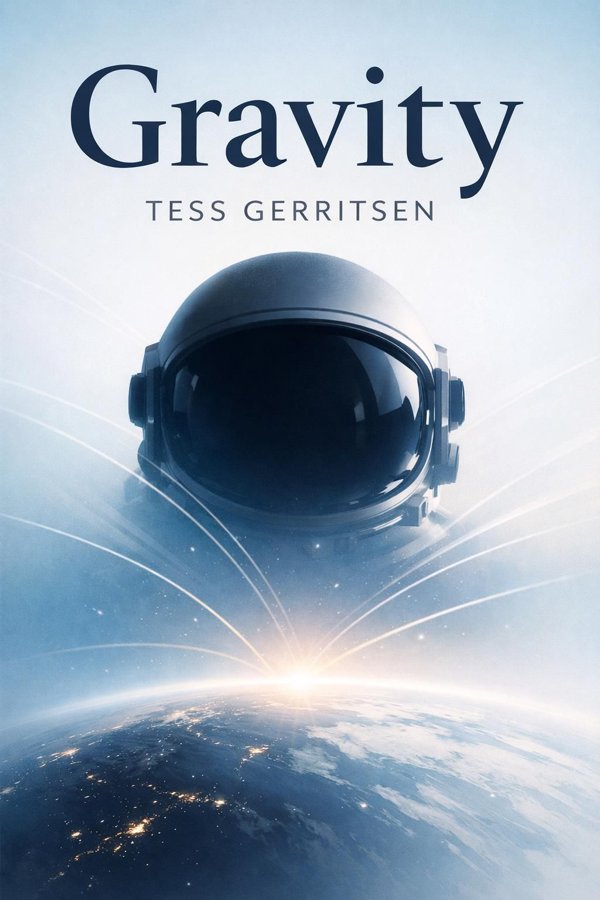
Gravity: Summary & Key Insights
 10 min8 chaptersAudio available
Key Takeaways from Gravity
A closed environment does not forgive error.
Heroism is often imagined as dramatic self-sacrifice, but Gravity suggests something more grounded: real courage often looks like disciplined competence under unbearable pressure.
People fear what they cannot see, and Gravity uses that fear with exceptional effectiveness.
Pressure does not create character from nothing; it reveals what was already there.
Some thrillers sacrifice realism for speed, while others become so technical that momentum fades.
What Is Gravity About?
Gravity by Tess Gerritsen is a mystery book. What makes a thriller unforgettable is not only danger, but the unsettling feeling that the danger could be real. Gravity delivers exactly that. In this high-stakes medical and space-based suspense novel, Tess Gerritsen follows Dr. Emma Watson, a physician and astronaut aboard the International Space Station, as a mysterious crisis turns an already unforgiving environment into a deadly trap. Cut off from safety and surrounded by failing systems, Emma must confront a threat that is both biological and intensely human: fear, secrecy, and the terrifying limits of survival in orbit. The novel matters because it combines multiple forms of suspense into one tightly engineered story. It is a medical thriller, a disaster novel, and a psychological survival tale, all set against the breathtaking but merciless backdrop of space. Gerritsen writes with unusual authority because she is not only a bestselling novelist, but also a former physician. That medical knowledge gives the story a convincing realism, especially when it explores contamination, diagnosis, and emergency decision-making under pressure. Gravity stands out as a gripping example of how science fiction elements can sharpen, rather than soften, the immediacy of a thriller. It is a novel about courage, competence, and how quickly order collapses when the smallest unseen threat enters a closed system.
This FizzRead summary covers all 8 key chapters of Gravity in approximately 10 minutes, distilling the most important ideas, arguments, and takeaways from Tess Gerritsen's work. Also available as an audio summary and Key Quotes Podcast.
Gravity
What makes a thriller unforgettable is not only danger, but the unsettling feeling that the danger could be real. Gravity delivers exactly that. In this high-stakes medical and space-based suspense novel, Tess Gerritsen follows Dr. Emma Watson, a physician and astronaut aboard the International Space Station, as a mysterious crisis turns an already unforgiving environment into a deadly trap. Cut off from safety and surrounded by failing systems, Emma must confront a threat that is both biological and intensely human: fear, secrecy, and the terrifying limits of survival in orbit.
The novel matters because it combines multiple forms of suspense into one tightly engineered story. It is a medical thriller, a disaster novel, and a psychological survival tale, all set against the breathtaking but merciless backdrop of space. Gerritsen writes with unusual authority because she is not only a bestselling novelist, but also a former physician. That medical knowledge gives the story a convincing realism, especially when it explores contamination, diagnosis, and emergency decision-making under pressure. Gravity stands out as a gripping example of how science fiction elements can sharpen, rather than soften, the immediacy of a thriller. It is a novel about courage, competence, and how quickly order collapses when the smallest unseen threat enters a closed system.
Who Should Read Gravity?
This book is perfect for anyone interested in mystery and looking to gain actionable insights in a short read. Whether you're a student, professional, or lifelong learner, the key ideas from Gravity by Tess Gerritsen will help you think differently.
- ✓Readers who enjoy mystery and want practical takeaways
- ✓Professionals looking to apply new ideas to their work and life
- ✓Anyone who wants the core insights of Gravity in just 10 minutes
Want the full summary?
Get instant access to this book summary and 100K+ more with Fizz Moment.
Get Free SummaryAvailable on App Store • Free to download
Key Chapters
A closed environment does not forgive error. One of the most striking ideas in Gravity is that space is not simply a dramatic setting; it is a force that amplifies every weakness in planning, communication, and human judgment. On Earth, a mistake in a hospital or laboratory may still leave room for backup systems, extra personnel, or rapid transport. In orbit, those safety nets disappear. A delayed response, a misread symptom, or a flawed assumption can become catastrophic in minutes.
Gerritsen uses the International Space Station to show how fragile complex systems really are. A spacecraft depends on exact routines, disciplined teamwork, and trust in equipment. Once a biological threat enters that carefully controlled world, every process is strained. The crew must evaluate symptoms, preserve oxygen, protect one another, and make decisions without the benefit of normal medical infrastructure. This creates suspense, but it also reveals a broader truth: the more advanced a system is, the more vulnerable it can become when something unexpected slips inside it.
This idea applies beyond fiction. Hospitals, airplanes, data centers, and even modern workplaces rely on tightly connected systems. In all of them, small failures can escalate when teams assume normal conditions will continue. The lesson is not to become fearful, but to respect complexity. High-performance environments require humility, contingency planning, and clear thinking under stress.
Actionable takeaway: whenever you work in a system that depends on precision, identify one hidden point of failure and create a backup plan before a crisis exposes it.
Heroism is often imagined as dramatic self-sacrifice, but Gravity suggests something more grounded: real courage often looks like disciplined competence under unbearable pressure. Dr. Emma Watson is compelling not because she is fearless, but because she continues to think, assess, and act while fear is all around her. As both physician and astronaut, she must rely on training, observation, and emotional control when panic would be the easier response.
This distinction matters. Gerritsen portrays expertise not as cold detachment, but as a lifeline. Emma’s medical knowledge helps her interpret symptoms and evaluate risks. Her astronaut training helps her navigate an environment where even basic movement is unnatural. Instead of presenting bravery as instinct, the novel shows that preparation gives people the ability to function when conditions deteriorate. In that sense, competence is not separate from courage; it enables it.
The book also highlights the psychological burden of responsibility. When others depend on your judgment, every choice carries moral weight. Emma must deal with uncertainty, incomplete information, and the possibility that any decision may worsen the crisis. That is what makes her resilience believable. She is not invincible. She is capable.
In everyday life, this idea is practical. During emergencies at work, family health scares, or financial setbacks, the people who steady the situation are often those who know what to do next. Preparation reduces panic. Skills create options. Calm grows from familiarity.
Actionable takeaway: build confidence by mastering one high-pressure skill in your own life, whether first aid, crisis communication, or technical troubleshooting, so that competence can support courage when you need it most.
People fear what they cannot see, and Gravity uses that fear with exceptional effectiveness. The novel’s central menace is not a monster in the conventional sense, but a biological threat moving through a sealed environment where the margin for error is almost zero. Because the danger is microscopic, it cannot be confronted through strength alone. It must be detected, understood, and contained. That makes the suspense more intimate and more psychologically disturbing.
Gerritsen’s medical background gives this idea unusual force. She understands that infection, contamination, and misdiagnosis are frightening precisely because they are hard to define at first. Symptoms can be ambiguous. Causes can be hidden. By the time certainty arrives, the crisis may already be far advanced. In space, where no full hospital exists and rescue is delayed, that uncertainty becomes deadly.
The book reminds readers that modern life is full of invisible risks, from viruses to system vulnerabilities to emotional strain that goes unnoticed until it erupts. We often assume visible threats are the most dangerous because they are easiest to identify. Yet unseen threats frequently spread the farthest before anyone responds. The lesson is not paranoia, but attentiveness. Good systems depend on early detection, honest reporting, and respect for anomalies.
On a practical level, the novel encourages a mindset of careful observation. In medicine, that means not dismissing unusual symptoms. In organizations, it means listening when small warning signs appear. In personal life, it means addressing tension before it hardens into crisis.
Actionable takeaway: treat unexplained changes, whether physical, technical, or interpersonal, as signals worth investigating early instead of hoping they will resolve on their own.
Pressure does not create character from nothing; it reveals what was already there. In Gravity, the extreme isolation of space intensifies every relationship aboard and beyond the station. Trust becomes more than an emotional preference. It becomes operationally necessary. When people are confined together, cut off from outside help, and facing mortal danger, personal tensions can directly affect survival.
Gerritsen explores this beautifully through the dynamics between crew members and mission control. Information must be shared accurately. Motives must be interpreted quickly. When uncertainty rises, even ordinary disagreements can start to look like betrayal or incompetence. In a sealed environment, suspicion spreads almost as quickly as infection. This is one reason the novel feels so tense: the biological crisis is dangerous, but the erosion of trust may be just as destructive.
The idea has broad relevance. Many readers will never face a life-or-death situation in orbit, but almost everyone knows what happens when stress compresses a team. Families in crisis, medical units, startups, classrooms, and emergency response teams all depend on trust under pressure. If communication is weak before the crisis, the crisis exposes it. If trust is strong, people can endure more than they thought possible.
Gravity suggests that trust is built long before it is tested. Shared standards, honest communication, and respect for expertise matter most when conditions worsen. Emotional steadiness is not a luxury in high-stakes situations. It is part of the infrastructure.
Actionable takeaway: strengthen one important relationship or team process now by clarifying expectations and improving communication before stress turns uncertainty into conflict.
Some thrillers sacrifice realism for speed, while others become so technical that momentum fades. Gravity shows that science and suspense can strengthen each other when handled skillfully. Gerritsen builds tension not by abandoning plausibility, but by grounding danger in medical and aerospace detail. The result is a story that feels more urgent because it seems possible.
The scientific elements in the novel are not decorative. They shape the plot. The biology of contamination, the constraints of zero gravity, the limitations of life-support systems, and the logistics of rescue all affect what characters can do. This creates a more satisfying kind of suspense because the obstacles are not arbitrary. They emerge naturally from the world of the story. Readers are not merely told that the situation is dangerous; they understand why it is dangerous.
This blending of disciplines is one reason the book has endured as a notable techno-thriller. Gerritsen respects the reader’s intelligence. She explains enough to make the stakes clear without turning the novel into a textbook. That balance is useful beyond fiction. In leadership, education, and communication, people respond best when information and emotion work together. Facts create credibility. Story creates investment.
For readers, the novel is also a reminder that learning can be thrilling when attached to consequences. Science becomes memorable when it explains who lives, who dies, and what decisions matter. Good storytelling does not weaken knowledge. It gives knowledge force.
Actionable takeaway: when explaining a complex idea, connect the facts to a meaningful human outcome so that people understand both the logic and the stakes.
In a true crisis, the hardest questions are rarely technical alone. Gravity emphasizes that survival is also an ethical challenge. When resources are limited, information is incomplete, and lives hang in the balance, every decision carries consequences that cannot be cleanly separated into right and wrong. Gerritsen uses the crisis aboard the station to examine the moral strain placed on professionals who must choose under uncertainty.
Emma Watson’s role is especially important here. As a doctor, she is trained to preserve life. As an astronaut, she operates within protocols, mission priorities, and physical constraints that may make ideal care impossible. Those competing duties force her into painful calculations: whom to protect first, how much risk to accept, when to obey orders, and when to trust her own judgment. The novel gains depth because it refuses to treat these choices lightly.
This idea resonates in many real-world settings. Doctors, pilots, military officers, managers, and parents all face moments when no option is painless. Ethical decision-making under pressure requires values, not just intelligence. It asks people to think beyond immediate fear and consider responsibility, fairness, and long-term consequences. The stress of urgency often tempts people to simplify. Gravity resists that simplification.
The broader lesson is that principles matter most when they are inconvenient. Crisis reveals whether individuals and institutions have thought seriously about the values guiding their actions. Preparation must include moral preparation, not only technical plans.
Actionable takeaway: before a high-pressure decision arises, define the two or three principles you want to protect most, so that urgency does not force you to invent your ethics in the moment.
We often assume large organizations are reassuring because they possess expertise, technology, and procedure. Gravity challenges that assumption by showing how institutions can become fragile when unprecedented events outpace their plans. Mission control, scientific oversight, and crisis protocols all matter in the novel, but they do not guarantee safety. Bureaucracy, delay, limited information, and conflicting priorities can make an emergency worse rather than better.
This is one of the book’s most unsettling insights. The danger is not merely that one person makes a bad choice, but that systems designed to protect people may respond too slowly, too cautiously, or too defensively when reality changes fast. Gerritsen does not present institutions as evil. Instead, she shows their human limits. Organizations are made of people interpreting data, guarding reputations, following rules, and trying to avoid disaster. Under enough pressure, those same habits can produce paralysis.
Readers can apply this insight widely. Whether in healthcare, government, business, or education, institutions work best when they combine expertise with adaptability. Protocols are necessary, but so is the willingness to revise assumptions quickly. A culture that punishes bad news or discourages dissent becomes dangerous in a crisis. Strong systems invite challenge, surface weak signals, and empower qualified people to act.
The novel therefore encourages a realistic view of authority. Trust institutions, but do not romanticize them. Ask how they handle uncertainty, who gets heard, and how quickly they can change course when lives or outcomes depend on it.
Actionable takeaway: in any organization you rely on, pay attention to whether people can raise concerns early and honestly, because transparency is often the first defense against systemic failure.
Even in space, people remain deeply human. One reason Gravity is so effective is that beneath its high-concept premise lies a familiar emotional core. The novel is about survival, but also about loneliness, responsibility, fear, attachment, and the need to be believed. Gerritsen understands that the more extraordinary the setting, the more important it becomes to ground the story in recognizable emotional truths.
Emma Watson may be an astronaut in orbit, yet her struggles are relatable. She faces pressure to perform, uncertainty about whom to trust, and the burden of making decisions with incomplete knowledge. These are heightened versions of challenges many readers know from medicine, leadership, parenting, or crisis management. The station may be far from Earth, but the emotions aboard it are not alien at all.
This is why the novel works for readers who do not usually read science fiction. Its appeal comes less from speculative wonder than from emotional realism under extraordinary strain. It asks what people need when stripped of comfort: clarity, connection, competence, and hope. In a sense, the setting removes distractions and exposes essentials.
That insight can be useful in daily life. During stressful periods, people often discover that their core needs are surprisingly simple. They need trustworthy information, supportive relationships, practical routines, and a reason to keep going. Complexity can mask those needs, but crisis reveals them.
Actionable takeaway: when life feels overwhelming, identify the most basic supports you need, such as one trusted person, one stabilizing routine, and one next action, and rebuild from there.
All Chapters in Gravity
About the Author
Tess Gerritsen is a bestselling novelist and former physician whose work is known for blending medical realism with gripping suspense. Born in San Diego and trained as a doctor, she practiced medicine before turning to fiction full time. That clinical background gives her thrillers unusual authority, particularly when she writes about disease, diagnosis, trauma, and the human body under stress. Gerritsen is widely recognized for the popular Rizzoli & Isles series, but she has also written acclaimed standalone novels such as Gravity. Her books often combine scientific detail, strong female protagonists, and high-stakes plots that move quickly without sacrificing credibility. Because she understands both medicine and storytelling, Gerritsen has become one of the most trusted and engaging voices in modern suspense fiction.
Get This Summary in Your Preferred Format
Read or listen to the Gravity summary by Tess Gerritsen anytime, anywhere. FizzRead offers multiple formats so you can learn on your terms — all free.
Available formats: App · Audio · PDF · EPUB — All included free with FizzRead
Download Gravity PDF and EPUB Summary
Key Quotes from Gravity
“A closed environment does not forgive error.”
“Heroism is often imagined as dramatic self-sacrifice, but Gravity suggests something more grounded: real courage often looks like disciplined competence under unbearable pressure.”
“People fear what they cannot see, and Gravity uses that fear with exceptional effectiveness.”
“Pressure does not create character from nothing; it reveals what was already there.”
“Some thrillers sacrifice realism for speed, while others become so technical that momentum fades.”
Frequently Asked Questions about Gravity
Gravity by Tess Gerritsen is a mystery book that explores key ideas across 8 chapters. What makes a thriller unforgettable is not only danger, but the unsettling feeling that the danger could be real. Gravity delivers exactly that. In this high-stakes medical and space-based suspense novel, Tess Gerritsen follows Dr. Emma Watson, a physician and astronaut aboard the International Space Station, as a mysterious crisis turns an already unforgiving environment into a deadly trap. Cut off from safety and surrounded by failing systems, Emma must confront a threat that is both biological and intensely human: fear, secrecy, and the terrifying limits of survival in orbit. The novel matters because it combines multiple forms of suspense into one tightly engineered story. It is a medical thriller, a disaster novel, and a psychological survival tale, all set against the breathtaking but merciless backdrop of space. Gerritsen writes with unusual authority because she is not only a bestselling novelist, but also a former physician. That medical knowledge gives the story a convincing realism, especially when it explores contamination, diagnosis, and emergency decision-making under pressure. Gravity stands out as a gripping example of how science fiction elements can sharpen, rather than soften, the immediacy of a thriller. It is a novel about courage, competence, and how quickly order collapses when the smallest unseen threat enters a closed system.
You Might Also Like






Browse by Category
Ready to read Gravity?
Get the full summary and 100K+ more books with Fizz Moment.