

Stephen Hawking Books
Stephen Hawking (1942–2018) was a British theoretical physicist, cosmologist, and author. He served as the Lucasian Professor of Mathematics at the University of Cambridge and made groundbreaking contributions to the understanding of black holes and the origins of the universe.
Known for: A Brief History of Time, A Briefer History of Time, Black Holes and Baby Universes and Other Essays, Brief Answers to the Big Questions, The Grand Design, The Universe in a Nutshell
Books by Stephen Hawking
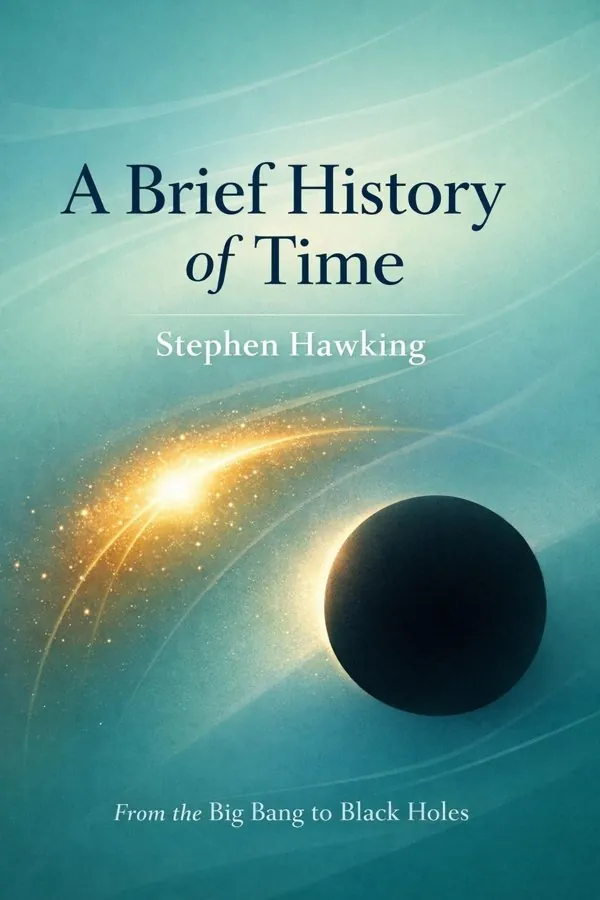
A Brief History of Time
What if the biggest questions humanity has ever asked could be explored without a physics degree? In A Brief History of Time, Stephen Hawking takes readers to the edge of human understanding and asks ...
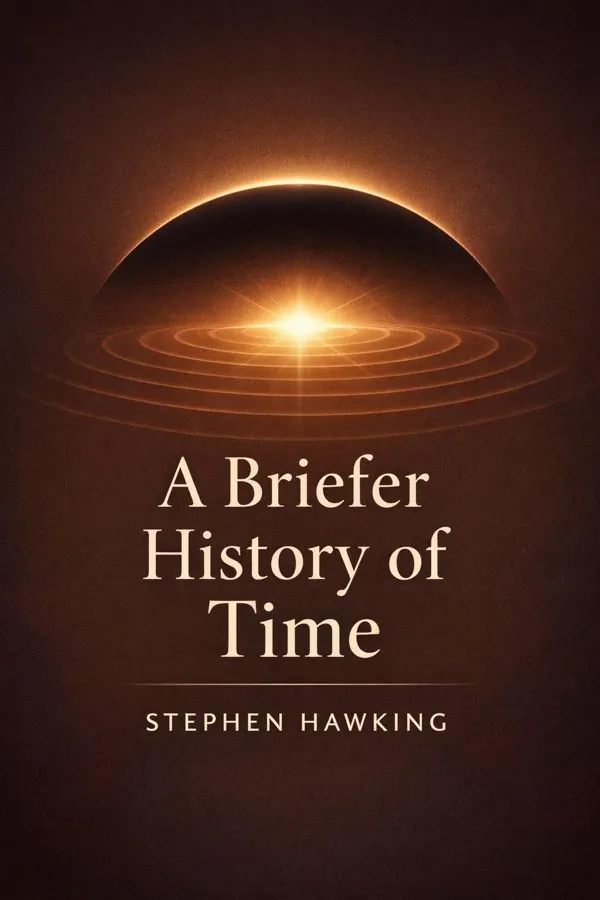
A Briefer History of Time
A Briefer History of Time is a concise and updated version of Stephen Hawking’s classic work, co-authored with Leonard Mlodinow. It presents complex concepts in cosmology—such as the Big Bang, black h...
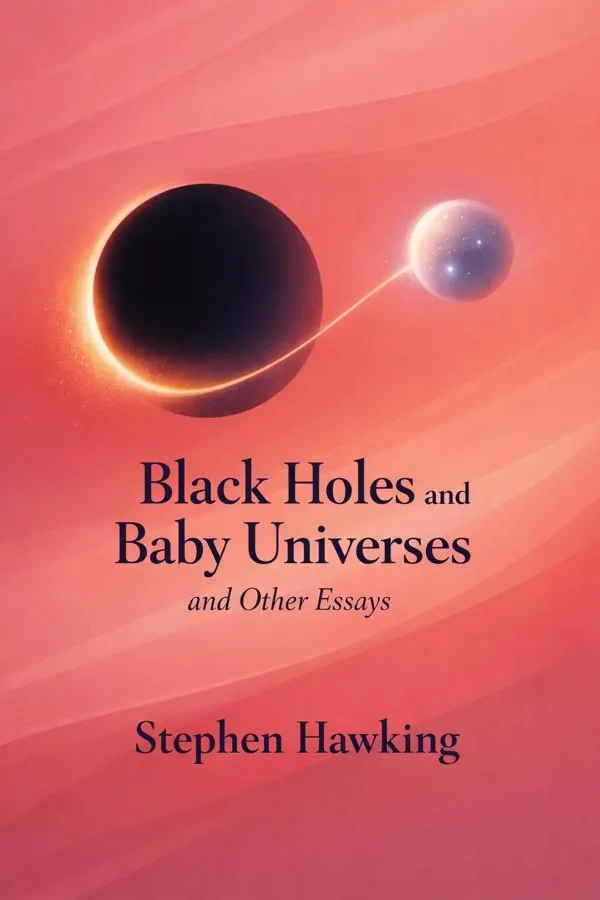
Black Holes and Baby Universes and Other Essays
Black Holes and Baby Universes and Other Essays is Stephen Hawking at his most wide-ranging: scientist, public thinker, teacher, and human being. Rather than presenting one single argument from start ...
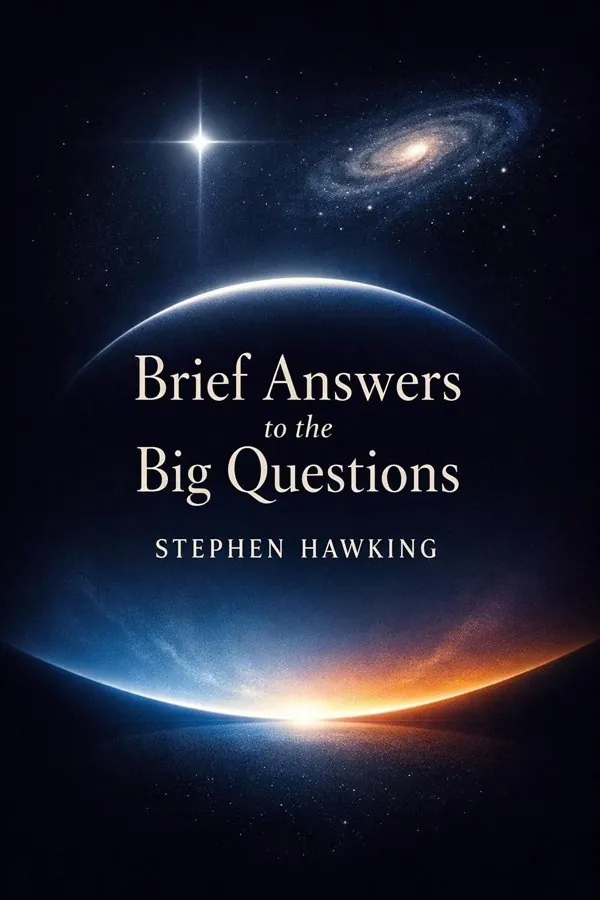
Brief Answers to the Big Questions
Brief Answers to the Big Questions is Stephen Hawking’s final invitation to think seriously about the largest mysteries human beings have ever faced. Framed around enduring questions—about God, the be...
The Grand Design
Why does the universe exist at all? Why do the laws of nature take the form they do, and do we need a creator to explain them? In The Grand Design, Stephen Hawking and Leonard Mlodinow tackle these im...
The Universe in a Nutshell
Stephen Hawking’s The Universe in a Nutshell is a guided tour through some of the most ambitious ideas in modern physics: curved space-time, black holes, quantum uncertainty, superstrings, branes, and...
Key Insights from Stephen Hawking
Our Picture of the Universe Evolves
Every age believes it finally understands the universe, until a better explanation arrives. Hawking begins by showing that cosmology is not just a story about stars and galaxies, but about the changing models humans build to explain reality. Ancient thinkers such as Aristotle pictured a finite, orde...
From A Brief History of Time
Space and Time Form One Fabric
Time is not a universal clock ticking the same way for everyone. One of the book’s most transformative ideas is that space and time are joined in a single framework: spacetime. Newton imagined space as a fixed stage and time as an independent stream flowing uniformly everywhere. Einstein overturned ...
From A Brief History of Time
The Universe Is Expanding Everywhere
The night sky looks eternal, but the universe is in motion on the largest possible scale. Hawking explains one of the central discoveries of modern cosmology: distant galaxies are moving away from us, and the farther they are, the faster they recede. This was not just a curious observation; it impli...
From A Brief History of Time
Uncertainty Limits What We Can Know
At the smallest scales, nature does not behave like a precise machine. Hawking introduces Heisenberg’s uncertainty principle, which states that certain pairs of physical properties—such as a particle’s position and momentum—cannot both be known exactly at the same time. This is not a flaw in our ins...
From A Brief History of Time
Particles and Forces Build Reality
The visible universe is astonishingly varied, but beneath that variety lies a small set of ingredients and interactions. Hawking outlines the world of elementary particles and the forces of nature to show that complexity emerges from simple rules. Matter consists of fundamental particles, while forc...
From A Brief History of Time
Black Holes Redefine Gravity and Matter
A black hole is where gravity becomes so extreme that our ordinary ideas about space, time, and escape begin to fail. Hawking explains black holes not as science fiction curiosities, but as serious predictions of general relativity. When a massive star collapses under its own gravity, it can compres...
From A Brief History of Time
About Stephen Hawking
Stephen Hawking (1942–2018) was a British theoretical physicist, cosmologist, and author. He served as the Lucasian Professor of Mathematics at the University of Cambridge and made groundbreaking contributions to the understanding of black holes and the origins of the universe. His popular science w...
Read more
Stephen Hawking (1942–2018) was a British theoretical physicist, cosmologist, and author. He served as the Lucasian Professor of Mathematics at the University of Cambridge and made groundbreaking contributions to the understanding of black holes and the origins of the universe. His popular science w...
Stephen Hawking (1942–2018) was a British theoretical physicist, cosmologist, and author. He served as the Lucasian Professor of Mathematics at the University of Cambridge and made groundbreaking contributions to the understanding of black holes and the origins of the universe. His popular science works brought complex physics to a global audience.


Frequently Asked Questions
Stephen Hawking (1942–2018) was a British theoretical physicist, cosmologist, and author. He served as the Lucasian Professor of Mathematics at the University of Cambridge and made groundbreaking contributions to the understanding of black holes and the origins of the universe.
Read Stephen Hawking's books in 15 minutes
Get AI-powered summaries with key insights from 6 books by Stephen Hawking.