
Dan Ariely Books
Dan Ariely is a professor of psychology and behavioral economics at Duke University. He is known for his research on irrational behavior and decision-making, and is the author of several bestselling books including 'Predictably Irrational' and 'The Upside of Irrationality'.
Known for: Predictably Irrational: The Hidden Forces That Shape Our Decisions, Dollars and Sense: How We Misthink Money and How to Spend Smarter, Payoff: The Hidden Logic That Shapes Our Motivations, The Honest Truth About Dishonesty: How We Lie to Everyone—Especially Ourselves, The Upside of Irrationality: The Unexpected Benefits of Defying Logic at Work and at Home
Books by Dan Ariely

Predictably Irrational: The Hidden Forces That Shape Our Decisions
Why do smart people overpay for useless upgrades, procrastinate on important goals, and make choices they later regret? In Predictably Irrational, behavioral economist Dan Ariely argues that these mis...

Dollars and Sense: How We Misthink Money and How to Spend Smarter
Written by behavioral economist Dan Ariely and humorist Jeff Kreisler, this book explores the subconscious and emotional factors that influence how people perceive money, make spending decisions, and ...

Payoff: The Hidden Logic That Shapes Our Motivations
What really makes people care about their work? Why do some tasks energize us while others drain us, even when the pay is the same? In Payoff, behavioral economist Dan Ariely tackles these questions w...

The Honest Truth About Dishonesty: How We Lie to Everyone—Especially Ourselves
In this book, behavioral economist Dan Ariely explores the psychology of dishonesty, revealing how and why people lie to themselves and others. Drawing on experiments and real-world examples, Ariely d...
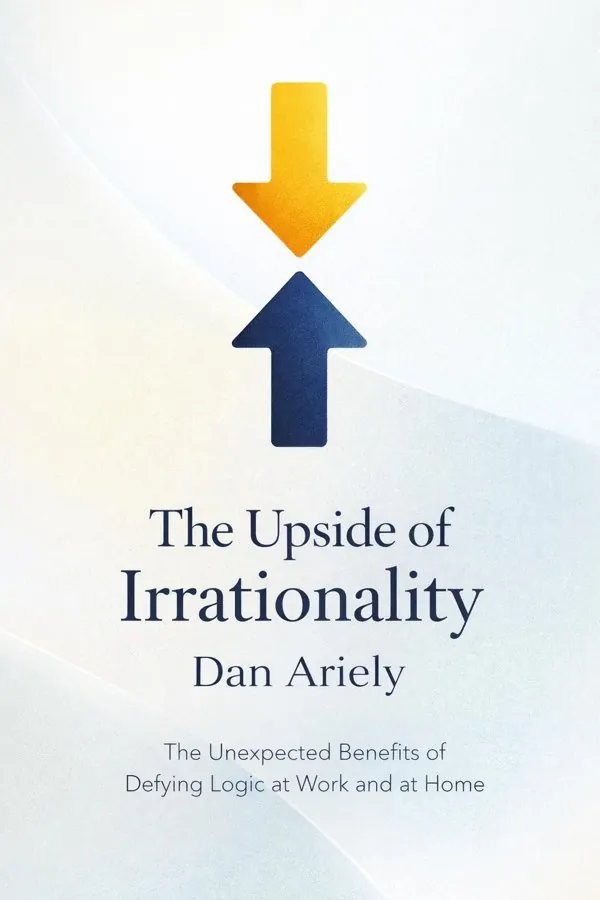
The Upside of Irrationality: The Unexpected Benefits of Defying Logic at Work and at Home
In this book, behavioral economist Dan Ariely explores how irrational behaviors influence our decisions in both professional and personal contexts. Through engaging experiments and real-world examples...
Key Insights from Dan Ariely
We Are Irrational in Predictable Ways
Most people assume bad decisions happen because we are tired, uninformed, or careless. Ariely’s central insight is more unsettling and more useful: our mistakes follow patterns. We do not behave irrationally in random bursts. We are predictably irrational, meaning our choices can be influenced in co...
From Predictably Irrational: The Hidden Forces That Shape Our Decisions
Relativity Shapes What We Value
Something does not need to be objectively valuable for us to want it. It often just needs to look better than the alternatives nearby. Ariely shows that humans rarely evaluate things in absolute terms. Instead, we judge by comparison. This tendency, called relativity, means our preferences are highl...
From Predictably Irrational: The Hidden Forces That Shape Our Decisions
Free Is More Powerful Than Logic
A tiny price drop can change behavior. But when the price hits zero, rational evaluation often disappears entirely. Ariely shows that the word free has an emotional force far greater than its economic value. People do not simply see free as cheaper. They see it as riskless, exciting, and impossible ...
From Predictably Irrational: The Hidden Forces That Shape Our Decisions
Social Norms and Market Norms Clash
Human relationships operate by more than one rulebook. Ariely distinguishes between social norms and market norms, and the difference explains why some interactions feel generous while others feel cold, insulting, or transactional. Social norms govern friendship, family, trust, and community. Market...
From Predictably Irrational: The Hidden Forces That Shape Our Decisions
We Procrastinate Without Helpful Constraints
People often imagine freedom leads to better choices. Ariely shows that too much freedom can make us worse at managing ourselves. Left to our own devices, many of us procrastinate, delay unpleasant tasks, and underestimate the cost of waiting. We know deadlines matter, yet we frequently fail to crea...
From Predictably Irrational: The Hidden Forces That Shape Our Decisions
Ownership Makes Us Overvalue Things
The moment something becomes ours, it often seems more valuable than it did before. Ariely examines this endowment effect, a bias that causes ownership to inflate perceived worth. We do not merely possess objects; we become attached to them, and that attachment alters judgment. A classic example in...
From Predictably Irrational: The Hidden Forces That Shape Our Decisions
About Dan Ariely
Dan Ariely is a professor of psychology and behavioral economics at Duke University. He is known for his research on irrational behavior and decision-making, and is the author of several bestselling books including 'Predictably Irrational' and 'The Upside of Irrationality'.


Frequently Asked Questions
Dan Ariely is a professor of psychology and behavioral economics at Duke University. He is known for his research on irrational behavior and decision-making, and is the author of several bestselling books including 'Predictably Irrational' and 'The Upside of Irrationality'.
Read Dan Ariely's books in 15 minutes
Get AI-powered summaries with key insights from 5 books by Dan Ariely.