
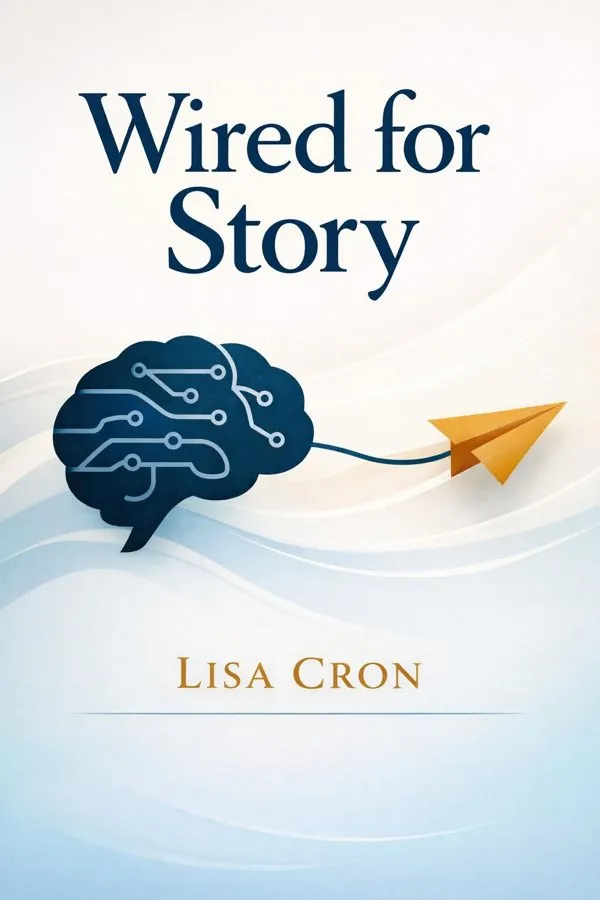
Wired for Story: The Writer’s Guide to Using Brain Science to Hook Readers from the Very First Sentence: Summary & Key Insights
by Lisa Cron
 10 min9 chaptersAudio available
What Is Wired for Story: The Writer’s Guide to Using Brain Science to Hook Readers from the Very First Sentence About?
Wired for Story: The Writer’s Guide to Using Brain Science to Hook Readers from the Very First Sentence by Lisa Cron is a writing book spanning 9 pages. Wired for Story explains how recent discoveries in neuroscience reveal why certain stories captivate readers. Lisa Cron shows writers how to craft narratives that engage the brain’s natural craving for meaning and emotional connection, offering practical techniques to build compelling plots and characters that resonate deeply with readers.
This FizzRead summary covers all 9 key chapters of Wired for Story: The Writer’s Guide to Using Brain Science to Hook Readers from the Very First Sentence in approximately 10 minutes, distilling the most important ideas, arguments, and takeaways from Lisa Cron's work. Also available as an audio summary and Key Quotes Podcast.
Wired for Story: The Writer’s Guide to Using Brain Science to Hook Readers from the Very First Sentence
Wired for Story explains how recent discoveries in neuroscience reveal why certain stories captivate readers. Lisa Cron shows writers how to craft narratives that engage the brain’s natural craving for meaning and emotional connection, offering practical techniques to build compelling plots and characters that resonate deeply with readers.
Who Should Read Wired for Story: The Writer’s Guide to Using Brain Science to Hook Readers from the Very First Sentence?
This book is perfect for anyone interested in writing and looking to gain actionable insights in a short read. Whether you're a student, professional, or lifelong learner, the key ideas from Wired for Story: The Writer’s Guide to Using Brain Science to Hook Readers from the Very First Sentence by Lisa Cron will help you think differently.
- ✓Readers who enjoy writing and want practical takeaways
- ✓Professionals looking to apply new ideas to their work and life
- ✓Anyone who wants the core insights of Wired for Story: The Writer’s Guide to Using Brain Science to Hook Readers from the Very First Sentence in just 10 minutes
Want the full summary?
Get instant access to this book summary and 100K+ more with Fizz Moment.
Get Free SummaryAvailable on App Store • Free to download
Key Chapters
The act of reading is far more than decoding words—it’s a biological and emotional experience. Neuroscience shows that stories activate the brain’s sensory cortices, mirror neurons, and emotional centers in exactly the same way real experiences do. When your protagonist walks into danger, your reader’s heart rate changes; when they triumph, dopamine floods the reader’s neural circuitry. This is why stories feel real—they are the simulation engines that evolution built for us.
From the first line, your reader’s brain is asking, ‘Why should I care?’ Every sensory detail, every line of dialogue, every narrative beat must answer that question on some level. If a scene doesn’t move the story forward in a way that matters to the protagonist’s inner logic, the brain checks out. To keep readers immersed, a writer must honor how the brain processes cause, meaning, and emotion together—not separately.
The trick is not to think of story as a sequence of events but as a continuous emotional logic. We follow stories because they help us predict human behavior. The reader’s subconscious tracks what the protagonist wants, what’s at risk, and what stands in the way—constantly testing scenarios just as it does in real life. That’s the brain on story: forever seeking pattern, purpose, and emotional coherence.
The human brain hungers not for information but for meaning. Facts alone never satisfy; it is the ‘why’ that feeds us. Every scene, every line, must serve that deep craving by illuminating cause and effect. The brain automatically looks for connections—why things happen, how actions lead to consequences, and what those consequences reveal about human nature. When readers can sense the pattern underneath the events, they stay hooked.
A story with high stakes but no emotional logic feels hollow. The brain resists randomness. It wants to know what this means to the protagonist and why it matters right now. This demand for coherence is ancient—it evolved because the ability to infer relationships between causes and effects increased our odds of survival. As a writer, your task is to ensure that every narrative thread contributes to that deeper sense of pattern recognition the reader’s brain expects.
+ 7 more chapters — available in the FizzRead app
All Chapters in Wired for Story: The Writer’s Guide to Using Brain Science to Hook Readers from the Very First Sentence
About the Author
Get This Summary in Your Preferred Format
Read or listen to the Wired for Story: The Writer’s Guide to Using Brain Science to Hook Readers from the Very First Sentence summary by Lisa Cron anytime, anywhere. FizzRead offers multiple formats so you can learn on your terms — all free.
Available formats: App · Audio · PDF · EPUB — All included free with FizzRead
Download Wired for Story: The Writer’s Guide to Using Brain Science to Hook Readers from the Very First Sentence PDF and EPUB Summary
Key Quotes from Wired for Story: The Writer’s Guide to Using Brain Science to Hook Readers from the Very First Sentence
“The act of reading is far more than decoding words—it’s a biological and emotional experience.”
“The human brain hungers not for information but for meaning.”
Frequently Asked Questions about Wired for Story: The Writer’s Guide to Using Brain Science to Hook Readers from the Very First Sentence
Wired for Story: The Writer’s Guide to Using Brain Science to Hook Readers from the Very First Sentence by Lisa Cron is a writing book that explores key ideas across 9 chapters. Wired for Story explains how recent discoveries in neuroscience reveal why certain stories captivate readers. Lisa Cron shows writers how to craft narratives that engage the brain’s natural craving for meaning and emotional connection, offering practical techniques to build compelling plots and characters that resonate deeply with readers.
You Might Also Like
The Art of Perspective
Christopher Castellani
10 min
Making a Point: The Persnickety Story of English Punctuation
David Crystal
10 min
The Elements Of Eloquence: How To Turn The Perfect English Phrase
Mark Forsyth
10 min
The Pocket Muse: Ideas and Inspirations for Writing
Monica Wood
10 min
A Little Book on Form: An Exploration into the Formal Imagination of Poetry
Robert Hass
10 min
Adventures In The Screen Trade: A Personal View Of Hollywood And Screenwriting
William Goldman
10 minBrowse by Category
Ready to read Wired for Story: The Writer’s Guide to Using Brain Science to Hook Readers from the Very First Sentence?
Get the full summary and 100K+ more books with Fizz Moment.