
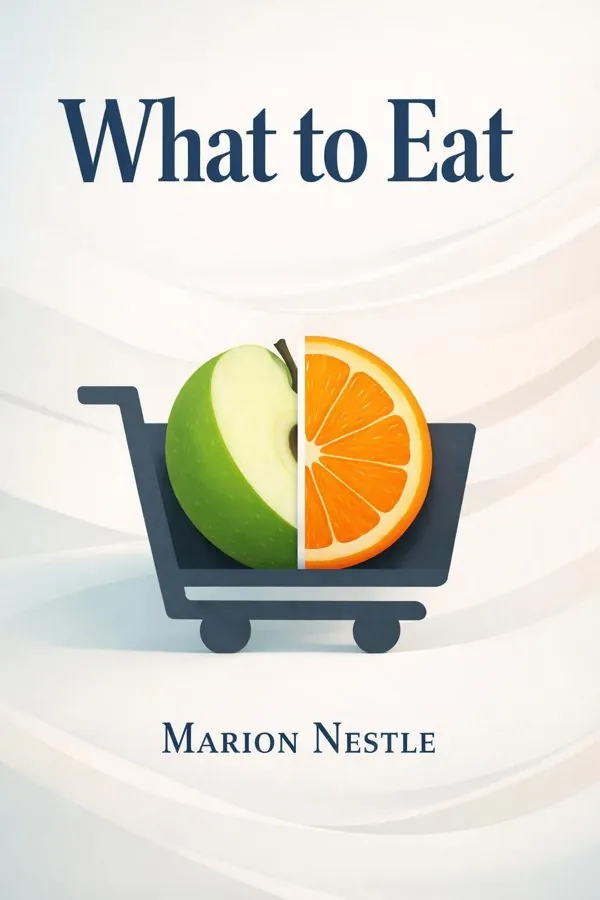
What to Eat: An Aisle-by-Aisle Guide to Savvy Food Choices and Good Eating: Summary & Key Insights
 10 min9 chaptersAudio available
Key Takeaways from What to Eat: An Aisle-by-Aisle Guide to Savvy Food Choices and Good Eating
The produce aisle looks like the most natural place in the supermarket, yet even here food choices are shaped by economics, farming practices, and consumer fears.
A package of meat is never just a package of meat; it is the end point of a long chain of decisions about animal feed, antibiotics, labor, land use, and environmental cost.
Fish is often sold as the perfect health food, but Nestle shows that the seafood counter is one of the most confusing places in the store.
Few food categories generate as much confusion as dairy and eggs, largely because they sit at the crossroads of nutrition science, tradition, and marketing.
Nestle explains that grains themselves are not the enemy.
What Is What to Eat: An Aisle-by-Aisle Guide to Savvy Food Choices and Good Eating About?
What to Eat: An Aisle-by-Aisle Guide to Savvy Food Choices and Good Eating by Marion Nestle is a nutrition book spanning 13 pages. What should a thoughtful person buy in a supermarket filled with labels, slogans, health claims, and endless processed options? In What to Eat, Marion Nestle turns that ordinary question into a powerful investigation of how modern food systems shape our choices. Rather than offering a trendy diet or a rigid list of forbidden foods, she walks readers aisle by aisle through the supermarket, explaining what different products are, how they are produced, why they are marketed the way they are, and what nutrition evidence actually supports. The book matters because most eating decisions are not made in a laboratory or a doctor’s office. They are made while standing in front of produce bins, cereal boxes, dairy cases, freezer doors, and checkout displays. Nestle shows that these decisions are influenced not only by health concerns, but also by industry lobbying, agricultural policy, food science, and advertising. As a leading nutrition scholar and public health expert, Nestle brings rare authority to the topic. She combines scientific literacy with practical common sense, helping readers cut through confusion and make food choices that are healthier, more informed, and more aligned with their values.
This FizzRead summary covers all 9 key chapters of What to Eat: An Aisle-by-Aisle Guide to Savvy Food Choices and Good Eating in approximately 10 minutes, distilling the most important ideas, arguments, and takeaways from Marion Nestle's work. Also available as an audio summary and Key Quotes Podcast.
What to Eat: An Aisle-by-Aisle Guide to Savvy Food Choices and Good Eating
What should a thoughtful person buy in a supermarket filled with labels, slogans, health claims, and endless processed options? In What to Eat, Marion Nestle turns that ordinary question into a powerful investigation of how modern food systems shape our choices. Rather than offering a trendy diet or a rigid list of forbidden foods, she walks readers aisle by aisle through the supermarket, explaining what different products are, how they are produced, why they are marketed the way they are, and what nutrition evidence actually supports.
The book matters because most eating decisions are not made in a laboratory or a doctor’s office. They are made while standing in front of produce bins, cereal boxes, dairy cases, freezer doors, and checkout displays. Nestle shows that these decisions are influenced not only by health concerns, but also by industry lobbying, agricultural policy, food science, and advertising.
As a leading nutrition scholar and public health expert, Nestle brings rare authority to the topic. She combines scientific literacy with practical common sense, helping readers cut through confusion and make food choices that are healthier, more informed, and more aligned with their values.
Who Should Read What to Eat: An Aisle-by-Aisle Guide to Savvy Food Choices and Good Eating?
This book is perfect for anyone interested in nutrition and looking to gain actionable insights in a short read. Whether you're a student, professional, or lifelong learner, the key ideas from What to Eat: An Aisle-by-Aisle Guide to Savvy Food Choices and Good Eating by Marion Nestle will help you think differently.
- ✓Readers who enjoy nutrition and want practical takeaways
- ✓Professionals looking to apply new ideas to their work and life
- ✓Anyone who wants the core insights of What to Eat: An Aisle-by-Aisle Guide to Savvy Food Choices and Good Eating in just 10 minutes
Want the full summary?
Get instant access to this book summary and 100K+ more with Fizz Moment.
Get Free SummaryAvailable on App Store • Free to download
Key Chapters
The produce aisle looks like the most natural place in the supermarket, yet even here food choices are shaped by economics, farming practices, and consumer fears. Fruits and vegetables remain the foundation of healthy eating because they are rich in fiber, vitamins, minerals, and protective plant compounds, and because diets built around them tend to crowd out more heavily processed foods. Nestle argues that if you want one broad rule that improves almost any diet, it is to eat more produce.
But she also complicates the picture. Consumers often worry about organic versus conventional produce, pesticide residues, local sourcing, freshness, and price. Nestle’s approach is practical rather than ideological. Organic produce may reduce exposure to certain pesticides and appeal to shoppers concerned about farming practices, but conventional produce is still far better nutritionally than skipping fruits and vegetables altogether. Likewise, local foods may support nearby farmers and sometimes taste fresher, but imported produce can still be nutritious and useful.
She encourages shoppers to think in layers: first buy fruits and vegetables in abundance, then make finer distinctions based on budget and values. Seasonal buying usually lowers cost and improves flavor. Frozen or canned vegetables can also be smart options when fresh produce is expensive or unavailable, especially if they contain little added sugar or sodium.
A practical way to apply this is to fill at least half your cart, and later half your plate, with a variety of colorful produce. If cost is the main barrier, prioritize affordability and consistency over perfection. The actionable takeaway: buy more fruits and vegetables first, then choose organic, local, or seasonal when those options fit your budget and priorities.
A package of meat is never just a package of meat; it is the end point of a long chain of decisions about animal feed, antibiotics, labor, land use, and environmental cost. Nestle uses the meat and poultry aisle to show how industrial agriculture shapes both what we eat and what we assume is normal. Modern supermarkets present meat as abundant, cheap, and convenient, but that low price often hides costs shifted onto public health, animal welfare, and the environment.
Nutritionally, meat can provide high-quality protein, iron, zinc, and B vitamins. The problem is not that meat is inherently bad, but that many people eat too much of it, especially highly processed or fatty varieties. Nestle draws attention to distinctions among cuts, production methods, and portion sizes. Leaner cuts, smaller servings, and less frequent consumption align better with health goals than relying on large portions of red and processed meats.
She also helps readers decode labels such as natural, antibiotic-free, free-range, pasture-raised, and organic. These terms do not always mean what shoppers assume, and some are more tightly regulated than others. The broader point is that food labels often sell reassurance. Understanding production methods matters more than trusting marketing language.
In practice, shoppers can use meat more strategically: treat it as one component of a meal rather than the centerpiece of every plate, compare labels carefully, and consider beans, lentils, or tofu as substitutes a few times a week. The actionable takeaway: eat meat more consciously by choosing smaller portions, better-quality options when possible, and more plant-based meals overall.
Fish is often sold as the perfect health food, but Nestle shows that the seafood counter is one of the most confusing places in the store. On one hand, fish can be an excellent source of protein and omega-3 fats, nutrients linked to heart and brain health. On the other hand, seafood choices raise questions about contamination, overfishing, sustainability, species substitution, and aquaculture practices. In other words, fish is healthy in principle, but choosing wisely takes more effort than nutrition headlines suggest.
Nestle encourages readers to move beyond simplistic messages like “eat more fish” and ask practical questions. Which fish tend to be lower in mercury? Which are caught or farmed in environmentally responsible ways? Are highly processed breaded fish products delivering the same benefits as a plain fillet? Species such as salmon, sardines, and trout often offer a good balance of nutrition and lower contaminant risk, while large predatory fish may deserve more caution.
She also points out that seafood labels can be vague. Terms like fresh, wild, or sustainably harvested may not always be clearly defined or consistently verified. Price can be misleading too; expensive fish is not automatically healthier or more ethical. Frozen fish may be a perfectly good choice, especially if it is minimally processed.
For everyday shopping, the best strategy is moderation and variety. Rotate among lower-mercury species, avoid relying on fried fish products, and consult reputable sustainability guidance when possible. The actionable takeaway: choose seafood for its nutritional benefits, but pair that choice with informed attention to species, sourcing, and preparation.
Few food categories generate as much confusion as dairy and eggs, largely because they sit at the crossroads of nutrition science, tradition, and marketing. Nestle treats both categories with balance. Milk, yogurt, and cheese can provide calcium, protein, and other nutrients, while eggs are affordable, versatile, and nutrient-dense. Yet these foods are also wrapped in long-running debates about saturated fat, cholesterol, hormones, fortification, and whether they are truly essential.
Her central point is that no single dairy or egg product should be judged in isolation from the total diet. Sweetened yogurt with candy-like mix-ins is nutritionally different from plain yogurt. Processed cheese slices are different from less processed cheeses. Eggs can fit comfortably into a healthy diet, especially when they replace more heavily processed breakfast foods, but they should still be understood as part of an overall eating pattern rather than a miracle food.
Nestle also urges skepticism toward health halos. Low-fat dairy products may reduce saturated fat, but they can also contain added sugars. Specialty eggs labeled cage-free, omega-3, or vegetarian-fed may appeal to ethical or nutritional concerns, but shoppers should know what each term actually guarantees. The same goes for milk alternatives, which vary dramatically in protein, fortification, and additives.
A practical approach is to choose dairy and eggs in forms closest to their original state, watch added sugars and sodium, and let your own health needs guide your decisions. The actionable takeaway: use dairy and eggs as useful foods, not as nutritional symbols, and compare products by ingredient quality rather than by marketing claims alone.
The grain aisle is where one of nutrition’s most important distinctions becomes visible: the difference between whole foods and refined products engineered for shelf life, sweetness, and convenience. Nestle explains that grains themselves are not the enemy. Whole grains such as oats, brown rice, barley, and whole wheat can provide fiber, vitamins, minerals, and lasting satiety. The problem is that many supermarket grain products barely resemble the grains they came from.
Breakfast cereals illustrate this perfectly. Boxes often display whole grain stamps, vitamin claims, and child-friendly imagery while containing large amounts of added sugar and little fiber. Bread labels can be equally misleading. A loaf labeled multigrain or wheat may still be made primarily from refined flour unless the ingredient list begins with whole grain or whole wheat. Pasta, crackers, granola bars, and snack-like cereal products often carry a health aura that exceeds their actual nutritional value.
Nestle’s broader lesson is that food processing matters because it changes how foods behave in the body and how much of them we tend to eat. Refined grains digest faster, often deliver fewer nutrients, and are easier to overconsume, especially when combined with sugar, salt, and fat. Whole grains are not magic, but they generally support more stable energy and better diet quality.
In practical terms, shoppers should read ingredient lists before front-of-package promises, compare fiber content, and keep simple staple grains on hand. Oatmeal, brown rice, and whole grain bread with minimal ingredients can do more for health than heavily fortified sugary cereal. The actionable takeaway: choose grains that still resemble grain, and treat flashy claims on cereal and bread packages with caution.
Many of the supermarket’s most profitable products are not designed to nourish you; they are designed to make you want more. Nestle uses snack foods, sweets, and beverages to show how food companies combine sugar, salt, fat, flavoring, packaging, and advertising to create products that are convenient, craveable, and easy to consume in large amounts. This does not mean every snack or dessert is harmful. It means these categories deserve special awareness because they are where commercial food engineering most clearly overrides hunger and common sense.
She pays close attention to soft drinks and other sweetened beverages, which deliver calories quickly without creating much fullness. Juice drinks, sports beverages, sweetened teas, and flavored coffees can also appear healthier than they are. Similarly, snack foods such as chips, cookies, candy bars, and sweetened cereal bars are often sold in portion sizes and packages that encourage mindless eating.
Nestle’s point is not moralistic deprivation. It is that the supermarket makes overeating easy by surrounding consumers with products designed for constant nibbling. Marketing intensifies this effect by linking snacks to pleasure, reward, convenience, or even health. A granola bar may look wholesome; a vitamin-enhanced drink may sound functional; but both can still be forms of dessert.
A better strategy is to redefine snacks as small real-food meals: fruit with nuts, yogurt, hummus with vegetables, or whole grain toast with peanut butter. Beverages should mostly be water, with sweet drinks treated as occasional choices. The actionable takeaway: assume highly marketed snacks and drinks are built to sell, not to satisfy, and replace routine convenience grazing with simpler, more filling foods.
Convenience foods are not automatically nutritional disasters, but they often trade time saved for control lost. Nestle’s discussion of frozen foods and prepared meals is especially useful because it avoids extremes. She recognizes that busy households rely on shortcuts, and that frozen vegetables, plain frozen fish, canned beans, or simple soups can make home eating more realistic. The key issue is not convenience itself, but how much sugar, sodium, unhealthy fats, additives, and packaging complexity come bundled with it.
Frozen dinners and packaged meals often promise balance, calorie control, or restaurant-quality flavor. Yet many are high in sodium, low in vegetables, and built around refined starches and processed meats. Portion sizes can also be deceptive. Some products appear to be single servings but are not especially filling; others contain multiple servings that one person may easily eat in one sitting. Prepared foods in deli sections can create the same illusion of wholesomeness while still being heavily salted and energy-dense.
Nestle urges readers to compare convenience products against a simple benchmark: could you assemble something nutritionally better with a few basic ingredients in roughly the same amount of time? A bag of frozen broccoli, a carton of beans, prewashed greens, eggs, or rotisserie chicken may outperform many branded meal solutions.
The smartest use of convenience is selective. Stock ingredients that reduce preparation barriers without replacing real cooking entirely. Keep frozen produce, plain proteins, and simple staples available for fast meals. The actionable takeaway: use convenience foods as helpers, not dietary foundations, and choose products with short ingredient lists and recognizable components whenever possible.
The modern supermarket teaches shoppers to read the front of the package first, but Nestle wants readers to reverse that habit. Food labels can provide useful information, especially nutrition facts panels and ingredient lists, yet they are also major marketing tools. Claims such as low-fat, natural, immune-supporting, heart-healthy, multigrain, lightly sweetened, or made with real fruit often highlight one appealing feature while distracting from the total nutritional picture.
Nestle explains that health claims exist in a commercial environment, not a neutral educational one. Companies use legal wording, selective science, and strategic packaging to frame processed foods as smart choices. A sugary cereal fortified with vitamins can be marketed as nutritious. A snack labeled organic may still be high in sugar or low in substance. Reduced-fat products may compensate with more sugar or starch to preserve flavor. The lesson is not to ignore labels but to understand their hierarchy of truth.
The most reliable information usually comes from the ingredient list and the overall structure of the food. Is sugar near the top? Is the product mostly refined flour and additives? Does it contain recognizable whole-food ingredients? Nutrition facts can help compare sodium, fiber, saturated fat, and added sugars across brands, but no single number should dominate the decision.
Consumers gain power when they stop asking whether a product sounds healthy and start asking what it actually is. Compare similar products side by side, distrust emotional packaging, and remember that the shortest route to clarity is often the least processed option. The actionable takeaway: read beyond the headline on the package and let ingredients, not claims, guide your purchase.
One of Nestle’s most important insights is that personal food choice is never purely personal. Supermarkets reflect public policy, agricultural subsidies, corporate lobbying, supply chains, labor systems, and advertising budgets. If highly processed foods seem cheap, convenient, and everywhere, that is not an accident. The food environment has been built to favor products that are profitable, scalable, and heavily marketable. This is why nutrition advice so often collides with what stores promote most aggressively.
Nestle helps readers see that confusion itself can be useful to industry. When consumers are overwhelmed by contradictory claims about fat, carbs, sugar, protein, organic farming, supplements, or superfoods, they become more vulnerable to branding. Meanwhile, the deeper structural issues behind food quality and affordability remain hidden. Questions about who grows food, how animals are raised, how workers are treated, and why some communities have poor access to fresh food are as relevant as calorie counts.
Yet the book is not fatalistic. Nestle argues that individual shopping decisions still matter, especially when repeated over time and joined with civic awareness. Choosing more whole foods, supporting better producers, questioning marketing, and advocating for clearer labeling or stronger public health policy are all forms of engagement.
A shopper cannot fix the food system in one trip, but can refuse to be passively shaped by it. Build habits that align with both health and values, and pay attention to the forces influencing what is available. The actionable takeaway: shop with a double awareness, asking not only “Is this good for me?” but also “What kind of food system does this purchase support?”
All Chapters in What to Eat: An Aisle-by-Aisle Guide to Savvy Food Choices and Good Eating
About the Author
Marion Nestle is an American nutritionist, public health scholar, and bestselling author known for transforming the way people think about food. She is Paulette Goddard Professor Emerita of Nutrition, Food Studies, and Public Health at New York University, where she helped establish the academic field of food studies. Nestle’s work focuses on the intersection of nutrition science, food marketing, agricultural policy, and public health. She is especially recognized for explaining how corporate influence and government policy shape everyday eating habits. Through books such as Food Politics and What to Eat, she has become one of the most influential public voices on food systems in the United States. Her writing combines scholarly credibility, clear communication, and a strong commitment to helping consumers make informed choices.
Get This Summary in Your Preferred Format
Read or listen to the What to Eat: An Aisle-by-Aisle Guide to Savvy Food Choices and Good Eating summary by Marion Nestle anytime, anywhere. FizzRead offers multiple formats so you can learn on your terms — all free.
Available formats: App · Audio · PDF · EPUB — All included free with FizzRead
Download What to Eat: An Aisle-by-Aisle Guide to Savvy Food Choices and Good Eating PDF and EPUB Summary
Key Quotes from What to Eat: An Aisle-by-Aisle Guide to Savvy Food Choices and Good Eating
“The produce aisle looks like the most natural place in the supermarket, yet even here food choices are shaped by economics, farming practices, and consumer fears.”
“A package of meat is never just a package of meat; it is the end point of a long chain of decisions about animal feed, antibiotics, labor, land use, and environmental cost.”
“Fish is often sold as the perfect health food, but Nestle shows that the seafood counter is one of the most confusing places in the store.”
“Few food categories generate as much confusion as dairy and eggs, largely because they sit at the crossroads of nutrition science, tradition, and marketing.”
“The grain aisle is where one of nutrition’s most important distinctions becomes visible: the difference between whole foods and refined products engineered for shelf life, sweetness, and convenience.”
Frequently Asked Questions about What to Eat: An Aisle-by-Aisle Guide to Savvy Food Choices and Good Eating
What to Eat: An Aisle-by-Aisle Guide to Savvy Food Choices and Good Eating by Marion Nestle is a nutrition book that explores key ideas across 9 chapters. What should a thoughtful person buy in a supermarket filled with labels, slogans, health claims, and endless processed options? In What to Eat, Marion Nestle turns that ordinary question into a powerful investigation of how modern food systems shape our choices. Rather than offering a trendy diet or a rigid list of forbidden foods, she walks readers aisle by aisle through the supermarket, explaining what different products are, how they are produced, why they are marketed the way they are, and what nutrition evidence actually supports. The book matters because most eating decisions are not made in a laboratory or a doctor’s office. They are made while standing in front of produce bins, cereal boxes, dairy cases, freezer doors, and checkout displays. Nestle shows that these decisions are influenced not only by health concerns, but also by industry lobbying, agricultural policy, food science, and advertising. As a leading nutrition scholar and public health expert, Nestle brings rare authority to the topic. She combines scientific literacy with practical common sense, helping readers cut through confusion and make food choices that are healthier, more informed, and more aligned with their values.
More by Marion Nestle

You Might Also Like
Eating by the Seasons Cookbook: Seasonal Produce-Focused Recipes
Clare Foster
10 min
From Crook to Cook: Platinum Recipes from Tha Boss Dogg's Kitchen
Snoop Dogg with Ryan Ford
10 min
Juicing for Beginners: The Essential Guide to Juicing Recipes and Juicing for Weight Loss
Rockridge Press
10 min
The Food Therapist: Break Bad Habits, Eat with Intention, and Indulge Without Worry
Shira Lenchewski
10 min
The Mediterranean Diet Meal Plan: A 4-Week Meal Plan for Optimal Health and Weight Loss
Various Contributors
10 min
The Well Plated Cookbook: Simple, Wholesome Recipes for Everyday Meals
Erin Clarke
10 minBrowse by Category
Ready to read What to Eat: An Aisle-by-Aisle Guide to Savvy Food Choices and Good Eating?
Get the full summary and 100K+ more books with Fizz Moment.