
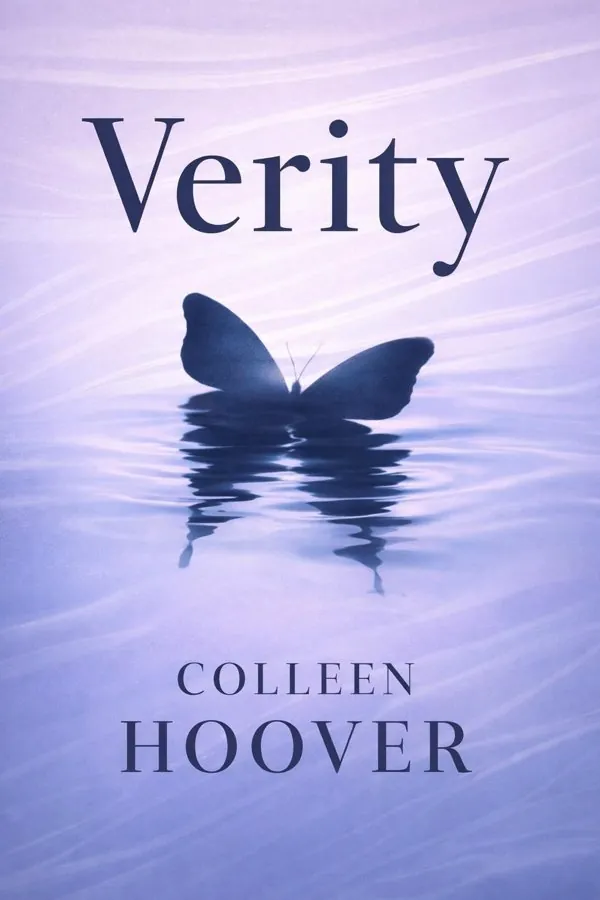
Verity: Summary & Key Insights
 10 min4 chaptersAudio available
Key Takeaways from Verity
The opening of *Verity* works because Lowen Ashleigh is vulnerable before she ever steps into the Crawford house.
The hidden manuscript is the engine that transforms *Verity* from uneasy suspense into full psychological descent.
As Lowen spends more time in the Crawford home, her role shifts from observer to participant, and that is where *Verity* becomes especially unsettling.
The final movement of *Verity* delivers its biggest shock not by neatly solving the mystery, but by forcing readers to choose what they believe.
What Is Verity About?
Verity by Colleen Hoover is a romance book published in 2018 spanning 4 pages. What makes *Verity* so unforgettable is that it refuses to stay in one lane. It begins like a career rescue story, slips into a darkly charged romance, and then tightens into psychological suspense that makes you question every page you’ve just read. Originally published in 2018, Colleen Hoover’s novel follows struggling writer Lowen Ashleigh as she accepts a life-changing offer: complete a bestselling series for famed author Verity Crawford, who has been left incapacitated after a devastating accident. But what starts as a professional opportunity quickly becomes something far more dangerous when Lowen discovers a deeply disturbing manuscript hidden inside the Crawford home. The novel matters because it blends emotional vulnerability with high-stakes tension in a way that feels immediate and addictive. It explores grief, desire, manipulation, and the frightening power of narrative itself—especially when written words may be confession, performance, or both. Hoover, known for bestselling novels such as *It Ends With Us*, *Ugly Love*, and *Verity*, has built a wide readership by writing emotionally intense stories that are accessible, propulsive, and impossible to put down. In *Verity*, she uses those strengths to create a book that invites readers not just to follow a mystery, but to distrust their own certainty.
This FizzRead summary covers all 4 key chapters of Verity in approximately 10 minutes, distilling the most important ideas, arguments, and takeaways from Colleen Hoover's work. Also available as an audio summary and Key Quotes Podcast.
Verity
What makes *Verity* so unforgettable is that it refuses to stay in one lane. It begins like a career rescue story, slips into a darkly charged romance, and then tightens into psychological suspense that makes you question every page you’ve just read. Originally published in 2018, Colleen Hoover’s novel follows struggling writer Lowen Ashleigh as she accepts a life-changing offer: complete a bestselling series for famed author Verity Crawford, who has been left incapacitated after a devastating accident. But what starts as a professional opportunity quickly becomes something far more dangerous when Lowen discovers a deeply disturbing manuscript hidden inside the Crawford home.
The novel matters because it blends emotional vulnerability with high-stakes tension in a way that feels immediate and addictive. It explores grief, desire, manipulation, and the frightening power of narrative itself—especially when written words may be confession, performance, or both. Hoover, known for bestselling novels such as *It Ends With Us*, *Ugly Love*, and *Verity*, has built a wide readership by writing emotionally intense stories that are accessible, propulsive, and impossible to put down. In *Verity*, she uses those strengths to create a book that invites readers not just to follow a mystery, but to distrust their own certainty.
Who Should Read Verity?
This book is perfect for anyone interested in romance and looking to gain actionable insights in a short read. Whether you're a student, professional, or lifelong learner, the key ideas from Verity by Colleen Hoover will help you think differently.
- ✓Readers who enjoy romance and want practical takeaways
- ✓Professionals looking to apply new ideas to their work and life
- ✓Anyone who wants the core insights of Verity in just 10 minutes
Want the full summary?
Get instant access to this book summary and 100K+ more with Fizz Moment.
Get Free SummaryAvailable on App Store • Free to download
Key Chapters
The opening of *Verity* works because Lowen Ashleigh is vulnerable before she ever steps into the Crawford house. She is not entering the story from a place of stability or confidence. She is grieving, financially strained, and professionally stuck, which makes Jeremy Crawford’s offer feel less like a simple job and more like a lifeline. That emotional setup matters: when people are under pressure, they are far more likely to ignore warning signs in exchange for security, comfort, or hope. Lowen’s decision is understandable, and that is exactly why the story becomes so unsettling.
Jeremy appears composed, attractive, and deeply burdened by tragedy. His wife, Verity, is incapacitated; his family has suffered devastating loss; and the enormous home he invites Lowen into feels heavy with silence. Hoover turns the setting into an emotional amplifier. The house is wealthy and beautiful, but also claustrophobic, making Lowen feel both sheltered and trapped. As she begins sorting through Verity’s notes, outlines, and drafts, the assignment seems straightforward: learn Verity’s voice well enough to continue the series. Yet every hallway, every closed door, and every unexplained tension suggests that the real work ahead has little to do with writing.
A useful takeaway for readers is how clearly the novel shows the psychology of compromise. Lowen tells herself she is there for practical reasons, but emotional entanglement starts almost immediately. The lesson is familiar beyond fiction: when we rationalize an opportunity because we need it badly enough, we often stop asking the questions that might protect us. Lowen’s arrival sets up the book’s central tension—whether she is stepping into a dream opportunity or into a trap disguised as one.
The hidden manuscript is the engine that transforms *Verity* from uneasy suspense into full psychological descent. When Lowen discovers Verity’s unfinished autobiography among the professional materials, she finds something far more intimate than plot notes or background research. The manuscript reads like a confession—raw, obsessive, and chillingly direct. Through Verity’s voice, the novel opens a second narrative layer, one that forces Lowen and the reader to confront disturbing claims about marriage, jealousy, motherhood, and control.
What makes these pages so effective is not only what Verity says, but how she says it. Her writing is emotionally naked yet unnervingly calculated. She describes her attraction to Jeremy, her possessiveness, and her resentment after becoming a mother in ways that feel shocking because they strip away the social performance of the “perfect wife” and “perfect mother.” The manuscript suggests emotional cruelty and even darker possibilities tied to the deaths of the Crawford twins. Lowen is horrified, but she keeps reading—an important detail that reveals how fear and fascination often operate together. She wants proof, clarity, and understanding, but every page pulls her deeper into ambiguity.
This section also raises one of the novel’s best questions: can writing ever be taken at face value? A manuscript may reveal truth, but it can also exaggerate, distort, or perform. That uncertainty is what makes the discovery so powerful. For readers, there is a broader insight here about interpretation: documents, journals, and even personal narratives feel authoritative, yet they are still crafted versions of events. Hoover uses the manuscript to show that storytelling itself can become a weapon. It can shape sympathy, redirect suspicion, and make even monstrous ideas feel intimate enough to believe.
As Lowen spends more time in the Crawford home, her role shifts from observer to participant, and that is where *Verity* becomes especially unsettling. The manuscript does not simply inform her understanding of Verity—it begins to alter her emotions, her choices, and her grip on what is real. She watches Jeremy differently, reads the house differently, and starts interpreting every sound, gesture, and unexplained incident as possible evidence. This is how obsession works in the novel: not as one dramatic break from reality, but as a slow accumulation of certainty built on incomplete facts.
Hoover uses this middle section to blur the line between intuition and paranoia. Lowen notices things that seem impossible to dismiss: movements, sensations of being watched, signs that Verity may be more aware than she appears. Yet because Lowen is isolated, emotionally invested, and under immense psychological pressure, the reader can never be fully sure whether these moments are objective truth or the result of escalating fear. Her attraction to Jeremy complicates everything further. The more she wants to protect him, the more likely she is to interpret the manuscript as definitive proof of danger. Desire and judgment become inseparable.
One reason this idea resonates is that it reflects a very human tendency: once we believe we’ve identified the villain in a story, we start organizing every detail around that belief. The actionable insight here is simple but important—strong emotion narrows interpretation. In real life, as in the novel, obsession feeds on selective evidence. Lowen’s mental state erodes not because she lacks intelligence, but because intelligence under emotional stress can become a tool for self-justification. The result is a tense, disorienting portrait of what happens when truth becomes less important than the need to make events fit a fearful narrative.
The final movement of *Verity* delivers its biggest shock not by neatly solving the mystery, but by forcing readers to choose what they believe. By this point, Lowen has built a worldview around the manuscript and around her growing conviction that Verity is dangerous. The climax turns that conviction into action, and the consequences are immediate, violent, and morally complicated. Rather than offering a clean triumph of truth over deception, the novel asks whether certainty itself can become destructive when it rests on unstable ground.
What makes the ending so memorable is its refusal to give full emotional closure. Instead, Hoover introduces a final revelation that reframes everything Lowen—and the reader—thought they understood. If the manuscript was a genuine confession, then one set of conclusions follows. If it was an exercise, a private writing experiment, or a manipulative piece of self-protection, then the moral balance of the entire novel shifts. This ambiguity is the point. The book’s final conflict is not only between characters; it is between competing narratives, each powerful enough to feel true.
The practical insight here is about the danger of acting before uncertainty has been resolved—especially when our judgments are reinforced by emotion, fear, or desire. *Verity* leaves readers with an uncomfortable but valuable idea: truth is not always the same as the story that best explains our feelings. In thrillers, we often expect revelation to settle everything. Here, revelation deepens the unease. That lingering doubt is why the ending stays with so many readers long after the final page.
All Chapters in Verity
About the Author
Colleen Hoover is an American author born in Sulphur Springs, Texas, best known for her contemporary romance and psychological suspense novels. She has built a large international readership through emotionally intense, highly readable stories that explore love, trauma, resilience, and complicated relationships. Her notable works include *It Ends With Us*, *Ugly Love*, and *Verity*, each of which helped expand her reach across different corners of commercial fiction. Hoover is especially recognized for combining accessible prose with high emotional stakes, creating books that resonate strongly with readers and often spark widespread discussion online and in book clubs.
Get This Summary in Your Preferred Format
Read or listen to the Verity summary by Colleen Hoover anytime, anywhere. FizzRead offers multiple formats so you can learn on your terms — all free.
Available formats: App · Audio · PDF · EPUB — All included free with FizzRead
Download Verity PDF and EPUB Summary
Key Quotes from Verity
“The opening of *Verity* works because Lowen Ashleigh is vulnerable before she ever steps into the Crawford house.”
“The hidden manuscript is the engine that transforms *Verity* from uneasy suspense into full psychological descent.”
“As Lowen spends more time in the Crawford home, her role shifts from observer to participant, and that is where *Verity* becomes especially unsettling.”
“The final movement of *Verity* delivers its biggest shock not by neatly solving the mystery, but by forcing readers to choose what they believe.”
Frequently Asked Questions about Verity
Verity by Colleen Hoover is a romance book that explores key ideas across 4 chapters. What makes *Verity* so unforgettable is that it refuses to stay in one lane. It begins like a career rescue story, slips into a darkly charged romance, and then tightens into psychological suspense that makes you question every page you’ve just read. Originally published in 2018, Colleen Hoover’s novel follows struggling writer Lowen Ashleigh as she accepts a life-changing offer: complete a bestselling series for famed author Verity Crawford, who has been left incapacitated after a devastating accident. But what starts as a professional opportunity quickly becomes something far more dangerous when Lowen discovers a deeply disturbing manuscript hidden inside the Crawford home. The novel matters because it blends emotional vulnerability with high-stakes tension in a way that feels immediate and addictive. It explores grief, desire, manipulation, and the frightening power of narrative itself—especially when written words may be confession, performance, or both. Hoover, known for bestselling novels such as *It Ends With Us*, *Ugly Love*, and *Verity*, has built a wide readership by writing emotionally intense stories that are accessible, propulsive, and impossible to put down. In *Verity*, she uses those strengths to create a book that invites readers not just to follow a mystery, but to distrust their own certainty.
Compare Verity




More by Colleen Hoover

You Might Also Like

Browse by Category
Ready to read Verity?
Get the full summary and 100K+ more books with Fizz Moment.