
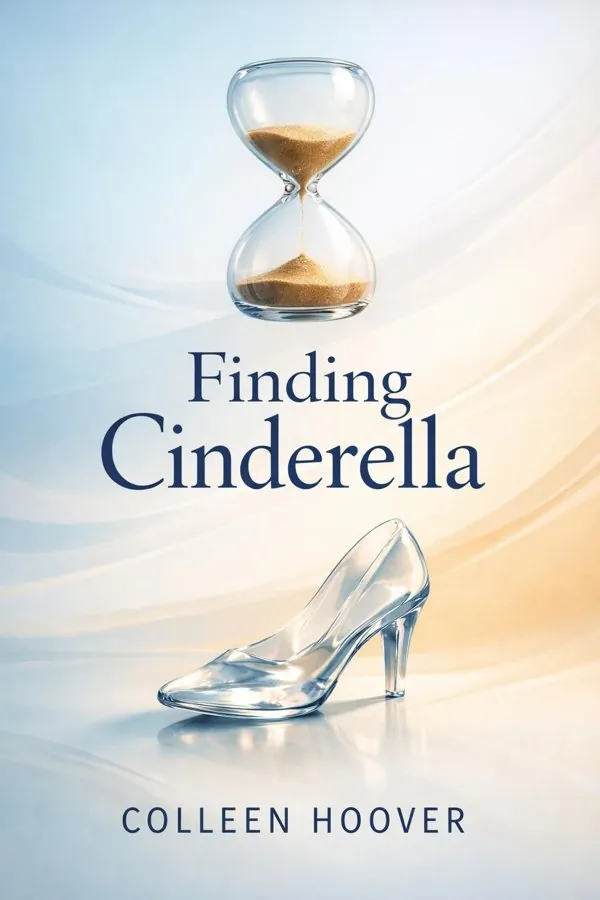
Finding Cinderella: Summary & Key Insights
 10 min8 chaptersAudio available
Key Takeaways from Finding Cinderella
Some of the most life-changing relationships begin in situations that seem accidental, awkward, or even absurd.
People often laugh most when they feel least safe.
A fantasy can be intoxicating precisely because it remains incomplete.
Being truly seen is one of the fastest ways trust can form.
A relationship can be right in feeling and still difficult in timing.
What Is Finding Cinderella About?
Finding Cinderella by Colleen Hoover is a general book. Finding Cinderella by Colleen Hoover is a sharp, witty, and emotionally charged novella that revisits the world of the Hopeless series through the unexpected romance of Daniel Wesley and Six. What begins as a playful, anonymous encounter between two teenagers in a dark closet quickly turns into something far more meaningful: a story about timing, vulnerability, trust, and the surprising ways love can arrive when people least expect it. Though shorter than Hoover’s full-length novels, this book carries the same emotional intensity, fast-moving dialogue, and character-driven storytelling that made her one of the most widely read contemporary romance authors of her generation. Hoover has built her reputation on writing relationships that feel messy, intimate, and deeply human, and Finding Cinderella is no exception. It matters because beneath its humor and flirtation, the novella explores a familiar but powerful truth: real connection often requires honesty, courage, and the willingness to let go of fantasy in order to embrace reality. For readers of contemporary romance, especially fans of interconnected character worlds, this is a brief but satisfying story with surprising emotional depth.
This FizzRead summary covers all 8 key chapters of Finding Cinderella in approximately 10 minutes, distilling the most important ideas, arguments, and takeaways from Colleen Hoover's work. Also available as an audio summary and Key Quotes Podcast.
Finding Cinderella
Finding Cinderella by Colleen Hoover is a sharp, witty, and emotionally charged novella that revisits the world of the Hopeless series through the unexpected romance of Daniel Wesley and Six. What begins as a playful, anonymous encounter between two teenagers in a dark closet quickly turns into something far more meaningful: a story about timing, vulnerability, trust, and the surprising ways love can arrive when people least expect it. Though shorter than Hoover’s full-length novels, this book carries the same emotional intensity, fast-moving dialogue, and character-driven storytelling that made her one of the most widely read contemporary romance authors of her generation. Hoover has built her reputation on writing relationships that feel messy, intimate, and deeply human, and Finding Cinderella is no exception. It matters because beneath its humor and flirtation, the novella explores a familiar but powerful truth: real connection often requires honesty, courage, and the willingness to let go of fantasy in order to embrace reality. For readers of contemporary romance, especially fans of interconnected character worlds, this is a brief but satisfying story with surprising emotional depth.
Who Should Read Finding Cinderella?
This book is perfect for anyone interested in general and looking to gain actionable insights in a short read. Whether you're a student, professional, or lifelong learner, the key ideas from Finding Cinderella by Colleen Hoover will help you think differently.
- ✓Readers who enjoy general and want practical takeaways
- ✓Professionals looking to apply new ideas to their work and life
- ✓Anyone who wants the core insights of Finding Cinderella in just 10 minutes
Want the full summary?
Get instant access to this book summary and 100K+ more with Fizz Moment.
Get Free SummaryAvailable on App Store • Free to download
Key Chapters
Some of the most life-changing relationships begin in situations that seem accidental, awkward, or even absurd. Finding Cinderella opens with a chance encounter that feels more like a joke than the start of a serious romance, yet that unlikely moment becomes the emotional engine of the story. Colleen Hoover uses this setup to challenge the idea that love must begin with polished introductions, perfect timing, or obvious compatibility. Instead, she suggests that chemistry often appears before certainty does.
Daniel and Six do not begin with a traditional foundation. Their first connection is built on mystery, playfulness, and a temporary escape from the expectations around them. That matters because many people dismiss meaningful opportunities when they do not look “serious” enough at first. A conversation at the wrong time, an unusual meeting, or a fleeting bond can seem too random to trust. Hoover argues, through story rather than lecture, that emotional significance does not always announce itself clearly.
In real life, this idea applies beyond romance. A casual meeting can become a friendship, a temporary project can shape a career, and an unexpected conversation can alter how someone sees themselves. The important lesson is not to force meaning onto every moment, but to remain open to the possibility that important things can emerge from imperfect beginnings.
The novella also highlights the tension between fantasy and reality. What starts as a magical, almost fairy-tale encounter must eventually survive the ordinary world. That shift gives the story its emotional force. Attraction may begin in mystery, but connection deepens only when real identities and real complications enter the picture.
Actionable takeaway: stop judging important opportunities by how polished they look at the start. Stay curious about the unexpected moments that spark genuine emotion, and give promising connections enough space to reveal what they might become.
People often laugh most when they feel least safe. One of the novella’s most distinctive strengths is its use of humor, especially through Daniel’s personality. He is funny, impulsive, and often outrageous, but his wit is not just entertainment. It is also armor. Colleen Hoover shows that joking can be a way of controlling discomfort, hiding fear, and keeping emotional exposure at a manageable distance.
This dynamic makes Daniel more than comic relief. His humor creates energy and charm, but it also reveals his emotional strategy. When a person turns serious situations into jokes, they may be testing whether the other person can handle the deeper truth underneath. In that sense, banter becomes a language of caution. The novella asks readers to see beyond what characters say on the surface and to notice what their style of communication protects.
This matters in everyday relationships. Many people mask insecurity with sarcasm, flirtation, or exaggerated confidence. A partner, friend, or family member may appear carefree while actually asking for reassurance in indirect ways. Recognizing this pattern can lead to more compassionate communication. Instead of reacting only to the joke, it helps to ask what feeling might be sitting behind it.
Hoover never turns this into a moral lesson, but she makes the point clearly through interaction: laughter can draw people together, yet it cannot carry a relationship forever. Eventually, people must say what they mean. Humor may open the door, but honesty has to walk through it.
A practical application is to notice your own communication habits. Do you joke when conversations become uncomfortable? Do you avoid saying what you need by turning everything into something light? There is nothing wrong with humor, but it becomes limiting when it replaces clarity.
Actionable takeaway: enjoy humor as a bridge, not a barrier. The next time you use a joke to dodge vulnerability, pause and express one honest sentence underneath it.
A fantasy can be intoxicating precisely because it remains incomplete. In Finding Cinderella, the anonymous, fairy-tale quality of Daniel and Six’s early connection gives their relationship a dreamlike charge. They meet in secrecy, outside the normal rules of social life, and that allows each of them to project possibility onto the other. Hoover uses this setup to explore a universal emotional pattern: people often fall in love not just with a person, but with the story they begin telling themselves about that person.
This is where the novella becomes more insightful than its playful premise suggests. A hidden encounter can feel magical because it is temporarily free from logistics, history, conflict, and social pressure. But no relationship can remain in that suspended state. Once identities are known and circumstances become concrete, attraction must adapt to reality. The real test is not whether two people can feel something intense in a heightened moment. It is whether that feeling can survive once ordinary life enters the room.
This idea applies broadly. In dating, people can become attached to potential rather than pattern. In friendships, they can confuse exciting first impressions with lasting compatibility. Even in work or creative partnerships, the image of what something could be may overshadow what it actually is. The lesson is not to reject fantasy entirely. Imagination plays an important role in desire, hope, and emotional momentum. The problem comes when fantasy is treated as sufficient.
Hoover balances both sides well. She respects the emotional force of the dream while insisting on the necessity of reality. That is why the romance feels satisfying rather than superficial. The relationship is not meaningful because it starts magically. It becomes meaningful because the characters must decide what remains when the magic is stripped of anonymity.
Actionable takeaway: when a connection feels exciting, ask yourself two questions: what do I actually know, and what am I imagining? Let reality deepen attraction instead of letting fantasy replace understanding.
Being truly seen is one of the fastest ways trust can form. In Finding Cinderella, attraction grows not only from novelty or chemistry, but from the subtle recognition that each character reaches something real in the other. Colleen Hoover suggests that emotional safety does not always begin with long history. Sometimes it begins with the startling feeling that another person understands your tone, your humor, your fear, or your need without demanding performance.
This kind of recognition matters because many people spend much of their social lives managing impressions. They try to sound more confident, less needy, more detached, or more agreeable than they actually feel. When someone responds to the version underneath the performance, trust can accelerate. That does not mean immediate intimacy is always wise, but it does explain why certain connections feel unusually significant very quickly.
The novella captures this through dialogue and rhythm. Daniel and Six do not trust each other because they know every fact about one another. They trust each other because their interaction creates a sense of emotional fluency. They can play, challenge, and reveal themselves in ways that feel natural rather than forced. This is an important distinction. Trust is not only about information. It is also about how safe someone feels in your presence.
In practical terms, this insight can improve relationships of all kinds. People build trust when they listen carefully, respond specifically, and notice what matters to the other person. Generic reassurance is less powerful than accurate recognition. Saying “I get it” means little unless your words or actions show that you genuinely do.
At the same time, Hoover reminds readers that feeling understood should lead to more honesty, not less caution. Recognition can open the door, but sustained trust still depends on consistency, respect, and truth.
Actionable takeaway: strengthen trust by showing precise attention. In your next meaningful conversation, reflect back one specific feeling, fear, or desire the other person has expressed instead of offering a vague response.
A relationship can be right in feeling and still difficult in timing. One of the quieter themes in Finding Cinderella is that attraction does not unfold in a vacuum. People bring existing friendships, personal histories, social roles, and emotional readiness into every romantic possibility. Colleen Hoover uses the novella’s compact structure to show how timing can intensify connection while also complicating it.
This theme matters because popular romance often presents love as if it should effortlessly override circumstances. Hoover takes a more emotionally believable approach. Feelings may be immediate, but decisions still require context. Daniel and Six are not only responding to each other; they are also navigating the world around them, including the expectations and relationships already in place. That makes the story more relatable. In real life, people rarely meet at a neutral moment. They meet while healing, changing, hiding, or trying to maintain something else.
Understanding timing can lead to more mature choices. For example, a strong connection may still need patience if one person is emotionally overwhelmed. A friendship may need protection before a romance can be pursued openly. A conversation may be true but poorly timed. Timing does not determine whether feelings are real, but it often determines whether those feelings can be expressed in healthy ways.
Hoover does not turn timing into an excuse for avoidance. Instead, she presents it as a practical emotional force. The characters are pushed to decide whether they will act with courage, delay for the right reasons, or let fear disguise itself as timing. That distinction is important. Sometimes “bad timing” is real. Sometimes it is self-protection.
Readers can apply this by evaluating not just what they feel, but what conditions surround the feeling. Acting too soon can create chaos; waiting too long can create regret.
Actionable takeaway: when facing an important emotional decision, separate the feeling from the timing. Ask yourself whether the obstacle is temporary, structural, or simply fear wearing a reasonable disguise.
The version of a person we meet first is rarely the whole person. Finding Cinderella plays with mistaken assumptions, anonymity, and shifting perception to show how quickly people create stories about one another. Colleen Hoover is especially interested in the gap between initial attraction and fuller knowledge. That gap is where both excitement and misunderstanding live.
At first, mystery heightens desire. When details are missing, imagination fills them in. But the novella also reveals the risk of that process. People often mistake a compelling first impression for truth. They decide who someone is based on wit, confidence, beauty, awkwardness, or chemistry in a single charged moment. Later, reality complicates that image. The person turns out to be funnier, more wounded, more loyal, or more complex than expected.
This idea has practical relevance beyond romance. In work settings, someone may seem disorganized when they are actually overloaded. In friendships, someone may appear distant when they are simply cautious. On social media, curated fragments can easily be mistaken for complete identities. Hoover’s story reminds readers that attraction and interpretation are both vulnerable to projection.
What makes the novella effective is that it does not present deeper knowledge as disappointing. Instead, it suggests that genuine intimacy becomes possible only when illusion gives way to fuller understanding. The real person may differ from the imagined one, but that difference can create stronger connection rather than weaker feeling. Mature love is not built from perfect first impressions. It is built from revised understanding.
A useful personal application is to watch how quickly you assign meaning to surface traits. Do you assume confidence equals security? Mystery equals depth? Humor equals ease? These shortcuts are natural, but they are often incomplete.
Actionable takeaway: replace assumption with discovery. When you feel strongly about someone, make room for at least three things about them that do not fit your first impression, and let those truths reshape your understanding.
Chemistry can attract people, but honesty is what makes closeness sustainable. Beneath the flirtation and humor of Finding Cinderella lies a simple but powerful argument: intimacy depends on the willingness to stop performing and start telling the truth. Colleen Hoover understands that the most difficult confessions are often not dramatic secrets, but ordinary emotional truths such as “I care more than I planned to,” “I am afraid of being rejected,” or “This matters to me.”
The novella’s emotional movement depends on exactly that shift. Characters who initially relate through mystery and playful concealment are eventually forced into greater clarity. This transition is essential because attraction without honesty creates instability. Each person may feel deeply, but if neither one speaks plainly, the relationship remains dependent on guesswork. Guesswork can be thrilling for a while, yet it also breeds confusion and insecurity.
In everyday life, emotional honesty is often misunderstood as total disclosure. Hoover points toward something more practical: saying what is relevant, real, and necessary for connection to deepen. That might mean expressing interest directly instead of playing games. It might mean admitting hurt instead of pretending indifference. It might mean naming expectations before resentment forms.
There is also a lesson here about courage. Honesty always risks changing the dynamic. Once truth is spoken, fantasy can no longer hide behind uncertainty. But that risk is also what makes intimacy possible. Relationships become stronger when people know where they stand, even if clarity brings temporary discomfort.
For readers, this theme offers a clear invitation to examine how often they substitute signals for statements. Hints, jokes, strategic silence, and assumptions may feel safer than direct communication, but they rarely create secure connection.
Actionable takeaway: choose one important relationship and replace one indirect signal with a direct statement. Say what you feel, what you need, or what you hope for in clear language.
A story does not need to be long or solemn to say something meaningful. Finding Cinderella is playful, fast, and often funny, yet it still delivers emotional insight about love, identity, and vulnerability. Colleen Hoover demonstrates that brevity can intensify impact when a story is focused, character-driven, and emotionally precise. The novella format allows her to strip away excess and center the emotional transformation itself.
This matters because readers sometimes assume that shorter fiction is less substantial or that romantic comedy elements automatically make a work lighter in significance. Hoover resists that false divide. She uses humor, speed, and romantic tension to make deeper themes more accessible. The result is a book that reads quickly but lingers because its emotional patterns are familiar. Many readers recognize themselves in the fear of being known, the temptation to idealize, and the relief of finding someone who sees through the performance.
The format also reflects a useful broader principle: not every important lesson arrives through complexity. Sometimes a concise story reveals a truth more effectively than an elaborate one because it isolates one emotional idea and shows it clearly. That is true in literature, communication, teaching, and even leadership. Precision often matters more than length.
For practical application, readers can think about the stories they tell themselves and others. Are they overcomplicating what is actually simple? Are they waiting for grand experiences to teach them what everyday interactions already reveal? Hoover’s novella suggests that a brief encounter, honestly examined, can contain an entire emotional education.
The key is attention. Meaning emerges when readers look beneath the entertaining surface and ask what the story is showing about human behavior. In that sense, the book rewards both casual enjoyment and closer reflection.
Actionable takeaway: do not dismiss something as minor because it is brief or light in tone. Ask instead: what human truth is this experience, story, or conversation making easier for me to see?
All Chapters in Finding Cinderella
About the Author
Colleen Hoover is an American bestselling author known for contemporary romance, new adult fiction, and emotionally intense novels that explore love, loss, healing, and personal growth. She rose to prominence with Slammed and went on to build a massive global readership through books such as Hopeless, Ugly Love, Verity, and It Ends with Us. Her work is recognized for its accessible prose, strong emotional pacing, memorable twists, and characters who feel both flawed and deeply relatable. Hoover has become one of the most influential commercial fiction writers of her generation, with many of her books gaining renewed popularity through online reading communities and social media. Finding Cinderella showcases her talent for blending humor, romance, and vulnerability in a compact but emotionally satisfying format.
Get This Summary in Your Preferred Format
Read or listen to the Finding Cinderella summary by Colleen Hoover anytime, anywhere. FizzRead offers multiple formats so you can learn on your terms — all free.
Available formats: App · Audio · PDF · EPUB — All included free with FizzRead
Download Finding Cinderella PDF and EPUB Summary
Key Quotes from Finding Cinderella
“Some of the most life-changing relationships begin in situations that seem accidental, awkward, or even absurd.”
“People often laugh most when they feel least safe.”
“A fantasy can be intoxicating precisely because it remains incomplete.”
“Being truly seen is one of the fastest ways trust can form.”
“A relationship can be right in feeling and still difficult in timing.”
Frequently Asked Questions about Finding Cinderella
Finding Cinderella by Colleen Hoover is a general book that explores key ideas across 8 chapters. Finding Cinderella by Colleen Hoover is a sharp, witty, and emotionally charged novella that revisits the world of the Hopeless series through the unexpected romance of Daniel Wesley and Six. What begins as a playful, anonymous encounter between two teenagers in a dark closet quickly turns into something far more meaningful: a story about timing, vulnerability, trust, and the surprising ways love can arrive when people least expect it. Though shorter than Hoover’s full-length novels, this book carries the same emotional intensity, fast-moving dialogue, and character-driven storytelling that made her one of the most widely read contemporary romance authors of her generation. Hoover has built her reputation on writing relationships that feel messy, intimate, and deeply human, and Finding Cinderella is no exception. It matters because beneath its humor and flirtation, the novella explores a familiar but powerful truth: real connection often requires honesty, courage, and the willingness to let go of fantasy in order to embrace reality. For readers of contemporary romance, especially fans of interconnected character worlds, this is a brief but satisfying story with surprising emotional depth.
More by Colleen Hoover




You Might Also Like
Duct Tape Marketing: The World's Most Practical Small Business Marketing Guide
John Jantsch
10 minDusk, Night, Dawn: On Revival and Courage
Anne Lamott
10 minFinish Big: How Great Entrepreneurs Exit Their Companies on Top
Bo Burlingham
10 minFirst As Tragedy, Then As Farce
Slavoj Zizek
10 minFirst Principles: What America's Founders Learned from the Greeks and Romans and How That Shaped Our Country
Thomas E. Ricks
10 minGood Habits, Bad Habits: The Science of Making Positive Changes That Stick
Wendy Wood
10 minBrowse by Category
Ready to read Finding Cinderella?
Get the full summary and 100K+ more books with Fizz Moment.