
Verity vs The Love Hypothesis: Which Should You Read?
A detailed comparison of Verity by Colleen Hoover and The Love Hypothesis by Ali Hazelwood. Discover the key differences, strengths, and which book is right for you.

Verity
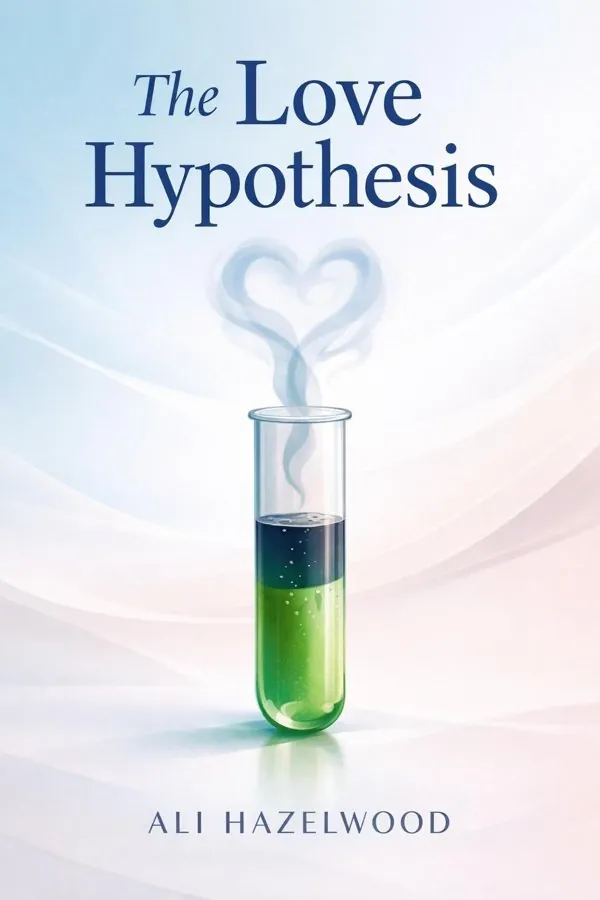
The Love Hypothesis
In-Depth Analysis
Although both Verity and The Love Hypothesis are marketed under the broad umbrella of romance, they occupy strikingly different emotional and structural territories. One weaponizes intimacy to produce dread; the other uses a fabricated relationship to create safety, then tenderness. Comparing them reveals not just two love stories, but two opposed visions of what romance can do inside popular fiction.
Verity begins with precarity. Lowen Ashleigh is financially unstable, professionally anxious, and emotionally raw before she ever enters the Crawford home. That matters, because Hoover makes Lowen susceptible not only to Jeremy Crawford’s attention but to the house itself as a psychological environment. The premise is career-oriented on the surface—finish an incapacitated author’s series—but the true engine is discovery. When Lowen finds Verity’s hidden manuscript, the novel splits into competing realities: the lived domestic space of the Crawford family and the confessional document that frames Verity as monstrous. Hoover uses that embedded text brilliantly as both evidence and temptation. The reader, like Lowen, becomes addicted to reading forward while increasingly unsure whether reading forward is ethically defensible.
The Love Hypothesis, by contrast, begins with a performative act that is playful rather than sinister: Olive Smith impulsively kisses Adam Carlsen to convince her friend she has moved on. From there, Ali Hazelwood leans into one of romance’s most reliable devices, fake dating, but retools it through the pressures of academia. Olive is not endangered by the premise; she is embarrassed by it. The stakes are social, professional, and emotional, not gothic. That difference in initial tension shapes everything. Where Verity asks, “What if intimacy exposes you to manipulation and violence?” The Love Hypothesis asks, “What if performative intimacy gives you a route toward honesty?”
The male leads also illustrate the books’ divergence. Jeremy in Verity is attractive partly because he appears protective amid chaos, but Hoover never allows his appeal to become uncomplicated. He is filtered through Lowen’s desire and fear, and because the novel is saturated with secrets, readers are trained to question even moments of tenderness. Adam in The Love Hypothesis is introduced as intimidating—a feared young professor with a severe reputation—but the novel gradually recontextualizes that severity as reserve, attentiveness, and ethical control. In other words, Jeremy grows more suspicious as the book proceeds; Adam grows more trustworthy. That reversal explains why the emotional residue of each novel is so different.
Structurally, Verity is the more aggressive book. Its use of the manuscript is not just a plot mechanism but a theory of reading. Every new confession from Verity contaminates the present-tense narrative, changing how Lowen interprets gestures, rooms, memories, and bodies. The suspense is psychological before it is factual. Hoover knows that readers often treat written confession as privileged truth, and she exploits that instinct. By the time the novel reaches its final explanatory materials, the issue is no longer whether one document is real and the other false; it is whether any story can escape motive. The ending’s force lies in refusing absolute closure and making the reader complicit in choosing a version.
The Love Hypothesis is less structurally daring but very effective within genre convention. Hazelwood’s strength is scene chemistry: conference trips, staged public affection, textural details of labs and faculty politics, and the accumulating evidence that Adam notices Olive more deeply than she realizes. The novel’s pleasures depend on delayed recognition rather than epistemic shock. Readers are usually ahead of Olive in seeing that the fake relationship contains real feeling, and that asymmetry creates warmth instead of paranoia. Hazelwood also grounds the romance in a recognizable ecosystem of graduate-school stress, grant anxiety, and professional vulnerability, giving Olive’s insecurities practical context.
In thematic terms, Verity is interested in obsession, authorship, and the erotics of danger. Even motherhood becomes unstable in the novel, transformed into a site of taboo confession and horror. Lowen’s reading of Verity’s manuscript becomes a form of possession: she is not merely solving a mystery but being psychologically rewritten by it. That is why the book feels so invasive. It dramatizes how stories colonize perception.
The Love Hypothesis, meanwhile, centers vulnerability in a more reparative register. Olive’s skepticism about relationships is tied to self-protection, while Adam’s apparent coldness masks his own forms of restraint and care. The novel repeatedly contrasts institutional harshness with interpersonal gentleness. In a field where Olive often feels evaluated, romance becomes the one space where she is more fully seen. Even when the plot moves through misunderstandings or professional conflict, the governing assumption is that honesty can restore trust.
For readers, the biggest practical difference is not quality but desired experience. Verity is a page-turner for those who want to feel destabilized. Its romance is inseparable from danger, and its best moments are the ones that make you recoil even as you keep reading. The Love Hypothesis is for readers who want emotional payoff, trope satisfaction, and characters whose connection deepens through awkwardness, loyalty, and mutual respect. One invites post-reading argument; the other invites affectionate rereading.
Ultimately, the books demonstrate the elasticity of modern commercial romance. Verity stretches romance toward thriller and horror, using attraction as a conduit for dread. The Love Hypothesis pulls romance toward comedy and aspiration, using a false premise to uncover genuine attachment. Both are effective because each commits fully to its tonal contract. Hoover makes love feel dangerous because uncertainty is the point. Hazelwood makes love feel discoverable because trust is the reward. Which book is stronger depends less on literary hierarchy than on whether you want your next romance to leave you comforted or haunted.
Side-by-Side Comparison
| Aspect | Verity | The Love Hypothesis |
|---|---|---|
| Core Philosophy | Verity is built around instability: truth may be performative, intimacy may be predatory, and the most dangerous stories are the ones people choose to believe. Its central question is not simply who is guilty, but whether narrative itself can be trusted. | The Love Hypothesis treats love as something initially approached through logic, boundaries, and performance but ultimately validated through emotional honesty. Its philosophy is optimistic: even a staged relationship can reveal authentic care when both people become vulnerable. |
| Writing Style | Colleen Hoover writes Verity in a highly propulsive, confessional style that leans on cliffhangers, dread, and escalating unease. The inserted manuscript creates a second voice that is more lurid and intimate, sharpening the novel’s unreliable atmosphere. | Ali Hazelwood uses a breezy, bantering rom-com voice with strong first-person interiority and a steady rhythm of humor, awkwardness, and sexual tension. The prose is accessible and contemporary, with STEM vocabulary used more for texture and setting than density. |
| Practical Application | Verity offers little practical application in a self-help sense, but it does illuminate manipulation, obsession, and the psychological consequences of entering relationships under conditions of secrecy. Readers may come away more alert to power imbalances and the seduction of incomplete evidence. | The Love Hypothesis has more everyday relational application: it models boundary-setting, communication, professional ambition, and the difference between performative dating and genuine emotional availability. Its workplace-academic frame also speaks to balancing career pressure with intimacy. |
| Target Audience | Verity is best suited to romance readers who also enjoy psychological suspense, morally compromised characters, and ambiguous endings. It especially appeals to readers who want tension, taboo material, and a dark domestic setting rather than comfort. | The Love Hypothesis is ideal for readers seeking a contemporary romance with fake dating, academia, humor, and a reassuring emotional payoff. It fits those who enjoy slow-burn chemistry without wanting the emotional brutality or menace of a thriller. |
| Scientific Rigor | Scientific rigor is largely irrelevant to Verity, which operates through psychological suggestion rather than formal analytic frameworks. Its interest lies in perception, trauma, and narrative manipulation, not in technical realism. | The Love Hypothesis is more attentive to institutional and research culture, especially the stresses of graduate school, lab politics, conferences, and academic prestige. Still, the science serves character and romance, so it is credible in atmosphere rather than rigorously technical in method. |
| Emotional Impact | Verity aims to disturb before it moves; its strongest emotional effects are anxiety, voyeuristic fascination, disgust, and paranoia. Even its romantic scenes are charged by fear, making the emotional experience intentionally destabilizing. | The Love Hypothesis delivers warmth, embarrassment, yearning, and eventual catharsis. Its emotional arc is gentler and more restorative, turning miscommunication and self-doubt into reassurance and earned intimacy. |
| Actionability | As a reading experience, Verity is actionable mainly in discussion: it invites debate about evidence, ethics, and whether Lowen or the manuscript should be believed. Its ambiguity gives book clubs abundant material rather than clear lessons. | The Love Hypothesis is more behaviorally legible, offering recognizable takeaways about trust, honesty, and advocating for oneself in professional spaces. Readers can map its interpersonal dynamics onto real-world dating and workplace boundaries more easily. |
| Depth of Analysis | Verity supports deeper analysis than its thriller packaging might suggest because it layers manuscript-within-manuscript structure, performative disability, maternal monstrosity, and reader complicity. Much of its depth comes from what cannot be conclusively verified. | The Love Hypothesis has thematic depth in its treatment of impostor syndrome, women in STEM, and emotional self-protection, but it remains structurally committed to the conventions of commercial romantic comedy. Its analysis is character-centered rather than interpretively destabilizing. |
| Readability | Verity is extremely readable in the compulsive sense; short scenes and escalating revelations make it difficult to stop. However, some readers may find its graphic emotional content and dark subject matter harder to process. | The Love Hypothesis is highly readable in a lighter way, driven by charm, dialogue, and familiar romance beats. It is generally the easier recommendation for readers easing into contemporary romance. |
| Long-term Value | Verity lingers because its ending remains interpretively open, prompting rereads and argument long after the plot twists land. Its staying power comes from unresolved moral and epistemic tension. | The Love Hypothesis has long-term value as a comfort reread thanks to its satisfying arc, lovable chemistry, and academic-romance niche. It may not provoke the same level of debate, but it excels in emotional revisiting. |
Key Differences
Romance as Safety vs Romance as Threat
In The Love Hypothesis, romance becomes the space where Olive feels increasingly understood and protected, especially as Adam’s intimidating exterior gives way to visible care. In Verity, romance is never fully separable from danger; Lowen’s attraction to Jeremy intensifies the sense that she may be stepping deeper into manipulation rather than toward security.
Fake Dating vs Hidden Manuscript
Hazelwood builds her novel around a classic external trope: a pretend relationship that gradually reveals real feeling. Hoover builds around an invasive discovery, the manuscript, which continually rewrites what both Lowen and the reader think they know about Verity, Jeremy, and the household.
Academic Comedy vs Domestic Gothic
The Love Hypothesis derives much of its identity from the rhythms of graduate school, conferences, and the social awkwardness of STEM culture. Verity uses the Crawford home almost like a gothic estate: isolated, memory-soaked, and psychologically charged, turning setting into a source of dread.
Emotional Resolution vs Interpretive Ambiguity
The Love Hypothesis aims for clarity by the end, resolving misunderstandings and affirming the central relationship. Verity deliberately withholds full certainty, especially through its final explanatory turn, forcing readers to decide which account they trust and whether trust is even possible.
Trustworthy Arc vs Unreliable Perception
Olive’s perspective in The Love Hypothesis may be insecure, but the novel’s emotional logic is stable; readers can trust that the story is moving toward revelation and mutual understanding. In Verity, Lowen’s perceptions are constantly compromised by desire, fear, and textual influence, making the act of interpretation itself precarious.
Character Appeal
Adam Carlsen is designed to be reinterpreted positively: the feared professor turns out to be attentive, ethical, and deeply devoted. Jeremy Crawford is designed to remain suspect, because every affectionate moment is shadowed by the possibility that Lowen—and the reader—may be misreading him.
Reread Value for Different Reasons
Readers return to The Love Hypothesis for comfort, favorite scenes, and the pleasure of watching known chemistry unfold again. Readers reread Verity to hunt for clues, test theories about the manuscript and letter, and see whether earlier scenes support one interpretation more than another.
Who Should Read Which?
Reader who wants comfort, humor, and a dependable happy ending
→ The Love Hypothesis
This reader will likely respond to Olive and Adam’s gradual emotional openness, the fake-dating charm, and the novel’s fundamentally reassuring worldview. The conflicts are real, but they are designed to deepen intimacy rather than corrode trust.
Reader who loves thrillers, unreliable narratives, and morally messy relationships
→ Verity
Verity is the stronger choice for someone who wants a book to provoke anxiety, suspicion, and debate. The manuscript device, the claustrophobic household, and the unresolved final interpretation make it ideal for readers who prefer unease over comfort.
Reader interested in women navigating career pressure while falling in love
→ The Love Hypothesis
Olive’s life as a Ph.D. candidate gives the romance a concrete professional backdrop, including lab politics, reputation, and academic ambition. While Lowen in Verity also begins from career vulnerability, her professional plot is quickly absorbed into gothic suspense rather than sustained workplace realism.
Which Should You Read First?
For most readers, The Love Hypothesis should come first. It offers a cleaner introduction to contemporary romance because its pleasures are immediate and legible: fake dating, banter, academic tension, and a steadily deepening connection between Olive and Adam. Starting there helps establish what an emotionally satisfying romance arc looks like when the genre is working in a relatively classic mode. Then read Verity as a deliberate contrast. Hoover’s novel is much darker and more destabilizing, and it becomes even more interesting when read after a conventional romance because you can see how it bends familiar elements—attraction, intimacy, emotional dependence—into instruments of suspense. The experience of moving from Hazelwood’s warmth to Hoover’s menace highlights the range inside romance-adjacent fiction. The only reason to reverse the order is if you are primarily a thriller reader. In that case, Verity may hook you faster, and The Love Hypothesis can then function as a palate cleanser. But for readers coming fresh to both, The Love Hypothesis first and Verity second creates the strongest contrast and the least tonal whiplash.
Want the full summary?
Get instant access to this book summary and 100K+ more with Fizz Moment.
Get Free SummaryAvailable on App Store • Free to download
Frequently Asked Questions
Is Verity better than The Love Hypothesis for beginners?
For most beginners to romance, The Love Hypothesis is the easier starting point. Its fake-dating setup, humorous voice, and emotionally reassuring arc make the genre conventions easy to follow and enjoy. Verity is beginner-friendly in terms of pace, but not in tone: it blends romance with psychological suspense, disturbing confessions, and an ending designed to unsettle rather than comfort. If a new reader expects romance to deliver safety and clear emotional resolution, Verity may feel like a bait-and-switch. If the beginner actually prefers thrillers and wants a romance-adjacent book with obsession and ambiguity, then Verity could be the more compelling entry point.
Which book has more plot twists: Verity or The Love Hypothesis?
Verity has far more overt plot twists and relies on revelation as its primary momentum. The hidden manuscript, the shifting perception of Verity’s condition, and the final competing explanations all create a reading experience built on reassessment. The Love Hypothesis is much more transparent by design: its pleasures come from anticipation, chemistry, and the gradual collapse of emotional defenses rather than shock. There are still moments of surprise, especially in how Adam’s feelings and certain professional conflicts are reframed, but they function as romantic payoffs rather than thriller reversals. If you want jaw-dropping twists, Verity is the clear winner.
Is The Love Hypothesis or Verity better if I want romance with strong emotional tension?
Both deliver emotional tension, but they do so through radically different mechanisms. In The Love Hypothesis, tension comes from fake dating, professional boundaries, mutual misreading, and the delicious slowness of two people realizing their feelings are real. It is anxious in a pleasurable, hopeful way. In Verity, emotional tension is fused with dread: Lowen’s attraction to Jeremy is constantly polluted by the manuscript, the house, and the possibility that she is entangling herself in something dangerous. So if you mean yearning and vulnerability, choose The Love Hypothesis. If you mean obsession, paranoia, and attraction under threat, choose Verity.
Which book is darker, Verity or The Love Hypothesis?
Verity is dramatically darker. It features disturbing material involving family tragedy, manipulative behavior, sexual obsession, and the possibility that a written confession may expose horrific truths. Even the romantic elements are shadowed by menace and moral uncertainty. The Love Hypothesis, in contrast, is fundamentally a romantic comedy. It includes stress related to academia, gendered professional pressure, and emotional insecurity, but its tone remains playful and restorative. Readers sensitive to psychological suspense or taboo content should be cautious with Verity, while those seeking a more comforting read will almost certainly prefer The Love Hypothesis.
Is The Love Hypothesis more realistic than Verity in relationships and career setting?
In relationship dynamics, The Love Hypothesis generally feels more realistic because it builds on recognizable problems: mixed signals, impostor syndrome, workplace reputation, and fear of vulnerability. Its academic setting also carries believable texture through conferences, labs, grant culture, and the pressures of graduate life. Verity is less interested in realism than in heightened psychological effect. The Crawford household is designed as a gothic pressure chamber, and the romance functions inside a thriller framework where secrecy and suspicion distort normal behavior. If you want emotional and professional realism, The Love Hypothesis is stronger; if you want heightened dramatic psychology, Verity is more memorable.
Should I read Verity after The Love Hypothesis if I want to explore different sides of romance?
Yes, that is an excellent sequence if your goal is range. The Love Hypothesis introduces contemporary romance through familiar pleasures: banter, fake dating, gradual trust, and a satisfying emotional landing. Reading Verity afterward shows how far the category can stretch into thriller territory without losing the central role of attraction and intimacy. The contrast becomes especially illuminating: one book uses performance to create authenticity, while the other uses confession to destroy certainty. Going from Hazelwood to Hoover also helps calibrate expectations, because you will move from comfort and warmth into ambiguity and psychological unease instead of the reverse.
The Verdict
If you want the stronger all-around romance experience, The Love Hypothesis is the safer and more satisfying recommendation. It delivers a clear emotional arc, memorable chemistry between Olive and Adam, and a setting that gives the story identity without overwhelming the love story. Its fake-dating premise is executed with wit and warmth, and it rewards readers who want tenderness, humor, and a convincing transition from performance to sincerity. If, however, you want the more unforgettable reading experience, Verity may leave the deeper mark. Hoover’s novel is messier, darker, and far more divisive, but that divisiveness is part of its power. The manuscript device, Lowen’s growing obsession, and the final uncertainty about what actually happened make it the more discussable and destabilizing book. It is not a conventional comfort romance; it is a psychological suspense novel that uses romantic desire as fuel. So the recommendation depends on purpose. Choose The Love Hypothesis if you want emotional payoff, accessibility, and a romance that feels fundamentally safe despite its conflicts. Choose Verity if you want intensity, taboo tension, and a book that keeps working on you after you finish because you cannot stop replaying its clues and contradictions. For most readers, The Love Hypothesis is the better first pick. For readers chasing shock, ambiguity, and dark obsession, Verity is the bolder choice.
Want to read both books?
Get AI-powered summaries of both Verity and The Love Hypothesis in just 20 minutes total.