
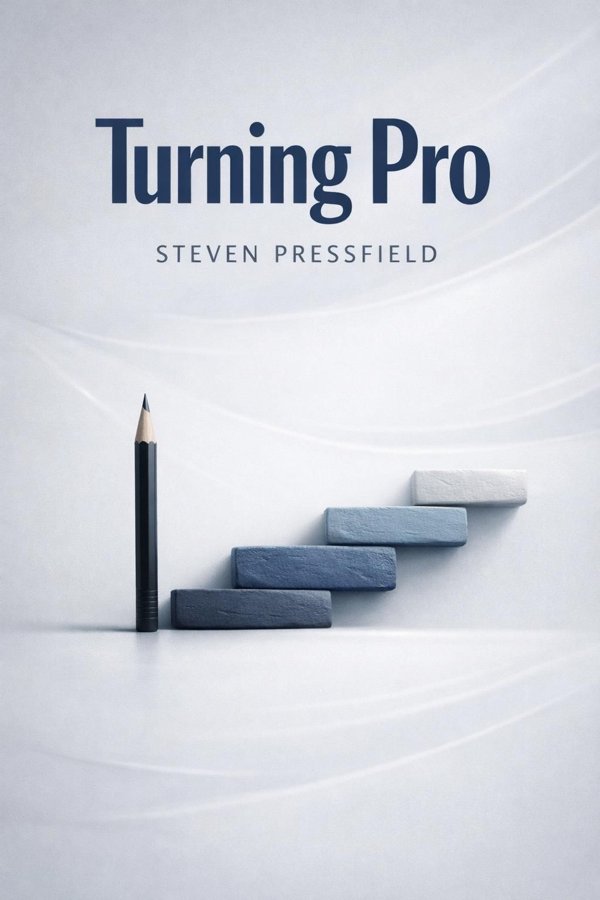
Turning Pro: Tap Your Inner Power and Create Your Life's Work: Summary & Key Insights
 10 min9 chaptersAudio available
Key Takeaways from Turning Pro: Tap Your Inner Power and Create Your Life's Work
The real divide is not talent but commitment.
Most people do not lack direction as much as they lack the courage to obey it.
Fear is often the clearest sign that something matters.
What looks like restriction from the outside often feels like liberation from the inside.
Many people do not fail because they lack ability; they fail because they are defending a fragile self-image.
What Is Turning Pro: Tap Your Inner Power and Create Your Life's Work About?
Turning Pro: Tap Your Inner Power and Create Your Life's Work by Steven Pressfield is a creativity book spanning 9 pages. Turning Pro by Steven Pressfield is a short but forceful book about one of the most important transitions in a creative life: the move from acting like an amateur to living as a professional. Pressfield argues that many people never fully commit to the work they are meant to do because they remain trapped by fear, distraction, addiction, self-sabotage, and the need for approval. To “turn pro” is not simply to earn money from your craft. It means accepting responsibility for your calling, showing up consistently, and organizing your life around meaningful work rather than fleeting moods. The book matters because it speaks to a universal struggle. Whether you are a writer, entrepreneur, artist, teacher, freelancer, or anyone trying to build a purposeful life, you will likely recognize the internal Resistance Pressfield describes. His authority comes from hard-earned experience: after years of drift and struggle, he became known for The War of Art and for historical novels such as Gates of Fire. In Turning Pro, he offers both philosophy and practical insight, showing that real transformation begins when we stop waiting to feel ready and start working like professionals.
This FizzRead summary covers all 9 key chapters of Turning Pro: Tap Your Inner Power and Create Your Life's Work in approximately 10 minutes, distilling the most important ideas, arguments, and takeaways from Steven Pressfield's work. Also available as an audio summary and Key Quotes Podcast.
Turning Pro: Tap Your Inner Power and Create Your Life's Work
Turning Pro by Steven Pressfield is a short but forceful book about one of the most important transitions in a creative life: the move from acting like an amateur to living as a professional. Pressfield argues that many people never fully commit to the work they are meant to do because they remain trapped by fear, distraction, addiction, self-sabotage, and the need for approval. To “turn pro” is not simply to earn money from your craft. It means accepting responsibility for your calling, showing up consistently, and organizing your life around meaningful work rather than fleeting moods.
The book matters because it speaks to a universal struggle. Whether you are a writer, entrepreneur, artist, teacher, freelancer, or anyone trying to build a purposeful life, you will likely recognize the internal Resistance Pressfield describes. His authority comes from hard-earned experience: after years of drift and struggle, he became known for The War of Art and for historical novels such as Gates of Fire. In Turning Pro, he offers both philosophy and practical insight, showing that real transformation begins when we stop waiting to feel ready and start working like professionals.
Who Should Read Turning Pro: Tap Your Inner Power and Create Your Life's Work?
This book is perfect for anyone interested in creativity and looking to gain actionable insights in a short read. Whether you're a student, professional, or lifelong learner, the key ideas from Turning Pro: Tap Your Inner Power and Create Your Life's Work by Steven Pressfield will help you think differently.
- ✓Readers who enjoy creativity and want practical takeaways
- ✓Professionals looking to apply new ideas to their work and life
- ✓Anyone who wants the core insights of Turning Pro: Tap Your Inner Power and Create Your Life's Work in just 10 minutes
Want the full summary?
Get instant access to this book summary and 100K+ more with Fizz Moment.
Get Free SummaryAvailable on App Store • Free to download
Key Chapters
The real divide is not talent but commitment. Pressfield’s central distinction between amateurs and professionals has little to do with skill level or income. An amateur may be gifted, passionate, and ambitious, yet still remain ruled by emotion, ego, and fear. Professionals, by contrast, understand that meaningful work cannot depend on inspiration alone. They show up whether they feel confident or not, whether praise is coming or not, and whether progress is visible or not.
Amateurs often fuse their identity with the outcome of their work. If the project fails, they feel that they themselves are failures. Because of this, they avoid risk, delay completion, and seek safety in endless preparation. Professionals separate self-worth from daily performance. They care deeply about the work, but they know one bad day, one rejection, or one poor result does not define them. This psychological distance gives them resilience.
In practical terms, the amateur waits for the right mood; the professional builds a routine. The amateur wants validation; the professional wants mastery. The amateur complains about obstacles; the professional problem-solves. A novelist who writes only when inspired remains an amateur in mindset, even if talented. A designer who creates every day, ships work, accepts criticism, and improves is turning pro.
This idea applies beyond art. In health, relationships, business, and personal growth, maturity begins when we stop asking, “Do I feel like it?” and start asking, “What does the work require today?”
Actionable takeaway: Identify one area where you still behave like an amateur, then define the professional standard for that area and follow it daily for the next 30 days.
Most people do not lack direction as much as they lack the courage to obey it. Pressfield suggests that somewhere beneath noise, distraction, and fear, each person carries an inner knowing about what they are meant to do. This is the call to the professional life. It may appear as a persistent fascination, a recurring dream, a creative obsession, or a deep restlessness with living below one’s potential.
The tragedy is not that the call is absent; it is that we keep drowning it out. We overcommit, consume, scroll, gossip, chase approval, or remain busy with lesser tasks so we do not have to confront the bigger question: What is my real work? The call can be unsettling because it asks for change. It often demands sacrifice, discipline, and the willingness to disappoint others who preferred our smaller version.
Pressfield’s point is not mystical in a vague sense. The call becomes visible through repeated attraction and repeated avoidance. The thing you are repeatedly drawn toward and repeatedly resist may be the very thing you are meant to pursue. A person who constantly talks about writing but never writes, or dreams of launching a business but never starts, may not be confused. They may be hearing the call and retreating from it.
Listening requires silence, honesty, and self-observation. Journaling, long walks, time away from stimulation, and paying attention to envy can all help. Often, the life we admire in others reveals the path we fear claiming in ourselves.
Actionable takeaway: Write down the work or life direction that has called to you for years, then take one concrete step toward it this week instead of thinking about it again.
Fear is often the clearest sign that something matters. Pressfield’s concept of Resistance is the invisible force that rises whenever we move toward meaningful growth. It appears as procrastination, self-doubt, rationalization, perfectionism, addiction, busyness, or sudden fatigue. Resistance is not random weakness; it is the mind’s defense against change, exposure, and transformation.
One of the book’s most liberating insights is that Resistance does not mean you are unfit for the work. It usually means the opposite. The stronger the Resistance, the more important the work may be. If you feel intense fear around writing a book, making art, asking for funding, changing careers, or committing to recovery, that fear may be signaling significance, not impossibility.
The mistake amateurs make is trying to eliminate fear before acting. Professionals act in the presence of fear. They expect Resistance to show up every day and build systems to outmaneuver it. A writer may set a fixed writing hour before checking messages. An entrepreneur may break a terrifying launch into small deadlines. A student may study in a distraction-free library instead of relying on willpower at home.
Resistance thrives in vagueness. It weakens when the task becomes specific: write 500 words, make five sales calls, draft one proposal, rehearse for 30 minutes. It also weakens when exposed. Naming the excuse reduces its power. “I’m not too busy; I’m avoiding the discomfort of starting” is a more honest and more useful statement.
Actionable takeaway: The next time you feel Resistance, do not debate it. Name it, shrink the task to a concrete action, and begin before your mind can negotiate an escape.
What looks like restriction from the outside often feels like liberation from the inside. Pressfield argues that discipline is not punishment but the structure that allows serious work to happen. When people remain amateur in their mindset, they believe discipline kills creativity. In reality, discipline protects creativity from chaos, mood swings, and the endless leakage of attention.
Daily practice is how professionals convert intention into identity. A person becomes a writer by writing regularly, not by talking about writing or taking endless notes about the perfect future routine. The same is true for musicians, coaches, founders, and craftspeople. Repetition may seem ordinary, but it is the birthplace of mastery. Professionals trust process over drama.
Discipline also reduces inner conflict. If you decide in advance when and how you work, you no longer waste energy renegotiating the decision each day. A morning ritual, a dedicated workspace, a fixed production target, or scheduled deep work time can turn effort into habit. This is especially important because the creative mind is vulnerable to seduction by novelty. Discipline says: return to the page, the instrument, the plan, the practice.
Examples are simple but powerful. A designer may commit to one hour of portfolio work before client tasks. A teacher writing a book may wake at 6 a.m. to draft before the day’s demands begin. A recovering procrastinator may use a timer and work in focused blocks rather than waiting for a perfect stretch of time.
Actionable takeaway: Choose a non-negotiable daily practice tied to your life’s work and make it small enough that you can sustain it even on difficult days.
Many people do not fail because they lack ability; they fail because they are defending a fragile self-image. Pressfield emphasizes that turning pro requires a shift in identity. The amateur is absorbed in the personal self: How do I look? What do others think? What if I’m exposed as untalented? The professional becomes more devoted to the work itself than to protecting the ego.
This transition is crucial because ego distorts perception. It makes criticism feel unbearable, comparison feel threatening, and success feel like proof of superiority rather than a byproduct of service and labor. When we cling to an image of ourselves as gifted, original, misunderstood, or destined, we often avoid the humble practices that real development requires. We want to be seen as artists before we are willing to live like artists.
Pressfield points toward self-transcendence: the ability to move beyond the small, anxious self and serve something larger. That “something” may be the work, the audience, truth, beauty, God, craft, or contribution. In this state, work becomes less about self-display and more about faithful execution. A musician practices not to seem impressive but to honor the music. A business owner improves the product not for applause but to genuinely help customers.
This perspective makes rejection easier to endure. Criticism still stings, but it is no longer a threat to existence. You are not your latest review, sale, or performance. You are the person committed to the work over time.
Actionable takeaway: Before beginning your next session, ask, “How can I serve the work today?” and let that question replace concerns about image, approval, or comparison.
Every meaningful path charges tuition, and that tuition is often paid in failure. Pressfield treats setbacks not as evidence that we should quit but as part of professional initiation. The amateur interprets failure personally and dramatically: this proves I am not good enough. The professional interprets failure diagnostically: this shows me what must be strengthened.
This shift matters because all important work includes uncertainty. A startup may stall. A manuscript may be rejected. A product launch may flop. A performance may go badly. If we expect progress to be clean, we will constantly be shocked and discouraged. Professionals assume friction, disappointment, and revision are built into the path. They do not enjoy failure, but they stop being surprised by it.
Perseverance is not blind stubbornness. It is intelligent persistence. The professional reviews what happened, keeps what worked, drops what did not, and returns to the work with greater clarity. In that sense, failure is information. It reveals weak assumptions, undeveloped skills, emotional triggers, and structural flaws. A freelancer who loses a client may discover they need better boundaries. An author receiving edits may learn that what felt complete was only a first draft.
Pressfield’s message is deeply encouraging because it normalizes struggle. You do not need to wait until failure stops hurting. You simply need to refuse to let it define your future effort. The path belongs to those who can metabolize disappointment without abandoning the mission.
Actionable takeaway: After your next setback, perform a professional review: list what happened, what you learned, what you will change, and the exact date you will begin again.
Recognition can motivate, but dependence on it can corrupt the work. Pressfield warns that amateurs often focus on external rewards: money, praise, followers, status, publication, awards, or public proof that their efforts matter. Professionals understand that while rewards may come, they cannot be the foundation of a meaningful practice.
The problem with chasing recognition is that it hands emotional control to forces outside your command. If your motivation rises and falls with applause, you become erratic. You work harder when seen and drift when ignored. You make choices for approval instead of excellence. This is especially dangerous in creative fields, where validation is inconsistent and often delayed.
Turning pro means learning to love process, craft, and contribution more than outcome. This does not mean money and success are unimportant. Pressfield is not romanticizing poverty or obscurity. Rather, he insists that professionals build an inner economy first. They derive satisfaction from having done the work well, kept the appointment, honored the practice, and moved the project forward.
In practical life, this means measuring progress by controllable actions: pages written, calls made, hours practiced, designs completed, clients served. A podcaster may commit to publishing consistently before worrying about audience size. A painter may complete a series before seeking a gallery. A consultant may improve delivery quality before obsessing over social media metrics.
Paradoxically, detachment often improves outcomes. Work created from conviction tends to be stronger than work created from desperation for applause.
Actionable takeaway: Replace at least one outcome-based goal this month with a process-based metric that you can control and track every week.
A professional must learn how to be alone without feeling abandoned. Pressfield highlights solitude as a necessary condition for serious work. In silence, we encounter both our gift and our fear. That is why many people avoid solitude and seek constant distraction, social stimulation, or emotional entanglement. Noise can protect us from hearing what we already know.
Solitude is not isolation in a destructive sense. It is chosen space where thought can deepen, intuition can emerge, and effort can become concentrated. Writers need time alone with language. Founders need time alone to think strategically. Artists need time alone to make bad work, experiment, and discover. Without solitude, we remain overly shaped by the reactions and expectations of others.
At the same time, Pressfield does not deny the need for companionship. Turning pro does not require becoming cold or detached from all relationships. It means becoming selective about the company we keep. Supportive peers, mentors, collaborators, and loved ones can strengthen commitment when they respect the work rather than compete with it. The key is whether a relationship enables growth or feeds avoidance.
This idea is especially relevant in a hyperconnected age. Constant messaging, content consumption, and comparison can fracture creative energy. A person may feel socially engaged while becoming inwardly scattered. Solitude repairs that fragmentation.
Actionable takeaway: Schedule recurring periods of protected solitude each week, and audit your relationships and digital habits to see which ones nourish your work and which ones quietly drain it.
Grace often arrives after commitment, not before it. Pressfield closes many of his ideas with a powerful paradox: while discipline is essential, there is also a mysterious dimension to creative work. Call it inspiration, grace, muse, flow, or higher assistance. Whatever name we give it, genuine breakthroughs often feel as if they come through us as much as from us.
But this force rarely rewards passivity. Professionals do not sit around waiting for lightning to strike. They prepare the ground. They show up, begin clumsily, stay present through resistance, and create the conditions under which inspiration can appear. In this way, labor and grace are partners. The disciplined act of starting invites the intangible spark.
This viewpoint protects against both arrogance and helplessness. It prevents arrogance because no creator fully controls the best moments of creation. It prevents helplessness because we still have agency: we can make ourselves available. A songwriter may discover the chorus only after an hour of struggle. A therapist may find the right insight in the middle of a session because years of discipline prepared the moment. A founder may receive strategic clarity only after weeks of focused wrestling with a problem.
Pressfield’s deeper message is spiritual as much as practical. When we turn pro, we align ourselves with a larger order. We stop asking life to indulge our moods and instead offer our steadiness to the work. Then, sometimes, something greater meets us there.
Actionable takeaway: Create a simple pre-work ritual that signals readiness, then begin every session the same way so that inspiration learns where and when to find you.
All Chapters in Turning Pro: Tap Your Inner Power and Create Your Life's Work
About the Author
Steven Pressfield is an American author known for his writing on creativity, discipline, and the psychological obstacles that block meaningful work. He is the author of bestselling nonfiction books such as The War of Art, Turning Pro, and Do the Work, which have become widely read among writers, entrepreneurs, artists, and performers. Pressfield has also written acclaimed historical fiction, including Gates of Fire, The Afghan Campaign, and The Legend of Bagger Vance. Before finding success as a writer, he went through years of struggle, rejection, and unstable work, an experience that deeply shaped his views on professionalism and perseverance. His books combine direct advice, spiritual reflection, and hard-earned realism, making him one of the most influential modern voices on creative resistance and committed practice.
Get This Summary in Your Preferred Format
Read or listen to the Turning Pro: Tap Your Inner Power and Create Your Life's Work summary by Steven Pressfield anytime, anywhere. FizzRead offers multiple formats so you can learn on your terms — all free.
Available formats: App · Audio · PDF · EPUB — All included free with FizzRead
Download Turning Pro: Tap Your Inner Power and Create Your Life's Work PDF and EPUB Summary
Key Quotes from Turning Pro: Tap Your Inner Power and Create Your Life's Work
“The real divide is not talent but commitment.”
“Most people do not lack direction as much as they lack the courage to obey it.”
“Fear is often the clearest sign that something matters.”
“What looks like restriction from the outside often feels like liberation from the inside.”
“Many people do not fail because they lack ability; they fail because they are defending a fragile self-image.”
Frequently Asked Questions about Turning Pro: Tap Your Inner Power and Create Your Life's Work
Turning Pro: Tap Your Inner Power and Create Your Life's Work by Steven Pressfield is a creativity book that explores key ideas across 9 chapters. Turning Pro by Steven Pressfield is a short but forceful book about one of the most important transitions in a creative life: the move from acting like an amateur to living as a professional. Pressfield argues that many people never fully commit to the work they are meant to do because they remain trapped by fear, distraction, addiction, self-sabotage, and the need for approval. To “turn pro” is not simply to earn money from your craft. It means accepting responsibility for your calling, showing up consistently, and organizing your life around meaningful work rather than fleeting moods. The book matters because it speaks to a universal struggle. Whether you are a writer, entrepreneur, artist, teacher, freelancer, or anyone trying to build a purposeful life, you will likely recognize the internal Resistance Pressfield describes. His authority comes from hard-earned experience: after years of drift and struggle, he became known for The War of Art and for historical novels such as Gates of Fire. In Turning Pro, he offers both philosophy and practical insight, showing that real transformation begins when we stop waiting to feel ready and start working like professionals.
More by Steven Pressfield
The War of Art
Steven Pressfield
10 min
Do the Work
Steven Pressfield
10 min
The War of Art: Break Through the Blocks and Win Your Inner Creative Battles
Steven Pressfield
10 min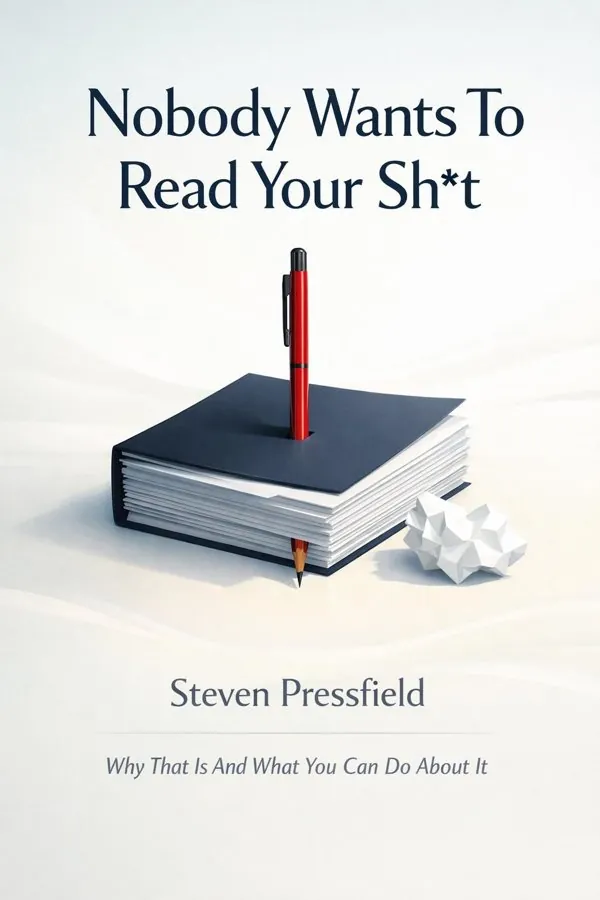
Nobody Wants To Read Your Sh*t: Why That Is And What You Can Do About It
Steven Pressfield
10 minYou Might Also Like
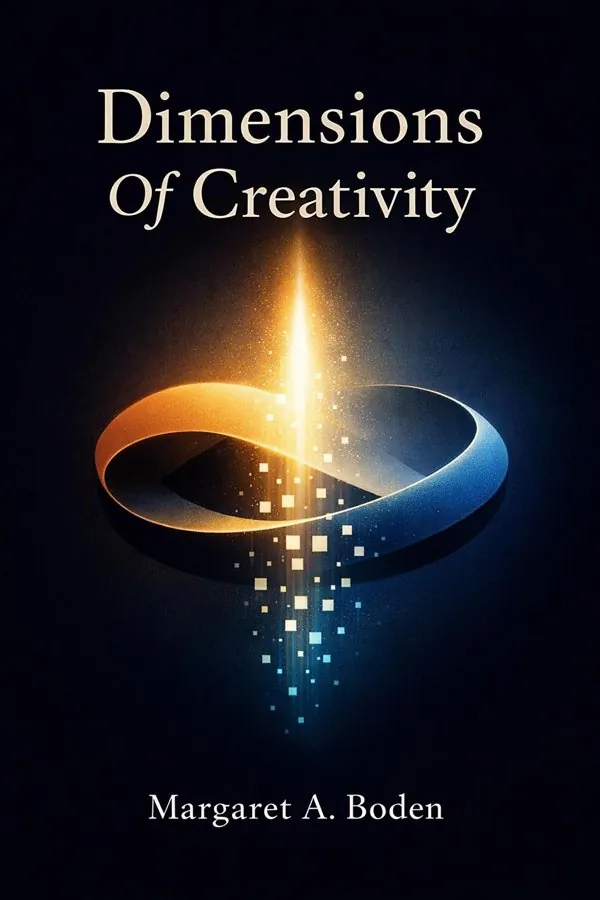
Dimensions Of Creativity
Margaret A. Boden
10 min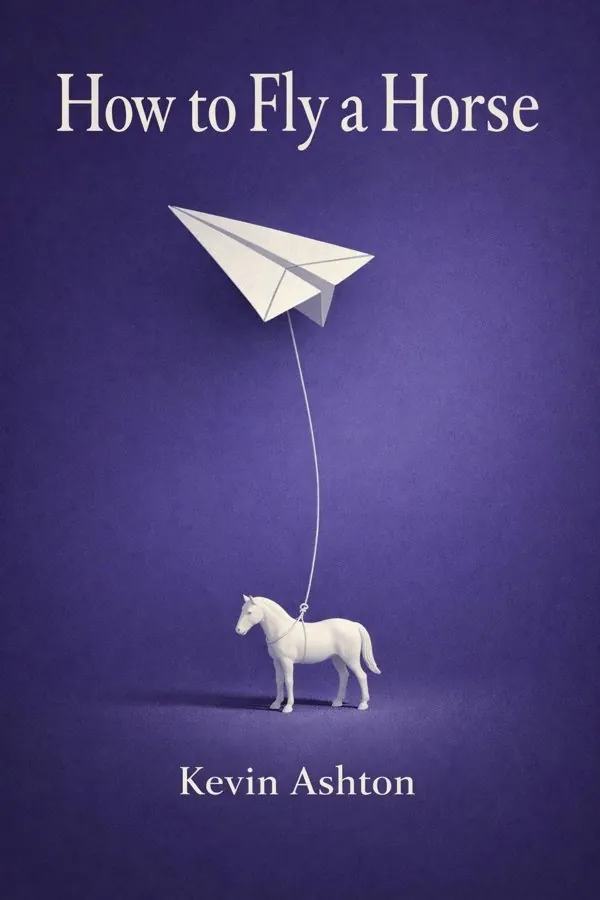
How to Fly a Horse: The Secret History of Creation, Invention, and Discovery
Kevin Ashton
10 min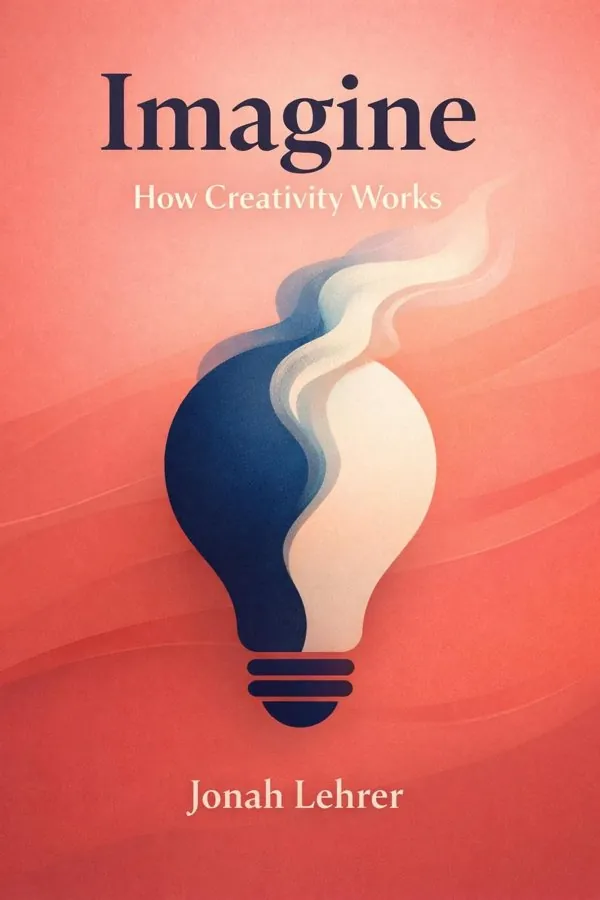
Imagine: How Creativity Works
Jonah Lehrer
10 min
The Accidental Creative: How to Be Brilliant at a Moment's Notice
Todd Henry
10 min
The Origins of Creativity
Edward O. Wilson
10 min
Wired to Create: Unraveling the Mysteries of the Creative Mind
Scott Barry Kaufman, Carolyn Gregoire
10 minBrowse by Category
Ready to read Turning Pro: Tap Your Inner Power and Create Your Life's Work?
Get the full summary and 100K+ more books with Fizz Moment.