
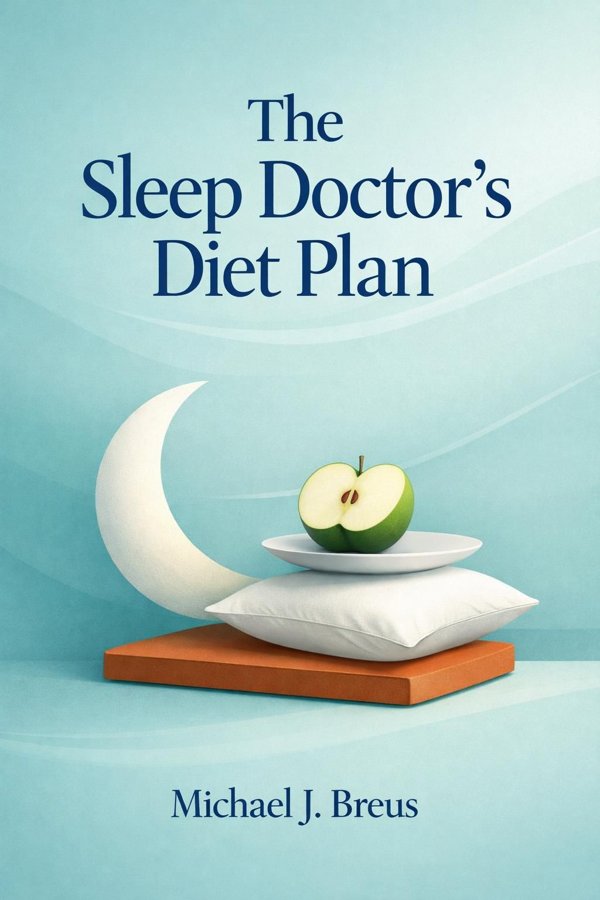
The Sleep Doctor’s Diet Plan: Lose Weight Through Better Sleep: Summary & Key Insights
 10 min9 chaptersAudio available
Key Takeaways from The Sleep Doctor’s Diet Plan: Lose Weight Through Better Sleep
A surprising truth sits behind many failed diets: your body does not process food the same way at all hours of the day.
What feels like a lack of discipline is often a biological imbalance.
The body can get trapped in a loop where stress causes poor sleep, poor sleep increases weight gain, and weight gain creates even more stress.
Many people say they want better sleep while unknowingly protecting the very habits that destroy it.
One of Breus’s most compelling ideas is that tomorrow’s food choices are often decided the night before.
What Is The Sleep Doctor’s Diet Plan: Lose Weight Through Better Sleep About?
The Sleep Doctor’s Diet Plan: Lose Weight Through Better Sleep by Michael J. Breus is a nutrition book spanning 6 pages. Most weight-loss advice starts with calories, carbs, or exercise plans. Michael J. Breus argues that this misses a powerful and often ignored factor: sleep. In The Sleep Doctor’s Diet Plan: Lose Weight Through Better Sleep, Breus shows that poor sleep does more than leave you tired. It disrupts hormones that regulate hunger, raises stress levels, impairs decision-making, slows metabolism, and makes the body more likely to store fat. In other words, if your sleep is broken, your diet may be fighting an uphill battle before breakfast even begins. Breus brings unusual authority to this argument. A clinical psychologist and board-certified sleep specialist known as “The Sleep Doctor,” he combines medical research, clinical experience, and practical behavior-change tools. Rather than offering a fad diet, he presents a whole-body program that links sleep timing, food choices, light exposure, stress control, and daily habits. The result is a more realistic path to health: instead of punishing the body into losing weight, Breus teaches readers how to restore the biological conditions that make weight loss easier, more sustainable, and more aligned with long-term wellness.
This FizzRead summary covers all 9 key chapters of The Sleep Doctor’s Diet Plan: Lose Weight Through Better Sleep in approximately 10 minutes, distilling the most important ideas, arguments, and takeaways from Michael J. Breus's work. Also available as an audio summary and Key Quotes Podcast.
The Sleep Doctor’s Diet Plan: Lose Weight Through Better Sleep
Most weight-loss advice starts with calories, carbs, or exercise plans. Michael J. Breus argues that this misses a powerful and often ignored factor: sleep. In The Sleep Doctor’s Diet Plan: Lose Weight Through Better Sleep, Breus shows that poor sleep does more than leave you tired. It disrupts hormones that regulate hunger, raises stress levels, impairs decision-making, slows metabolism, and makes the body more likely to store fat. In other words, if your sleep is broken, your diet may be fighting an uphill battle before breakfast even begins.
Breus brings unusual authority to this argument. A clinical psychologist and board-certified sleep specialist known as “The Sleep Doctor,” he combines medical research, clinical experience, and practical behavior-change tools. Rather than offering a fad diet, he presents a whole-body program that links sleep timing, food choices, light exposure, stress control, and daily habits. The result is a more realistic path to health: instead of punishing the body into losing weight, Breus teaches readers how to restore the biological conditions that make weight loss easier, more sustainable, and more aligned with long-term wellness.
Who Should Read The Sleep Doctor’s Diet Plan: Lose Weight Through Better Sleep?
This book is perfect for anyone interested in nutrition and looking to gain actionable insights in a short read. Whether you're a student, professional, or lifelong learner, the key ideas from The Sleep Doctor’s Diet Plan: Lose Weight Through Better Sleep by Michael J. Breus will help you think differently.
- ✓Readers who enjoy nutrition and want practical takeaways
- ✓Professionals looking to apply new ideas to their work and life
- ✓Anyone who wants the core insights of The Sleep Doctor’s Diet Plan: Lose Weight Through Better Sleep in just 10 minutes
Want the full summary?
Get instant access to this book summary and 100K+ more with Fizz Moment.
Get Free SummaryAvailable on App Store • Free to download
Key Chapters
A surprising truth sits behind many failed diets: your body does not process food the same way at all hours of the day. Breus begins with the idea that human biology runs on an internal clock, or circadian rhythm, that influences not only sleep and wakefulness but also appetite, digestion, insulin sensitivity, body temperature, and energy use. When that rhythm is stable, the body knows when to feel alert, when to rest, and when to efficiently handle food. When it is disrupted by late nights, irregular schedules, shift work, or constant screen exposure, metabolism becomes less efficient and weight regulation gets harder.
This matters because many people focus only on what they eat, not when they eat or sleep. Yet a person who stays up too late, sleeps too little, and eats at inconsistent times may unintentionally send mixed signals to the body. Hunger can rise at the wrong hours, cravings may intensify, and the body may become more likely to store calories instead of burning them well. Breus argues that better sleep is not just recovery; it is metabolic organization.
Practical applications include keeping a consistent bedtime and wake time, reducing bright light exposure at night, getting morning sunlight, and aligning meals more predictably with daytime hours. Someone who currently sleeps from 1:00 a.m. to 7:00 a.m. and snacks heavily at midnight may see meaningful change simply by shifting toward an earlier, steadier routine.
Actionable takeaway: treat your sleep schedule as part of your nutrition plan by going to bed and waking up at roughly the same time every day.
What feels like a lack of discipline is often a biological imbalance. One of Breus’s core insights is that sleep strongly affects the hormones that regulate appetite and body weight, especially leptin, ghrelin, and cortisol. Leptin helps signal fullness, while ghrelin stimulates hunger. When you sleep well, these hormones are more likely to remain in healthy balance. But when you are sleep deprived, leptin tends to fall and ghrelin tends to rise, creating a perfect setup for overeating.
Add cortisol, the body’s primary stress hormone, and the picture becomes even clearer. Poor sleep can keep cortisol elevated, which may increase abdominal fat storage, intensify cravings for sugary or high-fat foods, and make the body feel as though it needs quick energy. This is why a tired person often reaches for pastries, chips, or extra coffee rather than a balanced meal. The body is not simply being lazy; it is responding to altered chemical signals.
Breus’s message is liberating because it reframes overeating as something that can be influenced upstream. If a person improves sleep duration and quality, appetite often becomes easier to manage. Meals feel more satisfying, emotional reactivity decreases, and the urge to snack late at night often softens.
A practical example is someone who gets five hours of sleep during the workweek and finds themselves constantly hungry by afternoon. By extending sleep to seven or more hours and reducing evening stimulation, they may notice fewer cravings without changing anything else at first.
Actionable takeaway: when cravings feel out of control, do not only tighten your diet—first ask whether sleep loss is disrupting the hormones that govern appetite.
The body can get trapped in a loop where stress causes poor sleep, poor sleep increases weight gain, and weight gain creates even more stress. Breus explores this feedback cycle to show why many people feel stuck despite sincere effort. When stress remains high, the nervous system stays activated. Falling asleep becomes harder, sleep becomes lighter and more fragmented, and the next day starts with low energy and reduced resilience. That fatigue often leads to skipped workouts, more caffeine, emotional eating, and impulsive food choices.
At the same time, carrying extra weight can worsen sleep quality through snoring, sleep apnea risk, inflammation, and discomfort. Then the cycle reinforces itself. A person under chronic pressure may believe they need more discipline, but what they often need is a system that calms the body enough to restore sleep. Once sleep improves, stress tolerance usually rises, making healthier choices more realistic.
Breus encourages readers to see stress management not as a luxury but as a weight-loss tool. This might include breathing exercises before bed, reducing stimulating work late at night, setting boundaries around email, journaling to unload mental clutter, or using a calming wind-down routine. Even ten to fifteen minutes of deliberate decompression can help shift the body toward sleep readiness.
Imagine someone who works late, scrolls on their phone in bed, sleeps poorly, and then relies on sugary snacks to get through the next day. The problem is not just food; it is a dysregulated stress-sleep cycle.
Actionable takeaway: interrupt the stress-sleep-weight loop by building a nightly wind-down ritual that tells your brain and body the day is over.
Many people say they want better sleep while unknowingly protecting the very habits that destroy it. Breus highlights common sleep saboteurs that quietly interfere with rest and, by extension, weight regulation. These include excess caffeine, alcohol used as a sedative, late-night heavy meals, irregular bedtimes, bedroom light, room temperature problems, loud environments, and constant digital stimulation. Some of these habits make it hard to fall asleep; others reduce sleep quality after you drift off.
A key point in the book is that not all tiredness comes from the same source. Some people are sleep deprived because they go to bed too late. Others spend enough time in bed but have poor sleep hygiene, stress-related awakenings, or medical issues such as sleep apnea. Effective change begins with noticing patterns rather than guessing. When do you feel most alert? What are you consuming late in the day? Do you wake refreshed or exhausted? Does your partner notice snoring or breathing pauses?
Breus encourages experimentation. If you stop caffeine after early afternoon, darken the bedroom, keep devices out of bed, and avoid large meals close to bedtime, you can often see noticeable improvements within days or weeks. Readers learn that sleep hygiene is not a collection of arbitrary rules. It is a set of environmental and behavioral choices that either support or disrupt recovery.
For example, someone who drinks wine to relax might fall asleep quickly but wake at 3:00 a.m. and feel foggy the next day. Removing evening alcohol may improve both sleep continuity and next-day appetite control.
Actionable takeaway: audit your evenings for hidden sleep saboteurs and eliminate one high-impact disruptor at a time.
One of Breus’s most compelling ideas is that tomorrow’s food choices are often decided the night before. Sleep deprivation weakens attention, planning, impulse control, and emotional regulation, all of which are essential for eating well. This means poor sleep does not just change metabolism; it changes behavior. A tired brain is more likely to choose convenience over intention, immediate reward over long-term goals, and comfort foods over nourishing meals.
This is why many people can follow a nutrition plan on some days and then abandon it when exhausted. The issue is not necessarily a lack of commitment but reduced executive function. After a bad night, breakfast may be skipped, lunch may be rushed, and by evening the body and brain are primed for overeating. Breus reframes sleep as a form of behavioral preparation. By protecting sleep, you improve your odds of making better choices without relying on constant self-control.
In practical terms, that means using the evening to set up the next day. Prepare breakfast, pack lunch, reduce decision fatigue, and shut down mentally before bed. A rested person can pause before grabbing junk food. A sleep-deprived person often reacts automatically. Breus’s approach therefore links nighttime habits to daytime nutrition success.
Consider a parent who stays up too late watching television, wakes groggy, grabs a sugary muffin on the way to work, and then crashes by midafternoon. If they move bedtime earlier and simplify the morning routine, they create a chain reaction of better decisions.
Actionable takeaway: see sleep as the foundation of next-day self-control, and make bedtime part of your weight-management strategy.
Health advice often fails because it is too generic. Breus responds by offering a structured but flexible program that integrates sleep improvement with nutrition and lifestyle change. The goal is not extreme restriction. Instead, it is to create conditions in which the body can regulate hunger, energy, and recovery more effectively. His plan emphasizes consistent sleep scheduling, strategic meal timing, improved food quality, stress reduction, movement, and environmental changes that support deeper rest.
A major strength of this approach is that it meets readers where they are. Someone who works long hours may start by improving bedtime consistency and reducing late-night snacking. Another person may focus first on cutting evening caffeine, walking daily, and creating a darker sleep environment. The program works best when readers identify the most obvious bottlenecks and address them systematically rather than trying to transform everything at once.
Breus also stresses sustainability. Instead of demanding perfection, he encourages patterns that can survive real life. That makes the plan especially useful for readers who are tired of rigid diets that produce short-term results and long-term frustration. Better sleep supports better eating, and better eating supports better sleep, creating a reinforcing upward cycle.
A practical implementation might include a two-week reset: fixed wake time, no caffeine after lunch, lighter dinners, thirty minutes of movement most days, and a screen-free wind-down routine. These changes may seem modest, but together they can significantly improve sleep quality and metabolic stability.
Actionable takeaway: build a realistic health plan around one principle—make sleep, food, stress, and daily routine support each other instead of working against each other.
Diet affects sleep just as surely as sleep affects diet. Breus emphasizes that the relationship goes both ways: what you eat influences how well you sleep, and how well you sleep influences what you want to eat. This two-way model helps explain why change becomes easier when readers stop separating nutrition from rest. Certain foods and eating habits can either calm the body and stabilize blood sugar or create nighttime discomfort, stimulation, and restless sleep.
Large meals too close to bedtime may interfere with digestion and make it harder to fall asleep comfortably. Highly processed foods and sugar-heavy snacks can contribute to energy spikes and crashes. Excess caffeine late in the day can push sleep later, even if you think you have “gotten used to it.” Alcohol may create initial drowsiness but often fragments sleep later in the night. In contrast, balanced meals with protein, fiber, and healthy fats support steadier energy and may reduce late-night hunger.
Breus does not frame food as moral or forbidden. Instead, he shows readers how timing and composition influence the body’s readiness for rest. A lighter dinner eaten earlier, a reduction in late-night snacking, and more intentional hydration can improve both sleep quality and weight control. Readers are encouraged to notice how evening food choices affect next-morning mood and hunger.
For example, replacing a midnight bowl of ice cream with an earlier satisfying dinner and a more stable bedtime can reduce both reflux risk and the next day’s cravings.
Actionable takeaway: choose evening meals that are lighter, earlier, and less stimulating so your body can shift from digestion mode into recovery mode.
Exercise is often treated as a punishment for overeating, but Breus places it in a more intelligent framework: movement helps regulate sleep, and sleep helps the body benefit from movement. This matters because exhausted people frequently struggle to exercise consistently, and when they do force themselves through intense workouts while under-recovered, they may increase stress rather than improve health. The better approach is to align activity with the body’s energy and recovery capacity.
Regular movement can deepen sleep, improve insulin sensitivity, elevate mood, and support weight management. But these benefits are amplified when sleep is adequate. A rested body is more likely to recover well, maintain motivation, and sustain a healthy exercise pattern over time. On the other hand, poor sleep can reduce performance, increase perceived effort, and raise injury risk. This is one reason exercise plans fail: the person is trying to build fitness on a foundation of chronic fatigue.
Breus’s philosophy encourages consistency over heroics. Walking, moderate cardio, strength training, and activity timed sensibly during the day can all support the sleep-weight connection. People do not need a punishing routine; they need one they can repeat while improving recovery.
Take someone who sleeps five hours and attempts intense evening workouts, only to feel wired afterward and too sore the next day. A better strategy might be morning or afternoon exercise, moderate intensity, and a stronger focus on sleep restoration first.
Actionable takeaway: pair exercise with recovery by choosing sustainable movement and protecting sleep so your body can actually adapt, burn energy efficiently, and feel stronger over time.
The book’s most persuasive contribution is that it treats sleep not as wellness fluff but as a measurable, evidence-based lever for change. Breus draws on research linking short sleep duration and poor sleep quality with obesity, impaired glucose regulation, increased hunger, worse food choices, and reduced metabolic health. He also supports his case with patient stories and practical outcomes, showing how sleep-focused interventions can unlock progress where traditional dieting alone has stalled.
This combination of science and real-life application matters. Many readers have been taught to blame themselves for weight struggles, even when they are operating in a state of chronic sleep debt. Breus offers a more compassionate and medically grounded explanation: biology matters. When people begin sleeping better, they often report improved energy, better mood, fewer cravings, greater consistency with exercise, and steadier weight-loss progress. That does not mean sleep is a magic bullet, but it can be the missing variable that makes other healthy behaviors finally start working.
The success stories in the book reinforce a broader lesson: sustainable change usually comes from addressing root causes rather than fighting symptoms. Readers are encouraged to track sleep, notice patterns, and test changes with curiosity. Improvement does not require perfection. It requires recognizing that sleep is an active tool for health transformation.
For someone who has spent years trying diets with limited success, this perspective can be deeply validating. It shifts the question from “Why am I failing?” to “What biological barrier have I been ignoring?”
Actionable takeaway: stop treating sleep as optional recovery and start treating it as a core health metric worthy of the same attention you give food and exercise.
All Chapters in The Sleep Doctor’s Diet Plan: Lose Weight Through Better Sleep
About the Author
Michael J. Breus, Ph.D., is a clinical psychologist and a diplomate of the American Board of Sleep Medicine. Widely recognized as “The Sleep Doctor,” he has become one of the most prominent public voices on sleep health, performance, and recovery. Breus is known for translating complex sleep science into practical advice that ordinary readers can use to improve energy, mood, metabolism, and overall well-being. In addition to his clinical background, he has written several books on sleep and frequently appears in television, digital media, and wellness discussions as an expert commentator. His work often focuses on the connection between sleep and broader health outcomes, including stress, productivity, and weight management. In The Sleep Doctor’s Diet Plan, he brings together scientific research and real-world guidance to show how better sleep can support healthier living.
Get This Summary in Your Preferred Format
Read or listen to the The Sleep Doctor’s Diet Plan: Lose Weight Through Better Sleep summary by Michael J. Breus anytime, anywhere. FizzRead offers multiple formats so you can learn on your terms — all free.
Available formats: App · Audio · PDF · EPUB — All included free with FizzRead
Download The Sleep Doctor’s Diet Plan: Lose Weight Through Better Sleep PDF and EPUB Summary
Key Quotes from The Sleep Doctor’s Diet Plan: Lose Weight Through Better Sleep
“A surprising truth sits behind many failed diets: your body does not process food the same way at all hours of the day.”
“What feels like a lack of discipline is often a biological imbalance.”
“The body can get trapped in a loop where stress causes poor sleep, poor sleep increases weight gain, and weight gain creates even more stress.”
“Many people say they want better sleep while unknowingly protecting the very habits that destroy it.”
“One of Breus’s most compelling ideas is that tomorrow’s food choices are often decided the night before.”
Frequently Asked Questions about The Sleep Doctor’s Diet Plan: Lose Weight Through Better Sleep
The Sleep Doctor’s Diet Plan: Lose Weight Through Better Sleep by Michael J. Breus is a nutrition book that explores key ideas across 9 chapters. Most weight-loss advice starts with calories, carbs, or exercise plans. Michael J. Breus argues that this misses a powerful and often ignored factor: sleep. In The Sleep Doctor’s Diet Plan: Lose Weight Through Better Sleep, Breus shows that poor sleep does more than leave you tired. It disrupts hormones that regulate hunger, raises stress levels, impairs decision-making, slows metabolism, and makes the body more likely to store fat. In other words, if your sleep is broken, your diet may be fighting an uphill battle before breakfast even begins. Breus brings unusual authority to this argument. A clinical psychologist and board-certified sleep specialist known as “The Sleep Doctor,” he combines medical research, clinical experience, and practical behavior-change tools. Rather than offering a fad diet, he presents a whole-body program that links sleep timing, food choices, light exposure, stress control, and daily habits. The result is a more realistic path to health: instead of punishing the body into losing weight, Breus teaches readers how to restore the biological conditions that make weight loss easier, more sustainable, and more aligned with long-term wellness.
You Might Also Like

Eating by the Seasons Cookbook: Seasonal Produce-Focused Recipes
Clare Foster
10 min
From Crook to Cook: Platinum Recipes from Tha Boss Dogg's Kitchen
Snoop Dogg with Ryan Ford
10 min
Juicing for Beginners: The Essential Guide to Juicing Recipes and Juicing for Weight Loss
Rockridge Press
10 min
The Food Therapist: Break Bad Habits, Eat with Intention, and Indulge Without Worry
Shira Lenchewski
10 min
The Mediterranean Diet Meal Plan: A 4-Week Meal Plan for Optimal Health and Weight Loss
Various Contributors
10 min
The Well Plated Cookbook: Simple, Wholesome Recipes for Everyday Meals
Erin Clarke
10 minBrowse by Category
Ready to read The Sleep Doctor’s Diet Plan: Lose Weight Through Better Sleep?
Get the full summary and 100K+ more books with Fizz Moment.