
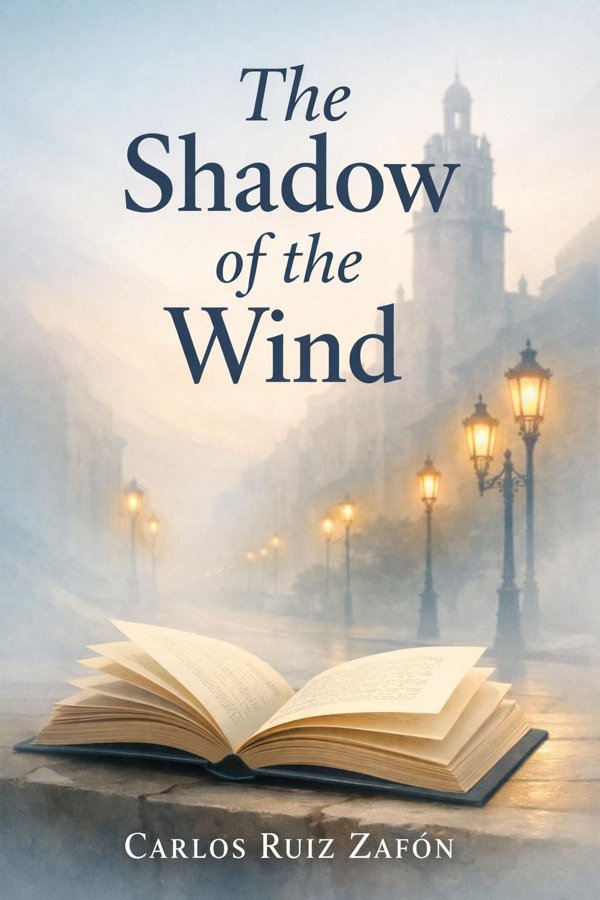
The Shadow of the Wind: Summary & Key Insights
 10 min9 chaptersAudio available
Key Takeaways from The Shadow of the Wind
Some books entertain us, but a few seem to choose us.
The past rarely stays buried; it waits in corners, names, and silences.
In dark times, friendship often becomes a form of salvation.
Love in this novel is never simple; it is powerful precisely because it is shadowed by danger, timing, and memory.
Evil often survives not because it is stronger, but because others learn to look away.
What Is The Shadow of the Wind About?
The Shadow of the Wind by Carlos Ruiz Zafón is a bestsellers book spanning 6 pages. Set in the wounded streets of postwar Barcelona, The Shadow of the Wind begins with a boy, a secret library, and a single forgotten novel that changes everything. When young Daniel Sempere is taken by his father to the Cemetery of Forgotten Books, he chooses a mysterious volume by an obscure author named Julián Carax. What starts as a reader’s fascination soon becomes an obsession, drawing Daniel into a decades-old web of vanished identities, forbidden love, political corruption, revenge, and buried grief. As he hunts for the truth about Carax, Daniel finds that books do not merely reflect life—they can shape it, haunt it, and sometimes save it. This novel matters because it is far more than a literary mystery. Carlos Ruiz Zafón uses suspense, romance, gothic atmosphere, and historical memory to explore how stories preserve human lives from erasure. Barcelona itself becomes a living character: beautiful, dangerous, secretive, and scarred by war. Zafón, one of the most internationally celebrated Spanish novelists of his generation, wrote with rare cinematic richness and emotional depth. The result is a novel that invites readers to lose themselves in a mystery while reflecting on memory, identity, and the enduring power of literature.
This FizzRead summary covers all 9 key chapters of The Shadow of the Wind in approximately 10 minutes, distilling the most important ideas, arguments, and takeaways from Carlos Ruiz Zafón's work. Also available as an audio summary and Key Quotes Podcast.
The Shadow of the Wind
Set in the wounded streets of postwar Barcelona, The Shadow of the Wind begins with a boy, a secret library, and a single forgotten novel that changes everything. When young Daniel Sempere is taken by his father to the Cemetery of Forgotten Books, he chooses a mysterious volume by an obscure author named Julián Carax. What starts as a reader’s fascination soon becomes an obsession, drawing Daniel into a decades-old web of vanished identities, forbidden love, political corruption, revenge, and buried grief. As he hunts for the truth about Carax, Daniel finds that books do not merely reflect life—they can shape it, haunt it, and sometimes save it.
This novel matters because it is far more than a literary mystery. Carlos Ruiz Zafón uses suspense, romance, gothic atmosphere, and historical memory to explore how stories preserve human lives from erasure. Barcelona itself becomes a living character: beautiful, dangerous, secretive, and scarred by war. Zafón, one of the most internationally celebrated Spanish novelists of his generation, wrote with rare cinematic richness and emotional depth. The result is a novel that invites readers to lose themselves in a mystery while reflecting on memory, identity, and the enduring power of literature.
Who Should Read The Shadow of the Wind?
This book is perfect for anyone interested in bestsellers and looking to gain actionable insights in a short read. Whether you're a student, professional, or lifelong learner, the key ideas from The Shadow of the Wind by Carlos Ruiz Zafón will help you think differently.
- ✓Readers who enjoy bestsellers and want practical takeaways
- ✓Professionals looking to apply new ideas to their work and life
- ✓Anyone who wants the core insights of The Shadow of the Wind in just 10 minutes
Want the full summary?
Get instant access to this book summary and 100K+ more with Fizz Moment.
Get Free SummaryAvailable on App Store • Free to download
Key Chapters
Some books entertain us, but a few seem to choose us. That is the emotional spark at the heart of Daniel Sempere’s journey. As a child, Daniel enters the Cemetery of Forgotten Books, a hidden sanctuary where abandoned volumes wait for new guardians. There he selects The Shadow of the Wind by Julián Carax, unaware that this decision will alter the course of his life. Zafón uses this moment to show how reading can become an awakening: curiosity turns into devotion, and devotion into identity.
Daniel’s discovery matters because it is not simply about plot. It captures the private, transformative bond between reader and book. Many people can remember a novel they encountered at exactly the right moment, one that made the world feel larger and more mysterious. Daniel’s attachment to Carax’s novel reflects that experience. He does not read passively; he enters into a relationship with the text and begins asking questions no one else seems willing to answer.
This idea extends beyond literature. In real life, a single work of art, teacher, conversation, or memory can reshape a person’s direction. Daniel’s curiosity drives him toward adulthood, moral courage, and emotional complexity. His journey reminds us that the things we love deeply often become the map by which we navigate the world.
Zafón also suggests that wonder is an act of resistance. In a grim, authoritarian society, preserving curiosity is a way of preserving freedom. Daniel’s first encounter with Carax becomes the seed of a larger rebellion against forgetting, silence, and fear.
Actionable takeaway: Pay attention to the stories, ideas, or passions that awaken unusual intensity in you—they may be pointing toward a deeper purpose.
In dark times, friendship often becomes a form of salvation. One of the novel’s greatest strengths is its portrayal of companionship, especially through Fermín Romero de Torres, whose wit, resilience, and loyalty provide both comic relief and moral force. Though the world of The Shadow of the Wind is full of cruelty, betrayal, and violence, Zafón refuses to let darkness have the final word. Humor becomes a survival strategy, and friendship becomes a shield against despair.
Fermín is not merely an entertaining side character. He represents the dignity of those broken by history yet not defeated by it. Scarred by political persecution and poverty, he still chooses cleverness, tenderness, and courage. Through his bond with Daniel, the novel shows how intergenerational friendship can shape character. Daniel offers trust and opportunity; Fermín offers street wisdom, emotional insight, and fierce devotion.
This relationship feels deeply practical because it reflects a truth about real life: people often survive hardship not through solitary strength but through bonds of care. A loyal friend can sharpen judgment, lighten grief, and restore perspective. Fermín’s humor, in particular, shows that laughter is not denial. It can be a refusal to surrender one’s humanity.
The novel encourages readers to value those who walk with them through uncertainty. Mentors, friends, and unexpected allies can help us endure periods when we cannot see clearly on our own. Daniel’s quest would likely fail without Fermín’s presence, proving that mystery-solving, like life, is rarely a solo act.
Actionable takeaway: Invest in friendships that combine honesty, humor, and loyalty—those relationships can sustain you through challenges that talent or intelligence alone cannot solve.
Love in this novel is never simple; it is powerful precisely because it is shadowed by danger, timing, and memory. Through parallel romances across generations, Zafón explores how desire can elevate a life while also exposing it to ruin. Julián Carax’s doomed love and Daniel’s own emotional awakening reveal that love is both revelation and risk. To love deeply is to become vulnerable—not only to joy, but to absence, misunderstanding, and grief.
What makes this theme resonate is its layered treatment. Zafón does not present romantic love as sentimental rescue. Instead, he shows how social class, family pressure, political conditions, and personal fear can distort or destroy intimate bonds. Love becomes entangled with secrecy and sacrifice. In this world, the heart is not isolated from history; private feeling is constantly invaded by public violence.
Yet the novel does not become cynical. It argues that love remains meaningful even when it cannot prevent suffering. In fact, its fragility is part of its value. Daniel learns that to love someone honestly requires courage, patience, and responsibility. Carax’s story, by contrast, shows what can happen when passion is consumed by obsession, guilt, and unresolved wounds.
Readers can apply this insight by recognizing that relationships are shaped not only by emotion but by context. Family patterns, unhealed trauma, and external pressures all matter. Love grows stronger when people confront these realities instead of pretending feeling alone will solve everything.
Actionable takeaway: Treat love as a commitment that requires truth, courage, and emotional awareness—not just intensity—if you want it to endure beyond fantasy.
Evil often survives not because it is stronger, but because others learn to look away. One of the novel’s darkest and most important ideas is how corruption spreads through fear, secrecy, and the abuse of authority. Postwar Barcelona is not merely a backdrop; it is a society in which power protects cruelty and punishes truth. Through figures tied to political violence and personal vengeance, Zafón shows how institutional force can invade the most private corners of life.
The novel’s antagonistic forces are terrifying precisely because they blur the line between official authority and moral depravity. Violence is not random. It is often justified, hidden, or normalized by systems that reward obedience. This creates an atmosphere where people censor themselves, conceal the past, and make compromises to survive. The result is a culture of silence in which injustice deepens over time.
Daniel’s journey becomes a moral education in this reality. He begins as a curious reader, but his search gradually forces him to confront what fear does to a society. He sees how reputations are manipulated, how vulnerable people are cornered, and how truth becomes dangerous when it threatens the powerful.
This theme remains relevant. In workplaces, communities, and governments, people may tolerate misconduct because speaking up feels costly. Zafón reminds us that silence can protect harm as effectively as direct participation. At the same time, he shows that individual acts of courage matter. Small refusals to submit can preserve justice when institutions fail.
Actionable takeaway: When you see fear being used to suppress truth, do not dismiss it as someone else’s problem—naming abuse early is one of the strongest defenses against deeper corruption.
To be forgotten is one of the novel’s deepest fears, and storytelling is its answer. The Cemetery of Forgotten Books symbolizes a beautiful, urgent belief: books preserve human lives that might otherwise vanish. Julián Carax’s novels are nearly erased from the world, yet Daniel’s devotion revives their meaning. In this way, Zafón presents literature as more than entertainment. Stories become vessels of memory, dignity, and resistance.
This theme gives the novel its unusual emotional power. Daniel is not just solving a puzzle; he is participating in an act of preservation. Every time he asks about Carax, reads his work, or protects a book from destruction, he is fighting oblivion. The same is true for the many characters whose hidden histories finally come to light. To tell the truth about a life is to refuse its erasure.
Readers can apply this idea broadly. We all preserve what matters through attention. Family stories, old letters, photographs, journals, and creative work carry identities across time. When these disappear, something irreplaceable can vanish with them. The novel encourages us to become custodians of memory in our own lives.
It also honors the reciprocal relationship between books and readers. Daniel saves Carax’s work, but Carax’s work also shapes Daniel’s moral imagination. Literature protects us from narrowing into the present moment. It introduces us to lives not our own and teaches us to care beyond immediate utility.
Actionable takeaway: Preserve the stories that matter to you—share them, write them down, revisit them—because memory survives only when someone chooses to carry it forward.
Some settings hold action; others generate it. In The Shadow of the Wind, Barcelona is not simply where events happen—it is the emotional architecture of the novel. Its alleys, mansions, cemeteries, bookshops, police offices, cafés, and ruined corners shape every encounter. Zafón renders the city with such atmosphere that it becomes a breathing presence: seductive, wounded, elegant, and haunted by the aftermath of civil conflict.
This matters because place in the novel is inseparable from meaning. The city’s beauty coexists with decay, much like the characters themselves. Grand buildings hide family secrets; dark streets carry political menace; forgotten spaces shelter buried truths. Barcelona mirrors the novel’s major themes: memory, concealment, and the collision between art and brutality.
Zafón’s treatment of setting offers a useful lesson in perception. We often move through familiar places without noticing how deeply they influence our mood and choices. The novel invites us to read cities as texts. A neighborhood can reveal class divisions, historical trauma, or collective aspirations. Architecture can preserve the traces of what a society wants to remember—or forget.
For readers, this also explains why the book feels so immersive. Setting is not decorative; it is narrative. Barcelona guides Daniel’s search, intensifies suspense, and grounds abstract themes in sensory detail. Rain, shadow, stone, and dust all become part of the storytelling.
Actionable takeaway: Pay closer attention to the places you inhabit—their histories, silences, and textures—because environments often shape your understanding more profoundly than you realize.
We like to imagine that we invent ourselves freely, but much of identity arrives before choice. Daniel’s coming-of-age story reveals how individuals inherit emotional patterns, social expectations, and unfinished stories from those who came before them. As he uncovers the life of Julián Carax, he becomes aware of eerie parallels between their experiences. This resemblance creates both danger and opportunity: inherited patterns can trap us, but they can also teach us.
Zafón suggests that identity is not fixed or isolated. Daniel is shaped by his father’s gentleness, the city’s violence, the books he reads, the friends he trusts, and the secrets he uncovers. Carax functions as a kind of shadow-self, a possible future or distorted mirror. By learning Carax’s history, Daniel gains the chance to avoid repeating its most destructive mistakes.
This idea applies widely. Many people discover, often later in life, that they have unconsciously repeated family dynamics or absorbed inherited beliefs about love, status, fear, or ambition. Awareness does not erase these influences, but it creates room for agency. Daniel’s maturation lies not in escaping all inheritance but in understanding it well enough to choose differently.
The novel therefore treats self-knowledge as an ethical task. To know who you are, you must know what has shaped you. Reading, remembering, and questioning become tools of freedom.
Actionable takeaway: Reflect on the patterns you have inherited—from family, culture, and past experience—and decide intentionally which ones deserve to continue through you.
Not all wounds can be undone, but many can be transformed when truth is finally faced. Beneath its mystery and gothic drama, The Shadow of the Wind is a novel about redemption—personal, relational, and historical. Characters who have lived under false names, hidden guilt, or years of silence move toward healing only when buried realities are acknowledged. Redemption here is not innocence regained. It is damaged people choosing honesty, loyalty, and mercy in a broken world.
This is one of Zafón’s most mature insights. He does not offer easy absolution. The harms in the novel are real, and many losses remain irreversible. But he shows that bitterness, secrecy, and revenge deepen suffering, while truth creates the possibility of connection. Daniel’s role in uncovering the past allows others to reclaim their stories. His development also depends on compassion: solving the mystery is not enough; he must learn to understand the pain behind people’s actions.
In practical terms, the novel reminds us that unresolved history often controls present behavior. Families, friendships, and communities cannot move forward securely while living inside denial. Yet truth without compassion can become another weapon. Zafón insists on both. People need facts, but they also need tenderness if those facts are to heal rather than destroy.
By the end, the novel affirms that literature itself can participate in redemption. To tell a story fully is to restore complexity to lives reduced by rumor, fear, or oblivion.
Actionable takeaway: When dealing with past harm, pursue truth with empathy—lasting repair usually requires both clarity about what happened and compassion for those carrying its consequences.
All Chapters in The Shadow of the Wind
About the Author
Carlos Ruiz Zafón (1964–2020) was a Spanish novelist born in Barcelona and one of the most widely read contemporary authors in the Spanish language. Before devoting himself fully to fiction, he worked in advertising, an experience that sharpened his sense of pacing, imagery, and dramatic atmosphere. He first published successful young adult novels, but achieved international acclaim with The Shadow of the Wind, the novel that introduced many readers to the world of the Cemetery of Forgotten Books. Zafón became known for blending gothic suspense, historical fiction, romance, and literary reflection in a style that felt both elegant and cinematic. His novels, translated into dozens of languages, earned a global following. He is remembered for his deep love of storytelling and his unmatched ability to make books themselves feel magical.
Get This Summary in Your Preferred Format
Read or listen to the The Shadow of the Wind summary by Carlos Ruiz Zafón anytime, anywhere. FizzRead offers multiple formats so you can learn on your terms — all free.
Available formats: App · Audio · PDF · EPUB — All included free with FizzRead
Download The Shadow of the Wind PDF and EPUB Summary
Key Quotes from The Shadow of the Wind
“Some books entertain us, but a few seem to choose us.”
“The past rarely stays buried; it waits in corners, names, and silences.”
“In dark times, friendship often becomes a form of salvation.”
“Love in this novel is never simple; it is powerful precisely because it is shadowed by danger, timing, and memory.”
“Evil often survives not because it is stronger, but because others learn to look away.”
Frequently Asked Questions about The Shadow of the Wind
The Shadow of the Wind by Carlos Ruiz Zafón is a bestsellers book that explores key ideas across 9 chapters. Set in the wounded streets of postwar Barcelona, The Shadow of the Wind begins with a boy, a secret library, and a single forgotten novel that changes everything. When young Daniel Sempere is taken by his father to the Cemetery of Forgotten Books, he chooses a mysterious volume by an obscure author named Julián Carax. What starts as a reader’s fascination soon becomes an obsession, drawing Daniel into a decades-old web of vanished identities, forbidden love, political corruption, revenge, and buried grief. As he hunts for the truth about Carax, Daniel finds that books do not merely reflect life—they can shape it, haunt it, and sometimes save it. This novel matters because it is far more than a literary mystery. Carlos Ruiz Zafón uses suspense, romance, gothic atmosphere, and historical memory to explore how stories preserve human lives from erasure. Barcelona itself becomes a living character: beautiful, dangerous, secretive, and scarred by war. Zafón, one of the most internationally celebrated Spanish novelists of his generation, wrote with rare cinematic richness and emotional depth. The result is a novel that invites readers to lose themselves in a mystery while reflecting on memory, identity, and the enduring power of literature.
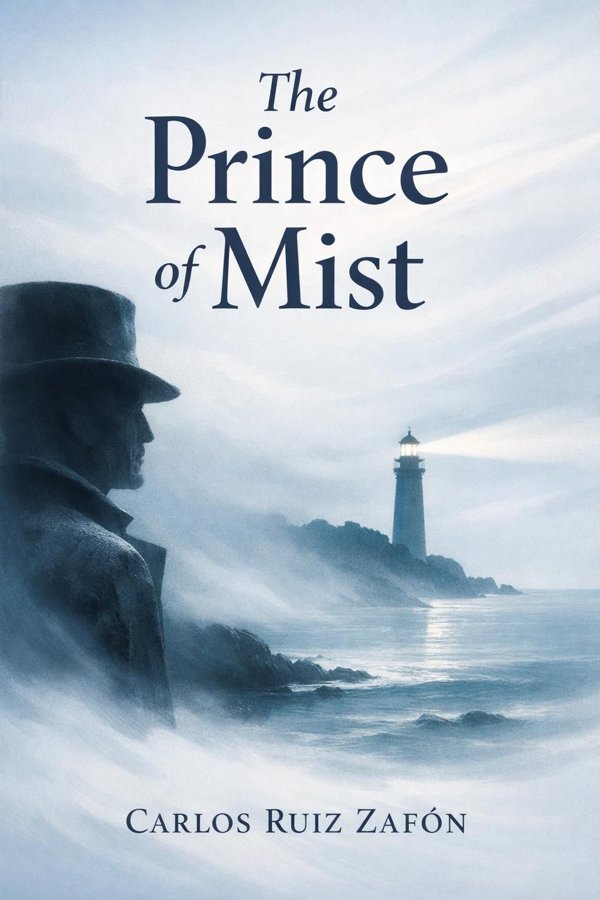
More by Carlos Ruiz Zafón
You Might Also Like

The Godfather
Mario Puzo
10 min
The Handmaid's Tale
Margaret Atwood
10 min
The Hunger Games
Suzanne Collins
10 min
The Nightingale
Kristin Hannah
10 min
The Seven Husbands of Evelyn Hugo
Taylor Jenkins Reid
10 min
Backwater Justice
Fern Michaels
10 minBrowse by Category
Ready to read The Shadow of the Wind?
Get the full summary and 100K+ more books with Fizz Moment.