
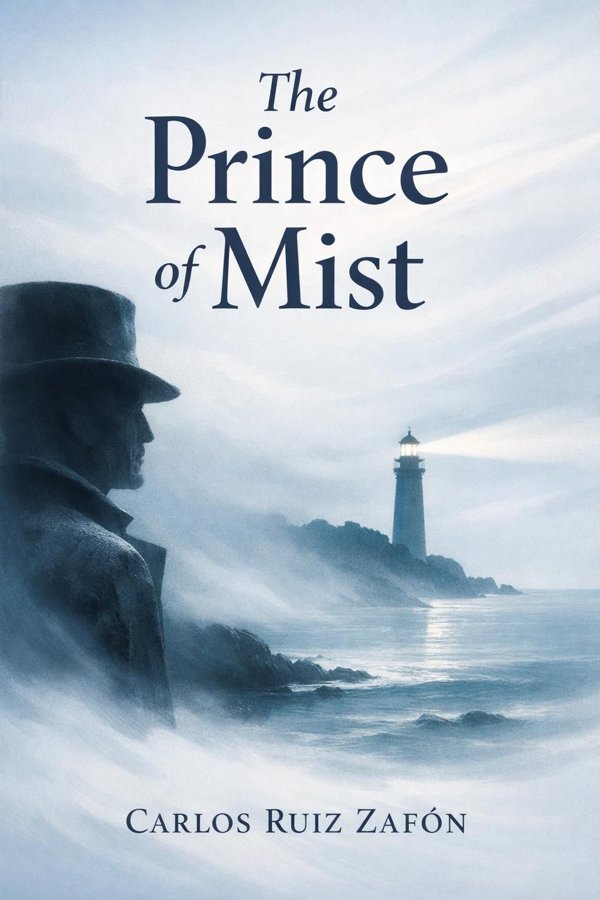
The Prince of Mist: Summary & Key Insights
 10 min8 chaptersAudio available
Key Takeaways from The Prince of Mist
A new beginning often carries the hidden weight of what we are trying to escape.
The people we meet in moments of uncertainty often become guides into truths we would never discover alone.
Evil is most dangerous when it offers exactly what we think we want.
Some debts cannot be erased; they can only be answered through sacrifice.
Growing up often begins with the realization that wonder and fear can occupy the same place.
What Is The Prince of Mist About?
The Prince of Mist by Carlos Ruiz Zafón is a bestsellers book spanning 4 pages. Some stories feel like a dream you cannot quite shake, and The Prince of Mist is one of them. Carlos Ruiz Zafón’s debut novel follows Max Carver, a boy whose family escapes the dangers of war to start over in a quiet coastal town. But the house they move into holds the memory of a dead child, the nearby grounds conceal a sinister garden of statues, and the sea seems to carry secrets older than anyone dares to name. What begins as a coming-of-age adventure slowly turns into a gothic mystery about memory, desire, sacrifice, and evil that never truly disappears. The novel matters because it shows, even in Zafón’s early work, the qualities that later made him world-famous: a gift for atmosphere, emotionally charged plotting, and a rare ability to blend youthful wonder with genuine dread. Though written for younger readers, The Prince of Mist speaks powerfully to adults as well, especially anyone interested in how fear, love, and longing shape human choices. It is both an accessible supernatural tale and an early showcase of a major literary voice, making it a memorable entry point into Zafón’s imaginative world.
This FizzRead summary covers all 8 key chapters of The Prince of Mist in approximately 10 minutes, distilling the most important ideas, arguments, and takeaways from Carlos Ruiz Zafón's work. Also available as an audio summary and Key Quotes Podcast.
The Prince of Mist
Some stories feel like a dream you cannot quite shake, and The Prince of Mist is one of them. Carlos Ruiz Zafón’s debut novel follows Max Carver, a boy whose family escapes the dangers of war to start over in a quiet coastal town. But the house they move into holds the memory of a dead child, the nearby grounds conceal a sinister garden of statues, and the sea seems to carry secrets older than anyone dares to name. What begins as a coming-of-age adventure slowly turns into a gothic mystery about memory, desire, sacrifice, and evil that never truly disappears.
The novel matters because it shows, even in Zafón’s early work, the qualities that later made him world-famous: a gift for atmosphere, emotionally charged plotting, and a rare ability to blend youthful wonder with genuine dread. Though written for younger readers, The Prince of Mist speaks powerfully to adults as well, especially anyone interested in how fear, love, and longing shape human choices. It is both an accessible supernatural tale and an early showcase of a major literary voice, making it a memorable entry point into Zafón’s imaginative world.
Who Should Read The Prince of Mist?
This book is perfect for anyone interested in bestsellers and looking to gain actionable insights in a short read. Whether you're a student, professional, or lifelong learner, the key ideas from The Prince of Mist by Carlos Ruiz Zafón will help you think differently.
- ✓Readers who enjoy bestsellers and want practical takeaways
- ✓Professionals looking to apply new ideas to their work and life
- ✓Anyone who wants the core insights of The Prince of Mist in just 10 minutes
Want the full summary?
Get instant access to this book summary and 100K+ more with Fizz Moment.
Get Free SummaryAvailable on App Store • Free to download
Key Chapters
A new beginning often carries the hidden weight of what we are trying to escape. In The Prince of Mist, the Carver family leaves a world unsettled by war and relocates to a seaside village that seems peaceful on the surface. For Max, the move promises freedom, adventure, and distance from danger. Yet the house they inhabit is not empty of history. It once belonged to another family, and the death of a child still lingers in its rooms like a stain no one can wash away.
Zafón uses the house to show that places remember. The Carvers do not simply move into a building; they step into an unfinished story. Strange incidents begin almost immediately: unsettling feelings, mysterious discoveries, and an atmosphere that suggests the family has entered a space where the past is still active. This idea is central to the novel’s emotional force. Safety is not only about geography. You can flee war, relocate, and seek calm, yet still be confronted by grief, secrets, and forces beyond explanation.
In everyday life, this idea applies whenever people imagine that a change of scenery alone will solve deeper problems. Moving cities, starting a new job, or ending one chapter of life can help, but unresolved histories often travel with us. The novel encourages readers to notice what remains unspoken in families, homes, and communities.
Actionable takeaway: when entering a new phase of life, look not only at what is beginning but also at what unfinished stories, emotions, or patterns may still need to be understood.
The people we meet in moments of uncertainty often become guides into truths we would never discover alone. Max’s friendship with Roland, a local boy deeply connected to the sea, opens the novel outward. Through Roland, Max gains access not just to adventure but to the hidden emotional geography of the town. Their bond is shaped by curiosity, youthful courage, and the illusion that summer can suspend danger. Yet beneath their easy companionship lies a darker inheritance tied to family history and an old pact that has not been forgotten.
The sea in the novel is more than scenery. It symbolizes freedom, risk, and memory. Roland belongs to it in a way Max does not at first understand, and Victor Kray, the lighthouse keeper who raised him, stands as a guardian between the known world and what lurks beyond it. As Max spends more time with Roland, the friendship becomes a way of approaching buried truths. What begins as shared exploration turns into a confrontation with forces that have shaped Roland’s life long before Max arrived.
This key idea matters because friendships in adolescence often become the lens through which we understand loyalty, identity, and loss. We may think we are simply spending time together, but often we are learning how other people carry pain and history. The novel shows that real friendship means seeing the hidden burdens another person bears.
Actionable takeaway: treat close friendships as opportunities for deeper listening, because behind confidence or charm there may be struggles, histories, and fears that only trust can reveal.
Evil is most dangerous when it offers exactly what we think we want. The Prince of Mist, the novel’s mysterious and malevolent figure, is not merely a monster hiding in shadows. He represents temptation itself: a supernatural force that grants wishes at a terrible cost. This makes him more unsettling than a simple villain, because his power depends on human desire. He does not only attack; he bargains, distorts, and waits for longing to open the door.
As Max pieces together the story behind the village’s dark history, he learns that the Prince of Mist has influenced lives across generations. Old photographs, stories from Victor Kray, and clues hidden in the eerie garden of statues slowly reveal that the present danger is tied to choices made long ago. This structure gives the book its suspense. Max is not solving an abstract mystery. He is discovering how one person’s wish, once granted, can ripple outward and wound others many years later.
The idea of a curse in the novel can be read both literally and symbolically. On one level, it is a gothic fantasy about a sinister being. On another, it reflects how destructive choices, broken promises, and selfish desires can become inherited problems. In real life, people often face consequences created by decisions made before they were even born, whether in families, institutions, or societies.
Actionable takeaway: whenever an opportunity seems to promise everything at no cost, pause and ask what hidden price, compromise, or long-term consequence may be attached to it.
Some debts cannot be erased; they can only be answered through sacrifice. As the novel moves toward its climax, the supernatural mystery becomes deeply personal. The threat posed by the Prince of Mist converges with the truth about Roland’s identity and the choices made by those who came before him. What seemed at first like a ghostly puzzle turns into a moral reckoning in which love, guilt, and responsibility collide.
The final confrontation is powerful because Zafón refuses to make victory simple. Redemption in this story does not mean neat restoration or easy survival. It comes at a cost. Characters are forced to act not for their own comfort but for the protection of someone else. Victor Kray’s long burden of memory and regret finds its fullest meaning here, as the past finally demands payment. The sea, the lighthouse, and the fog all intensify the sense that the characters stand at the edge of both life and myth.
This ending captures one of the novel’s deepest truths: mature love is often measured by what one is willing to give up. In many stories for younger readers, danger ends once the villain is defeated. In The Prince of Mist, the emotional aftermath matters just as much. Survival is not the only outcome that counts; what matters is whether someone acts with courage and integrity when there is no painless choice.
Actionable takeaway: when facing difficult decisions, judge the right path not by convenience but by which choice best protects others, honors truth, and accepts responsibility.
Growing up often begins with the realization that wonder and fear can occupy the same place. One of the novel’s most compelling strengths is the way it presents adolescence not as innocence untouched by danger, but as a threshold where imagination becomes a way of perceiving hidden realities. Max is curious, observant, and eager for adventure, qualities that make him an appealing protagonist. But those same qualities also draw him toward truths that adults either ignore or cannot fully explain.
Zafón carefully balances youthful excitement with mounting dread. Bicycles, seaside excursions, exploration, and new friendship create the feeling of a classic summer adventure. Yet each discovery carries a shadow: a disturbing dream, a family secret, a grotesque statue, a story that sounds too strange to be fiction. This tonal contrast is why the novel resonates so strongly. The world still holds enchantment, but enchantment can turn ominous without warning.
For readers, this duality reflects real psychological experience. Adolescence is a time when the world expands quickly. Young people begin to understand mortality, betrayal, and moral complexity, often while still craving magic and possibility. The book honors that transitional emotional state. It does not mock youthful imagination; instead, it suggests that imagination may sometimes perceive danger before rational explanation catches up.
Actionable takeaway: value curiosity, but pair it with discernment. When something feels fascinating and unsettling at once, take that instinct seriously and investigate with care rather than rushing blindly ahead.
What we want most can become the doorway through which we lose ourselves. The Prince of Mist is a supernatural figure, but his deepest function in the novel is moral. He exposes how desire operates when it is detached from wisdom. Wishes are not neutral in this story. To ask for something from a dark force is already to accept a distorted view of life, one in which immediate fulfillment matters more than long-term consequence, and personal gain outweighs moral responsibility.
This theme elevates the novel beyond a conventional ghost story. The central terror is not just an evil presence; it is the human willingness to strike dangerous bargains. The curse persists because someone once valued a desired outcome over the hidden cost. That dynamic feels timeless. Whether the temptation is power, safety, love, status, or escape, the novel asks what happens when we seek shortcuts around pain, uncertainty, or loss.
In real life, such bargains are rarely supernatural. They appear as ethical compromises, manipulative relationships, or decisions that solve one problem while creating several worse ones. A person may trade integrity for approval, truth for convenience, or long-term well-being for temporary relief. Zafón gives this pattern mythic form, making the abstract vividly memorable.
The novel does not argue that desire itself is wrong. Instead, it warns that desire must be tested. Not every offer should be accepted, and not every longing deserves obedience. Wisdom lies in examining what a promise asks us to become.
Actionable takeaway: before saying yes to an appealing opportunity, ask whether it aligns with your values, or whether it demands a compromise that your future self will regret.
Sometimes a story’s setting does not simply surround the plot; it explains it. One reason The Prince of Mist remains memorable is Zafón’s extraordinary atmosphere. The coastal town, the drifting fog, the lighthouse, the abandoned garden, and the sea itself create a world where beauty and menace are inseparable. The environment is not decorative. It shapes the reader’s emotional understanding of the novel long before every mystery is clarified.
The sea, especially, carries multiple meanings. It suggests freedom and youth, but also depth, danger, and the unknowable. The lighthouse stands as a symbol of guidance amid uncertainty, while the fog represents obscured truth. Even the statues in the garden communicate a terrifying suspension between motion and stillness, life and death. Zafón’s gift lies in using these images to make abstract themes tangible. Fear becomes weather. Memory becomes landscape. Evil becomes a smile frozen in stone.
This is worth noticing because readers often focus only on plot, but atmosphere can be one of the strongest vehicles of meaning in fiction. It teaches us how to feel before it tells us what to think. In daily life, environments affect us similarly. Certain places intensify reflection, anxiety, calm, or nostalgia, often before we consciously identify why.
For aspiring readers and writers, The Prince of Mist is an excellent lesson in how setting can do narrative work. The mood is so carefully built that even quiet scenes seem charged with significance.
Actionable takeaway: pay attention to how environments influence your emotions and decisions; the spaces around you may be shaping your experience more than you realize.
All Chapters in The Prince of Mist
About the Author
Carlos Ruiz Zafón (1964–2020) was a Spanish novelist whose work combined gothic atmosphere, suspense, emotional depth, and a profound love of storytelling. Born in Barcelona, he began his professional life in advertising before turning to fiction, where he quickly distinguished himself with imaginative young adult novels such as The Prince of Mist, The Midnight Palace, and The Watcher in the Shadows. He later achieved worldwide acclaim with The Shadow of the Wind and the Cemetery of Forgotten Books series, which made him one of the most widely read Spanish-language authors of his time. Zafón’s writing is known for its cinematic settings, layered mysteries, and recurring themes of memory, loss, books, and hidden histories. His novels continue to attract readers across generations and around the world.
Get This Summary in Your Preferred Format
Read or listen to the The Prince of Mist summary by Carlos Ruiz Zafón anytime, anywhere. FizzRead offers multiple formats so you can learn on your terms — all free.
Available formats: App · Audio · PDF · EPUB — All included free with FizzRead
Download The Prince of Mist PDF and EPUB Summary
Key Quotes from The Prince of Mist
“A new beginning often carries the hidden weight of what we are trying to escape.”
“The people we meet in moments of uncertainty often become guides into truths we would never discover alone.”
“Evil is most dangerous when it offers exactly what we think we want.”
“Some debts cannot be erased; they can only be answered through sacrifice.”
“Growing up often begins with the realization that wonder and fear can occupy the same place.”
Frequently Asked Questions about The Prince of Mist
The Prince of Mist by Carlos Ruiz Zafón is a bestsellers book that explores key ideas across 8 chapters. Some stories feel like a dream you cannot quite shake, and The Prince of Mist is one of them. Carlos Ruiz Zafón’s debut novel follows Max Carver, a boy whose family escapes the dangers of war to start over in a quiet coastal town. But the house they move into holds the memory of a dead child, the nearby grounds conceal a sinister garden of statues, and the sea seems to carry secrets older than anyone dares to name. What begins as a coming-of-age adventure slowly turns into a gothic mystery about memory, desire, sacrifice, and evil that never truly disappears. The novel matters because it shows, even in Zafón’s early work, the qualities that later made him world-famous: a gift for atmosphere, emotionally charged plotting, and a rare ability to blend youthful wonder with genuine dread. Though written for younger readers, The Prince of Mist speaks powerfully to adults as well, especially anyone interested in how fear, love, and longing shape human choices. It is both an accessible supernatural tale and an early showcase of a major literary voice, making it a memorable entry point into Zafón’s imaginative world.
More by Carlos Ruiz Zafón
You Might Also Like
The Godfather
Mario Puzo
10 min
The Handmaid's Tale
Margaret Atwood
10 min
The Hunger Games
Suzanne Collins
10 min
The Nightingale
Kristin Hannah
10 min
The Seven Husbands of Evelyn Hugo
Taylor Jenkins Reid
10 min
Backwater Justice
Fern Michaels
10 minBrowse by Category
Ready to read The Prince of Mist?
Get the full summary and 100K+ more books with Fizz Moment.