
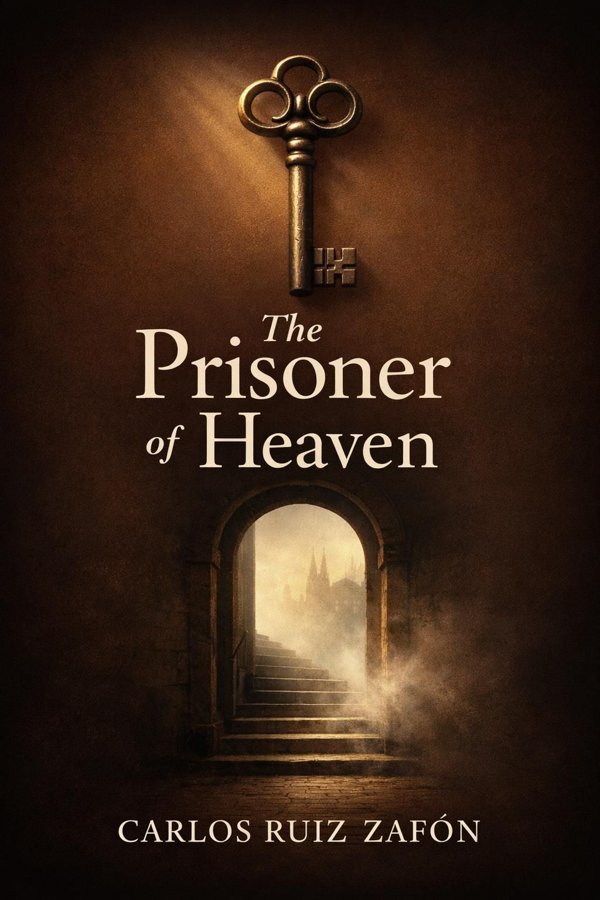
The Prisoner of Heaven: Summary & Key Insights
 10 min9 chaptersAudio available
Key Takeaways from The Prisoner of Heaven
A life can appear settled long before its deepest truths are finished with it.
The most elegant people often carry the ugliest histories.
Survival keeps people alive; friendship teaches them how to live again.
We do not enter life as blank pages; we enter as continuations.
When power seeks to erase people, stories become a form of shelter.
What Is The Prisoner of Heaven About?
The Prisoner of Heaven by Carlos Ruiz Zafón is a classics book spanning 5 pages. Some novels tell a story; Carlos Ruiz Zafón’s The Prisoner of Heaven unlocks an entire hidden chamber beneath one. Set in Barcelona in 1957, this atmospheric installment in the Cemetery of Forgotten Books cycle reunites Daniel Sempere and Fermín Romero de Torres at a moment when their hard-won peace is disrupted by a mysterious visitor and an old book inscribed with menace. What begins as an unsettling encounter in the Sempere bookshop quickly opens into a buried history of betrayal, imprisonment, political brutality, and literary obsession. The novel matters because it is both a gripping mystery and a crucial bridge between The Shadow of the Wind and The Angel’s Game. Zafón reveals how private grief and public terror intertwine, showing that the past is never truly dead in a city built on secrecy. His authority comes not only from masterful plotting, but from his singular ability to fuse gothic suspense, emotional intimacy, and historical memory into one immersive world. The Prisoner of Heaven is short, elegant, and essential: a novel about friendship, identity, and the stories that preserve what power tries to erase.
This FizzRead summary covers all 9 key chapters of The Prisoner of Heaven in approximately 10 minutes, distilling the most important ideas, arguments, and takeaways from Carlos Ruiz Zafón's work. Also available as an audio summary and Key Quotes Podcast.
The Prisoner of Heaven
Some novels tell a story; Carlos Ruiz Zafón’s The Prisoner of Heaven unlocks an entire hidden chamber beneath one. Set in Barcelona in 1957, this atmospheric installment in the Cemetery of Forgotten Books cycle reunites Daniel Sempere and Fermín Romero de Torres at a moment when their hard-won peace is disrupted by a mysterious visitor and an old book inscribed with menace. What begins as an unsettling encounter in the Sempere bookshop quickly opens into a buried history of betrayal, imprisonment, political brutality, and literary obsession.
The novel matters because it is both a gripping mystery and a crucial bridge between The Shadow of the Wind and The Angel’s Game. Zafón reveals how private grief and public terror intertwine, showing that the past is never truly dead in a city built on secrecy. His authority comes not only from masterful plotting, but from his singular ability to fuse gothic suspense, emotional intimacy, and historical memory into one immersive world. The Prisoner of Heaven is short, elegant, and essential: a novel about friendship, identity, and the stories that preserve what power tries to erase.
Who Should Read The Prisoner of Heaven?
This book is perfect for anyone interested in classics and looking to gain actionable insights in a short read. Whether you're a student, professional, or lifelong learner, the key ideas from The Prisoner of Heaven by Carlos Ruiz Zafón will help you think differently.
- ✓Readers who enjoy classics and want practical takeaways
- ✓Professionals looking to apply new ideas to their work and life
- ✓Anyone who wants the core insights of The Prisoner of Heaven in just 10 minutes
Want the full summary?
Get instant access to this book summary and 100K+ more with Fizz Moment.
Get Free SummaryAvailable on App Store • Free to download
Key Chapters
A life can appear settled long before its deepest truths are finished with it. At the opening of The Prisoner of Heaven, Daniel Sempere is no longer the uncertain boy readers first met in The Shadow of the Wind. He is a husband, a father, and a bookseller trying to protect the quiet order of his life. Yet Zafón immediately undermines that stability through one of his favorite devices: the arrival of a stranger. A chilling man visits the Sempere bookshop, purchases a rare copy of The Count of Monte Cristo, and leaves it for Fermín with a message signed by someone who should belong to the past.
This moment sets the tone for the whole novel. In Zafón’s Barcelona, the past does not return politely. It enters disguised, symbolic, and unsettling. The stranger is not merely a plot trigger; he embodies the idea that memory, guilt, and unfinished history can reappear at any time, often through small encounters that expose how fragile our sense of control really is. Daniel wants to believe his life has become ordinary, but the bookshop itself is a place where forgotten stories wait to be awakened.
Readers can apply this insight beyond fiction. We often assume closure means events are over, but unresolved experiences tend to return indirectly: through old relationships, family revelations, inherited fears, or even places that reactivate memory. Zafón reminds us that paying attention to anomalies matters. A strange comment, a repeated pattern, or an unexplained silence may point toward truths we have avoided.
The practical lesson is simple: when something disturbs your version of the present, do not dismiss it too quickly. Investigate what it might be connected to. Ask what history is trying to make itself known. Actionable takeaway: treat disruptions not only as problems, but as clues to unresolved stories that deserve understanding.
The most elegant people often carry the ugliest histories. Fermín Romero de Torres is one of Zafón’s most beloved characters: witty, loyal, theatrical, and seemingly indestructible. But The Prisoner of Heaven strips away some of that protective comedy and reveals the violence that shaped him. Through his confession, readers learn of his imprisonment in Montjuïc, the notorious fortress where the Francoist regime silenced, tortured, and erased those it considered inconvenient. What had once seemed like colorful mystery in Fermín’s background becomes a direct confrontation with political repression.
Zafón uses Fermín’s memories to show how authoritarian systems do not merely punish bodies; they deform identity, trust, and time itself. Prison in this novel is both literal and symbolic. It is a machine designed to reduce people to fear, dependency, and invisibility. Yet even within that machinery, Fermín retains a spark of intelligence and humanity. His voice, full of irony and style, becomes an act of resistance. To tell his story is to refuse the erasure the regime intended.
The novel also links Fermín’s suffering to larger literary mysteries, especially through the appearance of David Martín. This connection matters because Zafón suggests that individual pain and mythic narrative are not separate realms. Stories are one way history survives. They carry what official records bury.
In practical terms, this key idea invites readers to look more closely at the polished personas people present. Humor can hide trauma. Charm can be a survival strategy. Institutions can protect cruelty behind bureaucratic language. Whether in families, workplaces, or nations, systems often appear orderly from the outside while doing damage underneath.
Actionable takeaway: listen carefully when someone chooses to reveal the history behind their mask. Honest listening is a way of restoring dignity to experiences that power tried to bury.
Survival keeps people alive; friendship teaches them how to live again. One of the most moving elements of The Prisoner of Heaven is its portrayal of the bond between Daniel and Fermín. The novel is full of intrigue, hidden identities, and dark revelations, but its emotional core lies in loyalty. Fermín’s escape from degradation is not achieved through heroic individualism alone. It becomes possible because of friendship, trust, and the willingness of others to help him reclaim a place in the world.
Zafón presents recovery not as a clean transformation but as a gradual reconstruction. Fermín does not stop being marked by what he suffered. Instead, he builds a new self around that damage: as a friend, employee, mentor, and eventually husband. The Sempere bookshop becomes more than a workplace; it is a sanctuary where a discarded man is given back his name, dignity, and future. Daniel, for his part, grows by learning that love is not abstract admiration but sustained presence.
This idea has clear real-world relevance. Many people emerging from hardship need more than sympathy. They need structures of belonging: work, community, trust, and routines that restore agency. Recovery is often relational. A person can be intelligent and determined, yet still require another person’s faith in them before they can imagine a future again.
The book also warns against romanticizing resilience. Fermín’s wit is not proof that suffering leaves no scars. Rather, it shows how resilience is often creative, improvised, and dependent on human connection. We rebuild through others as much as through ourselves.
Actionable takeaway: if someone in your life is recovering from loss, humiliation, or trauma, offer concrete forms of loyalty. Share opportunities, make room for them, and be consistent. Small acts of trust can become the foundation on which another person rebuilds a life.
We do not enter life as blank pages; we enter as continuations. As the mystery deepens, Daniel begins to realize that the dangers around him are not random. They are tied to his family, his father’s silences, and the hidden network connecting his life to earlier tragedies. This shift is crucial because The Prisoner of Heaven transforms Daniel from witness into inheritor. He is no longer simply observing old secrets unfold around him; he is implicated in them.
Zafón is especially interested in how family histories are transmitted through omission. What parents conceal is often as formative as what they say aloud. Daniel has grown up surrounded by books, tenderness, and moral decency, yet there are chambers of his inheritance he has not been allowed to enter. As he learns more, he also confronts a more adult reality: the people we love may have protected us not with truth, but with carefully managed silence.
This idea resonates widely. Many people discover in adulthood that their family story is partial, curated, or mythologized. Financial struggles, political compromises, betrayals, lost loves, or acts of courage may remain hidden until circumstances force them into the open. Such revelations can be destabilizing, but they can also deepen maturity. To know where we come from more fully is often painful, yet necessary.
Zafón shows that Daniel’s awakening is not merely informational. It is moral. To inherit a past is to decide what one will do with it: deny it, repeat it, or understand it. Knowledge does not erase pain, but it can prevent naivety.
Actionable takeaway: examine the silences in your own inherited story. Ask respectful questions, notice recurring patterns, and reflect on what unfinished histories may still shape your choices. Understanding inheritance is the first step toward transforming it.
When power seeks to erase people, stories become a form of shelter. The Cemetery of Forgotten Books has always been one of Zafón’s most unforgettable inventions, and in The Prisoner of Heaven it takes on even deeper meaning. It is not merely a magical archive for rare books; it is a sanctuary for memory itself. The novel suggests that stories preserve lives that official history distorts, suppresses, or abandons. In a world of prisons, censorship, and corruption, literature becomes a refuge where truth can survive in coded form.
This is why the novel’s interwoven structure matters. The links between Daniel, Fermín, David Martín, and earlier books in the series show that narratives are not isolated objects. They speak to each other across time. A forgotten novel, an inscription, a rumor, or a hidden manuscript can carry emotional and historical truth longer than institutions can contain it. The Cemetery symbolizes a moral responsibility: to remember what others would rather disappear.
The practical application extends beyond reading fiction. We all participate in preserving or losing memory. Families archive stories through photographs, letters, and repeated anecdotes. Communities preserve identity through oral history. Societies preserve justice by documenting what happened, especially when those in power try to revise it.
Zafón’s point is not that books solve suffering. Rather, they prevent certain kinds of death: oblivion, distortion, and moral amnesia. To read carefully is to participate in remembrance. To tell stories honestly is to resist erasure.
Actionable takeaway: become a keeper of memory. Save meaningful stories, ask elders for their histories, record what matters, and return to books that deepen your sense of human continuity. Preservation is not passive; it is an act of responsibility.
Some cities hold events; Zafón’s Barcelona generates them. In The Prisoner of Heaven, the city is not a decorative backdrop but a living force shaping mood, movement, class, danger, and desire. Its streets, cafés, prisons, bookshops, mansions, and alleys create a geography of memory. Public spaces hide private histories, and beauty exists beside brutality. The result is a setting so charged that readers feel the plot could emerge only here.
Barcelona in this novel carries multiple identities at once. It is cultured and damaged, elegant and haunted, intimate and politically scarred. The lingering effects of the Civil War and Francoist repression remain embedded in the city’s architecture and institutions. Montjuïc, especially, becomes more than a prison site; it is a monument to how states turn space into fear. By contrast, the Sempere bookshop and the Cemetery of Forgotten Books offer counter-spaces where human complexity can still breathe.
Zafón’s achievement lies in making environment morally expressive. Where characters go reveals who they are and what kind of world they inhabit. Narrow streets suggest secrecy. Dusty rooms suggest memory. Grand buildings often conceal corruption. In real life, places influence us too. Homes, schools, offices, neighborhoods, and cities shape behavior, expectations, and emotional tone more than we sometimes admit.
This invites a practical question: what kinds of spaces are you inhabiting, and what do they teach you? Are they built for fear, haste, status, or reflection? Which spaces nourish curiosity and which ones flatten it? Readers can use Zafón’s sensitivity to place as a model for reading their own environments more carefully.
Actionable takeaway: pay attention to the places that shape your daily life. Notice how physical surroundings affect thought, trust, and memory, and choose, when possible, to spend more time in spaces that protect depth rather than diminish it.
The best mysteries do more than ask what happened; they ask what hidden forces make events possible. The Prisoner of Heaven is a suspenseful novel, but Zafón uses mystery not simply to entertain. Every clue opens into a larger ethical question about guilt, complicity, revenge, and truth. The stranger in the bookshop, the inscriptions in books, the prison memories, and the links to David Martín all work as puzzle pieces, yet the real tension comes from what these revelations demand of the characters.
This is what gives the novel its depth. Secrets are not neutral. Someone usually benefits from concealment, and someone else pays the cost. Zafón repeatedly shows that solving a mystery can destabilize comfortable identities. Daniel wants answers, but answers may alter his understanding of family, loyalty, and innocence. Fermín tells the truth, but truth reopens pain. The novel therefore treats revelation as morally double-edged: necessary, yet dangerous.
In everyday life, curiosity also has ethical dimensions. Investigating a problem at work, in a family, or in history means asking who has been protected by silence. It means recognizing that facts are not detached objects; they affect relationships and responsibilities. Good inquiry requires both courage and care.
Zafón’s structure models this balance. He keeps readers eager for the next twist, but he never allows suspense to overshadow human consequence. The point of learning the truth is not victory. It is clearer moral vision.
Actionable takeaway: when facing a confusing situation, pursue facts with integrity. Ask not only what is hidden, but why it was hidden and who is harmed by the silence. Let investigation lead to responsibility, not just information.
Who we are is often part truth, part invention, and part survival strategy. Few characters embody this better than Fermín, whose speech, manners, flamboyance, and self-mythologizing charm seem almost theatrical. Yet The Prisoner of Heaven reveals that performance is not superficial in his case; it is one of the ways he survives. Reinvention allows him to move beyond degradation without pretending it never happened. His wit is a costume, but it is also armor.
Zafón repeatedly explores the instability of identity across the series, and this novel sharpens that theme. Characters carry aliases, hidden histories, revised biographies, and versions of themselves designed for different audiences. This does not mean identity is fake. It means identity is negotiated under pressure. In societies marked by censorship, class anxiety, and political danger, people learn quickly which selves are safe to display.
There is a practical lesson here. Modern life also demands performance: at work, online, in family roles, or in public settings. We present edited selves to navigate expectations. The danger lies in confusing adaptation with authenticity or assuming other people’s polished personas are their whole reality. Zafón encourages readers to become more discerning and more compassionate. A dramatic personality may conceal pain; a quiet one may conceal strength.
At the same time, the novel offers hope. Reinvention is not always deception. It can be a creative act of dignity, a way of claiming a future after humiliation. What matters is whether the performed self helps us move toward truth or further from it.
Actionable takeaway: examine the roles you perform and ask which ones protect your growth and which ones imprison you. Keep the adaptations that help you live, but make space for relationships where you do not have to hide behind them.
Some books stand alone; others change meaning when read as part of a larger design. The Prisoner of Heaven is especially rewarding because it functions as a bridge within the Cemetery of Forgotten Books series. It deepens what readers learned in The Shadow of the Wind, illuminates mysteries from The Angel’s Game, and prepares the emotional and narrative ground for what follows. Rather than offering complete closure, it creates a powerful sense of convergence.
This bridging role is one reason the novel feels both compact and expansive. On the surface, it is one of the shorter entries in the series. But structurally, it is dense with revelations. Characters who once seemed separate begin to overlap. Timelines align. Motifs recur with new significance. The result is a reading experience that rewards memory and rereading. Zafón trusts his audience to enjoy partial revelation, the kind that does not answer every question but sharpens the shape of the mystery.
There is a broader application here for how we read and think. Not every meaningful work provides immediate completeness. Sometimes understanding grows through accumulation, context, and return. This is true in literature, but also in education, relationships, and self-knowledge. One conversation, one class, or one experience may feel incomplete on its own, yet later become crucial when another piece appears.
Zafón invites readers to embrace that layered form of understanding. Patience becomes part of interpretation. Connections matter as much as conclusions.
Actionable takeaway: when engaging with complex books, ideas, or life experiences, resist the urge to demand instant total clarity. Revisit earlier material, look for patterns across time, and allow meaning to emerge through connection rather than isolated explanation.
All Chapters in The Prisoner of Heaven
About the Author
Carlos Ruiz Zafón (1964–2020) was a Spanish novelist born in Barcelona and one of the most widely read literary voices of his generation. Before becoming a full-time writer, he worked in advertising, a background that helped shape his precision, rhythm, and flair for atmosphere. He first gained attention with novels for younger readers, but achieved global fame with The Shadow of the Wind and the larger Cemetery of Forgotten Books series. His fiction is known for its fusion of gothic suspense, historical memory, romance, and metafictional intrigue, often set in a dreamlike yet politically scarred Barcelona. Zafón’s books were translated into more than forty languages and sold millions of copies worldwide. He remains celebrated for making literature itself feel mysterious, intimate, and unforgettable.
Get This Summary in Your Preferred Format
Read or listen to the The Prisoner of Heaven summary by Carlos Ruiz Zafón anytime, anywhere. FizzRead offers multiple formats so you can learn on your terms — all free.
Available formats: App · Audio · PDF · EPUB — All included free with FizzRead
Download The Prisoner of Heaven PDF and EPUB Summary
Key Quotes from The Prisoner of Heaven
“A life can appear settled long before its deepest truths are finished with it.”
“The most elegant people often carry the ugliest histories.”
“Survival keeps people alive; friendship teaches them how to live again.”
“We do not enter life as blank pages; we enter as continuations.”
“When power seeks to erase people, stories become a form of shelter.”
Frequently Asked Questions about The Prisoner of Heaven
The Prisoner of Heaven by Carlos Ruiz Zafón is a classics book that explores key ideas across 9 chapters. Some novels tell a story; Carlos Ruiz Zafón’s The Prisoner of Heaven unlocks an entire hidden chamber beneath one. Set in Barcelona in 1957, this atmospheric installment in the Cemetery of Forgotten Books cycle reunites Daniel Sempere and Fermín Romero de Torres at a moment when their hard-won peace is disrupted by a mysterious visitor and an old book inscribed with menace. What begins as an unsettling encounter in the Sempere bookshop quickly opens into a buried history of betrayal, imprisonment, political brutality, and literary obsession. The novel matters because it is both a gripping mystery and a crucial bridge between The Shadow of the Wind and The Angel’s Game. Zafón reveals how private grief and public terror intertwine, showing that the past is never truly dead in a city built on secrecy. His authority comes not only from masterful plotting, but from his singular ability to fuse gothic suspense, emotional intimacy, and historical memory into one immersive world. The Prisoner of Heaven is short, elegant, and essential: a novel about friendship, identity, and the stories that preserve what power tries to erase.
More by Carlos Ruiz Zafón
You Might Also Like




Browse by Category
Ready to read The Prisoner of Heaven?
Get the full summary and 100K+ more books with Fizz Moment.