

The Reading Mind: A Cognitive Approach to Understanding How the Mind Reads: Summary & Key Insights
 10 min10 chaptersAudio available
Key Takeaways from The Reading Mind: A Cognitive Approach to Understanding How the Mind Reads
One of the book’s most important insights is that reading is not a natural human capacity in the way speaking is.
Learning to read changes the brain in ways that are both astonishing and highly specific.
If reading is a code, decoding is the key that opens it.
A surprising truth about reading comprehension is that it depends on far more than reading skill alone.
Good readers do not simply absorb sentences; they actively construct meaning as they go.
What Is The Reading Mind: A Cognitive Approach to Understanding How the Mind Reads About?
The Reading Mind: A Cognitive Approach to Understanding How the Mind Reads by Daniel T. Willingham is a education book spanning 10 pages. Reading feels effortless once it becomes fluent, but Daniel T. Willingham shows that it is anything but natural. In The Reading Mind, the cognitive psychologist unpacks one of humanity’s most remarkable inventions: the ability to turn visual symbols into language, meaning, memory, and thought. The book explains how reading is built on spoken language yet depends on brain systems that did not evolve specifically for print. It also explores why some children learn to read smoothly while others struggle, and what research says about effective instruction. What makes this book especially valuable is its combination of scientific rigor and practical relevance. Willingham draws on cognitive psychology, neuroscience, linguistics, and education research to explain decoding, vocabulary growth, comprehension, memory, motivation, and the effects of digital media. Rather than offering slogans or ideological arguments, he gives readers a clear model of how reading actually works in the mind. For teachers, parents, school leaders, and anyone curious about learning, this is a deeply useful guide to understanding why reading matters so much and how it can be taught more successfully.
This FizzRead summary covers all 10 key chapters of The Reading Mind: A Cognitive Approach to Understanding How the Mind Reads in approximately 10 minutes, distilling the most important ideas, arguments, and takeaways from Daniel T. Willingham's work. Also available as an audio summary and Key Quotes Podcast.
The Reading Mind: A Cognitive Approach to Understanding How the Mind Reads
Reading feels effortless once it becomes fluent, but Daniel T. Willingham shows that it is anything but natural. In The Reading Mind, the cognitive psychologist unpacks one of humanity’s most remarkable inventions: the ability to turn visual symbols into language, meaning, memory, and thought. The book explains how reading is built on spoken language yet depends on brain systems that did not evolve specifically for print. It also explores why some children learn to read smoothly while others struggle, and what research says about effective instruction.
What makes this book especially valuable is its combination of scientific rigor and practical relevance. Willingham draws on cognitive psychology, neuroscience, linguistics, and education research to explain decoding, vocabulary growth, comprehension, memory, motivation, and the effects of digital media. Rather than offering slogans or ideological arguments, he gives readers a clear model of how reading actually works in the mind. For teachers, parents, school leaders, and anyone curious about learning, this is a deeply useful guide to understanding why reading matters so much and how it can be taught more successfully.
Who Should Read The Reading Mind: A Cognitive Approach to Understanding How the Mind Reads?
This book is perfect for anyone interested in education and looking to gain actionable insights in a short read. Whether you're a student, professional, or lifelong learner, the key ideas from The Reading Mind: A Cognitive Approach to Understanding How the Mind Reads by Daniel T. Willingham will help you think differently.
- ✓Readers who enjoy education and want practical takeaways
- ✓Professionals looking to apply new ideas to their work and life
- ✓Anyone who wants the core insights of The Reading Mind: A Cognitive Approach to Understanding How the Mind Reads in just 10 minutes
Want the full summary?
Get instant access to this book summary and 100K+ more with Fizz Moment.
Get Free SummaryAvailable on App Store • Free to download
Key Chapters
One of the book’s most important insights is that reading is not a natural human capacity in the way speaking is. Children learn to speak simply by growing up around language, but they do not learn to read through exposure alone. Reading is a cultural invention, and the brain must repurpose older systems to make it possible. That means every fluent reader has performed a kind of cognitive feat: connecting visual marks on a page to the sounds and meanings of spoken language.
Willingham emphasizes this distinction because it changes how we think about reading instruction. If reading were natural, children would mostly absorb it on their own. But because it is artificial and complex, careful teaching matters enormously. Written language requires children to understand that symbols represent sounds, that these symbols combine into words, and that words connect to meanings they may already know from speech. The process is not obvious. It must be learned through guided practice.
This helps explain why reading difficulty is common and why early struggles should be taken seriously. A child who speaks brilliantly may still find print confusing. Likewise, a child who can recognize a few familiar words may not yet understand the system underneath them. In classrooms, this means teachers should not mistake exposure for mastery. Rich literacy environments matter, but they are not enough without explicit instruction.
A practical example is the difference between hearing bedtime stories and learning to decode. Both are valuable, but they support different parts of reading development. Stories build language and knowledge; decoding instruction teaches how print works. Actionable takeaway: treat reading as a learned cognitive system, not a natural byproduct of intelligence or exposure, and make sure instruction addresses both spoken language and print explicitly.
Learning to read changes the brain in ways that are both astonishing and highly specific. Willingham explains that the brain did not evolve a dedicated reading center because writing is far too recent in human history. Instead, reading recruits and reorganizes neural systems that originally served other functions, especially visual recognition and language processing. Through practice, the brain becomes better at recognizing letter patterns quickly and linking them to speech sounds and meaning.
A major part of this adaptation involves what researchers often call the visual word form area. With enough reading experience, this region becomes highly efficient at identifying familiar letter strings. But it cannot do its job alone. It must work in concert with phonological systems that process sound and with language networks that represent meaning. Reading, then, is not a single skill located in one spot. It is coordination across multiple mental systems.
This matters because it clarifies why repeated practice is essential. Children do not become fluent readers by understanding the concept of reading once. They become fluent by strengthening neural pathways through thousands of encounters with letters, sounds, words, and sentences. The same principle explains why dyslexia and other reading difficulties can arise from disruptions in these connections, not from laziness or lack of effort.
In practical terms, educators should expect reading to become more automatic only after substantial guided practice. Activities such as repeated reading, phonics review, and structured work with high-frequency words help build the speed and accuracy the brain needs for fluency. Parents can support this by encouraging regular reading habits without turning practice into punishment. Actionable takeaway: remember that reading fluency is the product of brain adaptation through repeated, structured experience, so build in consistent practice rather than assuming understanding will instantly become automatic.
If reading is a code, decoding is the key that opens it. Willingham argues that one of the most foundational achievements in learning to read is grasping the alphabetic principle: letters and letter combinations represent sounds in spoken words. Without this insight, print remains a set of arbitrary shapes. With it, children gain a generative system that lets them read unfamiliar words rather than merely memorizing familiar ones.
Decoding is sometimes underestimated because skilled readers no longer notice themselves doing it. But for beginners, sounding out words is the bridge to independence. It allows readers to move beyond guessing from pictures, context, or word shape. Willingham stresses that efficient word recognition depends on accurate decoding first. As children repeatedly decode words, those words become stored in memory and recognized automatically. In other words, automaticity grows out of successful decoding, not around it.
This has direct classroom implications. Explicit phonics instruction helps children see patterns in print and apply them across many words. For example, once a child knows the sounds in cat, that knowledge can support reading bat, hat, and clap. Teachers can model blending sounds, segmenting words, and noticing spelling patterns. Parents can reinforce these skills with simple games involving rhymes, syllables, and sound matching.
The goal is not endless slow sounding-out. The goal is fast, accurate word recognition built on a reliable decoding foundation. Students who skip this stage often compensate temporarily through memory or context, but they may later struggle with longer and more complex texts. Actionable takeaway: prioritize decoding as a non-negotiable early reading skill, because it is the mechanism that turns print from a puzzle into a system readers can use independently.
A surprising truth about reading comprehension is that it depends on far more than reading skill alone. Willingham shows that readers understand texts better when they already know more about the words and the world those texts refer to. Vocabulary matters because words carry meaning, but background knowledge matters just as much because meaning is interpreted through what the reader already knows.
Consider a passage about baseball, photosynthesis, or the Civil War. Even if two readers can decode equally well, the one with more topic knowledge will usually understand more, infer more, and remember more. That is because comprehension is not just extracting information from text; it is building meaning by combining text with prior knowledge. Vocabulary works the same way. If a reader does not know key words, understanding collapses quickly.
This insight has major implications for education. It challenges the idea that comprehension can be taught mainly through generic strategies such as predicting or summarizing. Those can help, but they cannot substitute for knowledge. Strong readers are often strong not simply because they use better strategies, but because they know more. Therefore, literacy instruction should include science, history, art, and rich conversation, not just reading drills.
In practice, teachers can preview essential vocabulary before reading, build thematic units that deepen knowledge over time, and encourage students to discuss ideas in complete sentences. At home, parents can support comprehension through read-alouds, museum visits, documentaries, and everyday explanations of how things work. Actionable takeaway: build reading comprehension by deliberately expanding both vocabulary and background knowledge, because understanding grows best when texts connect to a well-furnished mind.
Good readers do not simply absorb sentences; they actively construct meaning as they go. Willingham explains that comprehension involves integrating ideas across words, sentences, and paragraphs, drawing inferences, tracking references, and monitoring whether the text makes sense. Reading is therefore an active mental process, not a passive intake of information.
When readers encounter a sentence such as “Maria dropped the glass. It shattered on the floor,” they automatically connect the two statements, infer cause and effect, and create a coherent mental picture. Skilled readers also notice when coherence breaks down. If a passage suddenly becomes confusing, they may slow down, reread, or revise their interpretation. Struggling readers often fail not because they cannot decode the words, but because they do not build these links efficiently.
Willingham’s cognitive approach helps explain why comprehension can seem fragile. Working memory is limited, and complex texts place heavy demands on attention. If sentence structures are dense, vocabulary is unfamiliar, or the reader lacks background knowledge, meaning construction can falter. This is why students may read a paragraph aloud perfectly and still have little idea what it means.
Teachers can support comprehension by asking questions that require connections, not just recall. Instead of “What happened?” they might ask, “Why did that happen?” or “What does this sentence suggest about the character?” Graphic organizers, think-alouds, and guided discussion can also make invisible processes more visible. Actionable takeaway: teach students to read for coherence, constantly connecting ideas and checking understanding, because comprehension depends on active meaning-making rather than mere word calling.
Reading does not happen in a single moment; it depends on memory before, during, and after the act itself. Willingham highlights the role of working memory in holding words and ideas long enough to integrate them, and the role of long-term memory in supplying vocabulary, knowledge, and stored word forms. In a real sense, what you can understand while reading is constrained by what your memory system can manage.
Working memory is limited. A reader must hold the beginning of a sentence in mind while processing the end, keep track of pronouns and references, and connect current information to what came earlier. If decoding is effortful, working memory gets overloaded and comprehension suffers. This is one reason fluency matters so much: automatic word recognition frees mental resources for meaning.
Long-term memory is equally important. Every known word, concept, genre pattern, and fact stored in memory makes future reading easier. The more knowledge a reader has, the more hooks there are for new information to attach to. That is why reading growth can become cumulative: success builds memory, and memory supports further success.
Practically, teachers can reduce unnecessary cognitive load by breaking difficult passages into manageable sections, preteaching crucial concepts, and revisiting key ideas over time. Students benefit from retrieval practice, discussion, and writing, all of which strengthen memory traces. Parents can help by asking children to explain what they read rather than only asking whether they finished. Actionable takeaway: support reading by strengthening both fluency and knowledge, since memory is not separate from reading but one of the main systems that makes reading possible.
Children do not become strong readers through skill alone; they also need reasons to keep reading. Willingham notes that motivation and engagement are crucial because reading proficiency requires time, effort, and repeated practice. The more students read, the better they become; the better they become, the more rewarding reading often feels. But the reverse is also true: frustration can lead to avoidance, and avoidance can widen the gap.
Motivation is not just about making reading fun. It is also about competence, autonomy, relevance, and success. Students are more likely to engage when texts are challenging but manageable, when they can see progress, and when reading connects to their interests or goals. A child who repeatedly encounters failure may conclude that reading is not for them, even when the real problem is mismatched instruction or text difficulty.
This idea is especially important for educators. Praise should focus on effort, strategy, and growth rather than fixed labels like “good reader” or “poor reader.” Classroom reading should include both teacher-selected texts that build shared knowledge and self-selected texts that foster ownership. Struggling readers need support that preserves dignity and gives them authentic success experiences.
At home, adults can model reading as something meaningful, not merely academic. Let children see books, magazines, recipes, manuals, and articles used for real purposes. Talk about ideas, laugh over stories, and create routines in which reading feels normal. Actionable takeaway: protect motivation by matching readers with appropriate support and meaningful texts, because sustained engagement is what turns early instruction into lifelong reading growth.
No two readers develop in exactly the same way, yet Willingham argues that variation should not blind us to the common principles of reading. Children differ in language exposure, attention, memory, motivation, and neurological profile. Some learn quickly, some slowly, and some face significant difficulties such as dyslexia. But these differences do not mean that reading is mysterious or infinitely individualized. They mean that the same system may need different levels of support, intensity, and pacing.
This is a crucial corrective to the idea that each child requires a completely unique method. In reality, most children benefit from explicit teaching in phonological awareness, decoding, fluency, vocabulary, and comprehension. Students who struggle often need more systematic instruction, more practice, and earlier intervention, not a fundamentally different reading process. Understanding this can reduce confusion among educators and parents.
Willingham’s perspective also encourages compassion. Reading difficulties are not moral failings. They are often the predictable result of weaknesses in underlying processes such as phonological processing or language knowledge. A child who guesses words, avoids reading, or tires quickly may be signaling a real cognitive bottleneck. Identifying that bottleneck matters far more than assigning blame.
In practical settings, schools should use screening tools, monitor progress, and intervene early rather than waiting for children to fail dramatically. Families should seek assessment when concerns persist and resist explanations that reduce difficulty to low motivation alone. Actionable takeaway: honor individual differences without abandoning evidence-based principles, and respond to reading struggles early with targeted, systematic support.
One of the most practical messages in The Reading Mind is that good reading instruction must align with how the mind actually learns. Willingham does not treat pedagogy as ideology; he treats it as an application of cognitive science. If reading depends on connecting print to speech, building automatic word recognition, expanding knowledge, and supporting comprehension, then instruction should deliberately cultivate each of those capacities.
This means effective reading teaching is both structured and broad. It should include explicit phonics and decoding instruction in the early stages, because beginners need to understand the code. It should also include abundant oral language, rich knowledge-building content, vocabulary work, fluency practice, and meaningful discussion, because decoding alone does not produce comprehension. In later grades, reading instruction must continue to develop disciplinary knowledge and analytical thinking rather than assuming foundational skills are enough.
A practical classroom approach might combine systematic phonics lessons, read-alouds that expose students to complex language, guided reading of grade-level texts with support, and writing tasks that require students to retrieve and organize what they learned. Importantly, assessment should not focus only on whether students can pronounce words, but on whether they understand, remember, and can use what they read.
For parents, the lesson is reassuring: supporting reading does not require expertise in every method debate. It requires attention to fundamentals, patience, and consistency. Read aloud, talk often, notice struggles early, and support school instruction with regular practice. Actionable takeaway: choose reading instruction that reflects cognitive reality, combining explicit foundational skill teaching with rich language, knowledge, and comprehension work.
The medium of reading can subtly shape the way the mind engages with text. Willingham explores how digital environments affect attention, comprehension, and reading behavior. Screens do not make deep reading impossible, but they often encourage habits that compete with it: skimming, multitasking, hyperlink hopping, and fragmented attention. When reading becomes one activity among many alerts and stimuli, sustained comprehension can suffer.
This matters because reading quality depends on mental focus. Complex texts require readers to hold ideas in mind, connect information over time, and resist distraction. Digital platforms often make these processes harder by surrounding text with notifications, embedded media, or the expectation of rapid movement. Even when the text itself is unchanged, the reading context can alter depth of processing.
Willingham’s argument is not nostalgic or anti-technology. Digital tools offer enormous benefits: instant access to texts, adjustable fonts, annotation features, and supports for struggling readers. The key question is not paper versus screens in the abstract, but what kind of reading a task requires. A quick scan for information may work perfectly well on a phone. Close reading of a demanding argument may benefit from fewer distractions and more deliberate pacing.
Readers, teachers, and parents can respond by designing digital habits intentionally. Turn off notifications during reading, use dedicated e-readers or full-screen modes when possible, and teach students that different tasks call for different reading modes. Actionable takeaway: use digital tools strategically, but protect time and environments for focused, sustained reading when the goal is deep comprehension.
All Chapters in The Reading Mind: A Cognitive Approach to Understanding How the Mind Reads
About the Author
Daniel T. Willingham is an American cognitive psychologist and professor of psychology at the University of Virginia. He is best known for translating research on learning, memory, attention, and thinking into practical insights for educators and parents. Trained as a cognitive scientist, Willingham has spent much of his career examining how the mind works and how schooling can better reflect that knowledge. He has written widely on reading, critical thinking, curriculum, and the science of learning, and is admired for making complex academic research understandable without oversimplifying it. Through books, articles, and public speaking, he has become a leading voice in evidence-based education, helping bridge the gap between laboratory findings and classroom practice.
Get This Summary in Your Preferred Format
Read or listen to the The Reading Mind: A Cognitive Approach to Understanding How the Mind Reads summary by Daniel T. Willingham anytime, anywhere. FizzRead offers multiple formats so you can learn on your terms — all free.
Available formats: App · Audio · PDF · EPUB — All included free with FizzRead
Download The Reading Mind: A Cognitive Approach to Understanding How the Mind Reads PDF and EPUB Summary
Key Quotes from The Reading Mind: A Cognitive Approach to Understanding How the Mind Reads
“One of the book’s most important insights is that reading is not a natural human capacity in the way speaking is.”
“Learning to read changes the brain in ways that are both astonishing and highly specific.”
“If reading is a code, decoding is the key that opens it.”
“A surprising truth about reading comprehension is that it depends on far more than reading skill alone.”
“Good readers do not simply absorb sentences; they actively construct meaning as they go.”
Frequently Asked Questions about The Reading Mind: A Cognitive Approach to Understanding How the Mind Reads
The Reading Mind: A Cognitive Approach to Understanding How the Mind Reads by Daniel T. Willingham is a education book that explores key ideas across 10 chapters. Reading feels effortless once it becomes fluent, but Daniel T. Willingham shows that it is anything but natural. In The Reading Mind, the cognitive psychologist unpacks one of humanity’s most remarkable inventions: the ability to turn visual symbols into language, meaning, memory, and thought. The book explains how reading is built on spoken language yet depends on brain systems that did not evolve specifically for print. It also explores why some children learn to read smoothly while others struggle, and what research says about effective instruction. What makes this book especially valuable is its combination of scientific rigor and practical relevance. Willingham draws on cognitive psychology, neuroscience, linguistics, and education research to explain decoding, vocabulary growth, comprehension, memory, motivation, and the effects of digital media. Rather than offering slogans or ideological arguments, he gives readers a clear model of how reading actually works in the mind. For teachers, parents, school leaders, and anyone curious about learning, this is a deeply useful guide to understanding why reading matters so much and how it can be taught more successfully.
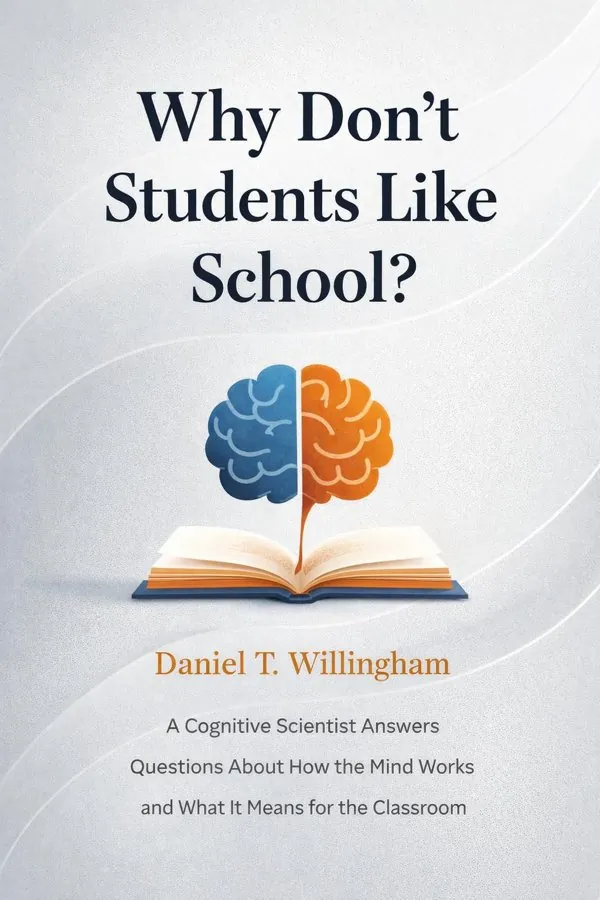
More by Daniel T. Willingham
You Might Also Like

Bedtime Biography: Florence Nightingale
Isabel Thomas
10 min
Introduction To Museum Studies
Howard H. Hoyt
10 min
A Mind for Numbers: How to Excel at Math and Science (Even If You Flunked Algebra)
Barbara Oakley
10 min
AI for Educators: Learning Strategies, Teacher Empowerment, and the Future of Education
Matt Miller
10 min
Animation For Beginners
Morr Meroz
10 min
Artificial Intelligence for Learning
Donald Clark
10 minBrowse by Category
Ready to read The Reading Mind: A Cognitive Approach to Understanding How the Mind Reads?
Get the full summary and 100K+ more books with Fizz Moment.