
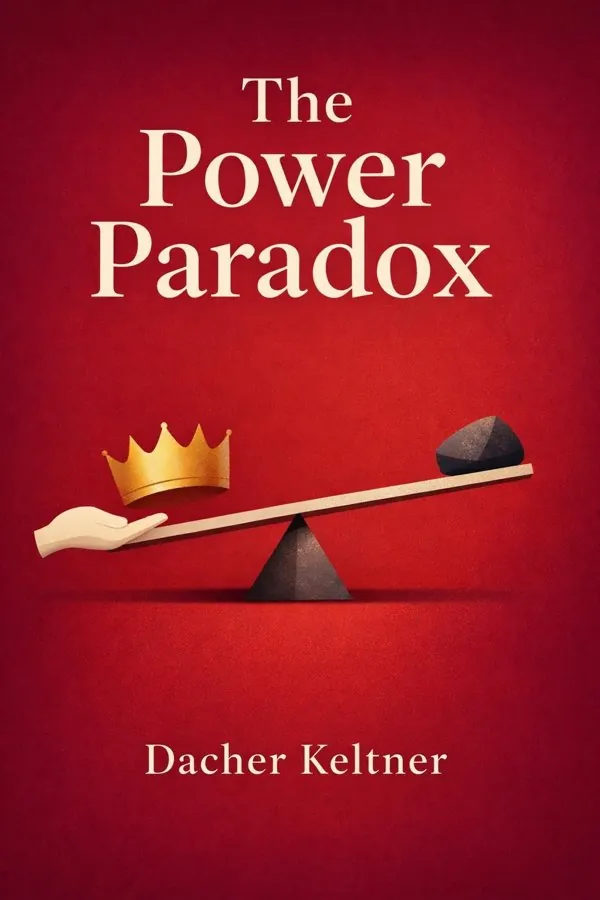
The Power Paradox: How We Gain and Lose Influence: Summary & Key Insights
 10 min9 chaptersAudio available
What Is The Power Paradox: How We Gain and Lose Influence About?
The Power Paradox: How We Gain and Lose Influence by Dacher Keltner is a psychology book spanning 9 pages. In this groundbreaking work, psychologist Dacher Keltner explores the surprising science of power—how it is gained, maintained, and lost. Drawing on decades of research, he reveals that true power stems not from force or dominance but from empathy, generosity, and social intelligence. Yet, paradoxically, once people gain power, they often lose the very qualities that helped them achieve it. Keltner offers insights into how individuals and societies can wield power more wisely and ethically.
This FizzRead summary covers all 9 key chapters of The Power Paradox: How We Gain and Lose Influence in approximately 10 minutes, distilling the most important ideas, arguments, and takeaways from Dacher Keltner's work. Also available as an audio summary and Key Quotes Podcast.
The Power Paradox: How We Gain and Lose Influence
In this groundbreaking work, psychologist Dacher Keltner explores the surprising science of power—how it is gained, maintained, and lost. Drawing on decades of research, he reveals that true power stems not from force or dominance but from empathy, generosity, and social intelligence. Yet, paradoxically, once people gain power, they often lose the very qualities that helped them achieve it. Keltner offers insights into how individuals and societies can wield power more wisely and ethically.
Who Should Read The Power Paradox: How We Gain and Lose Influence?
This book is perfect for anyone interested in psychology and looking to gain actionable insights in a short read. Whether you're a student, professional, or lifelong learner, the key ideas from The Power Paradox: How We Gain and Lose Influence by Dacher Keltner will help you think differently.
- ✓Readers who enjoy psychology and want practical takeaways
- ✓Professionals looking to apply new ideas to their work and life
- ✓Anyone who wants the core insights of The Power Paradox: How We Gain and Lose Influence in just 10 minutes
Want the full summary?
Get instant access to this book summary and 100K+ more with Fizz Moment.
Get Free SummaryAvailable on App Store • Free to download
Key Chapters
Power, as I see it, is not the authority to coerce but the capacity to make a difference in the lives of others. Our culture often treats power as a prize of dominance, but if we step back and look carefully—through the eyes of social science—we see that power is born in connection. Even the smallest acts of empathy or validation can change how others think, feel, and act. That is influence. And influence, in its purest form, is power.
The natural habitat of power is social. Each community, team, or friendship creates an ecology of interactions in which influence is granted to those who serve collective needs. When you listen deeply, express gratitude, or coordinate group goals, others entrust you with power. This trust is sacred yet fragile—earned slowly but lost in moments of selfishness. Thus, power is not a personal property to be held but a relationship to be maintained.
To understand power as relational frees us from the illusion that we must dominate to matter. It invites us instead to measure our status by the difference we make, not the control we exert. In this way, every person—child or CEO—possesses the potential for meaningful influence. The question is not whether we have power, but how we choose to use it.
+ 7 more chapters — available in the FizzRead app
All Chapters in The Power Paradox: How We Gain and Lose Influence
About the Author
Dacher Keltner is a professor of psychology at the University of California, Berkeley, and the founding director of the Greater Good Science Center. His research focuses on the biological and evolutionary origins of compassion, awe, and power. He is also the author of several influential books on emotion and human connection.
Get This Summary in Your Preferred Format
Read or listen to the The Power Paradox: How We Gain and Lose Influence summary by Dacher Keltner anytime, anywhere. FizzRead offers multiple formats so you can learn on your terms — all free.
Available formats: App · Audio · PDF · EPUB — All included free with FizzRead
Download The Power Paradox: How We Gain and Lose Influence PDF and EPUB Summary
Key Quotes from The Power Paradox: How We Gain and Lose Influence
“Power, as I see it, is not the authority to coerce but the capacity to make a difference in the lives of others.”
“In my research, I have observed that power does not spring from individual ambition but from group trust.”
Frequently Asked Questions about The Power Paradox: How We Gain and Lose Influence
The Power Paradox: How We Gain and Lose Influence by Dacher Keltner is a psychology book that explores key ideas across 9 chapters. In this groundbreaking work, psychologist Dacher Keltner explores the surprising science of power—how it is gained, maintained, and lost. Drawing on decades of research, he reveals that true power stems not from force or dominance but from empathy, generosity, and social intelligence. Yet, paradoxically, once people gain power, they often lose the very qualities that helped them achieve it. Keltner offers insights into how individuals and societies can wield power more wisely and ethically.
More by Dacher Keltner



You Might Also Like

The Body Keeps the Score
Bessel van der Kolk
10 min
Surrounded by Idiots
Thomas Erikson
10 min
Emotional Intelligence
Daniel Goleman
10 min
Attached
Amir Levine
10 min
Why Does He Do That
Lundy Bancroft
10 min
Women Who Run with the Wolves
Clarissa Pinkola Estés
10 minBrowse by Category
Ready to read The Power Paradox: How We Gain and Lose Influence?
Get the full summary and 100K+ more books with Fizz Moment.