
Dacher Keltner Books
Dacher Keltner is a professor of psychology at the University of California, Berkeley, and the founding director of the Greater Good Science Center. His research focuses on the biological and evolutionary origins of compassion, awe, and power.
Known for: Awe: The New Science of Everyday Wonder and How It Can Transform Your Life, Born to Be Good: The Science of a Meaningful Life, The Compassionate Instinct: The Science of Human Goodness, The Power Paradox: How We Gain and Lose Influence
Books by Dacher Keltner

Awe: The New Science of Everyday Wonder and How It Can Transform Your Life
In this groundbreaking work, psychologist Dacher Keltner explores the profound human emotion of awe—our capacity to feel wonder, reverence, and connection to something greater than ourselves. Drawing ...
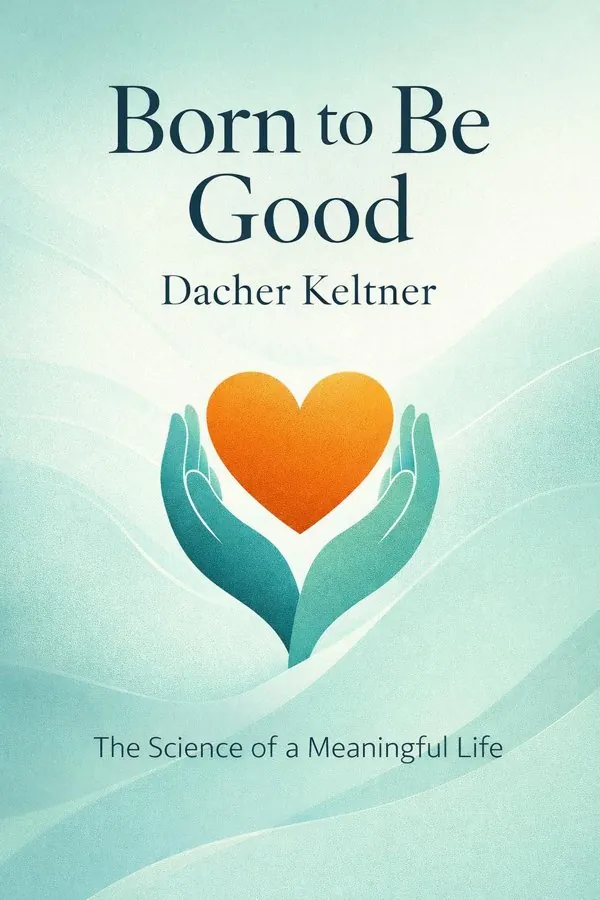
Born to Be Good: The Science of a Meaningful Life
In this book, psychologist Dacher Keltner explores the evolutionary and emotional foundations of human goodness. Drawing on research in social psychology, neuroscience, and evolutionary biology, he ar...

The Compassionate Instinct: The Science of Human Goodness
This book explores the biological and psychological foundations of compassion, kindness, and altruism. Edited by Dacher Keltner, Jason Marsh, and Jeremy Adam Smith, it gathers essays from leading scie...

The Power Paradox: How We Gain and Lose Influence
In this groundbreaking work, psychologist Dacher Keltner explores the surprising science of power—how it is gained, maintained, and lost. Drawing on decades of research, he reveals that true power ste...
Key Insights from Dacher Keltner
The Evolutionary Roots of Awe
Awe has always been part of the human story. When our ancestors gazed at storms, mountains, or the night sky, awe helped them grasp their smallness while igniting cooperation and curiosity. It is a distinctly social emotion—one that evolved to bind individuals into groups capable of collective survi...
From Awe: The New Science of Everyday Wonder and How It Can Transform Your Life
The Eight Wonders of Life
Through years of interviews and global research, my colleagues and I identified eight universal sources of awe—what we call the Eight Wonders of Life. First is moral beauty: when we witness courage, compassion, or strength of character, we feel the stirring recognition of our shared humanity. Awe aw...
From Awe: The New Science of Everyday Wonder and How It Can Transform Your Life
The Evolutionary Basis of Goodness
One of the most profound discoveries in recent decades is that human emotions evolved not merely for individual survival but for social connection. For centuries, Darwin’s notion of the ‘survival of the fittest’ was interpreted as a justification for self-serving behavior. Yet in *The Descent of Man...
From Born to Be Good: The Science of a Meaningful Life
The Role of Compassion
Compassion is where the science of goodness most vividly comes alive. For years, I have been fascinated by the small, often invisible gestures that express care—an arm around a shoulder, a soft tone in a moment of crisis, the willingness to see another’s suffering. Modern physiology shows that compa...
From Born to Be Good: The Science of a Meaningful Life
Historical Context: The Shift from Selfishness to Solidarity
For much of history, human beings were viewed through the lens of competition. From Hobbes’s vision of life as 'nasty, brutish, and short' to Darwin’s early interpreters who glorified 'survival of the fittest,' our collective imagination has been haunted by the myth of ruthless struggle. Every kindn...
From The Compassionate Instinct: The Science of Human Goodness
Evolutionary Foundations: How Compassion Became Adaptive
In evolutionary terms, compassion offers profound advantages. Groups that care for one another are more resilient, more productive, and more innovative. Our ancestors who cooperated had greater chances to survive harsh climates, raise offspring successfully, and protect resources. As a result, natur...
From The Compassionate Instinct: The Science of Human Goodness
About Dacher Keltner
Dacher Keltner is a professor of psychology at the University of California, Berkeley, and the founding director of the Greater Good Science Center. His research focuses on the biological and evolutionary origins of compassion, awe, and power. He is also the author of several influential books on em...
Read more
Dacher Keltner is a professor of psychology at the University of California, Berkeley, and the founding director of the Greater Good Science Center. His research focuses on the biological and evolutionary origins of compassion, awe, and power. He is also the author of several influential books on em...
Dacher Keltner is a professor of psychology at the University of California, Berkeley, and the founding director of the Greater Good Science Center. His research focuses on the biological and evolutionary origins of compassion, awe, and power. He is also the author of several influential books on emotion and human connection.



Frequently Asked Questions
Dacher Keltner is a professor of psychology at the University of California, Berkeley, and the founding director of the Greater Good Science Center. His research focuses on the biological and evolutionary origins of compassion, awe, and power.
Read Dacher Keltner's books in 15 minutes
Get AI-powered summaries with key insights from 4 books by Dacher Keltner.