
Dopamine Nation vs The Power of Habit: Which Should You Read?
A detailed comparison of Dopamine Nation by Anna Lembke and The Power of Habit by Charles Duhigg. Discover the key differences, strengths, and which book is right for you.
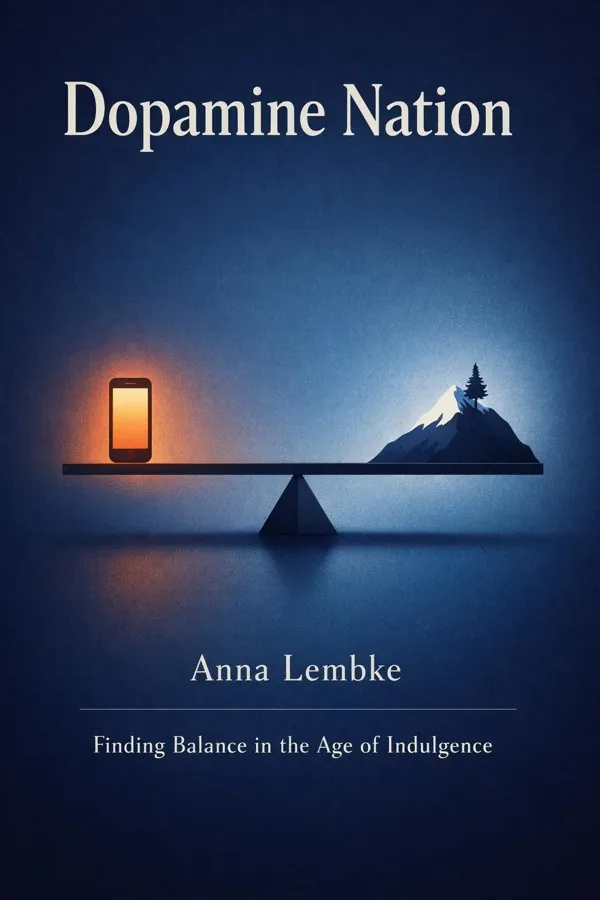
Dopamine Nation
The Power of Habit
In-Depth Analysis
Anna Lembke’s Dopamine Nation and Charles Duhigg’s The Power of Habit are both books about repeated behavior, but they begin from very different assumptions about why people get stuck and what change requires. Duhigg asks how habits work. Lembke asks what happens when a culture becomes so saturated with stimulation that habit shades into compulsion, then into suffering. That difference in starting point shapes everything: tone, examples, scientific emphasis, and the kind of reader each book is best equipped to help.
The clearest distinction is that Duhigg offers a behavioral framework, while Lembke offers a clinical and cultural diagnosis. In The Power of Habit, the key unit of analysis is the habit loop: cue, routine, reward. A person comes home from work stressed, opens the pantry, eats a cookie, and gets relief or pleasure. The practical challenge is to identify the cue and the reward, then substitute a different routine that satisfies the same craving. This is why Duhigg’s examples often feel modular. Whether the subject is smoking, exercise, workplace habits, or product marketing, he is usually asking the same question: what loop is running here, and how can it be redesigned?
Lembke, by contrast, is less interested in redesigning loops than in explaining why modern loops have become so overpowering. Her signature concept, the pleasure-pain balance, reframes ordinary indulgence as part of a neurobiological seesaw. Every pleasurable stimulus tilts the brain toward pleasure, but the brain responds by pushing back, creating a compensatory pain state. If a person keeps overstimulating the system through drugs, phone scrolling, gambling, pornography, or ultra-processed food, that pain rebound grows stronger. Eventually the person is not using to feel good, but using to feel normal. This is a more tragic picture of behavior than Duhigg’s, and for many readers it will also feel more realistic.
That is why Dopamine Nation often lands with greater urgency. Lembke’s case studies are not merely illustrations of theory; they are moral and emotional encounters with lives narrowed by craving. She writes about patients addicted not only to drugs, but to sex, romance novels, and digital stimulation, making the point that addiction is not confined to illegal substances. One of her most provocative contributions is to collapse the distance between “serious addict” and “ordinary consumer.” The same reward circuitry is involved when someone compulsively checks social media or binge-watches into the night. The difference is often one of degree, social visibility, and consequence, not of kind.
Duhigg’s examples, by comparison, are broader and often more institutionally oriented. He is interested in habits at the level of companies, organizations, and social systems as well as individuals. That gives The Power of Habit a wider lens in one sense. Readers learn not just how one person changes a routine, but how corporations create consumption habits and how keystone habits can transform multiple areas of life at once. This makes the book especially powerful for productivity-minded readers. If someone wants to understand why exercise can trigger improvements in sleep, diet, and self-control, Duhigg gives a highly usable vocabulary for that process.
The practical difference between the books is equally important. Duhigg generally assumes that substitution is possible and desirable. If the reward is stress relief, maybe the routine can shift from snacking to walking or calling a friend. If a workday cue triggers distraction, perhaps a new routine can be attached to the same cue. This makes his advice flexible, empowering, and especially helpful for mild to moderate behavior change. Lembke is more willing to say that for some behaviors, moderation is a fantasy. Her emphasis on abstinence, self-binding, and radical honesty reflects years of treating people whose brains have learned to exploit every loophole. For readers struggling with severe digital overuse, substance dependence, or compulsive sexual behavior, this realism can be lifesaving. For readers hoping for a gentler self-improvement framework, it may feel austere.
Another major difference is their treatment of discomfort. Duhigg acknowledges that habits often form around relief from anxiety or uncertainty, but discomfort in his framework is mainly a cue to be understood. In Lembke’s book, discomfort becomes central to healing. She argues that pain is not merely something to avoid; it can be therapeutic when chosen wisely. Exercise, cold exposure, and the discipline of abstinence can help recalibrate a nervous system distorted by excess reward. This is one of the most countercultural ideas in Dopamine Nation. Where Duhigg teaches readers how to engineer better defaults, Lembke asks them to rebuild tolerance for suffering.
In terms of prose and readability, Duhigg is usually the easier read. He structures chapters around sticky stories and repeatable concepts, and his journalistic style makes the material highly portable. Many readers will remember the habit loop long after finishing the book. Lembke is concise and vivid, but she writes with more gravity. Her best passages are not merely informative; they are diagnostic, even accusatory in the best sense, because they force readers to confront how much of modern life is designed to exploit the reward system.
For beginners, The Power of Habit is often the better entry point because it provides a simple mental model that can be applied quickly. But for readers who already understand habits and still feel trapped, Dopamine Nation often goes deeper. It explains why insight alone may fail when the nervous system has been conditioned by relentless stimulation. Duhigg helps readers reprogram patterns; Lembke helps readers understand why those patterns have become so hard to escape in the first place.
Ultimately, these books are most valuable when read as complementary rather than competing works. Duhigg explains the architecture of repetition. Lembke explains the pathology of excess. One says, “Map the loop.” The other says, “Notice that the whole environment is training the loop to become more extreme.” Together they offer a fuller picture of human behavior: habits are learnable, changeable structures, but they are also embedded in a pleasure economy powerful enough to reshape the brain itself.
Side-by-Side Comparison
| Aspect | Dopamine Nation | The Power of Habit |
|---|---|---|
| Core Philosophy | Dopamine Nation argues that modern life bombards us with high-dopamine rewards, and that this abundance dysregulates the brain’s pleasure-pain balance. Lembke’s central claim is that recovery often requires restraint, abstinence, and a willingness to endure discomfort. | The Power of Habit argues that behavior is shaped less by conscious intention than by automatic loops of cue, routine, and reward. Duhigg’s core philosophy is that habits can be redesigned by identifying their structure and changing the routine while preserving the underlying craving or reward. |
| Writing Style | Lembke writes as a clinician: intimate, confessional, and morally serious. She mixes neuroscience with patient case studies and her own admissions about compulsive romance reading and digital temptation, giving the book a raw and candid tone. | Duhigg writes like a journalist and explainer, moving briskly through research, corporate stories, and case studies. His style is polished, accessible, and highly narrative, often building concepts through memorable examples like Febreze, Starbucks, and NFL coaching routines. |
| Practical Application | The book is highly practical for readers dealing with compulsive overuse of substances, pornography, gaming, social media, shopping, or binge eating. Lembke offers concrete interventions such as dopamine fasting, radical honesty, self-binding, and strategically using discomfort like exercise or cold exposure. | Duhigg is practical for everyday self-improvement: exercise, productivity, work routines, eating patterns, and organizational change. His framework helps readers diagnose triggers, identify rewards, and build replacement routines rather than simply trying to suppress bad habits. |
| Target Audience | Dopamine Nation is especially suited to readers who feel trapped in cycles of craving, excess, or behavioral addiction, even when those behaviors are socially normalized. It also appeals to clinicians, caregivers, and readers interested in the psychology of pleasure, pain, and recovery. | The Power of Habit is aimed at a broader audience, including professionals, students, managers, and readers interested in personal effectiveness. It is particularly useful for people who want a general model for changing routines without necessarily seeing themselves in the language of addiction. |
| Scientific Rigor | Lembke grounds her argument in neuroscience, especially dopamine signaling, reward prediction, and adaptation, though she deliberately simplifies some brain science for a broad audience. The strength of the book lies in the synthesis of psychiatry and clinical observation rather than exhaustive academic debate. | Duhigg draws from behavioral science, neurology, and psychology, but his presentation is more conceptual than technical. The science is useful and memorable, though often filtered through anecdote and popularization rather than deep methodological scrutiny. |
| Emotional Impact | The emotional force of Dopamine Nation is stronger because the stakes are often severe: relapse, shame, family breakdown, overdose risk, and psychic emptiness. Lembke’s patient stories make the reader feel how craving narrows a life and how honesty and abstinence can reopen it. | The Power of Habit is emotionally engaging but usually less intense, because its stories often center on transformation, business decisions, and ordinary behavior change. Its impact comes more from recognition and empowerment than from existential confrontation. |
| Actionability | Lembke gives direct prescriptions, especially when compulsive behavior has become self-destructive. Her advice can be demanding, but it is clear: remove access, endure withdrawal, restore balance, tell the truth, and stop negotiating endlessly with the addictive object. | Duhigg’s actionability lies in its framework. Once readers understand the habit loop, they can test cues, map cravings, and design substitutions, making the book especially useful for iterative self-experimentation. |
| Depth of Analysis | The book goes deeper into the moral and psychological costs of a pleasure-saturated culture, asking why abundance can lead to numbness, anxiety, and self-fragmentation. It is less about optimizing behavior than about diagnosing a civilizational mismatch between ancient reward systems and modern hyperstimulation. | Duhigg provides broader but somewhat less philosophically intense analysis. He excels at showing how habits operate across individuals, institutions, and consumer behavior, but he is generally more interested in mechanism and application than in existential critique. |
| Readability | Dopamine Nation is readable and engaging, but some readers may find its clinical cases and harder truths emotionally heavy. Its brevity and clear structure help, yet the book asks readers to sit with discomfort rather than simply feel motivated. | The Power of Habit is exceptionally readable, with a smooth narrative flow and chapter design that makes concepts easy to retain. It is often the easier entry point for readers new to behavioral science. |
| Long-term Value | Lembke’s book has long-term value for readers living in environments engineered for compulsion, because its warnings become more relevant as digital and commercial temptations intensify. Its insights into abstinence, self-binding, and the healing role of pain remain useful beyond any single habit. | Duhigg’s book has enduring value as a general framework for understanding repeated behavior in personal life, workplaces, and culture. Readers often return to its cue-routine-reward model because it remains applicable across new goals and changing circumstances. |
Key Differences
Habit Change vs Reward Overload
The Power of Habit focuses on the structure of behavior: cues trigger routines that deliver rewards. Dopamine Nation focuses on what happens when the reward system itself becomes overstimulated, as with constant scrolling, binge eating, or escalating substance use.
Substitution vs Abstinence
Duhigg typically favors replacing a bad routine with a better one while preserving the underlying reward, such as swapping stress-eating for a walk or conversation. Lembke argues that with strongly addictive behaviors, substitution may not be enough and periods of full abstinence are often necessary.
Journalistic Narrative vs Clinical Testimony
Duhigg builds his ideas through business case studies, sports stories, and behavioral science examples, making the book feel wide-ranging and energetic. Lembke draws heavily from psychiatric practice and personal confession, which gives her book a more intimate, sober, and therapeutic quality.
Optimization vs Recovery
The Power of Habit often speaks to readers who want to become more effective, disciplined, or productive. Dopamine Nation speaks more directly to readers who feel trapped, depleted, ashamed, or unable to control a behavior that once felt merely pleasurable.
Broader Systems vs Inner Balance
Duhigg is interested in habits at many levels, including organizations, consumer behavior, and workplace culture. Lembke keeps returning to the individual nervous system and the brain’s pleasure-pain balance, asking how inner equilibrium gets disrupted.
Discomfort as Obstacle vs Discomfort as Medicine
In Duhigg’s framework, stress or anxiety often functions as a cue that launches a habit loop. In Lembke’s framework, chosen forms of discomfort—such as abstinence, exercise, or cold exposure—can help reset reward pathways and restore sensitivity to ordinary pleasures.
General Audience vs High-Stakes Relevance
The Power of Habit is ideal for a general readership because nearly anyone can apply the habit loop to daily routines. Dopamine Nation becomes especially powerful when the stakes are high, such as addiction, relapse, compulsive digital use, or self-destructive patterns that resist lighter interventions.
Who Should Read Which?
The overstimulated digital-age reader who feels trapped by scrolling, bingeing, or reward-seeking
→ Dopamine Nation
Lembke directly addresses the psychological and neurological consequences of living amid endless high-dopamine temptations. Her discussion of abstinence, self-binding, and the pleasure-pain balance is especially useful for readers whose behavior feels compulsive rather than merely inefficient.
The productivity-minded reader who wants better routines, focus, and consistency
→ The Power of Habit
Duhigg provides a clean, actionable framework for understanding why routines persist and how to redesign them. It is particularly effective for readers trying to improve exercise, work habits, eating patterns, and self-discipline without needing a full addiction framework.
The reflective reader interested in psychology, culture, and why modern abundance often produces dissatisfaction
→ Dopamine Nation
Beyond individual behavior change, Lembke offers a critique of a pleasure-saturated culture and its effects on mental life. Readers interested in the paradox that more stimulation can lead to less satisfaction will find it richer and more provocative.
Which Should You Read First?
Read The Power of Habit first if you want the clearest conceptual foundation. Duhigg gives you a simple vocabulary for behavior change—cue, routine, reward—that makes later insights easier to organize. Once you understand that habits are patterned loops rather than random failures of character, you will be better prepared to appreciate what Dopamine Nation adds: an explanation of why some loops become extreme in a world full of engineered rewards. Then read Dopamine Nation second to deepen and complicate the picture. Lembke shows that not all repeated behaviors are equally manageable through substitution alone. Some are amplified by dopamine-driven adaptation and may require abstinence, honesty, and stronger environmental controls. This sequence works especially well because Duhigg builds confidence, while Lembke builds seriousness. The first book teaches strategy; the second teaches limits. If, however, you already know your issue is addiction or compulsive overuse rather than ordinary habit change, you can reverse the order and start with Lembke.
Want the full summary?
Get instant access to this book summary and 100K+ more with Fizz Moment.
Get Free SummaryAvailable on App Store • Free to download
Frequently Asked Questions
Is Dopamine Nation better than The Power of Habit for beginners?
For most beginners, The Power of Habit is the easier starting point because Duhigg explains behavior with a simple and memorable model: cue, routine, reward. That structure helps readers quickly identify patterns in exercise, snacking, productivity, and procrastination. Dopamine Nation is also accessible, but it is more intense in tone and more focused on addiction, overstimulation, and the cost of excess pleasure. If you are new to psychology and want a broad introduction to behavior change, start with Duhigg. If your main concern is compulsive phone use, substance dependence, binge behavior, or feeling emotionally blunted by constant stimulation, Lembke may feel more immediately relevant.
Which book is better for breaking phone addiction: Dopamine Nation or The Power of Habit?
Dopamine Nation is generally stronger for breaking phone addiction because Lembke treats compulsive digital behavior as part of the same reward-system problem seen in other addictions. Her framework helps explain why endless scrolling can leave people overstimulated yet empty, and why temporary abstinence or self-binding may be necessary. The Power of Habit is still useful because it teaches you to identify cues—boredom, loneliness, stress, task avoidance—and replace the scrolling routine with something else. But if your phone use feels less like a bad habit and more like a dependency that erodes sleep, focus, and mood, Lembke offers the sharper diagnosis.
Should I read The Power of Habit or Dopamine Nation for productivity and self-discipline?
If your main goal is productivity, The Power of Habit is usually the better fit. Duhigg’s model is built for routine design: creating exercise habits, reducing procrastination, building work rituals, and understanding why repeated behaviors become automatic. He also shows how keystone habits can produce ripple effects across other parts of life. Dopamine Nation is more useful when productivity problems are downstream of overstimulation or compulsive reward-seeking. If your lack of discipline is tied to binge entertainment, gaming, online shopping, or constant checking behavior, Lembke may help you address the deeper reward imbalance rather than only optimizing routines.
How do Dopamine Nation and The Power of Habit differ in their science?
The books draw on different scientific emphases. Dopamine Nation leans more heavily on neuroscience and psychiatry, especially the role of dopamine, reward prediction, adaptation, and the pleasure-pain balance. Lembke writes as a practicing clinician, so the science is often tied to patient cases and treatment realities. The Power of Habit relies more on behavioral psychology and popular neuroscience, using the habit loop as its central explanatory tool. Duhigg’s science is effective and memorable, but it is usually presented through narrative examples rather than through dense clinical or technical discussion. In short, Lembke’s science feels more medical; Duhigg’s feels more behavioral and organizational.
Is Dopamine Nation more useful than The Power of Habit for addiction recovery?
Yes, in most cases Dopamine Nation is more directly useful for addiction recovery because addiction is its central subject, not a side application. Lembke addresses withdrawal, craving, shame, relapse, abstinence, self-binding, and radical honesty in a way that reflects real clinical practice. She also broadens the category of addiction to include socially accepted compulsions such as romance, pornography, gaming, and digital overuse. The Power of Habit can still help by clarifying triggers and routines, but it may undershoot the severity of addiction when readers need firm boundaries rather than habit redesign alone.
Can The Power of Habit and Dopamine Nation be read together for behavior change?
Absolutely. In fact, they complement each other unusually well. The Power of Habit gives you a practical operating system for identifying cues, rewards, and replacement routines. Dopamine Nation explains why some habits feel disproportionately powerful in a world engineered for instant reward and why abstinence may sometimes be more effective than moderation. Read together, the books cover both mechanism and magnitude: Duhigg helps you understand how behaviors repeat, while Lembke helps you understand why repeated exposure to pleasure can intensify craving and flatten satisfaction. For many readers, that combination leads to a more realistic and durable approach to change.
The Verdict
If you want one book that will change how you think about behavior in everyday life, The Power of Habit is the safer universal recommendation. It is more approachable, more broadly applicable, and more immediately useful for readers trying to improve productivity, routines, exercise, or self-discipline. Duhigg gives you a durable mental model you can apply almost anywhere, and that makes the book especially strong for beginners. But if your real struggle is not ordinary habit formation but compulsive overconsumption—social media binges, substance use, pornography, shopping, overeating, or a general sense of being overstimulated and emotionally depleted—Dopamine Nation is the more urgent and penetrating book. Lembke is less interested in optimization and more interested in recovery, restraint, and the neurological consequences of living in an engineered pleasure economy. She is also more willing to say that some behaviors cannot be “managed” and must instead be interrupted decisively. So the best recommendation depends on the reader’s problem. For self-improvement, systems, and practical habit design, choose The Power of Habit. For addiction, digital dependency, and understanding why pleasure can curdle into pain, choose Dopamine Nation. If possible, read both: Duhigg will show you the machinery of repeated behavior, and Lembke will show you what happens when that machinery is fed more reward than it can healthily bear.
Related Comparisons


Want to read both books?
Get AI-powered summaries of both Dopamine Nation and The Power of Habit in just 20 minutes total.