
The Power of Habit vs Eat That Frog: Which Should You Read?
A detailed comparison of The Power of Habit by Charles Duhigg and Eat That Frog by Brian Tracy. Discover the key differences, strengths, and which book is right for you.
The Power of Habit
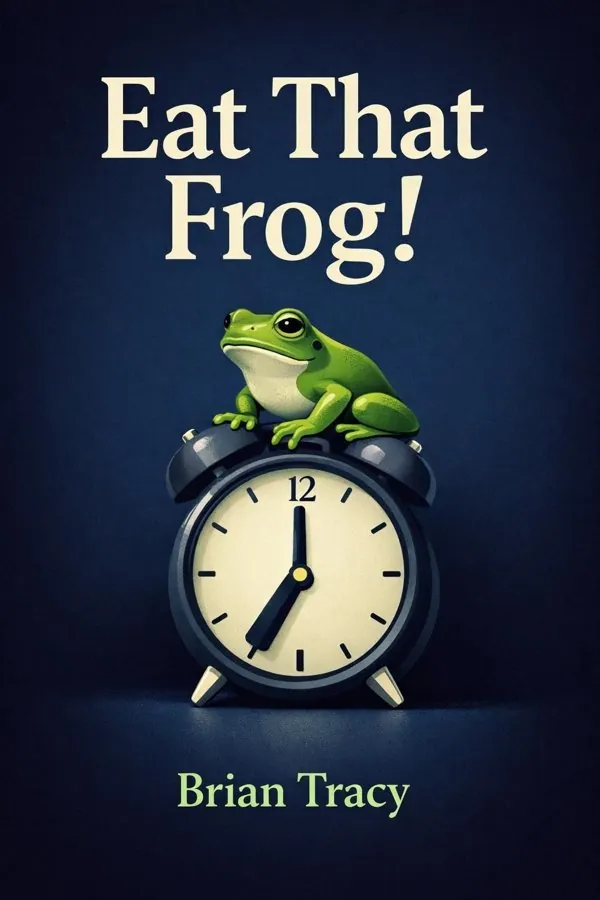
Eat That Frog
In-Depth Analysis
Charles Duhigg’s The Power of Habit and Brian Tracy’s Eat That Frog sit in the same broad productivity category, but they operate at very different levels of explanation. One is primarily a book about the hidden architecture of behavior; the other is a manual for getting important work done despite procrastination. Put simply, Duhigg explains why people do what they do, while Tracy tells them what to do next. That difference shapes nearly everything else: tone, usefulness, audience, and long-term impact.
The Power of Habit is built around the now-famous habit loop: cue, routine, reward. Duhigg’s central insight is that many behaviors feel like choices but actually run as learned scripts triggered by context. This makes the book especially strong for readers who repeatedly fail at change despite good intentions. Someone who keeps checking their phone during work, stress eating at night, or abandoning exercise plans may think the issue is weak discipline. Duhigg reframes the issue: the problem may be an automatic loop reinforced over time. That reframing is powerful because it moves the reader from self-blame to analysis. If the cue is boredom, the routine is social media, and the reward is stimulation or relief, the solution is not vague self-control; it is redesign.
Eat That Frog begins from a different premise. Tracy is less interested in the psychological origins of procrastination than in the practical consequences of failing to prioritize. His core metaphor—eat the frog first—means doing your most important, often most unpleasant task before anything else. In a world of endless low-value activity, this is effective because it attacks avoidance directly. Tracy’s techniques, such as clarifying goals, planning the day in advance, using prioritization methods like ABCDE, and applying the 80/20 principle, are meant to reduce drift. If Duhigg helps readers understand repeated patterns, Tracy helps them win the morning.
This leads to the clearest distinction in practical use. The Power of Habit is best for chronic behavioral problems that recur across contexts. For example, if a reader wants to understand why they always procrastinate when a project becomes ambiguous or anxiety-provoking, Duhigg gives them tools to observe the trigger and substitute a better routine. Eat That Frog is better for tactical execution when the issue is already clear: there are ten tasks, one matters most, and the reader keeps avoiding it. Tracy’s advice works especially well in professional environments where output matters, deadlines are visible, and tasks can be ranked by importance.
In terms of writing, Duhigg is the richer stylist. He uses reported stories and case-based exposition to show how habits shape individuals, organizations, and even broader social systems. This makes the book feel substantive and memorable, but also slower. The reader is invited to think, not just to implement. Tracy, by contrast, writes in short, directive bursts. His style resembles a seminar or coaching session: identify the goal, make the plan, start the task, avoid delay. That economy is a strength if the reader is overloaded and impatient. It is a weakness if the reader wants nuance about the mechanisms of change.
Scientific rigor is another major divider. The Power of Habit clearly draws more heavily on behavioral science and explanatory models. Although it is not an academic text, it gives the reader a framework that feels grounded in observation and research. Eat That Frog is persuasive in a more traditional self-help way: through business logic, common-sense principles, and accumulated productivity advice. That does not make Tracy ineffective, but it does mean his claims often function as heuristics rather than deeply evidenced behavioral explanations.
Emotionally, the books motivate in opposite directions. Duhigg’s book often produces recognition. Readers may see themselves in his descriptions of automatic routines and feel hopeful because change seems more mechanical and less mysterious than they assumed. Tracy’s book produces urgency. It tells readers that delay is costly, clarity is empowering, and momentum comes from tackling the hardest meaningful task first. If Duhigg reduces shame through understanding, Tracy combats inertia through pressure and structure.
A useful way to compare them is to ask what happens on a difficult workday. A reader influenced by The Power of Habit might pause and ask: what cue makes me avoid this report? Is it uncertainty, fear of criticism, or lack of clarity? What substitute routine could preserve the reward of relief without derailing the day? A reader influenced by Eat That Frog might identify the report as the highest-value task, block time for it first thing, break it into a starting step, and refuse to answer email until it is underway. Both approaches can work. The difference is whether the intervention is behavioral diagnosis or task management.
Their limitations also mirror their strengths. Duhigg can leave some readers inspired but under-instructed. Understanding habits does not automatically create a schedule, a priority map, or a bias toward action. Tracy can leave some readers energized but insufficiently self-aware. A person may know they should do the hardest task first yet still repeatedly fail because the underlying loop—anxiety cue, avoidance routine, temporary relief reward—remains unexamined.
Ultimately, these books are best seen as complementary rather than mutually exclusive. The Power of Habit addresses the engine of repeated behavior; Eat That Frog addresses the steering wheel of daily productivity. Duhigg helps readers redesign the systems beneath action. Tracy helps them direct action toward what matters most. If a reader struggles with deep-seated patterns, Duhigg is stronger. If a reader needs immediate results in focus and execution, Tracy is the sharper tool. The most effective productivity strategy may actually combine them: use Duhigg to understand why you avoid meaningful work, and use Tracy to decide what meaningful work gets done first.
Side-by-Side Comparison
| Aspect | The Power of Habit | Eat That Frog |
|---|---|---|
| Core Philosophy | The Power of Habit argues that behavior is largely governed by cue-routine-reward loops, and that lasting change comes from identifying and redesigning those loops rather than relying on willpower alone. Duhigg’s philosophy is diagnostic first: understand the machinery of behavior, then intervene intelligently. | Eat That Frog is built on the idea that productivity improves when you confront high-value, difficult tasks early and organize your day around clear priorities. Tracy’s philosophy is execution first: decide what matters most, then act decisively before distraction and procrastination take over. |
| Writing Style | Duhigg writes in a narrative-journalistic style, using case studies, corporate examples, and behavioral stories to make abstract ideas memorable. The tone is explanatory and investigative, often unfolding like long-form nonfiction. | Tracy writes in a direct, motivational, instruction-driven style. The prose is compact and coach-like, designed to push the reader toward immediate action rather than extended reflection. |
| Practical Application | The Power of Habit is practical in an indirect but powerful way: it helps readers diagnose why they keep repeating behaviors such as stress eating, phone checking, or avoidance. Its usefulness lies in habit redesign, especially through identifying cues and replacing routines while keeping rewards consistent. | Eat That Frog is practical in a highly immediate sense, offering techniques like goal clarification, planning, prioritization, and doing the hardest task first. A reader can apply its advice the same morning, especially in office work, study routines, or task-heavy roles. |
| Target Audience | Duhigg’s book suits readers interested in behavior change, personal development, workplace culture, and the psychology behind routines. It appeals to people who want to understand why change is hard before committing to a system. | Tracy’s book is ideal for readers who already know they procrastinate and want straightforward productivity tactics. It especially fits professionals, salespeople, managers, students, and anyone overwhelmed by competing tasks. |
| Scientific Rigor | The Power of Habit is more grounded in research, reporting, and behavioral science frameworks, even though it is written for general readers rather than academics. Its central habit loop model gives the book a stronger explanatory foundation than many standard productivity titles. | Eat That Frog relies more on productivity principles, business wisdom, and prescriptive strategies than on deep scientific evidence. Its authority comes from experience and practicality, not from sustained engagement with cognitive science. |
| Emotional Impact | Duhigg can be emotionally persuasive because he shows how habits shape identity, addiction, work life, and social outcomes. The realization that deeply ingrained behaviors are changeable often gives readers a sense of relief and possibility. | Tracy’s emotional effect is more energizing than reflective. The book creates urgency and motivation by framing procrastination as a solvable discipline problem and by making progress feel immediately attainable. |
| Actionability | Its actionability depends on self-observation: readers must identify cues, routines, and rewards, then experiment with substitutions. This makes the advice more customizable, but also slower to implement if someone wants a rigid step-by-step system. | Eat That Frog is highly actionable because it gives clear techniques such as writing task lists, using the ABCDE method, and starting with the most important difficult task. The instructions are simple enough to turn into a daily routine with minimal interpretation. |
| Depth of Analysis | The Power of Habit offers greater conceptual depth because it examines individual habits, organizational routines, and social change through a unifying framework. It asks not just what works, but why patterns persist beneath conscious intention. | Eat That Frog is intentionally narrower and less analytical. Its strength is not theoretical depth but concentration on practical levers that improve efficiency, focus, and follow-through. |
| Readability | Duhigg is very readable, but the book requires more sustained attention because it develops arguments through stories and examples over longer chapters. Readers looking for a deeper narrative nonfiction experience will likely enjoy that structure. | Tracy is easier to skim, revisit, and convert into checklists. The short, punchy format makes it especially accessible for busy readers who want fast takeaways rather than extended explanation. |
| Long-term Value | The Power of Habit tends to have stronger long-term value because its framework can be reused across health, work, relationships, and personal change. Readers often return to it when trying to solve a recurring behavioral pattern rather than a temporary scheduling problem. | Eat That Frog has lasting value as a tactical productivity manual, especially for periods of overload or procrastination. Its ideas remain useful, though they may feel repetitive once the core methods become habitual. |
Key Differences
Behavioral Diagnosis vs Task Execution
The Power of Habit focuses on why behaviors happen by analyzing loops of cue, routine, and reward. Eat That Frog focuses on what to do once you know work must be done, such as tackling the highest-priority difficult task first.
Research-Driven Framework vs Productivity Heuristics
Duhigg builds his argument through behavioral concepts and explanatory examples that help readers understand how change works. Tracy relies more on practical rules like ABCDE prioritization and the 80/20 principle, which are useful but less psychologically deep.
Indirect Change vs Immediate Tactics
The Power of Habit often changes behavior indirectly by increasing awareness and helping readers redesign patterns over time. Eat That Frog offers direct tactics a reader can implement the same day, like planning tomorrow before going to bed and starting with the hardest high-value task.
Narrative Nonfiction vs Instructional Self-Help
Duhigg uses storytelling and case studies, making the book feel like investigative nonfiction with practical implications. Tracy writes in concise, motivational commands, making the book feel more like a workshop handout or executive coaching guide.
Broad Life Application vs Workday Productivity Focus
The Power of Habit applies to health routines, emotional coping, mental patterns, and organizational behavior, not just office productivity. Eat That Frog is more tightly aimed at work output, deadline management, and personal efficiency in task-based environments.
Self-Awareness vs Discipline
Duhigg asks the reader to become a careful observer of patterns, triggers, and rewards before trying to change them. Tracy assumes that clarity and disciplined prioritization will solve much of the problem, which works well for some readers but may miss deeper emotional loops.
Long-Term Systems Thinking vs Daily Momentum
The Power of Habit is stronger for creating durable systems of change across months or years. Eat That Frog is stronger for generating momentum today, especially when a reader is stuck, overwhelmed, or tempted by low-value busywork.
Who Should Read Which?
The overwhelmed professional with too many tasks and constant procrastination
→ Eat That Frog
This reader needs fast prioritization tools more than deep theory. Tracy’s emphasis on planning, ranking tasks, and doing the hardest important job first addresses the daily chaos that keeps work from moving.
The reflective self-improver who keeps repeating the same bad routines
→ The Power of Habit
This reader will benefit from understanding the structure behind behavior rather than just receiving commands to work harder. Duhigg’s framework helps explain why habits persist and how to redesign them in a sustainable way.
The ambitious reader building a long-term personal productivity system
→ The Power of Habit
Although Tracy offers useful tactics, Duhigg provides a broader foundation for lasting change across work, health, and mindset. Readers building systems rather than just fixing a bad week will likely get more enduring value from Duhigg.
Which Should You Read First?
For most readers, Eat That Frog is the better book to read first, followed by The Power of Habit. Tracy’s book provides an immediate productivity structure: clarify goals, plan your day, prioritize tasks, and start with the hardest meaningful item. That creates fast wins, which can be motivating if you currently feel overwhelmed or chronically behind. You can begin using his methods almost instantly, especially if your problem is procrastination at work or scattered daily effort. Then read The Power of Habit to understand why some of Tracy’s advice may still be hard to sustain. Duhigg helps explain the hidden loops that interfere with consistent execution—stress checking, avoidance, comfort-seeking, and automatic routines. In that sense, Tracy gives you the operating instructions, while Duhigg explains the machinery underneath. If you start with Duhigg, you may gain deeper insight first, but some readers will want more immediate tactics than he provides. So the best sequence for practical results is usually Tracy first, Duhigg second.
Want the full summary?
Get instant access to this book summary and 100K+ more with Fizz Moment.
Get Free SummaryAvailable on App Store • Free to download
Frequently Asked Questions
Is The Power of Habit better than Eat That Frog for beginners?
It depends on what kind of beginner you mean. If you are new to self-improvement and want to understand why your routines keep repeating, The Power of Habit is the better starting point because it explains the mechanics behind behavior through the cue-routine-reward loop. If, however, you are a beginner who mainly wants simple productivity techniques you can use today, Eat That Frog is more accessible. Tracy gives direct instructions like clarifying goals, planning your day, and doing the hardest important task first. For beginners seeking insight, choose Duhigg; for beginners seeking immediate execution, choose Tracy.
Which book is better for procrastination: The Power of Habit or Eat That Frog?
For visible, day-to-day procrastination, Eat That Frog is usually more immediately effective. It treats procrastination as a prioritization and action problem, so its advice is practical: identify the most important task, break it down, and start early before distraction wins. The Power of Habit is better when procrastination is recurring and emotionally loaded. If you avoid difficult work because of fear, uncertainty, or the desire for quick relief, Duhigg helps you understand the loop that keeps the behavior alive. In short, Tracy helps you act despite procrastination; Duhigg helps you understand why procrastination keeps returning.
Should I read The Power of Habit or Eat That Frog first if I struggle with focus at work?
If your main problem is messy workdays, task overload, and constant delay, read Eat That Frog first. Its advice on goal clarity, planning, prioritization, and focusing on key tasks will improve your work structure quickly. If your lack of focus is part of a larger pattern—compulsive checking, avoidance under stress, inconsistent routines, or repeated failures to maintain good systems—start with The Power of Habit. Many readers actually benefit from reading Tracy first for fast improvement, then Duhigg for deeper behavioral change. The choice depends on whether you need a daily operating system or a diagnosis of your recurring patterns.
Is Eat That Frog too simplistic compared with The Power of Habit?
Compared with The Power of Habit, Eat That Frog is definitely simpler, but that is partly by design. Tracy is not trying to build a broad theory of human behavior; he is trying to help readers stop delaying important work. That simplicity can be a strength because it makes the book easy to apply in real time. However, readers looking for psychological depth, research-informed explanations, or insight into why habits persist may find Duhigg more satisfying. So yes, Eat That Frog is simpler, but not necessarily weaker—it is just narrower and more tactical.
Which book has more science: The Power of Habit or Eat That Frog?
The Power of Habit clearly contains more science and a stronger explanatory framework. Duhigg centers the book on how habits form and persist, using a habit loop model and multiple examples to show the relationship between cues, routines, and rewards. Eat That Frog is more of a productivity playbook based on practical principles such as prioritization, goal-setting, and focused action. Tracy’s book is useful, but its authority comes more from business-oriented productivity coaching than from behavioral science. If scientific grounding matters to you, Duhigg is the better choice.
Can The Power of Habit and Eat That Frog be used together for productivity?
Yes, and they may be more powerful together than separately. The Power of Habit helps you identify the invisible loops behind distraction, avoidance, and inconsistency. Eat That Frog then gives you a concrete daily method for deciding what to do and when to do it. For example, Duhigg can help you notice that anxiety triggers email-checking, while Tracy can help you commit to working first on your highest-value project before opening your inbox. Used together, the books address both root cause and daily execution, which is often the missing combination in productivity systems.
The Verdict
If you want one book that explains the hidden mechanics behind repeated behavior, The Power of Habit is the stronger and more substantial choice. Charles Duhigg gives readers a framework that can be applied far beyond productivity: exercise, distraction, stress responses, decision-making, and even organizational culture. It is especially valuable for people who have tried to change before and failed, because it replaces vague advice about discipline with a more precise understanding of cues, routines, and rewards. If, however, you need immediate help with procrastination, time management, and task prioritization, Eat That Frog is more directly useful. Brian Tracy excels at converting productivity into simple rules: define goals, plan in advance, identify the highest-value task, and do it first. The book is less nuanced and less research-driven, but it is undeniably practical. So the final recommendation depends on your bottleneck. Choose The Power of Habit if your main issue is recurring behavioral patterns and you want lasting insight. Choose Eat That Frog if your main issue is execution and you need a straightforward system by tomorrow morning. For most readers, Duhigg is the better standalone book because it offers deeper explanatory power and wider long-term relevance. But for a reader drowning in deadlines and avoidance, Tracy may deliver faster results. Best overall: The Power of Habit. Best for instant action: Eat That Frog.
Related Comparisons
Want to read both books?
Get AI-powered summaries of both The Power of Habit and Eat That Frog in just 20 minutes total.