
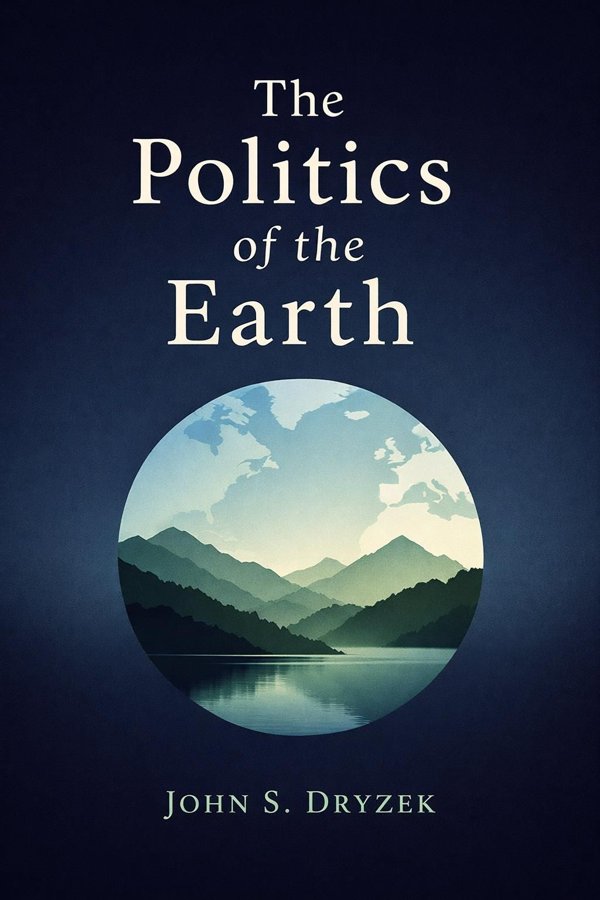
The Politics of the Earth: Environmental Discourses: Summary & Key Insights
 10 min11 chaptersAudio available
What Is The Politics of the Earth: Environmental Discourses About?
The Politics of the Earth: Environmental Discourses by John S. Dryzek is a environment book spanning 11 pages. This book offers a comprehensive analysis of the various discourses that shape environmental politics and policy. Dryzek explores how different ways of talking about the environment—such as survivalism, sustainability, and ecological modernization—reflect distinct worldviews and political ideologies. The work provides a framework for understanding how these discourses influence global environmental governance and public debate.
This FizzRead summary covers all 11 key chapters of The Politics of the Earth: Environmental Discourses in approximately 10 minutes, distilling the most important ideas, arguments, and takeaways from John S. Dryzek's work. Also available as an audio summary and Key Quotes Podcast.
The Politics of the Earth: Environmental Discourses
This book offers a comprehensive analysis of the various discourses that shape environmental politics and policy. Dryzek explores how different ways of talking about the environment—such as survivalism, sustainability, and ecological modernization—reflect distinct worldviews and political ideologies. The work provides a framework for understanding how these discourses influence global environmental governance and public debate.
Who Should Read The Politics of the Earth: Environmental Discourses?
This book is perfect for anyone interested in environment and looking to gain actionable insights in a short read. Whether you're a student, professional, or lifelong learner, the key ideas from The Politics of the Earth: Environmental Discourses by John S. Dryzek will help you think differently.
- ✓Readers who enjoy environment and want practical takeaways
- ✓Professionals looking to apply new ideas to their work and life
- ✓Anyone who wants the core insights of The Politics of the Earth: Environmental Discourses in just 10 minutes
Want the full summary?
Get instant access to this book summary and 100K+ more with Fizz Moment.
Get Free SummaryAvailable on App Store • Free to download
Key Chapters
In the heart of environmental politics lies discourse — the structured ways we talk, write, and reason about the relationship between humanity and nature. A discourse is not merely vocabulary; it is a complete worldview embedded in language and practice. It determines what counts as a problem, what solutions seem possible, and who is authorized to speak. Defining environmental discourse means grasping the rules of meaning-making that shape debates from local activism to global diplomacy.
Environmental discourses can be understood as systems of meaning that guide human action. They are produced through scientific reports, policy documents, activist campaigns, and media narratives. Discourses draw boundaries around what we consider rational, moral, or feasible. For instance, when we speak of “sustainable development,” we are already presupposing that development as such is both desirable and amendable to ecological limits — an assumption not shared by all ways of thinking about the environment.
Recognizing these discursive constructions allows us to see environmental politics as a contest of perspectives rather than a purely technical endeavor. It is a battlefield of ideas that organize power and justify authority. Some discourses empower centralized control, while others nurture grassroots participation. Some elevate human mastery; others call for humility. My goal, as an analyst of discourse, is not to declare one right or wrong but to show how each conveys particular truths and blind spots. Once this framework is clear, we can move through the principal discourses shaping the politics of the Earth.
Survivalism is the discourse born from alarm. It emerged from the ‘limits to growth’ debates of the 1970s and carries the conviction that the planet faces imminent collapse due to resource depletion and unchecked population growth. In survivalist storytelling, the Earth is finite, fragile, and unforgiving. Humanity’s relentless consumption pushes ecological systems toward thresholds beyond which catastrophe looms.
The survivalist worldview regards science and regulation as our last defenses. Think of reports like the Club of Rome’s *Limits to Growth*, which used systems modeling to predict exponential growth against finite resources. From this vantage, governments must act decisively — often through restrictive measures such as population control, energy rationing, or stringent environmental rules. Freedom takes a back seat to survival.
Yet survivalism also reveals its own contradictions. While it dramatizes the urgency of ecological limits, it tends to centralize authority and technocratic control, assuming that planners and scientists can calculate biospheric stability. This discourse thus embodies both ecological realism and political authoritarianism. In my analysis, its enduring power lies in its moral force: survivalism reminds society that ecological laws cannot be negotiated. But its weakness is its narrowed imagination — it can freeze politics into panic, leaving little room for democratic innovation.
+ 9 more chapters — available in the FizzRead app
All Chapters in The Politics of the Earth: Environmental Discourses
About the Author
John S. Dryzek is an Australian political scientist known for his contributions to environmental politics, deliberative democracy, and political theory. He is a Distinguished Professor at the University of Canberra and has published extensively on democratic theory and environmental governance.
Get This Summary in Your Preferred Format
Read or listen to the The Politics of the Earth: Environmental Discourses summary by John S. Dryzek anytime, anywhere. FizzRead offers multiple formats so you can learn on your terms — all free.
Available formats: App · Audio · PDF · EPUB — All included free with FizzRead
Download The Politics of the Earth: Environmental Discourses PDF and EPUB Summary
Key Quotes from The Politics of the Earth: Environmental Discourses
“In the heart of environmental politics lies discourse — the structured ways we talk, write, and reason about the relationship between humanity and nature.”
“Survivalism is the discourse born from alarm.”
Frequently Asked Questions about The Politics of the Earth: Environmental Discourses
The Politics of the Earth: Environmental Discourses by John S. Dryzek is a environment book that explores key ideas across 11 chapters. This book offers a comprehensive analysis of the various discourses that shape environmental politics and policy. Dryzek explores how different ways of talking about the environment—such as survivalism, sustainability, and ecological modernization—reflect distinct worldviews and political ideologies. The work provides a framework for understanding how these discourses influence global environmental governance and public debate.
More by John S. Dryzek
You Might Also Like

A Life on Our Planet: My Witness Statement and a Vision for the Future
David Attenborough
10 min
A Sky Full Of Birds
Matt Merritt
10 min
Carbon Zero: Imagining Cities That Can Save the Planet
Alex Steffen
10 min
Eaarth: Making a Life on a Tough New Planet
Bill McKibben
10 min
The Social Contract and Environmental Governance
Various Editors
10 min
The Wild Places
Robert Macfarlane
10 minBrowse by Category
Ready to read The Politics of the Earth: Environmental Discourses?
Get the full summary and 100K+ more books with Fizz Moment.