

The Politics of Recognition: Summary & Key Insights
 10 min12 chaptersAudio available
What Is The Politics of Recognition About?
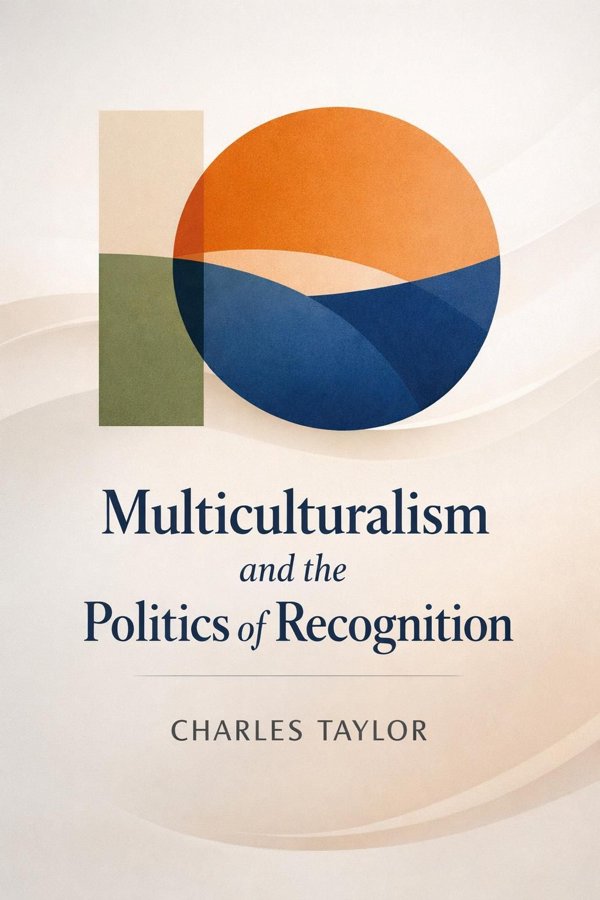
The Politics of Recognition by Charles Taylor is a politics book spanning 12 pages. In this influential essay, Charles Taylor explores the concept of recognition as a fundamental human need and a cornerstone of modern identity politics. He argues that the struggle for recognition shapes both personal identity and social justice, examining how multiculturalism and liberal democracy can reconcile demands for equality with respect for cultural difference.
This FizzRead summary covers all 12 key chapters of The Politics of Recognition in approximately 10 minutes, distilling the most important ideas, arguments, and takeaways from Charles Taylor's work. Also available as an audio summary and Key Quotes Podcast.
The Politics of Recognition
In this influential essay, Charles Taylor explores the concept of recognition as a fundamental human need and a cornerstone of modern identity politics. He argues that the struggle for recognition shapes both personal identity and social justice, examining how multiculturalism and liberal democracy can reconcile demands for equality with respect for cultural difference.
Who Should Read The Politics of Recognition?
This book is perfect for anyone interested in politics and looking to gain actionable insights in a short read. Whether you're a student, professional, or lifelong learner, the key ideas from The Politics of Recognition by Charles Taylor will help you think differently.
- ✓Readers who enjoy politics and want practical takeaways
- ✓Professionals looking to apply new ideas to their work and life
- ✓Anyone who wants the core insights of The Politics of Recognition in just 10 minutes
Want the full summary?
Get instant access to this book summary and 100K+ more with Fizz Moment.
Get Free SummaryAvailable on App Store • Free to download
Key Chapters
The modern discourse on recognition owes a decisive debt to Hegel. In the famous master–slave dialectic of the *Phenomenology of Spirit*, Hegel revealed that freedom and self-awareness are not inner possessions but relational achievements. The master seeks recognition from the slave, but the relationship is flawed, because true recognition requires mutuality. The slave, through labor and self-transformation, attains a deeper autonomy than the master precisely because he earns self-consciousness through struggle. Recognition, in other words, is the ground of our humanity: each self must be acknowledged by another to exist fully as a self.
This Hegelian legacy reverberates throughout modern political thought, though often in disguised form. When Marx writes of alienation, he is responding to a world in which laborers are denied recognition of their human capacities. When 20th-century anti-colonial movements assert their dignity, they are enacting the same basic drama. For me, this history is not mere philosophy—it tells us that the failure to recognize others rightly is not an intellectual error but a moral injury. It wounds the soul, deforming both the victim and the perpetrator. To refuse recognition is to deny someone their humanity. That is why politics, at its most humane, must be grounded in the ethical demand to recognize each other as free and equal beings.
Modern identity differs radically from pre-modern identity. In traditional societies, one’s place in the moral order was largely fixed: social rank, family role, or religious duty defined who one was. With the rise of individualism and expressive culture in the modern West came a new understanding of authenticity—the sense that each of us must discover and express our own unique way of being human. This is not narcissism; it is an ethical ideal. To live authentically is to be true to one’s inner voice. But authenticity cannot thrive in a vacuum. Our sense of self emerges dialogically, through recognition by others. When others fail to recognize us—or worse, misrecognize us—the result is not mere frustration but a loss of being.
Hence, the modern self’s craving for recognition is not a psychological weakness but a reflection of this new moral ontology. We are shaped by the languages of worth that we share. A culture that marginalizes certain voices deforms their very capacity to define themselves authentically. Because identity has become a moral project for each person, societies must ensure that the conditions of recognition are available to all. Otherwise, equality remains an abstraction that rings hollow to those excluded from the conversation.
+ 10 more chapters — available in the FizzRead app
All Chapters in The Politics of Recognition
About the Author
Charles Taylor is a Canadian philosopher known for his work in political philosophy, social theory, and the philosophy of mind. A leading figure in contemporary communitarian thought, he has written extensively on identity, modernity, and the role of moral frameworks in human life.
Get This Summary in Your Preferred Format
Read or listen to the The Politics of Recognition summary by Charles Taylor anytime, anywhere. FizzRead offers multiple formats so you can learn on your terms — all free.
Available formats: App · Audio · PDF · EPUB — All included free with FizzRead
Download The Politics of Recognition PDF and EPUB Summary
Key Quotes from The Politics of Recognition
“The modern discourse on recognition owes a decisive debt to Hegel.”
“Modern identity differs radically from pre-modern identity.”
Frequently Asked Questions about The Politics of Recognition
The Politics of Recognition by Charles Taylor is a politics book that explores key ideas across 12 chapters. In this influential essay, Charles Taylor explores the concept of recognition as a fundamental human need and a cornerstone of modern identity politics. He argues that the struggle for recognition shapes both personal identity and social justice, examining how multiculturalism and liberal democracy can reconcile demands for equality with respect for cultural difference.
More by Charles Taylor

You Might Also Like

Antifa: The Anti-Fascist Handbook
Mark Bray
10 min
Attack from Within: How Disinformation Is Sabotaging America
Barbara McQuade
10 min
Coercion, Capital, and European States, AD 990–1992
Charles Tilly
10 min
Digital Democracy: Concepts, Methodologies, Tools, and Applications
Various Authors
10 min
Fascism
Stanley G. Payne
10 min
Fire And Fury: Inside The Trump White House
Michael Wolff
10 minBrowse by Category
Ready to read The Politics of Recognition?
Get the full summary and 100K+ more books with Fizz Moment.