
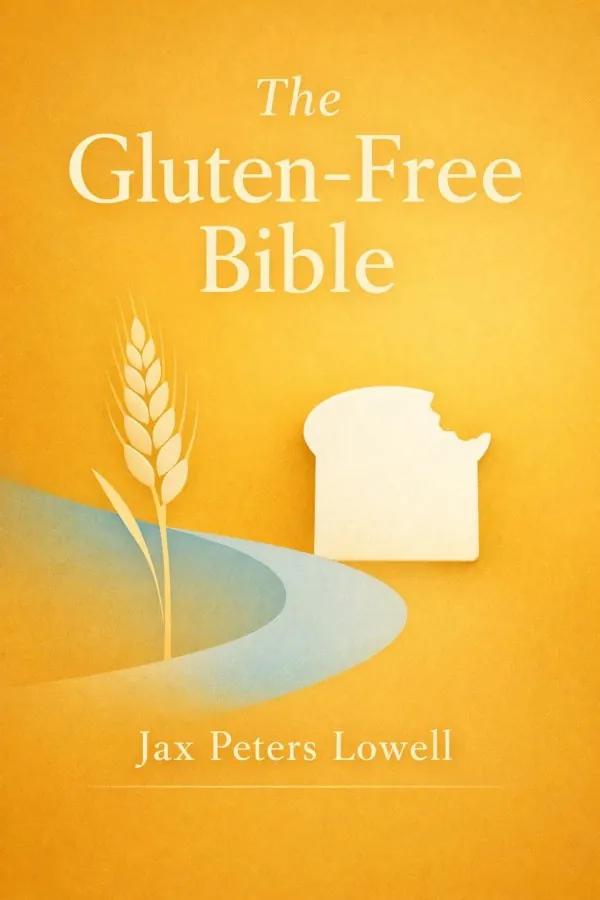
The Gluten-Free Bible: The Thoroughly Indispensable Guide to Negotiating Life Without Wheat: Summary & Key Insights
 10 min9 chaptersAudio available
Key Takeaways from The Gluten-Free Bible: The Thoroughly Indispensable Guide to Negotiating Life Without Wheat
A gluten-free life starts not with food, but with understanding.
The hardest part of going gluten-free is often not giving up bread, but discovering where gluten hides when no one expects it.
A kitchen can look clean and still be dangerous.
Success on a gluten-free diet rarely comes from willpower alone; it comes from systems.
Restaurants test more than appetite; they test your ability to advocate for yourself under pressure.
What Is The Gluten-Free Bible: The Thoroughly Indispensable Guide to Negotiating Life Without Wheat About?
The Gluten-Free Bible: The Thoroughly Indispensable Guide to Negotiating Life Without Wheat by Jax Peters Lowell is a nutrition book spanning 7 pages. The Gluten-Free Bible is a practical survival guide for anyone whose health, comfort, or peace of mind depends on avoiding wheat and gluten. More than a cookbook or diet manual, Jax Peters Lowell’s book tackles the full reality of gluten-free living: understanding celiac disease, decoding food labels, rebuilding your kitchen, eating out safely, traveling without panic, and coping with the emotional strain of feeling different in a food-centered world. What makes the book especially valuable is its tone. Lowell does not treat gluten-free life as a fashionable wellness choice, but as a serious, everyday negotiation that affects health, relationships, routines, and identity. Writing from personal experience as someone with celiac disease, she combines empathy with hard-earned practicality. The result is a guide that reassures readers while also equipping them to act confidently. For newly diagnosed readers, it offers a roadmap through confusion. For those already living gluten-free, it provides structure, validation, and smarter strategies. Its lasting message is simple but empowering: a gluten-free life can be safe, nourishing, and fully enjoyable when approached with knowledge, preparation, and self-advocacy.
This FizzRead summary covers all 9 key chapters of The Gluten-Free Bible: The Thoroughly Indispensable Guide to Negotiating Life Without Wheat in approximately 10 minutes, distilling the most important ideas, arguments, and takeaways from Jax Peters Lowell's work. Also available as an audio summary and Key Quotes Podcast.
The Gluten-Free Bible: The Thoroughly Indispensable Guide to Negotiating Life Without Wheat
The Gluten-Free Bible is a practical survival guide for anyone whose health, comfort, or peace of mind depends on avoiding wheat and gluten. More than a cookbook or diet manual, Jax Peters Lowell’s book tackles the full reality of gluten-free living: understanding celiac disease, decoding food labels, rebuilding your kitchen, eating out safely, traveling without panic, and coping with the emotional strain of feeling different in a food-centered world. What makes the book especially valuable is its tone. Lowell does not treat gluten-free life as a fashionable wellness choice, but as a serious, everyday negotiation that affects health, relationships, routines, and identity. Writing from personal experience as someone with celiac disease, she combines empathy with hard-earned practicality. The result is a guide that reassures readers while also equipping them to act confidently. For newly diagnosed readers, it offers a roadmap through confusion. For those already living gluten-free, it provides structure, validation, and smarter strategies. Its lasting message is simple but empowering: a gluten-free life can be safe, nourishing, and fully enjoyable when approached with knowledge, preparation, and self-advocacy.
Who Should Read The Gluten-Free Bible: The Thoroughly Indispensable Guide to Negotiating Life Without Wheat?
This book is perfect for anyone interested in nutrition and looking to gain actionable insights in a short read. Whether you're a student, professional, or lifelong learner, the key ideas from The Gluten-Free Bible: The Thoroughly Indispensable Guide to Negotiating Life Without Wheat by Jax Peters Lowell will help you think differently.
- ✓Readers who enjoy nutrition and want practical takeaways
- ✓Professionals looking to apply new ideas to their work and life
- ✓Anyone who wants the core insights of The Gluten-Free Bible: The Thoroughly Indispensable Guide to Negotiating Life Without Wheat in just 10 minutes
Want the full summary?
Get instant access to this book summary and 100K+ more with Fizz Moment.
Get Free SummaryAvailable on App Store • Free to download
Key Chapters
A gluten-free life starts not with food, but with understanding. Lowell emphasizes that celiac disease is not merely a sensitivity, preference, or dietary trend. It is an autoimmune disorder in which ingesting gluten triggers damage to the small intestine, interfering with nutrient absorption and affecting the entire body. Even for those with non-celiac gluten intolerance, the consequences can be serious, persistent, and disruptive. This distinction matters because the seriousness with which you understand the condition determines how seriously you will manage it.
The book helps readers move beyond vague ideas like “gluten makes me feel bad” toward a more precise awareness of what is at stake: digestive distress, fatigue, anemia, skin issues, bone problems, and long-term health consequences. Lowell makes clear that symptoms can vary dramatically from person to person. Some people experience severe stomach pain, while others deal with brain fog, depression, or chronic exhaustion. This variability often leads outsiders to underestimate the condition or sufferers to doubt themselves.
By grounding the gluten-free diet in medical necessity, Lowell gives readers emotional permission to set firm boundaries. If avoiding gluten feels inconvenient, socially awkward, or overly strict, remembering the biological reality helps cut through that discomfort. Practical application begins with proper diagnosis, keeping track of symptoms, discussing tests with healthcare professionals, and learning how even trace exposure can matter. Rather than living reactively, readers are encouraged to treat gluten avoidance as a form of medical self-care.
Actionable takeaway: write a one-paragraph personal reason for being gluten-free, including symptoms, health goals, and non-negotiables, and use it as your anchor when making food decisions or explaining your needs to others.
A kitchen can look clean and still be dangerous. Lowell stresses that for people with celiac disease or serious gluten intolerance, safety depends not only on ingredients but also on environment. Cross-contamination turns crumbs, shared condiments, scratched cookware, and careless habits into health risks. A single knife dipped into regular bread and then into peanut butter can undo an otherwise careful routine.
The book walks readers through how to reorganize the home kitchen so that gluten-free eating becomes realistic and sustainable. This may mean replacing or separating porous tools such as wooden spoons, cutting boards, colanders, baking stones, and old toasters. It can also mean labeling shelves, using separate butter, jam, and spreads, and teaching every member of the household what “safe” actually means. Lowell recognizes that many readers live with family members who still eat gluten, so she offers strategies for shared spaces rather than assuming ideal conditions.
Just as important, she addresses the emotional side of this shift. Redesigning the kitchen can feel dramatic, expensive, or inconvenient, especially if loved ones do not understand why a few crumbs matter. But Lowell argues that a safe kitchen reduces stress and decision fatigue. Once systems are in place, daily life becomes easier. Instead of checking every surface anxiously, you can cook with more freedom.
Practical examples include designating separate prep areas, storing gluten-free flours above regular flours to avoid spills, and maintaining a visible list of household rules. These systems protect not only physical health but also peace of mind.
Actionable takeaway: perform a one-hour kitchen audit today and identify every major cross-contamination risk, then fix the three highest-risk items first, such as the toaster, shared condiments, and cutting boards.
Success on a gluten-free diet rarely comes from willpower alone; it comes from systems. Lowell understands that many people fail not because they do not care, but because their old shopping, cooking, and meal habits no longer work. If you wait until you are hungry, busy, and tired, convenience foods and risky shortcuts become tempting. A gluten-free life therefore requires a more intentional approach to planning.
The book encourages readers to rebuild their pantry with naturally gluten-free basics: rice, potatoes, beans, eggs, vegetables, fruits, meats, dairy, nuts, and gluten-free grains where tolerated. Lowell also helps readers rethink recipes instead of mourning every lost food. Some dishes need substitution, but many classic meals are already close to gluten-free with small adjustments. A stew can be thickened with cornstarch instead of flour. Tacos on corn tortillas can replace sandwiches. Roasted vegetables, grilled fish, and rice bowls become reliable foundations rather than fallback options.
Meal planning also serves an emotional purpose. When readers know what they will eat, gluten-free living feels abundant instead of restrictive. Batch cooking soups, freezing safe muffins, carrying emergency snacks, and keeping simple ingredients on hand reduce panic and help avoid social or travel emergencies. Lowell shows that confidence grows when food is not left to chance.
Her practical wisdom is especially useful for households balancing cost, time, and multiple preferences. Gluten-free eating need not mean gourmet cooking every night. It means having a repeatable structure that protects health while fitting real life.
Actionable takeaway: build a one-week gluten-free meal template with three breakfasts, three lunches, three dinners, and two emergency snacks you can rotate consistently.
Restaurants test more than appetite; they test your ability to advocate for yourself under pressure. Lowell recognizes that dining out can feel like entering a negotiation where politeness, embarrassment, hunger, and risk all collide. Many people know how to order food, but far fewer know how to order safely. Her key insight is that confidence at restaurants comes from preparation, not luck.
She encourages readers to ask targeted questions rather than vague ones. “Is this gluten-free?” may not yield a reliable answer if the server does not understand cross-contact or hidden ingredients. Better questions include: Is the sauce thickened with flour? Are fries cooked in a shared fryer? Is grilled meat seasoned with a premade blend? Can the kitchen avoid bread crumbs, soy sauce, or shared utensils? These questions shift the conversation from labels to processes.
Lowell also explains that travel introduces additional layers of complexity: airports, foreign languages, unfamiliar brands, conference buffets, and relatives’ homes. The solution is to build a travel protocol. Bring backup snacks. Research restaurants ahead of time. Pack gluten-free essentials. Learn how to explain your needs simply and clearly. If necessary, eat before social events so hunger does not push you into risky choices.
The larger point is not that restaurants are impossible, but that passivity is dangerous. Readers learn to stop feeling guilty for asking questions and to understand that protecting their health is not rude. A relaxed meal becomes far more possible when the hard thinking happens before you sit down.
Actionable takeaway: create a short script you can use at restaurants and during travel that clearly explains your gluten-free needs and the specific precautions required.
Food restrictions are never just about food. Lowell is particularly strong on the emotional landscape of living gluten-free: grief, isolation, frustration, resentment, vigilance, and the fatigue of always having to think ahead. A diagnosis may bring relief by explaining years of symptoms, but it can also trigger a deep sense of loss. Foods tied to comfort, culture, family traditions, and spontaneity suddenly become complicated or forbidden.
The book validates these feelings instead of minimizing them. Readers are reminded that sadness or anger does not mean they are weak or ungrateful. It means they are adjusting to a genuine life change. This matters because many people try to cope by pretending it is no big deal, then feel overwhelmed when social events, holidays, or travel expose just how much has changed.
Lowell also highlights the importance of support. Family members, partners, doctors, support groups, and gluten-free communities can make the difference between constant struggle and gradual confidence. Even small forms of support matter: a friend who checks restaurant menus in advance, a partner who keeps the kitchen safe, or an online forum that shares trusted products. Emotional resilience grows when people feel understood rather than dismissed.
Another practical lesson is to prepare for social friction. Some people will trivialize the condition, confuse it with dieting, or pressure you to “just have a little.” Having calm, practiced responses protects your boundaries without escalating conflict. Over time, self-advocacy becomes easier.
Actionable takeaway: identify three people or communities who can support your gluten-free life, and ask for one concrete kind of help from each, such as safe meal planning, kitchen cooperation, or emotional encouragement.
Removing gluten is not the same as becoming healthy. Lowell warns against a common mistake: replacing wheat with highly processed gluten-free substitutes and assuming the job is done. Many packaged gluten-free foods are lower in fiber, higher in sugar or fat, and less fortified than their conventional counterparts. For someone recovering from celiac-related intestinal damage, nutrition deserves even more attention, not less.
The book encourages readers to think in terms of nourishment rather than deprivation. If bread and pasta disappear, what nutrient-dense foods will take their place? Lowell points readers toward balanced eating patterns built around whole foods: vegetables, legumes, quality proteins, fruits, dairy or alternatives, nuts, seeds, and naturally gluten-free grains. This approach supports healing, stable energy, and long-term wellness.
She also recognizes that untreated celiac disease can leave people depleted in iron, calcium, folate, and other nutrients because damaged intestines struggle to absorb them. As healing begins on a strict gluten-free diet, the body may recover, but that process benefits from thoughtful eating and medical follow-up. A gluten-free cookie may be safe, but it is not a substitute for rebuilding nutritional strength.
This chapter broadens the goal from “avoid getting sick today” to “build health over time.” It reframes the diet as more than a list of forbidden foods. The question becomes: how can a gluten-free life also be energetic, satisfying, and nutritionally complete?
Actionable takeaway: review your weekly diet and identify one area to strengthen nutritionally this week, such as adding more fiber-rich foods, iron sources, calcium-rich options, or minimally processed gluten-free staples.
At first glance, a gluten-free life appears defined by limitation. Lowell’s deeper argument is that knowledge is what transforms that limitation into freedom. Ignorance creates fear because every meal feels uncertain. Knowledge creates options because you learn how to shop, ask questions, substitute ingredients, anticipate risks, and build routines that work. The goal is not perfectionism for its own sake, but a level of competence that restores spontaneity and confidence.
This shift is especially important for newly diagnosed readers who may feel as though life has narrowed overnight. Lowell shows that the learning curve is steep but finite. In the beginning, every label is confusing and every meal outside the home feels dangerous. Over time, however, readers develop a repertoire of trusted products, reliable recipes, safe restaurants, travel habits, and communication strategies. What once felt overwhelming becomes normal.
The book therefore offers more than instructions; it offers a mindset. Rather than asking, “What can’t I eat anymore?” readers begin to ask, “How do I create a life that supports my health?” That framing invites creativity and control. It also makes long-term adherence more realistic because the diet is no longer experienced as constant punishment.
Lowell’s most encouraging contribution may be her insistence that living gluten-free does not require withdrawing from life. It requires becoming informed enough to participate in life wisely.
Actionable takeaway: make a personal gluten-free toolkit that includes your trusted foods, safe brands, restaurant questions, travel snacks, and go-to explanations, so daily decisions become easier and less emotionally draining.
All Chapters in The Gluten-Free Bible: The Thoroughly Indispensable Guide to Negotiating Life Without Wheat
About the Author
Jax Peters Lowell is an American author, speaker, and advocate best known for her work on celiac disease and gluten-free living. Diagnosed with celiac disease herself, she wrote from firsthand experience at a time when practical guidance on living without wheat was far less available than it is today. Her work helped translate a confusing medical condition into everyday strategies readers could actually use, from shopping and cooking to travel and social situations. Lowell’s writing stands out for combining clear information with empathy, making readers feel understood rather than lectured. Through books like The Gluten-Free Bible, she became a respected voice in the gluten-free community, helping countless people navigate diagnosis, dietary change, and the challenge of building a safe and satisfying life without gluten.
Get This Summary in Your Preferred Format
Read or listen to the The Gluten-Free Bible: The Thoroughly Indispensable Guide to Negotiating Life Without Wheat summary by Jax Peters Lowell anytime, anywhere. FizzRead offers multiple formats so you can learn on your terms — all free.
Available formats: App · Audio · PDF · EPUB — All included free with FizzRead
Download The Gluten-Free Bible: The Thoroughly Indispensable Guide to Negotiating Life Without Wheat PDF and EPUB Summary
Key Quotes from The Gluten-Free Bible: The Thoroughly Indispensable Guide to Negotiating Life Without Wheat
“A gluten-free life starts not with food, but with understanding.”
“The hardest part of going gluten-free is often not giving up bread, but discovering where gluten hides when no one expects it.”
“A kitchen can look clean and still be dangerous.”
“Success on a gluten-free diet rarely comes from willpower alone; it comes from systems.”
“Restaurants test more than appetite; they test your ability to advocate for yourself under pressure.”
Frequently Asked Questions about The Gluten-Free Bible: The Thoroughly Indispensable Guide to Negotiating Life Without Wheat
The Gluten-Free Bible: The Thoroughly Indispensable Guide to Negotiating Life Without Wheat by Jax Peters Lowell is a nutrition book that explores key ideas across 9 chapters. The Gluten-Free Bible is a practical survival guide for anyone whose health, comfort, or peace of mind depends on avoiding wheat and gluten. More than a cookbook or diet manual, Jax Peters Lowell’s book tackles the full reality of gluten-free living: understanding celiac disease, decoding food labels, rebuilding your kitchen, eating out safely, traveling without panic, and coping with the emotional strain of feeling different in a food-centered world. What makes the book especially valuable is its tone. Lowell does not treat gluten-free life as a fashionable wellness choice, but as a serious, everyday negotiation that affects health, relationships, routines, and identity. Writing from personal experience as someone with celiac disease, she combines empathy with hard-earned practicality. The result is a guide that reassures readers while also equipping them to act confidently. For newly diagnosed readers, it offers a roadmap through confusion. For those already living gluten-free, it provides structure, validation, and smarter strategies. Its lasting message is simple but empowering: a gluten-free life can be safe, nourishing, and fully enjoyable when approached with knowledge, preparation, and self-advocacy.
You Might Also Like
Eating by the Seasons Cookbook: Seasonal Produce-Focused Recipes
Clare Foster
10 min
From Crook to Cook: Platinum Recipes from Tha Boss Dogg's Kitchen
Snoop Dogg with Ryan Ford
10 min
Juicing for Beginners: The Essential Guide to Juicing Recipes and Juicing for Weight Loss
Rockridge Press
10 min
The Food Therapist: Break Bad Habits, Eat with Intention, and Indulge Without Worry
Shira Lenchewski
10 min
The Mediterranean Diet Meal Plan: A 4-Week Meal Plan for Optimal Health and Weight Loss
Various Contributors
10 min
The Well Plated Cookbook: Simple, Wholesome Recipes for Everyday Meals
Erin Clarke
10 minBrowse by Category
Ready to read The Gluten-Free Bible: The Thoroughly Indispensable Guide to Negotiating Life Without Wheat?
Get the full summary and 100K+ more books with Fizz Moment.