
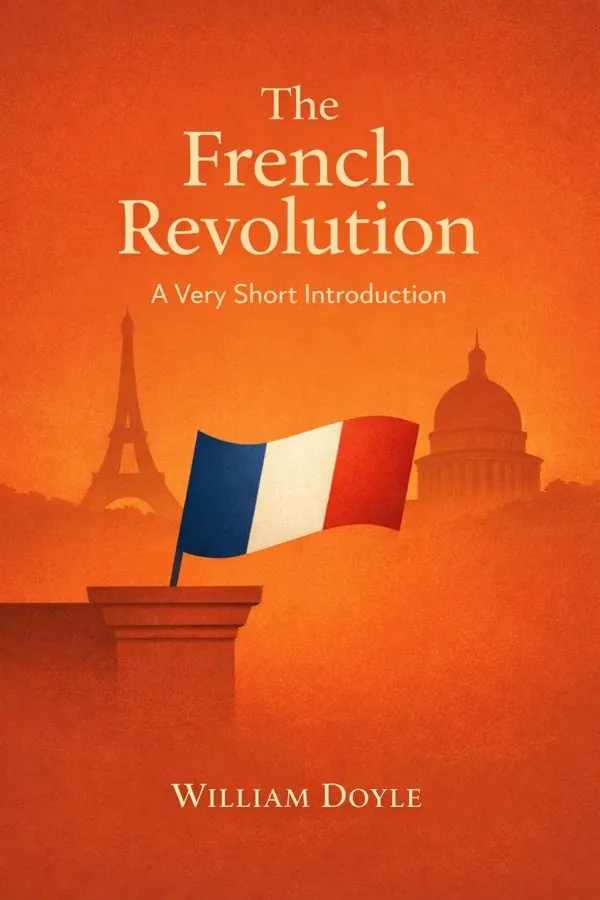
The French Revolution: A Very Short Introduction: Summary & Key Insights
 10 min10 chaptersAudio available
What Is The French Revolution: A Very Short Introduction About?
The French Revolution: A Very Short Introduction by William Doyle is a world_history book spanning 10 pages. This concise volume offers a clear and authoritative overview of the French Revolution, exploring its origins, major events, and lasting impact on modern political and social thought. William Doyle examines the complex causes behind the Revolution, the rise and fall of revolutionary governments, and the transformation of France and Europe that followed.
This FizzRead summary covers all 10 key chapters of The French Revolution: A Very Short Introduction in approximately 10 minutes, distilling the most important ideas, arguments, and takeaways from William Doyle's work. Also available as an audio summary and Key Quotes Podcast.
The French Revolution: A Very Short Introduction
This concise volume offers a clear and authoritative overview of the French Revolution, exploring its origins, major events, and lasting impact on modern political and social thought. William Doyle examines the complex causes behind the Revolution, the rise and fall of revolutionary governments, and the transformation of France and Europe that followed.
Who Should Read The French Revolution: A Very Short Introduction?
This book is perfect for anyone interested in world_history and looking to gain actionable insights in a short read. Whether you're a student, professional, or lifelong learner, the key ideas from The French Revolution: A Very Short Introduction by William Doyle will help you think differently.
- ✓Readers who enjoy world_history and want practical takeaways
- ✓Professionals looking to apply new ideas to their work and life
- ✓Anyone who wants the core insights of The French Revolution: A Very Short Introduction in just 10 minutes
Want the full summary?
Get instant access to this book summary and 100K+ more with Fizz Moment.
Get Free SummaryAvailable on App Store • Free to download
Key Chapters
Before we can understand what shattered, we must first grasp what stood. The France of Louis XVI, though admired for its splendor, rested upon a social and political structure that was medieval in spirit. It was a society of orders, not individuals—a hierarchy where privilege defined power. The clergy and the nobility enjoyed exempt status; the Third Estate, encompassing everyone else from wealthy merchants to landless peasants, bore the tax burden.
But this world was already creaking under strain. The privileges that once seemed natural were increasingly resented, and royal authority, though physically imposing, lacked moral legitimacy. The monarchy had centralized power for centuries, yet it had failed to reform the fiscal system that financed it. The nobility clung to ancient rights, while the crown faced insolvency. Agriculture remained the backbone of the economy, yet millions struggled to survive bad harvests and local famines.
When you looked more closely, the Old Regime appeared less like a firm edifice and more like a patchwork of contradictions. There were signs of modernity—commercial growth, educated elites, salons buzzing with debate—but the monarchy resisted structural change. Even well-intentioned ministers like Turgot and Necker found themselves crushed by vested interests. Reform was spoken of, even attempted, but always thwarted by privilege. Thus, France entered the late eighteenth century as a country rich in ideas but paralyzed in practice—a dangerous combination.
If the monarchy’s problems were material, its legitimacy was intellectual. The Enlightenment had taught people to question every source of authority—tradition, religion, kingship. Thinkers like Voltaire, Rousseau, and Montesquieu provided the intellectual instruments of revolution long before the guillotine was built. Their writings did not prescribe insurrection directly, but they undermined obedience. The notion that sovereignty originates in the people, not in the divine right of the king, spread through salons and pamphlets, reaching even provincial lawyers and bureaucrats who would soon lead France’s political upheaval.
In these decades, the crown itself seemed caught in contradiction. Louis XVI was not a tyrant, but a hesitant reformer. Yet hesitation proved fatal. He supported American independence, and in doing so financed his own ruin, sending France into deeper debt while exporting revolutionary ideals. The convergence of Enlightenment thought, fiscal collapse, and social discontent created a volatile mix. There was a growing recognition that the system could no longer sustain itself. When political language changes faster than institutions can adapt, revolution becomes possible.
+ 8 more chapters — available in the FizzRead app
All Chapters in The French Revolution: A Very Short Introduction
About the Author
William Doyle is a British historian specializing in eighteenth-century France and the French Revolution. He is Emeritus Professor of History at the University of Bristol and a Fellow of the British Academy, known for his scholarly works on French history and revolutionary politics.
Get This Summary in Your Preferred Format
Read or listen to the The French Revolution: A Very Short Introduction summary by William Doyle anytime, anywhere. FizzRead offers multiple formats so you can learn on your terms — all free.
Available formats: App · Audio · PDF · EPUB — All included free with FizzRead
Download The French Revolution: A Very Short Introduction PDF and EPUB Summary
Key Quotes from The French Revolution: A Very Short Introduction
“Before we can understand what shattered, we must first grasp what stood.”
“If the monarchy’s problems were material, its legitimacy was intellectual.”
Frequently Asked Questions about The French Revolution: A Very Short Introduction
The French Revolution: A Very Short Introduction by William Doyle is a world_history book that explores key ideas across 10 chapters. This concise volume offers a clear and authoritative overview of the French Revolution, exploring its origins, major events, and lasting impact on modern political and social thought. William Doyle examines the complex causes behind the Revolution, the rise and fall of revolutionary governments, and the transformation of France and Europe that followed.
More by William Doyle

You Might Also Like
The Age of Capital
Eric Hobsbawm
10 min
The Gulag Archipelago
Aleksandr Solzhenitsyn
10 min
Jerusalem: The Biography
Simon Sebag Montefiore
10 min
The Anglo-Saxons
James Campbell
10 min
The Boer War
Thomas Pakenham
10 min
The Industrial Revolutionaries: The Making of the Modern World 1776–1914
Gavin Weightman
10 minBrowse by Category
Ready to read The French Revolution: A Very Short Introduction?
Get the full summary and 100K+ more books with Fizz Moment.