
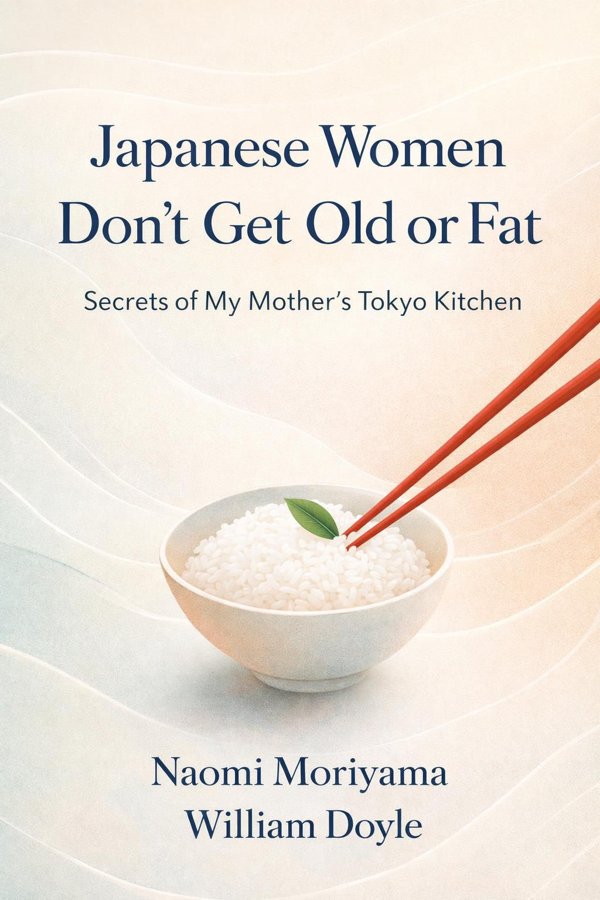
Japanese Women Don't Get Old or Fat: Secrets of My Mother's Tokyo Kitchen: Summary & Key Insights
by Naomi Moriyama, William Doyle
 10 min10 chaptersAudio available
What Is Japanese Women Don't Get Old or Fat: Secrets of My Mother's Tokyo Kitchen About?
Japanese Women Don't Get Old or Fat: Secrets of My Mother's Tokyo Kitchen by Naomi Moriyama, William Doyle is a nutrition book spanning 10 pages. This book explores the traditional Japanese diet and lifestyle, revealing how Japanese women maintain health, vitality, and longevity. Drawing from Naomi Moriyama’s childhood experiences in her mother’s Tokyo kitchen, it offers insights into balanced meals, portion control, and mindful eating habits that contribute to well-being.
This FizzRead summary covers all 10 key chapters of Japanese Women Don't Get Old or Fat: Secrets of My Mother's Tokyo Kitchen in approximately 10 minutes, distilling the most important ideas, arguments, and takeaways from Naomi Moriyama, William Doyle's work. Also available as an audio summary and Key Quotes Podcast.
Japanese Women Don't Get Old or Fat: Secrets of My Mother's Tokyo Kitchen
This book explores the traditional Japanese diet and lifestyle, revealing how Japanese women maintain health, vitality, and longevity. Drawing from Naomi Moriyama’s childhood experiences in her mother’s Tokyo kitchen, it offers insights into balanced meals, portion control, and mindful eating habits that contribute to well-being.
Who Should Read Japanese Women Don't Get Old or Fat: Secrets of My Mother's Tokyo Kitchen?
This book is perfect for anyone interested in nutrition and looking to gain actionable insights in a short read. Whether you're a student, professional, or lifelong learner, the key ideas from Japanese Women Don't Get Old or Fat: Secrets of My Mother's Tokyo Kitchen by Naomi Moriyama, William Doyle will help you think differently.
- ✓Readers who enjoy nutrition and want practical takeaways
- ✓Professionals looking to apply new ideas to their work and life
- ✓Anyone who wants the core insights of Japanese Women Don't Get Old or Fat: Secrets of My Mother's Tokyo Kitchen in just 10 minutes
Want the full summary?
Get instant access to this book summary and 100K+ more with Fizz Moment.
Get Free SummaryAvailable on App Store • Free to download
Key Chapters
When I first tasted typical Western meals—giant plates of pasta, thick steaks, sugary desserts—I was stunned by the speed and quantity with which people ate. In Japan, food serves the body, not the other way around. Meals are designed to sustain, not to dominate. Where the modern Western diet often leans heavily on processed foods, fats, and oversized portions, ours centers on variety, freshness, and color.
For Japanese women, eating is rarely a guilty act. We savor smaller portions and celebrate each ingredient’s natural flavor. This is not an expression of deprivation but of abundance in miniature. A Western breakfast might include stacks of pancakes dripping in syrup, while my mother began her mornings with rice, vegetables, and grilled fish—a packet of energy that awakens the senses without overwhelming them.
The secret is balance. In Japan, every meal aims to balance flavors, textures, and nutrients. We mix hot with cold, soft with crisp, subtle with tangy. Fat and sugar appear, but in thoughtful, tiny quantities—enough to satisfy, never to numb. Western food culture has become more about convenience and reward, often chasing quick satisfaction. The Japanese table, in contrast, reflects patience and sensory mindfulness.
When Westerners ask how Japanese women maintain their weight and youthful looks, I always return to the same answer: it is not about dieting, but culture. Our habits—serving food in smaller bowls, walking instead of driving, eating slowly, drinking plenty of tea—are all practices woven into daily life. Where the Western approach often detaches eating from living, in Japan they are inseparable. Food is life itself.
The heart of every Japanese home is the kitchen, and in my family, my mother’s kitchen was a temple. It was modest—compact, immaculate, and beautifully organized. There were no gleaming stainless steel appliances or complicated gadgets, only a few well-cared-for tools that had been with her for decades: a rice cooker, a sharp knife, and a collection of small ceramic bowls, each chosen with intention.
Home-cooked meals are an act of devotion in Japan. Most families value cooking at home not only because it is economical, but because it connects generations. My mother cooked daily, transforming seasonal ingredients into simple dishes that expressed both care and creativity. She believed that cooking was an emotional language. Each meal said to her family: I am here, I see you, I want you to thrive.
The Japanese kitchen is designed for movement and efficiency. Because space is limited, everything has its place; waste is minimal, and ingredients are used in their entirety whenever possible. This practicality matches a deeper philosophy of cooking seasonally and eating mindfully. When you cook at home—when your meals are handmade and your ingredients respected—you cultivate gratitude and presence. You eat with awareness, and that awareness becomes nourishment far beyond calories.
+ 8 more chapters — available in the FizzRead app
All Chapters in Japanese Women Don't Get Old or Fat: Secrets of My Mother's Tokyo Kitchen
About the Authors
Naomi Moriyama is a Japanese author and food expert who writes about Japanese culture and healthy living. William Doyle is an American writer and producer known for his works on culture and history. Together, they co-authored this book to share the benefits of Japanese eating traditions with a global audience.
Get This Summary in Your Preferred Format
Read or listen to the Japanese Women Don't Get Old or Fat: Secrets of My Mother's Tokyo Kitchen summary by Naomi Moriyama, William Doyle anytime, anywhere. FizzRead offers multiple formats so you can learn on your terms — all free.
Available formats: App · Audio · PDF · EPUB — All included free with FizzRead
Download Japanese Women Don't Get Old or Fat: Secrets of My Mother's Tokyo Kitchen PDF and EPUB Summary
Key Quotes from Japanese Women Don't Get Old or Fat: Secrets of My Mother's Tokyo Kitchen
“When I first tasted typical Western meals—giant plates of pasta, thick steaks, sugary desserts—I was stunned by the speed and quantity with which people ate.”
“The heart of every Japanese home is the kitchen, and in my family, my mother’s kitchen was a temple.”
Frequently Asked Questions about Japanese Women Don't Get Old or Fat: Secrets of My Mother's Tokyo Kitchen
Japanese Women Don't Get Old or Fat: Secrets of My Mother's Tokyo Kitchen by Naomi Moriyama, William Doyle is a nutrition book that explores key ideas across 10 chapters. This book explores the traditional Japanese diet and lifestyle, revealing how Japanese women maintain health, vitality, and longevity. Drawing from Naomi Moriyama’s childhood experiences in her mother’s Tokyo kitchen, it offers insights into balanced meals, portion control, and mindful eating habits that contribute to well-being.
You Might Also Like
Eating by the Seasons Cookbook: Seasonal Produce-Focused Recipes
Clare Foster
10 min
From Crook to Cook: Platinum Recipes from Tha Boss Dogg's Kitchen
Snoop Dogg with Ryan Ford
10 min
Juicing for Beginners: The Essential Guide to Juicing Recipes and Juicing for Weight Loss
Rockridge Press
10 min
The Food Therapist: Break Bad Habits, Eat with Intention, and Indulge Without Worry
Shira Lenchewski
10 min
The Mediterranean Diet Meal Plan: A 4-Week Meal Plan for Optimal Health and Weight Loss
Various Contributors
10 min
The Well Plated Cookbook: Simple, Wholesome Recipes for Everyday Meals
Erin Clarke
10 minBrowse by Category
Ready to read Japanese Women Don't Get Old or Fat: Secrets of My Mother's Tokyo Kitchen?
Get the full summary and 100K+ more books with Fizz Moment.