
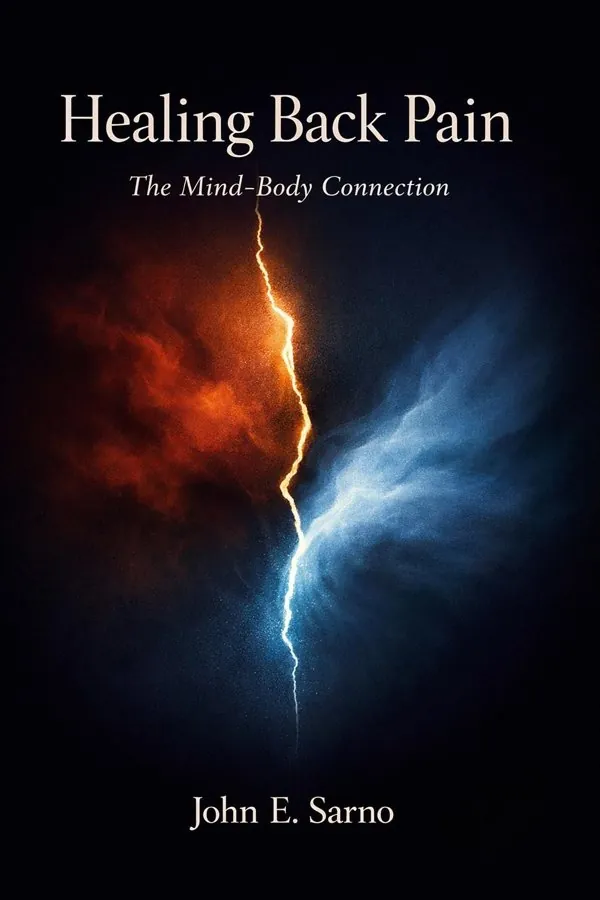
Healing Back Pain: The Mind-Body Connection: Summary & Key Insights
 10 min8 chaptersAudio available
Key Takeaways from Healing Back Pain: The Mind-Body Connection
What if your pain is not the problem, but a distraction from the real problem?
Many people reject psychological explanations because they think that would mean the pain is imaginary.
The people most likely to develop chronic pain are often the ones who seem the least likely to have emotional problems.
One of Sarno’s most striking claims is that understanding the true nature of pain can be therapeutic on its own.
Pain becomes chronic not only because it hurts, but because it teaches fear.
What Is Healing Back Pain: The Mind-Body Connection About?
Healing Back Pain: The Mind-Body Connection by John E. Sarno is a health_med book. Healing Back Pain: The Mind-Body Connection challenges one of the most common assumptions in modern medicine: that chronic back pain is usually caused by structural damage. In this influential book, physician John E. Sarno argues that many cases of persistent back, neck, shoulder, and limb pain are not primarily mechanical problems at all, but manifestations of a mind-body process he calls Tension Myositis Syndrome, or TMS. According to Sarno, repressed emotions such as anger, fear, pressure, and guilt can trigger physical symptoms by reducing blood flow to muscles and nerves, creating real pain with psychological roots. The book matters because it offers a radically different framework for understanding chronic pain, especially when scans, treatments, and physical interventions fail to provide lasting relief. Sarno draws on years of clinical experience at the Rusk Institute of Rehabilitation Medicine, where he observed recurring patterns in patients whose pain did not fit standard structural explanations. Whether readers fully accept his theory or approach it with caution, the book remains a provocative and often life-changing invitation to rethink pain, stress, personality, and the body’s hidden emotional language.
This FizzRead summary covers all 8 key chapters of Healing Back Pain: The Mind-Body Connection in approximately 10 minutes, distilling the most important ideas, arguments, and takeaways from John E. Sarno's work. Also available as an audio summary and Key Quotes Podcast.
Healing Back Pain: The Mind-Body Connection
Healing Back Pain: The Mind-Body Connection challenges one of the most common assumptions in modern medicine: that chronic back pain is usually caused by structural damage. In this influential book, physician John E. Sarno argues that many cases of persistent back, neck, shoulder, and limb pain are not primarily mechanical problems at all, but manifestations of a mind-body process he calls Tension Myositis Syndrome, or TMS. According to Sarno, repressed emotions such as anger, fear, pressure, and guilt can trigger physical symptoms by reducing blood flow to muscles and nerves, creating real pain with psychological roots.
The book matters because it offers a radically different framework for understanding chronic pain, especially when scans, treatments, and physical interventions fail to provide lasting relief. Sarno draws on years of clinical experience at the Rusk Institute of Rehabilitation Medicine, where he observed recurring patterns in patients whose pain did not fit standard structural explanations. Whether readers fully accept his theory or approach it with caution, the book remains a provocative and often life-changing invitation to rethink pain, stress, personality, and the body’s hidden emotional language.
Who Should Read Healing Back Pain: The Mind-Body Connection?
This book is perfect for anyone interested in health_med and looking to gain actionable insights in a short read. Whether you're a student, professional, or lifelong learner, the key ideas from Healing Back Pain: The Mind-Body Connection by John E. Sarno will help you think differently.
- ✓Readers who enjoy health_med and want practical takeaways
- ✓Professionals looking to apply new ideas to their work and life
- ✓Anyone who wants the core insights of Healing Back Pain: The Mind-Body Connection in just 10 minutes
Want the full summary?
Get instant access to this book summary and 100K+ more with Fizz Moment.
Get Free SummaryAvailable on App Store • Free to download
Key Chapters
Many people reject psychological explanations because they think that would mean the pain is imaginary. Sarno directly confronts this fear by insisting that Tension Myositis Syndrome is a genuine physical condition. In his model, the brain mildly restricts blood flow to muscles, nerves, or tendons, which creates oxygen deprivation and produces pain, stiffness, tingling, or weakness. Whether or not one accepts every detail of this mechanism, Sarno’s larger point is crucial: emotional processes can generate real bodily symptoms.
This distinction matters because patients with chronic pain are often trapped between two unsatisfying extremes. On one side, they are told their pain comes from structural flaws that must be fixed endlessly with rest, therapy, injections, or surgery. On the other side, if no clear structural cause is found, they fear being dismissed as exaggerating or inventing the problem. Sarno offers a third option: the pain is physically felt and psychologically driven.
He also argues that common findings on imaging, such as herniated discs, degeneration, or spinal abnormalities, are often overinterpreted. Many people without pain have similar scan results. This does not mean anatomy never matters, but it does mean structural explanations can become misleading when they do not match the full clinical picture.
In daily life, this perspective can reduce fear. Someone who avoids bending, walking, or lifting because of a scan result may begin to question whether the body is truly damaged. If medical evaluation has ruled out serious disease, the person can start re-engaging normal movement while addressing stress and emotion.
Actionable takeaway: stop equating “psychological” with “not real.” Consider whether your symptoms could be a legitimate mind-body response, and if serious pathology has been excluded, begin replacing fear with informed curiosity.
The people most likely to develop chronic pain are often the ones who seem the least likely to have emotional problems. Sarno observed that TMS commonly appears in high-achieving, conscientious, perfectionistic, responsible, and approval-seeking individuals. These people often pride themselves on being dependable and controlled. Yet the very traits that help them succeed can also create relentless inner tension. Perfectionists push themselves hard, goodists suppress anger to stay likable, and highly responsible people carry burdens they rarely admit feel unfair.
Sarno believed these personality patterns generate pressure in two ways. First, life itself produces frustration: work demands, family obligations, financial stress, aging, competition, and loss. Second, the personality adds another layer by insisting that one must cope gracefully, never complain, and never fall short. The gap between human limits and impossible self-expectations creates unconscious rage. Because that rage threatens a person’s self-image, it gets repressed. The brain then uses physical symptoms as a distraction.
Imagine a manager who must satisfy an unreasonable boss, support a family, and maintain a calm image. Outwardly, she appears composed. Inwardly, she may feel anger, humiliation, and fear of failure. Rather than consciously experiencing these emotions, she develops disabling back pain before an important project. The pain seems to come from sitting too long, but the timing suggests a larger emotional context.
Sarno’s aim is not to pathologize ambition or kindness. It is to show that admirable traits can become sources of strain when they are rigid and self-punishing. Recognizing your personality style can help you understand why your nervous system may be under constant pressure.
Actionable takeaway: identify whether perfectionism, people-pleasing, or over-responsibility defines you, and begin loosening one harsh inner rule that may be fueling chronic tension.
One of Sarno’s most striking claims is that understanding the true nature of pain can be therapeutic on its own. He reports that many patients improved substantially simply by learning about TMS and accepting that their pain was not caused by structural fragility. Why would knowledge have such power? Because fear, preoccupation, and misinterpretation help maintain chronic symptoms. When a person believes their spine is damaged, every sensation becomes threatening. The brain receives constant confirmation that pain is an effective way to command attention. Education interrupts that cycle.
Sarno’s treatment therefore placed heavy emphasis on reading, reflection, and recognition. He wanted patients to see the pattern: symptoms often began during stressful periods, shifted locations, persisted despite physical treatment, and coexisted with personality traits linked to repression. Once patients understood this framework, they could stop obsessing over posture, mattresses, chairs, stretching rituals, or every movement that supposedly triggered injury.
This educational approach resembles a change in narrative identity. Instead of saying, “I have a broken back that limits my life,” a person begins to say, “My body is strong, and my brain has learned to express emotional tension through pain.” That new story reduces panic and helplessness. It also makes room for self-observation rather than self-protection.
A practical example is someone who has seen multiple practitioners without lasting relief. Rather than collecting new diagnoses, they spend time learning about the psychology of pain, reviewing their symptom history, and noting evidence that the pattern does not behave like a straightforward injury. This does not replace medical care when needed, but it can reduce the endless search for a mechanical fix.
Actionable takeaway: educate yourself deeply about the mind-body model and review your own pain history for patterns that support it, because insight can weaken the fear that keeps symptoms alive.
Pain becomes chronic not only because it hurts, but because it teaches fear. Sarno argues that once people believe their bodies are damaged, they begin to organize life around avoidance. They stop exercising, sit cautiously, brace their muscles, cancel activities, and monitor every movement. This creates a self-reinforcing loop: fear increases attention to symptoms, attention amplifies symptoms, and symptoms seem to confirm the original fear. In this way, the pain problem becomes larger than the initial episode.
Even when the pain began after lifting, bending, or sitting, Sarno warns against assuming the activity itself remains dangerous. If serious injury has been ruled out, continued avoidance may send the brain a message that movement is threatening. The nervous system then stays on alert. Over time, ordinary actions like tying shoes, driving, or climbing stairs become loaded with dread.
Consider someone who experiences acute back pain after a stressful move to a new city. A scan shows mild disc changes, and they conclude that bending is unsafe. They stop exercising, request special chairs, and become hypervigilant about posture. Months later, the pain persists. Sarno would say the original stress and current fear are now more important than the physical event itself.
Recovery, in his view, often requires resuming normal activity with confidence. That does not mean recklessness or ignoring medical red flags. It means rejecting the identity of fragility. Walking, bending, and sitting become opportunities to teach the brain that the body is not in danger.
Actionable takeaway: if you have been medically cleared of serious structural problems, choose one avoided movement or activity and gradually reintroduce it while reminding yourself that fear, not damage, may be sustaining the pain.
A major reason chronic pain persists, according to Sarno, is that treatment often focuses on the wrong target. If the true driver is a mind-body process, then massages, manipulation, braces, injections, and even surgery may bring limited or temporary relief without addressing the underlying mechanism. Sarno is especially skeptical of explanations that blame posture, weak cores, leg-length differences, or minor spinal abnormalities for severe long-term pain in most cases. He believes many such diagnoses keep patients trapped in a structural story that increases fear and dependence.
This does not mean all physical treatment is useless or that structural disorders never exist. Sarno was a physician, not an opponent of medicine. His argument is that many patients with chronic pain have already pursued extensive physical remedies with little durable benefit. When treatment after treatment fails, it may be time to question the framework rather than intensify the same approach.
For example, a person might cycle through chiropractors, ergonomic devices, physical therapy routines, and repeated imaging while pain simply migrates from the lower back to the neck to the shoulder. Sarno saw symptom shifting as an important clue. If one symptom improves but another appears, the brain may still be using the body as a distraction. The expression changes, but the process remains.
A more effective response may include education, journaling, emotional reflection, stress awareness, and a return to normal function. The goal is not to abandon sensible care, but to stop searching endlessly for a mechanical flaw when the evidence points elsewhere.
Actionable takeaway: if you have tried multiple physical treatments without lasting relief, review your history honestly and ask whether the repeated failure of structural solutions suggests the need for a mind-body approach.
Insight alone helps, but Sarno makes clear that recovery is also a practice. To break the pain cycle, people must repeatedly shift attention away from physical fear and toward emotional awareness. This means recognizing stressors, observing personality pressures, challenging catastrophic thoughts, and refusing to let symptoms dominate identity. Healing is not about perfect emotional catharsis. It is about changing the relationship to pain so the brain no longer needs to produce it as a distraction.
Sarno often encouraged patients to resume physical activity, think psychologically during symptom episodes, and remind themselves that the body was fundamentally sound. He also recommended reflecting on current tensions and early life experiences that might intensify repression. Some readers use journaling to explore anger, sadness, guilt, or fear. Others benefit from psychotherapy, especially if trauma, chronic anxiety, or strong emotional inhibition is present. The method may vary, but the principle is consistent: bring what is hidden into awareness.
A useful application is to create a personal response plan for pain flare-ups. Instead of stretching frantically, searching online, or canceling the day, you pause and ask: What is happening in my life right now? What am I pressuring myself to be? What feelings am I resisting? Then you continue with normal activity as much as possible. Over time, this teaches the brain that pain no longer succeeds as a diversion.
Sarno’s broader contribution is hope. Many sufferers feel doomed by diagnosis, age, or failed treatment. His model suggests that the nervous system can change when fear decreases and emotional truth increases.
Actionable takeaway: build a simple recovery routine that includes daily emotional reflection, reduced symptom monitoring, and gradual return to normal movement so your actions reinforce the belief that healing is possible.
All Chapters in Healing Back Pain: The Mind-Body Connection
About the Author
John E. Sarno was an American physician and professor of rehabilitation medicine best known for his pioneering work on the relationship between chronic pain and emotional stress. He spent most of his career at the Rusk Institute of Rehabilitation Medicine at New York University Medical Center, where he treated thousands of patients with back pain and related conditions. Through his clinical observations, Sarno developed the theory of Tension Myositis Syndrome, or TMS, arguing that many chronic pain syndromes arise from unconscious emotional conflict rather than structural damage alone. His books, including Healing Back Pain, The Mindbody Prescription, and The Divided Mind, reached a wide audience and influenced both patients and practitioners interested in psychosomatic medicine. Sarno remains one of the most recognized and debated voices in the modern mind-body pain movement.
Get This Summary in Your Preferred Format
Read or listen to the Healing Back Pain: The Mind-Body Connection summary by John E. Sarno anytime, anywhere. FizzRead offers multiple formats so you can learn on your terms — all free.
Available formats: App · Audio · PDF · EPUB — All included free with FizzRead
Download Healing Back Pain: The Mind-Body Connection PDF and EPUB Summary
Key Quotes from Healing Back Pain: The Mind-Body Connection
“What if your pain is not the problem, but a distraction from the real problem?”
“Many people reject psychological explanations because they think that would mean the pain is imaginary.”
“The people most likely to develop chronic pain are often the ones who seem the least likely to have emotional problems.”
“One of Sarno’s most striking claims is that understanding the true nature of pain can be therapeutic on its own.”
“Pain becomes chronic not only because it hurts, but because it teaches fear.”
Frequently Asked Questions about Healing Back Pain: The Mind-Body Connection
Healing Back Pain: The Mind-Body Connection by John E. Sarno is a health_med book that explores key ideas across 8 chapters. Healing Back Pain: The Mind-Body Connection challenges one of the most common assumptions in modern medicine: that chronic back pain is usually caused by structural damage. In this influential book, physician John E. Sarno argues that many cases of persistent back, neck, shoulder, and limb pain are not primarily mechanical problems at all, but manifestations of a mind-body process he calls Tension Myositis Syndrome, or TMS. According to Sarno, repressed emotions such as anger, fear, pressure, and guilt can trigger physical symptoms by reducing blood flow to muscles and nerves, creating real pain with psychological roots. The book matters because it offers a radically different framework for understanding chronic pain, especially when scans, treatments, and physical interventions fail to provide lasting relief. Sarno draws on years of clinical experience at the Rusk Institute of Rehabilitation Medicine, where he observed recurring patterns in patients whose pain did not fit standard structural explanations. Whether readers fully accept his theory or approach it with caution, the book remains a provocative and often life-changing invitation to rethink pain, stress, personality, and the body’s hidden emotional language.
More by John E. Sarno
You Might Also Like

On Immunity
Eula Biss
10 min
The Three-Body Problem
Liu Cixin
10 min
Community Health Volunteer Toolkit: Training and Practical Activities
World Health Organization
10 min
Health Literacy for All: Practical Guides to Communicate Health Information (Compilations)
World Health Organization
10 min
The Complete Guide to Sports Supplements: An Evidence-Based Review
Anita Bean
10 min
The McDougall Program For Maximum Weight Loss
John A. McDougall
10 minBrowse by Category
Ready to read Healing Back Pain: The Mind-Body Connection?
Get the full summary and 100K+ more books with Fizz Moment.