
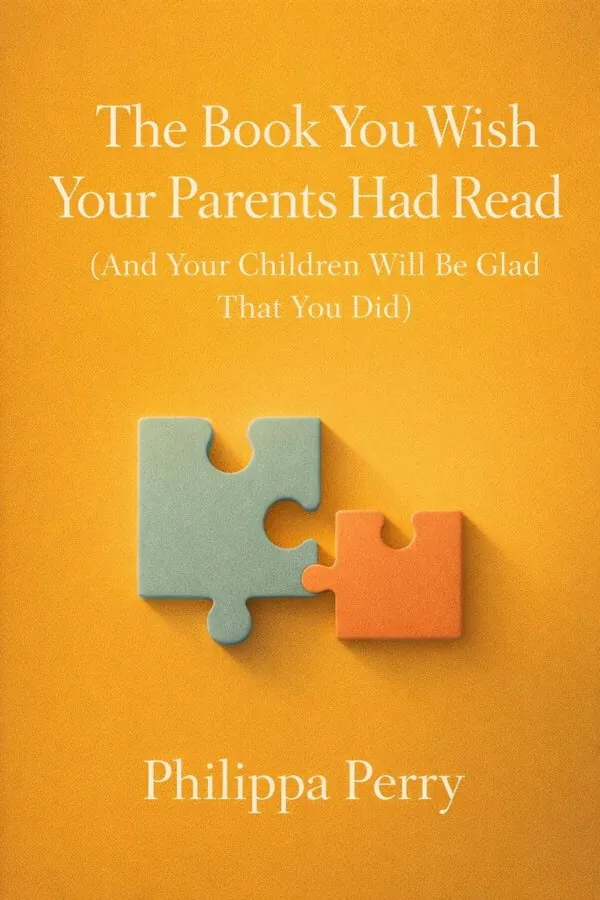
The Book You Wish Your Parents Had Read (And Your Children Will Be Glad That You Did): Summary & Key Insights
 10 min11 chaptersAudio available
What Is The Book You Wish Your Parents Had Read (And Your Children Will Be Glad That You Did) About?
The Book You Wish Your Parents Had Read (And Your Children Will Be Glad That You Did) by Philippa Perry is a parenting book spanning 11 pages. A practical and compassionate guide to understanding how our own upbringing shapes the way we parent, offering insights into emotional connection, communication, and self-awareness to foster healthier relationships with our children.
This FizzRead summary covers all 11 key chapters of The Book You Wish Your Parents Had Read (And Your Children Will Be Glad That You Did) in approximately 10 minutes, distilling the most important ideas, arguments, and takeaways from Philippa Perry's work. Also available as an audio summary and Key Quotes Podcast.
The Book You Wish Your Parents Had Read (And Your Children Will Be Glad That You Did)
A practical and compassionate guide to understanding how our own upbringing shapes the way we parent, offering insights into emotional connection, communication, and self-awareness to foster healthier relationships with our children.
Who Should Read The Book You Wish Your Parents Had Read (And Your Children Will Be Glad That You Did)?
This book is perfect for anyone interested in parenting and looking to gain actionable insights in a short read. Whether you're a student, professional, or lifelong learner, the key ideas from The Book You Wish Your Parents Had Read (And Your Children Will Be Glad That You Did) by Philippa Perry will help you think differently.
- ✓Readers who enjoy parenting and want practical takeaways
- ✓Professionals looking to apply new ideas to their work and life
- ✓Anyone who wants the core insights of The Book You Wish Your Parents Had Read (And Your Children Will Be Glad That You Did) in just 10 minutes
Want the full summary?
Get instant access to this book summary and 100K+ more with Fizz Moment.
Get Free SummaryAvailable on App Store • Free to download
Key Chapters
The first step toward conscious parenting is looking at our emotional patterns — those ingrained, automatic responses we inherited from early caregivers. I often describe these as emotional footprints: the atmosphere of our childhood stays imprinted deep within us, shaping how we react to intimacy, authority, and vulnerability. If your parents ignored your feelings or dismissed your sadness, you might have grown up believing that emotions are dangerous or irrelevant. As a parent, this belief might reappear when your child cries — triggering either irritation or a desire to ‘fix’ their feelings quickly.
To recognize these patterns, we begin by noticing how we feel when our child behaves in ways that are inconvenient to us. Frustration, shame, fear — these emotions often belong to an earlier chapter of our lives. By recognizing that these are echoes of our own past, we stop blaming the child and start seeing the deeper layers of our reactions. Understanding this allows us to differentiate between our adult reasoning and the child within us still seeking validation.
Once we become aware of these patterns, something remarkable happens: we create space for choice. We’re no longer prisoners of reflexive emotions; we can respond intentionally. The insight here is liberating — you do not need to be ruled by what was modeled for you. Awareness transforms the inherited script into an editable one. In that choice lies growth, both for you and for your child.
Every parent carries a story, and it is often unwritten or unspoken. I encourage you to tell yours, first to yourself. Many of our behaviors originate not from malice or neglect, but from unresolved pain — unmet needs for attention or safety that now reappear when our child mirrors them back to us. You might find yourself impatient with your child’s clinginess because no one ever offered you comfort when you were scared. You might recoil at your child’s anger because you were taught that anger is disrespectful.
Reflecting on your story means treating your past not as a prison but as a map. It shows where you learned love and where you learned fear. Writing or thinking through your memories — perhaps even discussing them with a partner or therapist — can illuminate how those lessons appear in your parenting today. This process is not about blaming your parents; it is about understanding the legacy of feelings that live on inside you.
As I often remind readers, healing happens not when we idealize or condemn our upbringing but when we make peace with it. When you own your story, you stop unconsciously projecting it onto your child. You become capable of responding to the present moment, rather than reliving the past. A child benefits most from a parent who is emotionally available — and emotional availability begins with knowing who you really are and how you came to be.
+ 9 more chapters — available in the FizzRead app
All Chapters in The Book You Wish Your Parents Had Read (And Your Children Will Be Glad That You Did)
About the Author
Philippa Perry is a British psychotherapist and author known for her accessible writing on psychology and relationships. She has written for major publications and presented television programs exploring mental health and family dynamics.
Get This Summary in Your Preferred Format
Read or listen to the The Book You Wish Your Parents Had Read (And Your Children Will Be Glad That You Did) summary by Philippa Perry anytime, anywhere. FizzRead offers multiple formats so you can learn on your terms — all free.
Available formats: App · Audio · PDF · EPUB — All included free with FizzRead
Download The Book You Wish Your Parents Had Read (And Your Children Will Be Glad That You Did) PDF and EPUB Summary
Key Quotes from The Book You Wish Your Parents Had Read (And Your Children Will Be Glad That You Did)
“The first step toward conscious parenting is looking at our emotional patterns — those ingrained, automatic responses we inherited from early caregivers.”
“Every parent carries a story, and it is often unwritten or unspoken.”
Frequently Asked Questions about The Book You Wish Your Parents Had Read (And Your Children Will Be Glad That You Did)
The Book You Wish Your Parents Had Read (And Your Children Will Be Glad That You Did) by Philippa Perry is a parenting book that explores key ideas across 11 chapters. A practical and compassionate guide to understanding how our own upbringing shapes the way we parent, offering insights into emotional connection, communication, and self-awareness to foster healthier relationships with our children.
More by Philippa Perry
You Might Also Like
Never Enough
Jennifer Breheny Wallace
10 min
Bluey: Sleepytime
Joe Brumm
10 min
In My Heart: A Book of Feelings
Jo Witek
10 min
Love From The Crayons
Drew Daywalt, Oliver Jeffers
10 min
Pete The Cat: Big Easter Adventure
James Dean, Kimberly Dean
10 min
Smart Money Smart Kids: Raising the Next Generation to Win with Money
Dave Ramsey, Rachel Cruze
10 minBrowse by Category
Ready to read The Book You Wish Your Parents Had Read (And Your Children Will Be Glad That You Did)?
Get the full summary and 100K+ more books with Fizz Moment.