

How to Stay Sane: Summary & Key Insights
 10 min9 chaptersAudio available
Key Takeaways from How to Stay Sane
A troubled mind often feels as if life is happening to us, when in reality our interpretation of events plays a powerful role in what we feel.
The moment you can notice your reaction, you are no longer completely trapped inside it.
We do not just live our lives; we narrate them.
Sanity is not maintained alone.
Many conflicts are not caused by bad intentions but by failures of imagination.
What Is How to Stay Sane About?
How to Stay Sane by Philippa Perry is a mental_health book spanning 11 pages. In How to Stay Sane, psychotherapist Philippa Perry offers a calm, humane guide to preserving inner balance in a world that easily overwhelms us. Rather than treating sanity as something fixed or fragile, Perry presents it as an ongoing practice: a way of relating to your thoughts, emotions, relationships, and habits with greater awareness. The book shows that mental well-being is not about eliminating discomfort, becoming perfectly rational, or always feeling in control. It is about learning how your mind works so you can respond to life with flexibility instead of being ruled by old patterns. What makes this book especially valuable is its clarity. Perry translates psychological ideas into everyday language and combines them with practical reflections that readers can use immediately. She explores self-observation, identity, empathy, emotional regulation, creativity, and resilience, showing how each contributes to a more stable inner life. As an experienced British psychotherapist and author, Perry brings both clinical insight and warmth to the subject. The result is a concise but deeply useful book for anyone who wants to understand themselves better, improve their relationships, and feel more grounded amid modern pressures.
This FizzRead summary covers all 9 key chapters of How to Stay Sane in approximately 10 minutes, distilling the most important ideas, arguments, and takeaways from Philippa Perry's work. Also available as an audio summary and Key Quotes Podcast.
How to Stay Sane
In How to Stay Sane, psychotherapist Philippa Perry offers a calm, humane guide to preserving inner balance in a world that easily overwhelms us. Rather than treating sanity as something fixed or fragile, Perry presents it as an ongoing practice: a way of relating to your thoughts, emotions, relationships, and habits with greater awareness. The book shows that mental well-being is not about eliminating discomfort, becoming perfectly rational, or always feeling in control. It is about learning how your mind works so you can respond to life with flexibility instead of being ruled by old patterns.
What makes this book especially valuable is its clarity. Perry translates psychological ideas into everyday language and combines them with practical reflections that readers can use immediately. She explores self-observation, identity, empathy, emotional regulation, creativity, and resilience, showing how each contributes to a more stable inner life. As an experienced British psychotherapist and author, Perry brings both clinical insight and warmth to the subject. The result is a concise but deeply useful book for anyone who wants to understand themselves better, improve their relationships, and feel more grounded amid modern pressures.
Who Should Read How to Stay Sane?
This book is perfect for anyone interested in mental_health and looking to gain actionable insights in a short read. Whether you're a student, professional, or lifelong learner, the key ideas from How to Stay Sane by Philippa Perry will help you think differently.
- ✓Readers who enjoy mental_health and want practical takeaways
- ✓Professionals looking to apply new ideas to their work and life
- ✓Anyone who wants the core insights of How to Stay Sane in just 10 minutes
Want the full summary?
Get instant access to this book summary and 100K+ more with Fizz Moment.
Get Free SummaryAvailable on App Store • Free to download
Key Chapters
A troubled mind often feels as if life is happening to us, when in reality our interpretation of events plays a powerful role in what we feel. Perry begins with the idea that thoughts, emotions, bodily sensations, and behavior constantly interact. Anxiety, sadness, anger, and confidence do not arise in isolation; they are reinforced by stories we tell ourselves, physical states we ignore, and habits we repeat without noticing. If you believe a difficult meeting means you are failing, your body tenses, your thoughts narrow, and your behavior becomes defensive. The event may be real, but your inner system amplifies it.
Perry encourages readers to see the mind as dynamic rather than fixed. This matters because many people assume they simply are anxious, insecure, or emotionally chaotic. But once you understand that mental states are patterns, not identities, change becomes possible. Your mind is not a machine that breaks once and for all; it is more like an ecosystem that can become healthier when conditions improve.
In practical terms, this means observing links between triggers, emotions, and actions. You might notice that lack of sleep makes you more pessimistic, that certain conversations activate shame, or that scrolling endlessly leaves you agitated. These patterns are not moral failings; they are information. By seeing how the system operates, you gain leverage over it.
The actionable takeaway is simple: for one week, track one difficult emotional pattern and note what happened before, what you felt in your body, what you thought, and what you did next. Awareness is the first step toward sanity.
The moment you can notice your reaction, you are no longer completely trapped inside it. One of Perry’s central claims is that self-observation is the foundation of mental health. Most of us move through the day on psychological autopilot, reacting to stress, criticism, desire, or fear before we have time to think. We snap at a partner, withdraw from a friend, overeat, overwork, or obsess—not because we choose these responses carefully, but because they have become automatic.
Self-observation interrupts this automaticity. It does not mean harsh self-monitoring or constant self-criticism. In Perry’s framework, it means developing a curious, non-punitive awareness of your inner life. What am I feeling right now? What story am I telling myself? Why did that comment sting so much? Why do I always feel restless after success? These questions help turn vague discomfort into something knowable.
This practice is powerful because what remains unconscious tends to control us. A person who has never examined their fear of rejection may repeatedly choose emotionally unavailable partners. Someone who cannot recognize rising anger may explode and then regret it. Self-observation allows a pause between impulse and action, and in that pause lies choice.
A practical example is journaling after emotionally charged moments. Instead of writing a dramatic account of what the other person did wrong, try describing your own experience: what you expected, what you feared, what memory it touched, what you wanted but could not say. Over time, patterns become visible.
The actionable takeaway: build a daily two-minute check-in. Ask yourself, “What am I feeling, what am I needing, and what am I avoiding?” Repeated gently, this habit increases emotional freedom.
We do not just live our lives; we narrate them. Perry explores how identity is shaped by the stories we carry about ourselves: I am the responsible one. I am difficult to love. I always mess things up. I must never depend on anyone. These narratives often begin early, formed through family roles, repeated experiences, and emotional assumptions that once helped us make sense of the world. The problem is that old stories can continue governing adult life long after they stop being useful.
A rigid self-story narrows possibility. If you see yourself as weak, every setback confirms it. If you identify as the one who keeps the peace, you may suppress valid anger until it turns into resentment. If you believe your worth depends on achievement, rest will feel threatening rather than restorative. Perry does not suggest inventing flattering fictions. Instead, she invites us to test whether the stories we tell are complete, fair, and current.
Revising identity begins by noticing language. Statements like “I am just the kind of person who...” often conceal habits that can change. A better approach is to replace fixed labels with more accurate descriptions: “I have learned to respond this way under pressure,” or “I often expect criticism, even when it isn’t present.” This creates room for growth.
A practical exercise is to write down one recurring negative belief about yourself and gather evidence both for and against it. Then ask whose voice is embedded in that belief. Is it truly yours, or inherited from a parent, teacher, partner, or culture?
The actionable takeaway: choose one identity statement that limits you and rewrite it in a more flexible form. Changing your story does not erase the past, but it can change the future you allow yourself to live.
Sanity is not maintained alone. Perry emphasizes that our minds are shaped in relationship and stabilized through connection. Human beings regulate themselves partly through contact with others: being understood, listened to, comforted, challenged, and seen accurately. When we become isolated, ashamed, or stuck in brittle independence, our thoughts can grow distorted and our emotions harder to manage. Healthy relationships act as mirrors, anchors, and sources of resilience.
This does not mean every relationship is beneficial. Some connections intensify confusion, self-doubt, or emotional volatility. Perry encourages readers to examine how relationships affect their internal state. Do you feel more like yourself around certain people, or less? Can you express vulnerability safely? Are conflict and repair possible, or does tension become blame, silence, or manipulation? Mental stability often depends less on the number of relationships we have than on their quality.
Perry also highlights that intimacy requires honesty. Many people seek closeness while hiding the very parts of themselves that need acceptance. We present competence instead of fear, politeness instead of hurt, compliance instead of desire. The result is connection that looks fine from the outside but feels thin from within. Genuine relating involves risking some truthful self-expression.
Practically, this may mean having a more direct conversation with a partner, reaching out to a trusted friend when you are struggling, or reducing time with people who repeatedly leave you feeling diminished. It may also mean becoming more emotionally available yourself by listening without rushing to fix or judge.
The actionable takeaway: identify one relationship that nourishes you and invest in it intentionally this week through a real conversation, honest sharing, or undistracted time together.
Many conflicts are not caused by bad intentions but by failures of imagination. Perry argues that empathy—the effort to understand another person’s inner world—is a stabilizing force both in relationships and within ourselves. When we assume we already know what others mean, or when we interpret their behavior only through our own wounds, communication quickly becomes reactive. Empathy slows this process down. It asks us to consider that another person’s behavior may be driven by fear, shame, stress, or misunderstanding rather than malice.
Importantly, empathy is not the same as self-erasure. It does not require accepting poor treatment or abandoning your own perspective. Instead, it creates enough emotional space for dialogue. If a colleague is abrupt, empathy might help you ask whether they are overwhelmed before concluding they are hostile. If your partner withdraws, empathy may help you see defensiveness where you first saw indifference. This shift does not solve everything, but it changes the tone of interaction from accusation to inquiry.
Perry also implies that empathy should extend inward. People who speak to themselves cruelly often struggle to stay steady under pressure. Self-empathy means recognizing your own feelings without dramatizing or dismissing them. It is easier to communicate clearly with others when you are not at war with yourself.
A useful practice is reflective listening: before defending yourself, summarize what the other person seems to be feeling or needing. “It sounds like you felt ignored when I canceled.” This does not concede blame; it demonstrates understanding and often reduces escalation.
The actionable takeaway: in your next disagreement, delay your rebuttal and first name what you think the other person is experiencing. Being understood is often the first step toward mutual sanity.
Emotional health is not the absence of strong feeling; it is the ability to experience feelings without becoming overwhelmed or acting blindly. Perry treats emotions as meaningful signals rather than inconveniences to suppress. Anxiety can point to threat, anger to violated boundaries, sadness to loss, jealousy to insecurity or longing. Problems begin when we either ignore emotions completely or obey them unquestioningly.
Many people are taught emotional extremes: repress everything or express everything. Perry offers a wiser middle path. If you deny anger, it may leak out as sarcasm or depression. If you vent every surge of feeling as truth, you may damage relationships and reinforce chaos. Regulation starts with naming what you feel, tolerating its presence, and exploring its message before deciding what action to take.
This approach can be practiced in ordinary moments. If you feel sudden irritation in a conversation, pause before reacting. Ask: what boundary feels crossed? What expectation did I have? If you feel anxious before sending an email, notice whether the anxiety reflects genuine risk or an old fear of being judged. The goal is not to become detached, but to become responsive rather than impulsive.
Perry also suggests that the body matters. Breathing, movement, rest, and sensory grounding can all help reduce emotional flooding. A regulated body makes reflective thought easier. Even simple acts such as slowing your breath, stepping outside, or unclenching your jaw can alter the emotional spiral.
The actionable takeaway: when a strong emotion arises, use this sequence—name it, locate it in the body, ask what it is signaling, then choose one deliberate response instead of your first automatic reaction.
One sign of an overburdened mind is that everything begins to feel functional, urgent, and heavy. Perry reminds readers that play and creativity are not luxuries for children or artists; they are essential capacities for psychological health. Play allows experimentation without catastrophic stakes. Creativity helps transform inner experience into something visible, movable, and meaningful. Both loosen the rigid mental patterns that keep us stuck.
When people are anxious or depressed, they often become overly literal and narrow. Life becomes a list of tasks, threats, and obligations. In that state, imagination shrinks. Yet imagination is precisely what allows alternatives to emerge. Drawing, writing, dancing, cooking, building, joking, improvising, gardening, and making music all invite a freer relationship to self. They create spaces where the mind can explore rather than defend.
Perry’s insight is especially relevant in adult life, where play is often dismissed as unproductive. But someone who never plays may become more brittle, more perfectionistic, and less resilient. Play helps us tolerate uncertainty because it teaches us that not everything has to be controlled to be valuable. Creativity can also reveal emotions we cannot yet explain in words. A sketch, a collage, or a piece of music may express grief or confusion long before a coherent explanation is possible.
A practical application is to reintroduce one non-evaluative activity into your week—something done for curiosity rather than performance. This means no measuring, no posting, no trying to be good. Just engaging.
The actionable takeaway: schedule thirty minutes this week for playful or creative activity with no practical goal. Mental flexibility grows when the mind is allowed to explore, not only to perform.
When we are distressed, our thoughts can become convincing but unreliable. Perry stresses the importance of reality testing: comparing our interpretations with evidence instead of assuming our first emotional conclusion is true. This is a cornerstone of sanity because the mind, especially under stress, tends to exaggerate, personalize, and predict negatively. A delayed reply becomes rejection. A mistake becomes proof of incompetence. One difficult week becomes evidence that life is falling apart.
Reality testing does not mean distrusting all feelings. It means recognizing that feelings are data, not verdicts. If you feel ashamed after speaking in a meeting, the feeling is real—but the thought “Everyone thinks I am foolish” may be a distortion. If you fear a friend is angry because they seem distant, reality testing invites questions: what else might explain this? What actual evidence do I have? Have I checked, or only assumed?
This skill is especially valuable in relationships and periods of stress, when projection increases. We often attribute our own fears to others or interpret neutral events through old emotional lenses. Perry encourages a more grounded approach: consult facts, seek clarification, and remain open to multiple explanations.
A practical technique is to separate observation from interpretation. Observation: “My manager sent a short email.” Interpretation: “She is disappointed in me.” Once separated, the emotional spell weakens and alternatives become visible. Another useful tool is trusted feedback from someone who is neither alarmist nor dismissive.
The actionable takeaway: the next time a thought spikes your anxiety, write down the facts, your interpretation, and two alternative explanations. Sanity grows when you learn to question mental certainty without denying emotional reality.
Many people think staying sane means becoming harder, less sensitive, or less affected by life. Perry offers a more humane definition of resilience. Real resilience is not emotional numbness or relentless positivity. It is the ability to remain in relationship with reality, with other people, and with yourself even when life is painful. It comes from integration: bringing together thought and feeling, strength and vulnerability, independence and dependence, past experience and present awareness.
Disintegration happens when parts of the self are split off. We may act competent while secretly panicked, appear agreeable while carrying buried rage, or pursue success while neglecting exhaustion. Over time, these splits create inner strain. Integration means acknowledging complexity instead of forcing a false simplicity. You can be grateful and grieving, strong and frightened, loving and angry. Mental health improves when these mixed states are tolerated rather than denied.
Perry also links resilience to perspective. Difficult experiences feel less annihilating when we can place them in a larger frame. A setback is painful, but it is not the whole story. A conflict matters, but it does not define an entire relationship. Perspective does not minimize suffering; it prevents total identification with it.
Practically, integration may involve therapy, reflective writing, more honest relationships, or simply allowing yourself to admit contradictory feelings. It also requires self-care in the broadest sense: enough sleep, time, and emotional space to process life rather than merely endure it.
The actionable takeaway: when facing a challenge, ask not “How do I stop feeling this?” but “How do I hold this experience without losing the rest of myself?” Resilience begins with making room for the whole truth of your inner life.
All Chapters in How to Stay Sane
About the Author
Philippa Perry is a British psychotherapist, writer, and broadcaster best known for translating psychological insight into clear, practical guidance for everyday life. Trained as a psychotherapist, she has spent years helping people understand how emotions, early experiences, and relationships shape adult behavior. Perry is the author of several widely read books on mental health, self-understanding, and family dynamics, including The Book You Wish Your Parents Had Read. She is also a frequent contributor to public conversations about emotional well-being through journalism, interviews, and media appearances. What distinguishes her work is its warmth, accessibility, and lack of jargon. Rather than offering simplistic fixes, Perry encourages curiosity, self-awareness, and compassion, making her one of the most trusted contemporary voices on emotional health and relationships.
Get This Summary in Your Preferred Format
Read or listen to the How to Stay Sane summary by Philippa Perry anytime, anywhere. FizzRead offers multiple formats so you can learn on your terms — all free.
Available formats: App · Audio · PDF · EPUB — All included free with FizzRead
Download How to Stay Sane PDF and EPUB Summary
Key Quotes from How to Stay Sane
“A troubled mind often feels as if life is happening to us, when in reality our interpretation of events plays a powerful role in what we feel.”
“The moment you can notice your reaction, you are no longer completely trapped inside it.”
“We do not just live our lives; we narrate them.”
“Perry emphasizes that our minds are shaped in relationship and stabilized through connection.”
“Many conflicts are not caused by bad intentions but by failures of imagination.”
Frequently Asked Questions about How to Stay Sane
How to Stay Sane by Philippa Perry is a mental_health book that explores key ideas across 9 chapters. In How to Stay Sane, psychotherapist Philippa Perry offers a calm, humane guide to preserving inner balance in a world that easily overwhelms us. Rather than treating sanity as something fixed or fragile, Perry presents it as an ongoing practice: a way of relating to your thoughts, emotions, relationships, and habits with greater awareness. The book shows that mental well-being is not about eliminating discomfort, becoming perfectly rational, or always feeling in control. It is about learning how your mind works so you can respond to life with flexibility instead of being ruled by old patterns. What makes this book especially valuable is its clarity. Perry translates psychological ideas into everyday language and combines them with practical reflections that readers can use immediately. She explores self-observation, identity, empathy, emotional regulation, creativity, and resilience, showing how each contributes to a more stable inner life. As an experienced British psychotherapist and author, Perry brings both clinical insight and warmth to the subject. The result is a concise but deeply useful book for anyone who wants to understand themselves better, improve their relationships, and feel more grounded amid modern pressures.
More by Philippa Perry

You Might Also Like

Big Feelings: How to Be Okay When Things Are Not Okay
Liz Fosslien, Mollie West Duffy
10 min
Creative Arts Therapies Handbook: Art, Music and Dance Therapy Practices for Wellbeing
Susan I. Buchalter
10 min
Emotional First Aid: Healing Rejection, Guilt, Failure, and Other Everyday Hurts
Guy Winch
10 min
Lost Connections: Why You're Depressed and How to Find Hope
Johann Hari
10 min
No Time to Panic: How to Stop Worrying and Embrace Life
Matt Gutman
10 min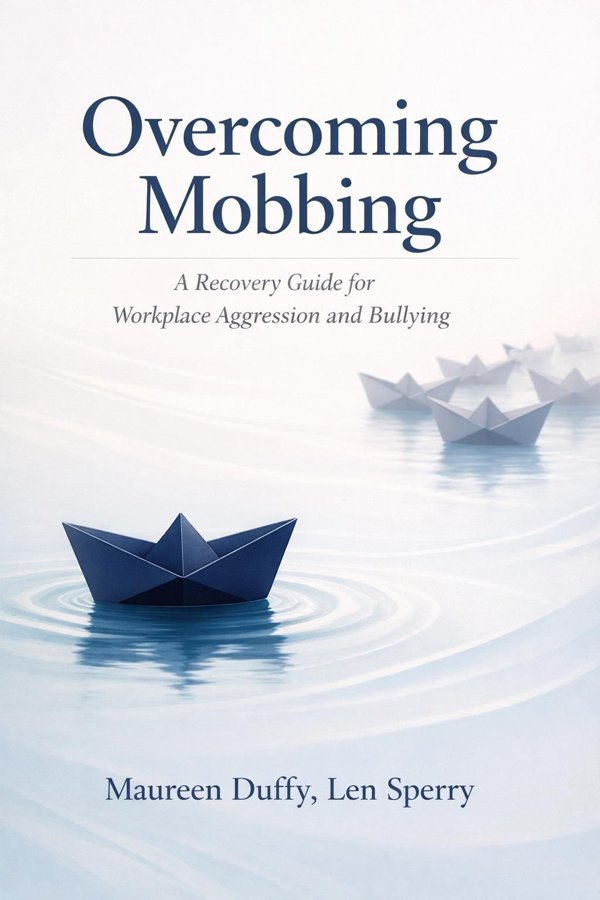
Overcoming Mobbing: A Recovery Guide for Workplace Aggression and Bullying
Maureen Duffy, Len Sperry
10 minBrowse by Category
Ready to read How to Stay Sane?
Get the full summary and 100K+ more books with Fizz Moment.