
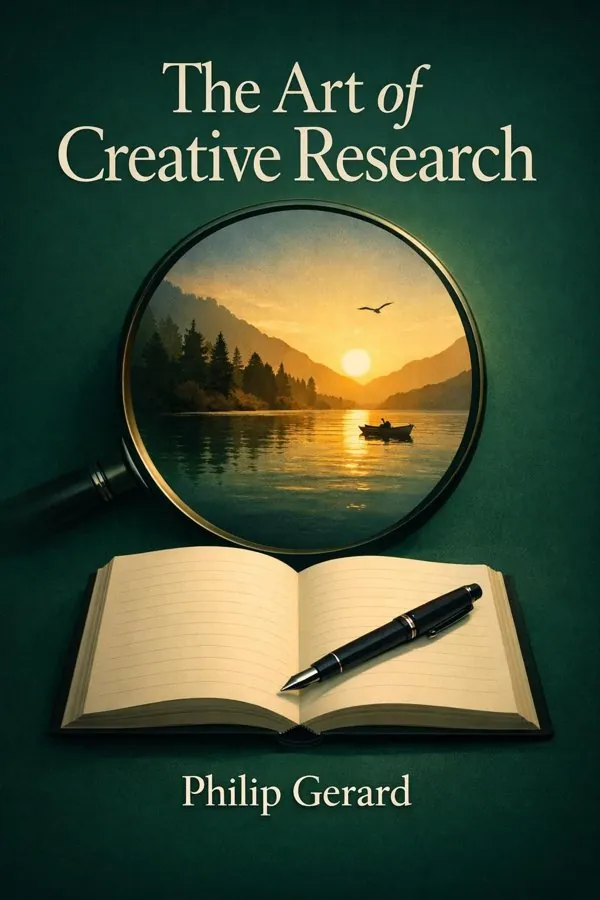
The Art of Creative Research: A Field Guide for Writers: Summary & Key Insights
 10 min11 chaptersAudio available
What Is The Art of Creative Research: A Field Guide for Writers About?
The Art of Creative Research: A Field Guide for Writers by Philip Gerard is a writing book spanning 11 pages. A practical guide for writers seeking to enrich their creative work through research. Philip Gerard explores how to find, evaluate, and integrate factual material into fiction and nonfiction writing, blending storytelling with investigative rigor. The book offers techniques for interviewing, archival digging, and field observation, emphasizing curiosity and ethical responsibility in the creative process.
This FizzRead summary covers all 11 key chapters of The Art of Creative Research: A Field Guide for Writers in approximately 10 minutes, distilling the most important ideas, arguments, and takeaways from Philip Gerard's work. Also available as an audio summary and Key Quotes Podcast.
The Art of Creative Research: A Field Guide for Writers
A practical guide for writers seeking to enrich their creative work through research. Philip Gerard explores how to find, evaluate, and integrate factual material into fiction and nonfiction writing, blending storytelling with investigative rigor. The book offers techniques for interviewing, archival digging, and field observation, emphasizing curiosity and ethical responsibility in the creative process.
Who Should Read The Art of Creative Research: A Field Guide for Writers?
This book is perfect for anyone interested in writing and looking to gain actionable insights in a short read. Whether you're a student, professional, or lifelong learner, the key ideas from The Art of Creative Research: A Field Guide for Writers by Philip Gerard will help you think differently.
- ✓Readers who enjoy writing and want practical takeaways
- ✓Professionals looking to apply new ideas to their work and life
- ✓Anyone who wants the core insights of The Art of Creative Research: A Field Guide for Writers in just 10 minutes
Want the full summary?
Get instant access to this book summary and 100K+ more with Fizz Moment.
Get Free SummaryAvailable on App Store • Free to download
Key Chapters
When I tell my students that the writer’s first job is to be an explorer, I see the flicker of recognition. Writing, after all, begins with curiosity—the hunger to know what happened, why it matters, and how it feels. Creative research grows from that hunger. Unlike academic research, which often starts from existing frameworks or theories, creative research begins in wonder and uncertainty.
To be a writer-explorer is to move through the world with an investigative stance. The real terrain is the human heart, but the route passes through landscapes, documents, and conversations. I learned early on that the story does not reveal itself from the comfort of one’s desk. It waits in a stranger’s voice, a stack of old letters, the smell of salt air in a place history forgot. Thus, research becomes a moral stance of attention: you go where the story leads, you pay attention, you ask questions that even the subjects may not have dared to pose.
Exploration demands risk. The risk that what you find will challenge your assumptions. The risk that the story will be messier than you imagined. But only in accepting that vulnerability do we earn truth. Every good writer must cultivate what I call an investigative faith—the belief that the world is more surprising and more complex than anything we could invent from our chairs. That faith pulls us out the door.
So, in practice, the writer-explorer keeps notebooks, listens intently, studies gestures, and learns to blend patience with boldness. You track down details that others overlook. You follow leads that may turn to nothing. Yet even what fails teaches something about your subjects and yourself. Over time, exploration becomes not simply part of your craft, but your way of inhabiting life—as one who is constantly learning how to see.
At the heart of creative research lies a deceptively simple question: What is the story? Data or description alone does not make art. To find the story, a writer must learn to ask not only what happened, but what it means. Meaning comes from connection—between events and emotions, facts and imagination, past and present.
I have always begun my projects with a question, not an answer. Often the question is emotional rather than intellectual: How do ordinary people behave under extraordinary pressure? What does courage look like after battle? Why does a landscape shape a culture’s sense of destiny? Research helps you chase those questions through the thickets of reality until a pattern emerges. You may begin with a fascination for a shipwreck, only to end up writing about how we remember loss. The story, when it comes, is rarely the one you set out to find.
Locating your story also means learning the discipline of focus. The world offers endless material, but truth needs a frame. A creative researcher learns to define a manageable inquiry—something human-scale that still hints at the universal. That balance between specificity and scope gives your narrative both substance and resonance. Real research reveals the limits of your knowledge and opens pathways into empathy. Through discovered detail, you find the pulse of humanity that transforms a cluster of facts into story.
+ 9 more chapters — available in the FizzRead app
All Chapters in The Art of Creative Research: A Field Guide for Writers
About the Author
Philip Gerard (1955–2022) was an American author, essayist, and professor of creative writing at the University of North Carolina Wilmington. He wrote several works of fiction and nonfiction, including 'Cape Fear Rising' and 'Secret Soldiers,' and was known for his contributions to narrative journalism and the craft of writing.
Get This Summary in Your Preferred Format
Read or listen to the The Art of Creative Research: A Field Guide for Writers summary by Philip Gerard anytime, anywhere. FizzRead offers multiple formats so you can learn on your terms — all free.
Available formats: App · Audio · PDF · EPUB — All included free with FizzRead
Download The Art of Creative Research: A Field Guide for Writers PDF and EPUB Summary
Key Quotes from The Art of Creative Research: A Field Guide for Writers
“When I tell my students that the writer’s first job is to be an explorer, I see the flicker of recognition.”
“At the heart of creative research lies a deceptively simple question: What is the story?”
Frequently Asked Questions about The Art of Creative Research: A Field Guide for Writers
The Art of Creative Research: A Field Guide for Writers by Philip Gerard is a writing book that explores key ideas across 11 chapters. A practical guide for writers seeking to enrich their creative work through research. Philip Gerard explores how to find, evaluate, and integrate factual material into fiction and nonfiction writing, blending storytelling with investigative rigor. The book offers techniques for interviewing, archival digging, and field observation, emphasizing curiosity and ethical responsibility in the creative process.
More by Philip Gerard
You Might Also Like
The Art of Perspective
Christopher Castellani
10 min
Making a Point: The Persnickety Story of English Punctuation
David Crystal
10 min
The Elements Of Eloquence: How To Turn The Perfect English Phrase
Mark Forsyth
10 min
The Pocket Muse: Ideas and Inspirations for Writing
Monica Wood
10 min
A Little Book on Form: An Exploration into the Formal Imagination of Poetry
Robert Hass
10 min
Adventures In The Screen Trade: A Personal View Of Hollywood And Screenwriting
William Goldman
10 minBrowse by Category
Ready to read The Art of Creative Research: A Field Guide for Writers?
Get the full summary and 100K+ more books with Fizz Moment.