
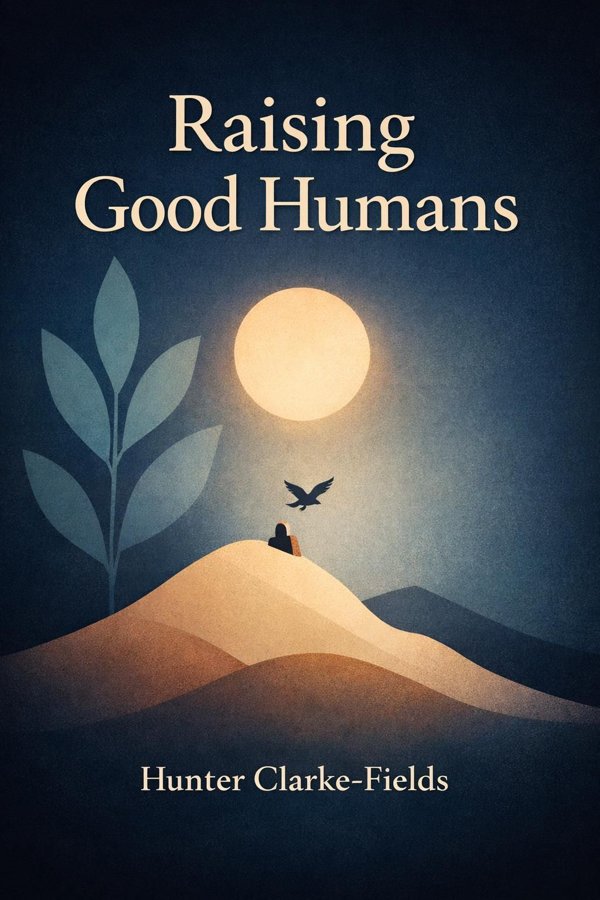
Raising Good Humans: A Mindful Guide to Breaking the Cycle of Reactive Parenting and Raising Kind, Confident Kids: Summary & Key Insights
 10 min5 chaptersAudio available
What Is Raising Good Humans: A Mindful Guide to Breaking the Cycle of Reactive Parenting and Raising Kind, Confident Kids About?
Raising Good Humans: A Mindful Guide to Breaking the Cycle of Reactive Parenting and Raising Kind, Confident Kids by Hunter Clarke-Fields is a parenting book spanning 5 pages. Raising Good Humans is a practical guide that helps parents cultivate mindfulness and compassion in their parenting approach. The book offers strategies to break cycles of reactivity, manage stress, and foster emotional intelligence in children. Through mindfulness practices and communication techniques, it empowers parents to raise kind, confident, and resilient kids.
This FizzRead summary covers all 5 key chapters of Raising Good Humans: A Mindful Guide to Breaking the Cycle of Reactive Parenting and Raising Kind, Confident Kids in approximately 10 minutes, distilling the most important ideas, arguments, and takeaways from Hunter Clarke-Fields's work. Also available as an audio summary and Key Quotes Podcast.
Raising Good Humans: A Mindful Guide to Breaking the Cycle of Reactive Parenting and Raising Kind, Confident Kids
Raising Good Humans is a practical guide that helps parents cultivate mindfulness and compassion in their parenting approach. The book offers strategies to break cycles of reactivity, manage stress, and foster emotional intelligence in children. Through mindfulness practices and communication techniques, it empowers parents to raise kind, confident, and resilient kids.
Who Should Read Raising Good Humans: A Mindful Guide to Breaking the Cycle of Reactive Parenting and Raising Kind, Confident Kids?
This book is perfect for anyone interested in parenting and looking to gain actionable insights in a short read. Whether you're a student, professional, or lifelong learner, the key ideas from Raising Good Humans: A Mindful Guide to Breaking the Cycle of Reactive Parenting and Raising Kind, Confident Kids by Hunter Clarke-Fields will help you think differently.
- ✓Readers who enjoy parenting and want practical takeaways
- ✓Professionals looking to apply new ideas to their work and life
- ✓Anyone who wants the core insights of Raising Good Humans: A Mindful Guide to Breaking the Cycle of Reactive Parenting and Raising Kind, Confident Kids in just 10 minutes
Want the full summary?
Get instant access to this book summary and 100K+ more with Fizz Moment.
Get Free SummaryAvailable on App Store • Free to download
Key Chapters
In the beginning of every parenting journey lies a familiar tension—the urge to control, to fix, to respond immediately when things seem out of hand. Many of us learned this rhythm from our own parents, who, in turn, were shaped by generations of survival-based behavior. Reactivity becomes an unconscious inheritance. We raise our voices, snap in frustration, or shut down emotionally, not because we want to, but because our bodies and minds are conditioned to respond that way.
When I first began teaching mindfulness to parents, I realized that the heart of parenting struggles often lies not in the child’s behavior but in our internal state. We can’t offer calm if we’re governed by anxiety. We can’t teach empathy when we ourselves feel trapped by resentment. To break this pattern, we begin by recognizing that every moment of frustration is an opportunity to pause and breathe. Mindfulness allows us to see our reactions as conditioned responses rather than absolute truths. By pausing, we create space—a gap between stimulus and response—in which we can choose kindness and curiosity over anger.
This awareness transforms the parent-child relationship. When our child screams, disobeys, or argues, instead of reacting immediately, we observe our inner sensations: the tightening in the chest, the racing thoughts, the voice that insists we need control. That observation is the first step to freedom. Through repeated practice, our nervous system learns a new rhythm, one of compassion and non-reactivity. We stop carrying forward the emotional burdens of our own upbringing and instead teach our children what balanced presence looks like.
Mindfulness is much more than a breathing exercise—it is the practice of learning to rest in awareness, of seeing thoughts and emotions arise and dissolve without being swept away by them. As parents, this skill becomes our anchor in chaos. Children are unpredictable; emotions fluctuate. When we rely only on discipline or logic, we often meet resistance. When we meet the moment with awareness, though, we open the door to genuine connection.
I often remind parents that mindfulness begins with self-compassion. Before we can regulate our child’s emotions, we must learn to regulate our own. By noticing our stress responses—heart rate increasing, muscles tensing, mind racing—we teach ourselves to stay grounded. This doesn’t mean we suppress emotion; instead, we learn to allow feelings to exist without letting them dictate our behavior. In my own life, I learned that a single mindful breath could transform a potentially heated exchange into a moment of empathy.
As we continue practicing mindfulness daily—through simple routines like conscious breathing, short meditations, or committed presence during mundane tasks—we internalize calm. That internal calm becomes contagious. Children learn emotional regulation by watching it modeled. When they see a parent encountering stress without lashing out, they learn that emotions can be felt safely, expressed respectfully, and released peacefully. Over time, this mindful awareness creates an environment that fosters security and trust, the foundation of emotional intelligence.
+ 3 more chapters — available in the FizzRead app
All Chapters in Raising Good Humans: A Mindful Guide to Breaking the Cycle of Reactive Parenting and Raising Kind, Confident Kids
About the Author
Hunter Clarke-Fields is a mindfulness mentor, podcaster, and author specializing in mindful parenting. She holds certifications in mindfulness and yoga teaching and has worked extensively to help parents integrate mindfulness into daily family life.
Get This Summary in Your Preferred Format
Read or listen to the Raising Good Humans: A Mindful Guide to Breaking the Cycle of Reactive Parenting and Raising Kind, Confident Kids summary by Hunter Clarke-Fields anytime, anywhere. FizzRead offers multiple formats so you can learn on your terms — all free.
Available formats: App · Audio · PDF · EPUB — All included free with FizzRead
Download Raising Good Humans: A Mindful Guide to Breaking the Cycle of Reactive Parenting and Raising Kind, Confident Kids PDF and EPUB Summary
Key Quotes from Raising Good Humans: A Mindful Guide to Breaking the Cycle of Reactive Parenting and Raising Kind, Confident Kids
“In the beginning of every parenting journey lies a familiar tension—the urge to control, to fix, to respond immediately when things seem out of hand.”
“Mindfulness is much more than a breathing exercise—it is the practice of learning to rest in awareness, of seeing thoughts and emotions arise and dissolve without being swept away by them.”
Frequently Asked Questions about Raising Good Humans: A Mindful Guide to Breaking the Cycle of Reactive Parenting and Raising Kind, Confident Kids
Raising Good Humans: A Mindful Guide to Breaking the Cycle of Reactive Parenting and Raising Kind, Confident Kids by Hunter Clarke-Fields is a parenting book that explores key ideas across 5 chapters. Raising Good Humans is a practical guide that helps parents cultivate mindfulness and compassion in their parenting approach. The book offers strategies to break cycles of reactivity, manage stress, and foster emotional intelligence in children. Through mindfulness practices and communication techniques, it empowers parents to raise kind, confident, and resilient kids.
You Might Also Like
Never Enough
Jennifer Breheny Wallace
10 min
Bluey: Sleepytime
Joe Brumm
10 min
In My Heart: A Book of Feelings
Jo Witek
10 min
Love From The Crayons
Drew Daywalt, Oliver Jeffers
10 min
Pete The Cat: Big Easter Adventure
James Dean, Kimberly Dean
10 min
Smart Money Smart Kids: Raising the Next Generation to Win with Money
Dave Ramsey, Rachel Cruze
10 minBrowse by Category
Ready to read Raising Good Humans: A Mindful Guide to Breaking the Cycle of Reactive Parenting and Raising Kind, Confident Kids?
Get the full summary and 100K+ more books with Fizz Moment.