
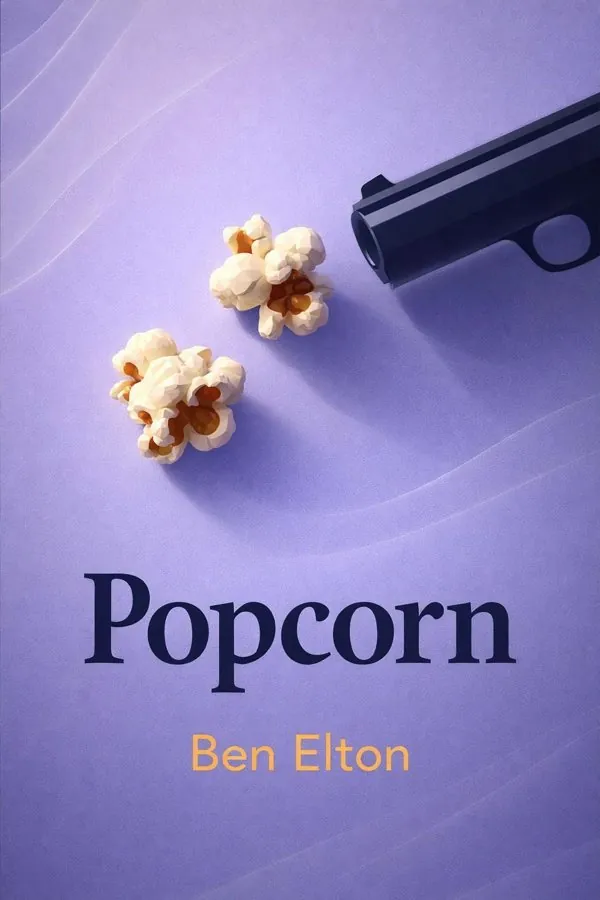
Popcorn: Summary & Key Insights
by Ben Elton
 10 min3 chaptersAudio available
What Is Popcorn About?
Popcorn by Ben Elton is a bestsellers book spanning 3 pages. Popcorn is a satirical novel set in contemporary America, exploring the relationship between media, celebrity culture, and violence. The story follows a film director whose work glorifies murder and a pair of killers who claim his movies inspired them, forcing him to confront the blurred line between art and responsibility.
This FizzRead summary covers all 3 key chapters of Popcorn in approximately 10 minutes, distilling the most important ideas, arguments, and takeaways from Ben Elton's work. Also available as an audio summary and Key Quotes Podcast.
Popcorn
Popcorn is a satirical novel set in contemporary America, exploring the relationship between media, celebrity culture, and violence. The story follows a film director whose work glorifies murder and a pair of killers who claim his movies inspired them, forcing him to confront the blurred line between art and responsibility.
Who Should Read Popcorn?
This book is perfect for anyone interested in bestsellers and looking to gain actionable insights in a short read. Whether you're a student, professional, or lifelong learner, the key ideas from Popcorn by Ben Elton will help you think differently.
- ✓Readers who enjoy bestsellers and want practical takeaways
- ✓Professionals looking to apply new ideas to their work and life
- ✓Anyone who wants the core insights of Popcorn in just 10 minutes
Want the full summary?
Get instant access to this book summary and 100K+ more with Fizz Moment.
Get Free SummaryAvailable on App Store • Free to download
Key Chapters
The novel opens in chaos—Los Angeles under the shadow of a killing spree. Wayne and Scout, a young couple with charm and charisma warped by rage, leave a trail of bodies behind them. They are lovers forged in the glare of television, raised on the heroic images of cinematic rebels. Their murders are staged like movie scenes: stylized, ironic, cool. When they talk, they sound like they’re rehearsing lines from a Tarantino script. They are not merely killers; they are media creations, born of the society that pays homage to violence as fashion.
Meanwhile, halfway across the city, Bruce Delamitri strides through a different battlefield—the Hollywood awards circuit. His latest movie, *Ordinary People Don’t Kill Their Lovers*, has just won him an Oscar. He is the darling of critics who call him a genius for revealing America’s violent heart with ironic detachment. In truth, Bruce relishes his notoriety. He’s built a career glamorizing sociopathy while insisting his films are social critique. But that justification begins to unravel the moment Wayne and Scout invade his home.
Their intrusion is cinematic in itself. They take Bruce, his ex-wife, and his teenage daughter hostage, and they claim his movies inspired their crimes. Wayne demands that Bruce publicly admit his complicity in their spree, that he acknowledge the power his art had over them. For Bruce, this is incomprehensible—the artist as criminal? He argues that his films merely reflect society’s sickness; they don’t cause it. But Wayne and Scout see something much simpler: Bruce made murder look good. They are the living proof that media influence cannot be shrugged off as theory.
The tension between the three becomes the novel’s central dynamic. Each conversation is a duel—one part philosophy, one part performance. Bruce is forced to defend art’s autonomy against the monsters it might have birthed. Wayne, narcissistic yet articulate, thrives on being center stage. Scout oscillates between gullibility and ferocity, embodying the mindless glamour of tabloid fame. Every word they exchange mirrors the contradictions of modern culture: morality disguised as irony, horror disguised as entertainment.
Through this volatile encounter, I wanted to strip away excuses. When Bruce insists, “I just show what’s out there,” he’s speaking for every media maker who hides behind observation. Yet, by giving Wayne and Scout an audience—even unwillingly—he completes the circuit of spectacle. The killers don’t want to escape prison; they want to be remembered. They crave the immortality that only television can give them. And Bruce, trapped in his own narrative, becomes their unwilling co-star. The satire is clear: violence feeds fame, fame feeds media, and the public keeps tuning in to watch it all unfold.
As the hostage situation unfolds, the media descends like vultures on a fresh carcass. Television networks scramble for exclusive footage. Anchors speculate breathlessly on motives, while pundits dissect Bruce’s filmography as though decoding scripture. What begins as tragedy quickly mutates into a circus. The cameras bring lights, microphones, and momentum—the ingredients of spectacle. Soon, millions of viewers are glued to their screens, watching a real-life drama that feels scripted.
This is the core of *Popcorn*: the inversion of values. Private terror becomes public consumption. The line between reality and entertainment collapses because the mechanisms of media can no longer tell them apart. In writing these scenes, I wanted to show how corporate hunger for ratings devours empathy itself. One network executive muses about “exclusive rights” even as people’s lives hang in the balance. A talk-show host debates Wayne and Scout’s psychology as if discussing their favorite film actors. Everywhere, the murderers’ charisma is fetishized; their victims are footnotes.
Meanwhile, Bruce clings to his defense—that he’s a mirror, not a maker of monsters. Yet as the coverage amplifies the killers’ celebrity, his argument rings hollow. What good is a moral stance when the medium itself has no conscience? I wrote these moments as satire, but they draw from real anxieties. In a world where every act of violence can be replayed endlessly, we have become spectators of our own demise. News has adopted the grammar of cinema: pacing, cuts, close-ups, cliffhangers. Reality is re-packaged as entertainment, and moral outrage competes with ad revenue.
Inside the house, the dynamic mirrors what’s happening outside. Wayne performs for the cameras, adjusting his image for the unseen millions. Scout follows, delighted by her sudden stardom. Bruce, once the puppeteer, becomes aware that even in mortal danger he cannot escape the machinery of fame. When the networks start live broadcasting the stand-off, he realizes they’ve all been reduced to roles in a grotesque reality show. What horrifies him most is not that he might die—it’s that his death would make ratings soar.
Through these shifting perspectives, I explored how the media’s gaze transforms everything it touches. The question is no longer whether art imitates life—it’s whether life now imitates art. By the midpoint of *Popcorn*, this question has consumed every character. There is no longer any authentic experience, only mediated performance. The satire sharpens into tragedy: the hunger for spectacle renders genuine morality obsolete. We care, but only while the cameras are rolling.
+ 1 more chapters — available in the FizzRead app
All Chapters in Popcorn
About the Author
Get This Summary in Your Preferred Format
Read or listen to the Popcorn summary by Ben Elton anytime, anywhere. FizzRead offers multiple formats so you can learn on your terms — all free.
Available formats: App · Audio · PDF · EPUB — All included free with FizzRead
Download Popcorn PDF and EPUB Summary
Key Quotes from Popcorn
“The novel opens in chaos—Los Angeles under the shadow of a killing spree.”
“As the hostage situation unfolds, the media descends like vultures on a fresh carcass.”
Frequently Asked Questions about Popcorn
Popcorn by Ben Elton is a bestsellers book that explores key ideas across 3 chapters. Popcorn is a satirical novel set in contemporary America, exploring the relationship between media, celebrity culture, and violence. The story follows a film director whose work glorifies murder and a pair of killers who claim his movies inspired them, forcing him to confront the blurred line between art and responsibility.
More by Ben Elton
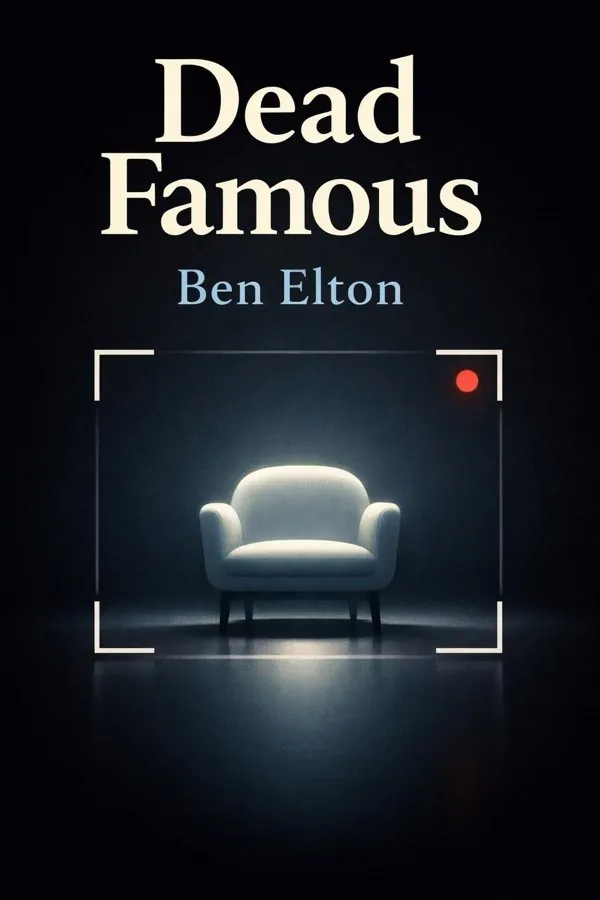
You Might Also Like
The Godfather
Mario Puzo
10 min
The Handmaid's Tale
Margaret Atwood
10 min
The Hunger Games
Suzanne Collins
10 min
The Nightingale
Kristin Hannah
10 min
The Seven Husbands of Evelyn Hugo
Taylor Jenkins Reid
10 min
Backwater Justice
Fern Michaels
10 minBrowse by Category
Ready to read Popcorn?
Get the full summary and 100K+ more books with Fizz Moment.