
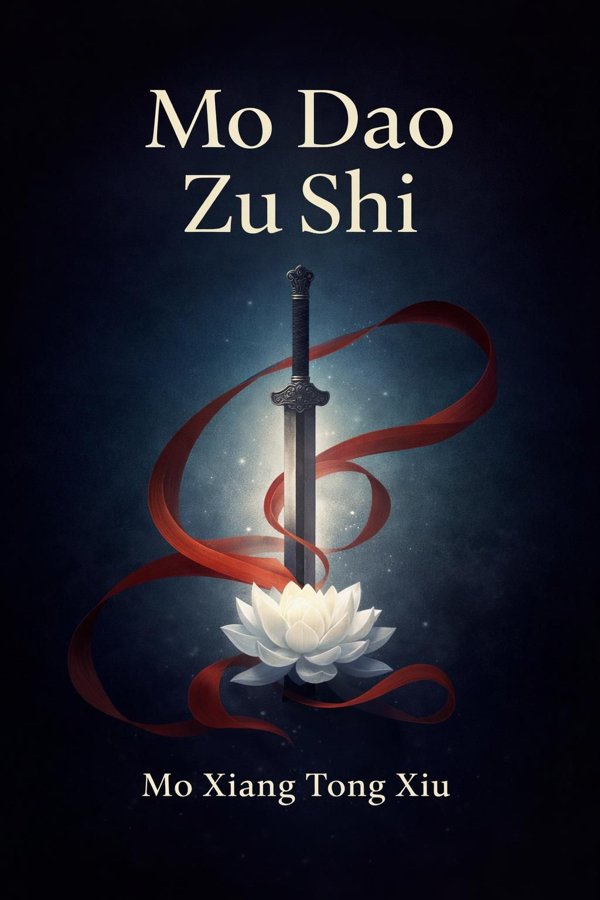
Mo Dao Zu Shi: Summary & Key Insights
 10 min9 chaptersAudio available
Key Takeaways from Mo Dao Zu Shi
A person’s earliest environment often shapes not only who they become, but what they refuse to become.
The most dangerous systems are often the ones that call themselves righteous.
New paths are rarely rejected because they fail; often they are rejected because they work too well outside accepted control.
Victory in war often creates a comforting lie: that the defeated were wholly evil and the victors therefore wholly just.
Sometimes a person dies twice: once in body, and once in the story others tell about them.
What Is Mo Dao Zu Shi About?
Mo Dao Zu Shi by Mo Xiang Tong Xiu is a scifi_fantasy book spanning 12 pages. What if the person branded a villain by history was actually the one who saw the world most clearly? Mo Dao Zu Shi, by Mo Xiang Tong Xiu, is a sweeping historical fantasy set in a xianxia world of cultivation sects, spiritual power, political rivalry, and buried truths. At its center is Wei Wuxian, a gifted, unconventional cultivator whose creation of a forbidden path leads to both extraordinary power and catastrophic consequences. After dying in infamy, he is summoned back into the world through a sacrificial ritual and drawn into a new mystery alongside the disciplined and deeply loyal Lan Wangji. As they investigate a chain of strange events, the novel gradually reveals the wounds of war, the corruption of the powerful, and the painful distance between reputation and truth. What makes this novel matter is not only its intricate plot, but its moral intelligence. Mo Xiang Tong Xiu blends mystery, romance, political drama, and emotional tragedy into a story about justice, memory, and redemption. She is widely recognized for her layered world-building and complex character relationships, and Mo Dao Zu Shi remains one of her most influential works because it asks a timeless question: who gets to decide what is righteous?
This FizzRead summary covers all 9 key chapters of Mo Dao Zu Shi in approximately 10 minutes, distilling the most important ideas, arguments, and takeaways from Mo Xiang Tong Xiu's work. Also available as an audio summary and Key Quotes Podcast.
Mo Dao Zu Shi
What if the person branded a villain by history was actually the one who saw the world most clearly? Mo Dao Zu Shi, by Mo Xiang Tong Xiu, is a sweeping historical fantasy set in a xianxia world of cultivation sects, spiritual power, political rivalry, and buried truths. At its center is Wei Wuxian, a gifted, unconventional cultivator whose creation of a forbidden path leads to both extraordinary power and catastrophic consequences. After dying in infamy, he is summoned back into the world through a sacrificial ritual and drawn into a new mystery alongside the disciplined and deeply loyal Lan Wangji. As they investigate a chain of strange events, the novel gradually reveals the wounds of war, the corruption of the powerful, and the painful distance between reputation and truth.
What makes this novel matter is not only its intricate plot, but its moral intelligence. Mo Xiang Tong Xiu blends mystery, romance, political drama, and emotional tragedy into a story about justice, memory, and redemption. She is widely recognized for her layered world-building and complex character relationships, and Mo Dao Zu Shi remains one of her most influential works because it asks a timeless question: who gets to decide what is righteous?
Who Should Read Mo Dao Zu Shi?
This book is perfect for anyone interested in scifi_fantasy and looking to gain actionable insights in a short read. Whether you're a student, professional, or lifelong learner, the key ideas from Mo Dao Zu Shi by Mo Xiang Tong Xiu will help you think differently.
- ✓Readers who enjoy scifi_fantasy and want practical takeaways
- ✓Professionals looking to apply new ideas to their work and life
- ✓Anyone who wants the core insights of Mo Dao Zu Shi in just 10 minutes
Want the full summary?
Get instant access to this book summary and 100K+ more with Fizz Moment.
Get Free SummaryAvailable on App Store • Free to download
Key Chapters
A person’s earliest environment often shapes not only who they become, but what they refuse to become. Wei Wuxian’s beginnings in the Yunmeng Jiang Sect are crucial because they establish the paradox that defines him throughout the novel: he is playful yet serious, rebellious yet deeply loyal, brilliant yet emotionally generous. Raised under Jiang Fengmian’s broad-minded care and alongside Jiang Cheng and Jiang Yanli, he grows up in an atmosphere that gives him both confidence and a strong instinct to protect others. His mischief is not superficial; it reflects a mind that questions rules rather than worships them.
This early stage of the story matters because it shows that Wei Wuxian is not corrupted by power later on. He already possesses the traits that will make him admired and condemned: independence, improvisation, and a refusal to accept authority simply because it is powerful. His training also highlights a deeper tension within cultivation culture. The world praises talent, but only when talent remains obedient. The moment brilliance becomes inconvenient, the same world turns punitive.
In practical terms, this idea applies far beyond fantasy. Many institutions claim to value originality, integrity, and courage, but often reward conformity over truth. Schools, workplaces, and communities may celebrate innovation until it challenges entrenched interests. Wei Wuxian’s youth reminds readers to ask whether their values are genuine or conditional.
Actionable takeaway: pay attention to the traits you are praised for only when they are harmless. Those same traits may be your deepest strengths when used with conviction.
The most dangerous systems are often the ones that call themselves righteous. The cultivation world in Mo Dao Zu Shi is organized around great sects, clan rules, and inherited authority. On the surface, this structure appears orderly and noble. Sects train disciples, suppress evil spirits, preserve rituals, and uphold codes of conduct. Yet the novel steadily reveals that hierarchy does not guarantee justice. In fact, it often protects hypocrisy.
The five major sects embody both civilization and fragility. Their formal rules create stability, but they also conceal pride, competition, and political self-interest. Public reputation becomes a kind of currency. Those with status can shape narratives, hide misconduct, and define what counts as orthodoxy. Those outside the dominant consensus are easily labeled dangerous, even when their actions are motivated by compassion or necessity.
This is why the novel’s world-building feels so convincing. It is not merely a fantasy setting of swords and talismans. It is a social order in which institutions preserve themselves first. Readers can recognize similar patterns in real life: companies invoking “professionalism” to silence criticism, governments invoking “security” to justify abuse, or communities invoking “tradition” to exclude dissenting voices. Moral language often sounds cleanest when it is being used to defend power.
Mo Dao Zu Shi does not argue that structure itself is evil. Rather, it insists that every hierarchy must be examined by its outcomes. Do its rules protect the vulnerable, or only the respectable? Do its leaders tell the truth, or only maintain face?
Actionable takeaway: whenever an authority claims moral superiority, look past the language and examine who benefits, who suffers, and who gets silenced.
New paths are rarely rejected because they fail; often they are rejected because they work too well outside accepted control. Wei Wuxian’s creation of demonic cultivation is one of the novel’s central moral flashpoints. After losing his golden core and facing circumstances where conventional cultivation no longer serves him, he develops a method that channels resentful energy rather than spiritual energy. This makes him extraordinarily effective, but also profoundly controversial.
The genius of this storyline is that the novel refuses simplistic answers. Demonic cultivation is neither framed as pure evil nor as harmless rebellion. It is powerful, adaptive, and born from desperation. It allows Wei Wuxian to protect people when the orthodox world has already failed them. Yet it also comes with terrifying consequences, social stigma, and the constant risk of emotional and spiritual imbalance. The question is not merely whether the method is forbidden, but why it became necessary at all.
This tension mirrors many real-world innovations. Whistleblowers, disruptive technologies, unconventional research, and social movements are often attacked not only because they carry risks, but because they expose the limitations of accepted systems. A novel solution can embarrass established authority simply by existing. At the same time, power gained outside institutions must be handled with self-awareness and discipline.
Wei Wuxian’s path shows that morality cannot be judged solely by whether an action is traditional. Intention, context, consequence, and accountability matter more than labels. A method may be feared because it is dangerous, because it is misunderstood, or because it threatens monopoly over legitimacy.
Actionable takeaway: when evaluating an unconventional path, ask two questions at once: what problem did it arise to solve, and what safeguards are needed to keep it from causing harm?
Victory in war often creates a comforting lie: that the defeated were wholly evil and the victors therefore wholly just. Mo Dao Zu Shi dismantles this illusion through the fall of the Wen Sect and its aftermath. The Qishan Wen clan is introduced as tyrannical and brutal, and its defeat appears, at first, to restore moral balance. But the novel quickly complicates that narrative by focusing on the Wen remnants, especially those who are noncombatants, healers, elders, and ordinary survivors.
Wei Wuxian’s decision to protect members of the defeated Wen family becomes one of the defining tests of his character. Others view all Wens as tainted by association, but he refuses collective punishment. This is where the novel’s ethics sharpen. It asks whether justice means revenge, extermination, or the courage to distinguish between perpetrators and the powerless. In the Burial Mounds, where Wei Wuxian shelters Wen refugees, compassion becomes a political crime because it contradicts the victors’ preferred story.
This theme resonates with any society emerging from conflict. After organizational collapse, political struggle, or public scandal, people are tempted to divide the world into clean categories of heroes and enemies. Yet lasting justice requires precision, not emotional convenience. Punishing everyone tied to a hated group may satisfy rage, but it also reproduces cruelty.
The novel’s portrayal of war is especially powerful because it emphasizes what happens after the battles end: resentment, opportunism, rewriting history, and abandonment of the vulnerable. True morality is tested not in moments of public triumph, but in what survivors choose to do when revenge is easiest.
Actionable takeaway: in any conflict, resist broad condemnation. Separate systems from individuals, leaders from dependents, and guilt from proximity.
Sometimes a person dies twice: once in body, and once in the story others tell about them. Wei Wuxian’s downfall and death show how quickly public opinion can become a weapon. Isolated, feared, and increasingly blamed for chaos larger than himself, he becomes the perfect scapegoat for a cultivation world eager to simplify its own guilt. His residence in the Burial Mounds turns into a symbol of monstrosity, and the man who once saved countless lives is reduced to a cautionary tale.
The emotional force of this part of the novel comes from how preventable much of it feels. Wei Wuxian does make mistakes, and the story does not erase the danger of his power. But his destruction is also enabled by rumor, political convenience, envy, and the refusal of others to defend what they know to be partly true. His fall reveals that social death often begins long before physical death. Once a collective decides what someone represents, evidence matters less than repetition.
This idea remains painfully relevant. In modern life, reputations can be destroyed through social media outrage, office politics, family narratives, or selective reporting. A complex human being can be turned into a symbol in days. Recovering nuance after that is difficult because communities often prefer certainty over honesty.
Mo Dao Zu Shi urges readers to be suspicious of consensus formed too neatly around a villain. Who benefits from the accusation? What details are omitted? What grief, fear, or ambition is being concealed behind moral certainty? Wei Wuxian’s death is tragic not only because he falls, but because so few people truly see him before it is too late.
Actionable takeaway: before accepting a widely repeated judgment about someone, pause and ask what firsthand evidence exists and whose version of events has gone unheard.
Being given another life does not erase the past; it creates a chance to understand it more truthfully. When Wei Wuxian is resurrected in the body of Mo Xuanyu, the novel shifts from tragic memory to investigative mystery. This narrative move is brilliant because it turns resurrection into more than a supernatural device. It becomes a framework for reexamining blame, identity, and unfinished history.
Now hidden behind another face, Wei Wuxian returns to a world that remembers him as legend, monster, or rumor. He is forced to observe how stories about him have hardened over time. At the same time, he and Lan Wangji begin following a trail of spiritual disturbances, dismembered body parts, and buried crimes that connect the present to old political betrayals. The investigation is not only about solving murders. It is about exposing how the past was manipulated.
This structure carries an important insight: truth often emerges only when emotion cools enough for patterns to be traced. In moments of crisis, people assign blame quickly. Later, with distance, evidence can be reassembled. The novel encourages a disciplined way of seeing: compare testimonies, revisit assumptions, notice who avoids scrutiny, and question narratives that seem too convenient.
In everyday life, second chances often look less dramatic but work similarly. A career reset, repaired relationship, or return to a painful subject can allow someone to understand events with more maturity. The goal is not simply to start over, but to see more clearly than before.
Actionable takeaway: when revisiting a painful past, do not only ask how to move on. Ask what you now have the distance, evidence, or courage to understand correctly.
Love is not proven by grand declarations first, but by the quiet decision to remain. Wei Wuxian’s reunion with Lan Wangji is one of the most moving dimensions of Mo Dao Zu Shi because it transforms an old tension into mature trust. In youth, their differences seemed sharp: Wei Wuxian was spontaneous, irreverent, and socially fluid; Lan Wangji was disciplined, reserved, and devoted to rules. Yet beneath those contrasts lay a shared seriousness about protecting what matters.
In the present timeline, Lan Wangji becomes the person most willing to stand beside Wei Wuxian without demanding performance or apology before understanding. This matters because Wei Wuxian returns carrying trauma, irony, and defensive humor. He expects suspicion. Instead, he encounters persistence. Lan Wangji does not erase the complexity of the past, but he offers something rarer than approval: witness. He listens, investigates, protects, and acts.
Their relationship is compelling not because it is idealized, but because it is built through repeated choices. They solve mysteries together, read danger accurately, and learn to trust each other’s judgment under pressure. This is a powerful model for any meaningful bond. Trust grows when people show up consistently, remember what matters to one another, and refuse to let public narratives define private truth.
The practical lesson extends to friendship, partnership, and collaboration. Strong relationships do not require sameness. In fact, difference can deepen trust when both people are anchored in respect. What matters is whether each person creates space for the other’s full reality, not only the acceptable parts.
Actionable takeaway: if you want to build trust, focus less on saying the perfect thing and more on being a steady, truthful presence when someone is misunderstood or under pressure.
The most elegant institutions can conceal the ugliest ambitions. As the mystery deepens, Mo Dao Zu Shi turns a sharp eye toward the Lanling Jin Sect and the broader rot within elite cultivation society. Wealth, ceremony, lineage, and polished appearance create an aura of authority, yet beneath that refinement lies manipulation, coercion, and self-serving political maneuvering. The novel demonstrates that corruption often flourishes not in obvious chaos, but in environments skilled at maintaining decorum.
Characters associated with power exploit systems of reputation, dependence, and silence. They reward loyalty selectively, hide abuses behind status, and make others complicit through fear or ambition. What is especially striking is how many people sense the corruption yet still comply because confronting it would be socially costly. This reflects a realistic truth: institutional decay persists when individuals conclude that survival requires accommodation.
The novel’s critique is not simply that some leaders are immoral. It is that prestige itself can become a shield against scrutiny. Once a family, brand, or organization is seen as respectable, people hesitate to believe accusations against it. This dynamic appears everywhere: celebrated companies with toxic cultures, influential families with hidden abuse, prestigious schools covering up misconduct. Surface order can delay justice.
By exposing corruption through investigation rather than sermonizing, the story teaches readers to separate image from structure. Ask how power is distributed, how dissent is treated, and whether accountability applies equally. A beautiful code of conduct is meaningless if the powerful can break it without consequence.
Actionable takeaway: when evaluating any institution, look beyond its symbols, traditions, and polished messaging. The real test is how it behaves when protecting truth becomes inconvenient.
Vindication is powerful, but it is never the same as undoing harm. As hidden conspiracies are revealed and responsibility is reassigned, Mo Dao Zu Shi gradually clears Wei Wuxian’s name in the eyes of those willing to face the truth. False narratives fracture, concealed crimes come to light, and long-suppressed facts emerge from beneath years of fear and distortion. Yet the novel wisely refuses a simplistic ending in which truth erases suffering.
What makes this resolution satisfying is its moral maturity. The point is not that Wei Wuxian was flawless and merely misunderstood. Rather, it is that history judged him unjustly, selectively, and without full context. The unveiling of truth restores complexity. It allows both characters and readers to see his choices in relation to war, sacrifice, manipulation, and grief. This is more meaningful than clean exoneration because it respects the cost of living through catastrophe.
The emotional culmination also lies in reconciliation. Wei Wuxian must live not only with what others did to him, but with what he lost, whom he could not save, and how pain changed him. His future with Lan Wangji is hopeful precisely because it is not built on amnesia. It is built on hard-won understanding.
In real life, many people seek closure through being proven right. But vindication alone rarely heals. Repair also requires grieving what cannot be restored, accepting one’s own limits, and building a life that is not governed by old accusations. Truth matters because it makes honest peace possible, not because it returns the world to innocence.
Actionable takeaway: when the truth finally emerges in your favor, allow yourself to value recognition, but do not wait for perfect reversal before beginning the work of healing and rebuilding.
All Chapters in Mo Dao Zu Shi
About the Author
Mo Xiang Tong Xiu is a Chinese author widely known for her bestselling works in the xianxia and danmei genres. She rose to prominence through serialized web fiction that combined fantasy adventure, emotional intensity, humor, and deeply developed character relationships. Her best-known novels include Mo Dao Zu Shi, Heaven Official’s Blessing, and The Scum Villain’s Self-Saving System, all of which have attracted large international audiences and inspired multiple adaptations. Her storytelling is especially admired for its intricate plotting, layered world-building, and ability to balance romance with questions of morality, trauma, and social power. Through memorable protagonists and emotionally resonant narratives, Mo Xiang Tong Xiu has become one of the most influential contemporary authors in modern Chinese genre fiction.
Get This Summary in Your Preferred Format
Read or listen to the Mo Dao Zu Shi summary by Mo Xiang Tong Xiu anytime, anywhere. FizzRead offers multiple formats so you can learn on your terms — all free.
Available formats: App · Audio · PDF · EPUB — All included free with FizzRead
Download Mo Dao Zu Shi PDF and EPUB Summary
Key Quotes from Mo Dao Zu Shi
“A person’s earliest environment often shapes not only who they become, but what they refuse to become.”
“The most dangerous systems are often the ones that call themselves righteous.”
“New paths are rarely rejected because they fail; often they are rejected because they work too well outside accepted control.”
“Victory in war often creates a comforting lie: that the defeated were wholly evil and the victors therefore wholly just.”
“Sometimes a person dies twice: once in body, and once in the story others tell about them.”
Frequently Asked Questions about Mo Dao Zu Shi
Mo Dao Zu Shi by Mo Xiang Tong Xiu is a scifi_fantasy book that explores key ideas across 9 chapters. What if the person branded a villain by history was actually the one who saw the world most clearly? Mo Dao Zu Shi, by Mo Xiang Tong Xiu, is a sweeping historical fantasy set in a xianxia world of cultivation sects, spiritual power, political rivalry, and buried truths. At its center is Wei Wuxian, a gifted, unconventional cultivator whose creation of a forbidden path leads to both extraordinary power and catastrophic consequences. After dying in infamy, he is summoned back into the world through a sacrificial ritual and drawn into a new mystery alongside the disciplined and deeply loyal Lan Wangji. As they investigate a chain of strange events, the novel gradually reveals the wounds of war, the corruption of the powerful, and the painful distance between reputation and truth. What makes this novel matter is not only its intricate plot, but its moral intelligence. Mo Xiang Tong Xiu blends mystery, romance, political drama, and emotional tragedy into a story about justice, memory, and redemption. She is widely recognized for her layered world-building and complex character relationships, and Mo Dao Zu Shi remains one of her most influential works because it asks a timeless question: who gets to decide what is righteous?
More by Mo Xiang Tong Xiu
You Might Also Like
Red Rising
Pierce Brown
10 min
Stranger in a Strange Land
Robert A. Heinlein
10 min
AI Valley
Chen Qiufan
10 min
Bloodchild
Octavia E. Butler
10 min
Do Androids Dream of Electric Sheep?
Philip K. Dick
10 min
Jujutsu Kaisen, Vol. 24
Gege Akutami
10 minBrowse by Category
Ready to read Mo Dao Zu Shi?
Get the full summary and 100K+ more books with Fizz Moment.