
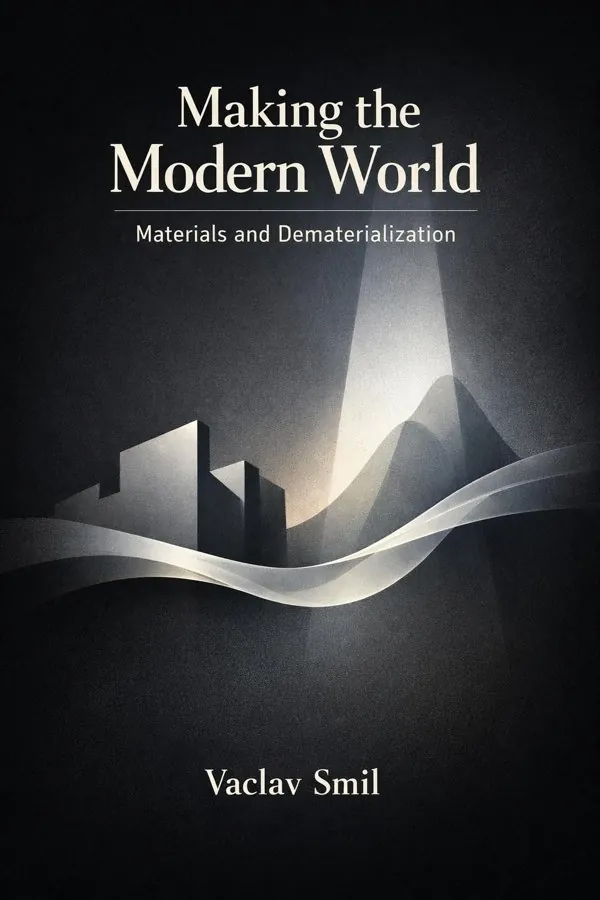
Making the Modern World: Materials and Dematerialization: Summary & Key Insights
by Vaclav Smil
 10 min9 chaptersAudio available
What Is Making the Modern World: Materials and Dematerialization About?
Making the Modern World: Materials and Dematerialization by Vaclav Smil is a popular_sci book spanning 9 pages. This book by Vaclav Smil explores the role of materials in shaping modern civilization, analyzing how material flows and consumption have evolved over time. It examines the historical and technological processes that have enabled industrialization and modernization, while also addressing the challenges of sustainability and dematerialization in the 21st century.
This FizzRead summary covers all 9 key chapters of Making the Modern World: Materials and Dematerialization in approximately 10 minutes, distilling the most important ideas, arguments, and takeaways from Vaclav Smil's work. Also available as an audio summary and Key Quotes Podcast.
Making the Modern World: Materials and Dematerialization
This book by Vaclav Smil explores the role of materials in shaping modern civilization, analyzing how material flows and consumption have evolved over time. It examines the historical and technological processes that have enabled industrialization and modernization, while also addressing the challenges of sustainability and dematerialization in the 21st century.
Who Should Read Making the Modern World: Materials and Dematerialization?
This book is perfect for anyone interested in popular_sci and looking to gain actionable insights in a short read. Whether you're a student, professional, or lifelong learner, the key ideas from Making the Modern World: Materials and Dematerialization by Vaclav Smil will help you think differently.
- ✓Readers who enjoy popular_sci and want practical takeaways
- ✓Professionals looking to apply new ideas to their work and life
- ✓Anyone who wants the core insights of Making the Modern World: Materials and Dematerialization in just 10 minutes
Want the full summary?
Get instant access to this book summary and 100K+ more with Fizz Moment.
Get Free SummaryAvailable on App Store • Free to download
Key Chapters
To grasp the world’s material dependence, we must start with its origins. Before industrialization, human societies lived within local material boundaries. Wood, stone, clay, and animal-derived substances sustained shelter, tools, and livelihoods. The preindustrial material cycle was modest because population density and technological capacity were limited. But industrialization shattered these boundaries, inaugurating a global system of extraction and transformation.
The 18th and 19th centuries brought mechanical power, coal, iron, and mechanization—a shift from organic to inorganic energy and materials. Coal-powered furnaces produced iron and steel in unprecedented quantities; steam engines enabled factories and railways; and mass production introduced economies of scale that multiplied demand. Materials became not just resources, but catalysts of social transformation. Iron turned into steel, wood yielded to concrete, and human labor was replaced by machines whose very existence required metals and fuels.
From the late 19th century onward, industrial societies diversified their material use. Nonferrous metals, alloys, synthetic chemicals, and polymers emerged from scientific advances in chemistry and metallurgy. The industrial revolution extended into electrical power and mass manufacturing, setting the stage for the twentieth century’s explosive material growth. Nonetheless, each phase of transition carried new dependencies—coal to oil, steel to aluminum, natural fibers to plastics.
What this long arc reveals is simple: material progress has never meant consuming less; it has meant consuming smarter and more efficiently, but always more in aggregate. Industrialization does not just transform technologies—it transforms the scale and rhythm of material metabolism.
Our modern world rests upon four pillars: construction materials, metals, polymers, and energy carriers. Cement, steel, plastics, copper, and fuels are the bones and blood of industrial civilization. Without them, there would be no electric grids, no transport networks, no digital infrastructures.
Construction materials—cement, aggregates, and steel—form the literal fabric of urbanization. Every kilometer of highway, every skyscraper, every dam reflects our dependence on these high-volume substances. The twentieth century witnessed their rise as global commodities. Cement production alone surged from tens of millions to billions of tons annually, shaping an urban planet that consumes more mineral matter than any epoch in history.
Metals underpin the mechanical and electrical capacities of modern economies. Iron and steel dominate construction and manufacturing; nonferrous metals like aluminum, copper, and nickel serve specialized, high-performance roles—from transport to electronics. Each metal embodies accumulated energy and technology—mining, smelting, refining—all resource-intensive processes that extend far beyond what consumers see.
Polymers revolutionized modernity by replacing natural materials with synthetic versatility. Plastics’ lightness and adaptability transformed packaging, electronics, and medical industries. Yet their proliferation raised new waste dilemmas, as global plastic production climbed exponentially through the 20th century.
Finally, energy carriers—coal, oil, gas, and emerging renewables—link all material flows. They power extraction, processing, and manufacturing, making them the invisible enablers of material civilization. From petrochemical feedstocks to steel mills and cement kilns, energy and material systems operate as a coupled chain. You can’t separate one from the other—the energy cost is baked into every kilogram of matter.
+ 7 more chapters — available in the FizzRead app
All Chapters in Making the Modern World: Materials and Dematerialization
About the Author
Vaclav Smil is a Czech-Canadian scientist and policy analyst known for his interdisciplinary research on energy, environment, food production, and technological innovation. He is a Distinguished Professor Emeritus at the University of Manitoba and the author of numerous influential works on global development and sustainability.
Get This Summary in Your Preferred Format
Read or listen to the Making the Modern World: Materials and Dematerialization summary by Vaclav Smil anytime, anywhere. FizzRead offers multiple formats so you can learn on your terms — all free.
Available formats: App · Audio · PDF · EPUB — All included free with FizzRead
Download Making the Modern World: Materials and Dematerialization PDF and EPUB Summary
Key Quotes from Making the Modern World: Materials and Dematerialization
“To grasp the world’s material dependence, we must start with its origins.”
“Our modern world rests upon four pillars: construction materials, metals, polymers, and energy carriers.”
Frequently Asked Questions about Making the Modern World: Materials and Dematerialization
Making the Modern World: Materials and Dematerialization by Vaclav Smil is a popular_sci book that explores key ideas across 9 chapters. This book by Vaclav Smil explores the role of materials in shaping modern civilization, analyzing how material flows and consumption have evolved over time. It examines the historical and technological processes that have enabled industrialization and modernization, while also addressing the challenges of sustainability and dematerialization in the 21st century.
More by Vaclav Smil
Grand Transitions: How the Modern World Was Made
Vaclav Smil
10 min
How the World Really Works: The Science Behind How We Got Here and Where We're Going
Vaclav Smil
10 min
Invention and Innovation
Vaclav Smil
10 min
Should We Eat Meat?: Evolution and Consequences of Modern Carnivory
Vaclav Smil
10 minYou Might Also Like
Structures: Or Why Things Don"t Fall Down
J.E. Gordon
10 min
The Road to Wigan Pier
George Orwell
10 min
Bonk: The Curious Coupling of Science and Sex
Mary Roach
10 min
First Bite: How We Learn to Eat
Bee Wilson
10 min
In Pursuit Of The Unknown: 17 Equations That Changed The World
Ian Stewart
10 min
Napoleon's Buttons: 17 Molecules That Changed History
Penny Le Couteur and Jay Burreson
10 minBrowse by Category
Ready to read Making the Modern World: Materials and Dematerialization?
Get the full summary and 100K+ more books with Fizz Moment.