
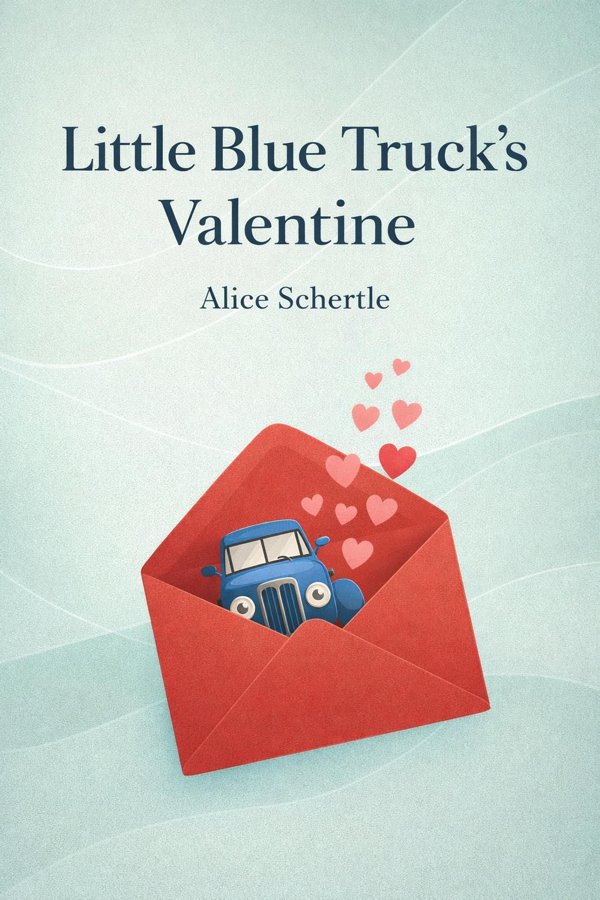
Little Blue Truck's Valentine: Summary & Key Insights
 10 min8 chaptersAudio available
Key Takeaways from Little Blue Truck's Valentine
Meaningful celebrations often begin long before the event itself, in the quiet moments of thought and preparation.
Kindness becomes most powerful when it moves outward, from private feeling into visible action.
One of childhood’s most important emotional discoveries is that making someone else happy can feel wonderful too.
Children need to learn that love given freely often returns in unexpected ways.
The way a story sounds can be just as important as what it says.
What Is Little Blue Truck's Valentine About?
Little Blue Truck's Valentine by Alice Schertle is a parenting book spanning 4 pages. Little Blue Truck's Valentine is a warm, rhythmic picture book about generosity, friendship, and the quiet joy of making others feel remembered. In this sweet holiday-themed installment of the beloved Little Blue Truck series, Little Blue sets out on Valentine’s Day to deliver special cards to his animal friends across the countryside. What begins as a simple errand becomes a gentle lesson in thoughtfulness: each stop reminds young readers that love is often expressed through small, sincere acts of care. For parents, this book offers more than a seasonal read-aloud. It creates an easy way to talk about kindness, inclusion, gratitude, and the happiness that comes from giving rather than receiving. Its short length and musical language make it especially appealing for toddlers and preschoolers, while its emotional message gives adults meaningful conversation starters. Alice Schertle brings real authority to this story through her long-standing reputation as one of children’s literature’s most dependable voices in rhyme and read-aloud storytelling. Known for blending charm, repetition, and emotional warmth, she turns a simple Valentine’s journey into a memorable reminder that loving communities are built one caring gesture at a time.
This FizzRead summary covers all 8 key chapters of Little Blue Truck's Valentine in approximately 10 minutes, distilling the most important ideas, arguments, and takeaways from Alice Schertle's work. Also available as an audio summary and Key Quotes Podcast.
Little Blue Truck's Valentine
Little Blue Truck's Valentine is a warm, rhythmic picture book about generosity, friendship, and the quiet joy of making others feel remembered. In this sweet holiday-themed installment of the beloved Little Blue Truck series, Little Blue sets out on Valentine’s Day to deliver special cards to his animal friends across the countryside. What begins as a simple errand becomes a gentle lesson in thoughtfulness: each stop reminds young readers that love is often expressed through small, sincere acts of care.
For parents, this book offers more than a seasonal read-aloud. It creates an easy way to talk about kindness, inclusion, gratitude, and the happiness that comes from giving rather than receiving. Its short length and musical language make it especially appealing for toddlers and preschoolers, while its emotional message gives adults meaningful conversation starters.
Alice Schertle brings real authority to this story through her long-standing reputation as one of children’s literature’s most dependable voices in rhyme and read-aloud storytelling. Known for blending charm, repetition, and emotional warmth, she turns a simple Valentine’s journey into a memorable reminder that loving communities are built one caring gesture at a time.
Who Should Read Little Blue Truck's Valentine?
This book is perfect for anyone interested in parenting and looking to gain actionable insights in a short read. Whether you're a student, professional, or lifelong learner, the key ideas from Little Blue Truck's Valentine by Alice Schertle will help you think differently.
- ✓Readers who enjoy parenting and want practical takeaways
- ✓Professionals looking to apply new ideas to their work and life
- ✓Anyone who wants the core insights of Little Blue Truck's Valentine in just 10 minutes
Want the full summary?
Get instant access to this book summary and 100K+ more with Fizz Moment.
Get Free SummaryAvailable on App Store • Free to download
Key Chapters
Meaningful celebrations often begin long before the event itself, in the quiet moments of thought and preparation. At the beginning of Little Blue Truck's Valentine, Little Blue is not simply checking a holiday task off a list. He is thoughtfully getting ready to share Valentine’s Day with the friends who matter to him. That choice matters because it shows children that giving is not only about the final gift; it is also about intention, anticipation, and care.
This opening scene introduces one of the book’s most important parenting lessons: rituals become richer when children participate in creating them. Little Blue’s preparation models how excitement can be paired with generosity. Instead of waiting to see what he will receive, he focuses on what he can offer. For young readers, this is a powerful emotional shift. It teaches that holidays are not just about consumption or attention, but about connection.
In family life, this can be applied in simple ways. A parent might help a child make homemade cards for siblings, grandparents, teachers, or neighbors. The craft does not need to be perfect. A scribbled heart, a sticker, or a dictated message can be enough. What matters is helping the child think, “Who would feel happy to be remembered?” That question builds empathy.
The book’s gentle tone also reassures parents that preparation does not need to be rushed or elaborate. A few intentional minutes spent decorating a card, choosing a recipient, or talking about friendship can create more emotional value than expensive gifts ever could.
Actionable takeaway: Before your next holiday or family celebration, invite your child to make or choose one small gift for someone else and talk together about why that person matters.
Kindness becomes most powerful when it moves outward, from private feeling into visible action. Once Little Blue Truck’s valentines are ready, he heads out across the countryside to deliver them one by one. This journey structure does more than move the plot forward. It shows children that caring relationships are sustained through effort, presence, and follow-through.
Each stop along the road reinforces that friendship is active. Little Blue does not assume his friends know they are appreciated. He goes to them. He shows up. In parenting terms, this is a helpful lesson because children often feel affection deeply but do not yet know how to express it. Stories like this bridge that gap by turning abstract love into concrete behavior.
The setting matters too. The familiar barns, fields, and roadside encounters create a sense of community. This is not a world of isolated individuals; it is a network of neighbors. For young children, that image helps define what belonging looks like. A healthy community is made of repeated gestures of recognition: greetings, visits, shared celebrations, and remembered occasions.
Parents can use this idea in everyday life. A walk to deliver cookies to a neighbor, a handmade note for a grandparent, or a quick voice message to a faraway relative all mirror Little Blue’s journey. Even very young children can help carry, hand over, or announce these small offerings. Doing so helps them experience themselves as contributors to relationships, not just recipients of care.
The countryside route also subtly teaches patience. Kindness often takes time. You travel, stop, greet, and connect. In a fast-paced culture, that is a valuable countermessage.
Actionable takeaway: Turn one family kindness into a physical journey this week, such as delivering a note, snack, or drawing to someone in your community, and let your child take part in the giving.
One of childhood’s most important emotional discoveries is that making someone else happy can feel wonderful too. As Little Blue Truck delivers his valentines, the cheerful reactions of his animal friends reveal the contagious nature of generosity. Their delight is not presented as exaggerated spectacle; it is warm, immediate, and sincere. That tone helps children understand that thoughtful gestures do not need to be grand to matter.
This part of the story gently challenges a common problem around holidays: the belief that excitement comes mainly from receiving. Little Blue’s experience shows the opposite. His joy grows through each act of giving. The more he shares, the more connected and fulfilled he becomes. For parents, this creates a valuable opportunity to teach emotional reciprocity. Children can learn that relationships feel good not only because others care for us, but because we care for them.
In practical terms, this idea can be nurtured through reflection. After a child gives a card or small gift, instead of asking only, “What did you get back?” a parent might ask, “How did their face look when they got it?” or “How did it feel to make them smile?” These questions help children notice the inner rewards of kindness.
The book also models appreciation without competition. Each recipient seems special in the moment. There is no ranking of who gets the best valentine or biggest reaction. That is an especially healthy message in a culture where children can become preoccupied with comparisons, party bags, and fairness in material terms. Here, the emotional emphasis is on shared delight.
Actionable takeaway: After your child gives something to another person, pause and talk about the joy they helped create, so they begin to associate generosity with positive emotional connection.
Children need to learn that love given freely often returns in unexpected ways. Near the end of Little Blue Truck's Valentine, the story offers a surprise for Little Blue himself. After spending his day delivering cards and brightening the lives of others, he discovers that he, too, has been lovingly remembered. This narrative turn is satisfying not because it rewards him in a transactional way, but because it completes the circle of belonging.
That distinction is important. The book does not suggest, “Be kind so you get something back.” Instead, it reveals that in a healthy community, care tends to flow in more than one direction. Little Blue gave because he wanted to. The surprise simply confirms that he is part of a web of mutual affection. For children, this supports emotional security. They are reminded that love is not one-sided and that being generous does not mean being overlooked.
Parents can draw an important lesson from this moment. Many children worry, especially during holidays and social events, about whether they will be included. They may wonder whether classmates, cousins, or friends think of them in the same way. Little Blue’s surprise can open a conversation about belonging, reassurance, and the many ways people show they care.
In family practice, this might mean helping children both give and receive graciously. If a child makes valentines, parents can also create a moment where the child is celebrated with a loving note, family card, or shared expression of appreciation. This balances the message: generosity is good, and you are worthy of kindness too.
Actionable takeaway: Pair acts of giving with intentional moments of reassurance, making sure your child experiences both the joy of offering love and the comfort of receiving it.
The way a story sounds can be just as important as what it says. Alice Schertle’s signature rhyming style gives Little Blue Truck's Valentine much of its power as a read-aloud. The steady rhythm, repetition, and musical language do more than entertain children. They create predictability, invite participation, and make the emotional tone feel safe and soothing.
For very young readers, rhyme supports memory and comprehension. Children can anticipate patterns, fill in familiar sounds, and stay engaged even when they cannot yet follow every detail. This makes the book especially valuable for toddlers and preschoolers, who learn not only through plot but through cadence, repetition, and oral play. A short story becomes a rich language experience.
From a parenting perspective, rhythmic books often become relationship tools. Reading them aloud encourages eye contact, vocal variation, shared laughter, and physical closeness. A child sitting on a parent’s lap while hearing a predictable rhyme is not just consuming content; they are building an association between language and comfort. That is one reason books like this become favorites children request again and again.
The rhyme also softens the moral lesson. Instead of feeling preachy, the message about kindness arrives through playfulness. This matters because children respond best when values are embodied in story rather than delivered as lectures.
Parents can extend this benefit by rereading favorite lines, pausing for children to complete a rhyme, or asking them to echo repeated sounds. These simple interactions strengthen phonological awareness while deepening engagement with the book’s emotional world.
Actionable takeaway: Read the story aloud slowly and playfully, inviting your child to join in repeated phrases or rhymes, so the book becomes both a bonding experience and a language-building activity.
Seasonal books are rarely just about the holiday itself; they often become tools for shaping what a family believes the holiday means. Little Blue Truck's Valentine offers parents an alternative to the more commercial side of Valentine’s Day. Instead of emphasizing candy, gifts, or romance, it frames the day around friendship, community, and heartfelt expression.
That framing is especially useful for young children, who are only beginning to form their ideas about celebrations. If Valentine’s Day is introduced primarily through consumer products or social pressure, the deeper emotional meaning can get lost. Schertle’s story keeps the focus where many parents want it: caring for others, being remembered, and enjoying shared warmth.
Books like this can help establish family culture through repetition. When a child hears the same story each February, they begin to associate the holiday with certain values and rituals. Perhaps the family reads the book, makes simple valentines, and delivers one to a neighbor or relative. Over time, that pattern becomes part of the child’s emotional memory of the season.
This also gives parents a way to reduce holiday overwhelm. Celebrations do not need to be extravagant to feel meaningful. A favorite book, a homemade craft, and one act of kindness can create a rich family tradition. The book’s short length makes it especially easy to revisit during busy weeks.
The larger insight is that stories help define celebrations. They give children a narrative for why the family does what it does.
Actionable takeaway: Use this book as the centerpiece of a simple annual Valentine’s tradition, pairing the read-aloud with one small act of giving that reflects the values you want your child to remember.
Empathy does not appear all at once; it grows through repeated experiences of imagining how others feel. Little Blue Truck's Valentine supports this growth by constantly directing attention outward. Little Blue notices his friends, thinks of them individually, and brings them something meant to make them happy. In story form, this invites children to practice perspective-taking.
For very young readers, empathy begins with simple questions: Who is Little Blue thinking about? How do the animals feel when they receive their valentines? How does Little Blue feel when he sees their reactions? These are basic emotional connections, but they matter. They teach children to link actions with feelings, which is a foundational social skill.
Parents can deepen the book’s value by turning the story into conversation. Ask, “Why do you think Little Blue brought cards?” or “How would you feel if a friend remembered you?” These prompts help children move from passive listening to active reflection. Even toddlers can point to happy faces, identify excitement, or imitate the sounds and expressions of delight.
The surprise ending also strengthens empathy by adding emotional complexity. Children can consider not only the joy of giving, but also the experience of being cherished. This reinforces the idea that everyone in a community has feelings worth honoring.
In daily life, empathy practice can be woven into ordinary moments. If a sibling is sad, a parent might ask, “What could we do to help them feel better?” That question echoes the book’s emotional logic: notice, care, respond.
Actionable takeaway: After reading, ask your child two feeling-based questions about the characters and then connect the answers to a real-life opportunity to notice and care for someone else.
All Chapters in Little Blue Truck's Valentine
About the Author
Alice Schertle is an American author and poet known for writing children’s books that combine musical language, emotional warmth, and memorable read-aloud rhythms. She is best known for the bestselling Little Blue Truck series, which has become a favorite among families, teachers, and librarians for its gentle lessons about friendship, kindness, and cooperation. Schertle has written numerous books for young readers, and her background as a poet is evident in her careful use of rhyme, cadence, and repetition. Her stories are often simple on the surface but rich in emotional meaning, making them especially effective for early childhood reading. Through books like Little Blue Truck's Valentine, she has earned a reputation as a trusted voice in children’s literature, particularly for parents seeking stories that are both charming and values-driven.
Get This Summary in Your Preferred Format
Read or listen to the Little Blue Truck's Valentine summary by Alice Schertle anytime, anywhere. FizzRead offers multiple formats so you can learn on your terms — all free.
Available formats: App · Audio · PDF · EPUB — All included free with FizzRead
Download Little Blue Truck's Valentine PDF and EPUB Summary
Key Quotes from Little Blue Truck's Valentine
“Meaningful celebrations often begin long before the event itself, in the quiet moments of thought and preparation.”
“Kindness becomes most powerful when it moves outward, from private feeling into visible action.”
“One of childhood’s most important emotional discoveries is that making someone else happy can feel wonderful too.”
“Children need to learn that love given freely often returns in unexpected ways.”
“The way a story sounds can be just as important as what it says.”
Frequently Asked Questions about Little Blue Truck's Valentine
Little Blue Truck's Valentine by Alice Schertle is a parenting book that explores key ideas across 8 chapters. Little Blue Truck's Valentine is a warm, rhythmic picture book about generosity, friendship, and the quiet joy of making others feel remembered. In this sweet holiday-themed installment of the beloved Little Blue Truck series, Little Blue sets out on Valentine’s Day to deliver special cards to his animal friends across the countryside. What begins as a simple errand becomes a gentle lesson in thoughtfulness: each stop reminds young readers that love is often expressed through small, sincere acts of care. For parents, this book offers more than a seasonal read-aloud. It creates an easy way to talk about kindness, inclusion, gratitude, and the happiness that comes from giving rather than receiving. Its short length and musical language make it especially appealing for toddlers and preschoolers, while its emotional message gives adults meaningful conversation starters. Alice Schertle brings real authority to this story through her long-standing reputation as one of children’s literature’s most dependable voices in rhyme and read-aloud storytelling. Known for blending charm, repetition, and emotional warmth, she turns a simple Valentine’s journey into a memorable reminder that loving communities are built one caring gesture at a time.
More by Alice Schertle
You Might Also Like
Never Enough
Jennifer Breheny Wallace
10 min
Bluey: Sleepytime
Joe Brumm
10 min
In My Heart: A Book of Feelings
Jo Witek
10 min
Love From The Crayons
Drew Daywalt, Oliver Jeffers
10 min
Pete The Cat: Big Easter Adventure
James Dean, Kimberly Dean
10 min
Smart Money Smart Kids: Raising the Next Generation to Win with Money
Dave Ramsey, Rachel Cruze
10 minBrowse by Category
Ready to read Little Blue Truck's Valentine?
Get the full summary and 100K+ more books with Fizz Moment.