
Trevor Noah's Thought-Provoking Reads
Books that shaped Trevor Noah's worldview and humor. From social commentary to personal memoirs.
 10 min read
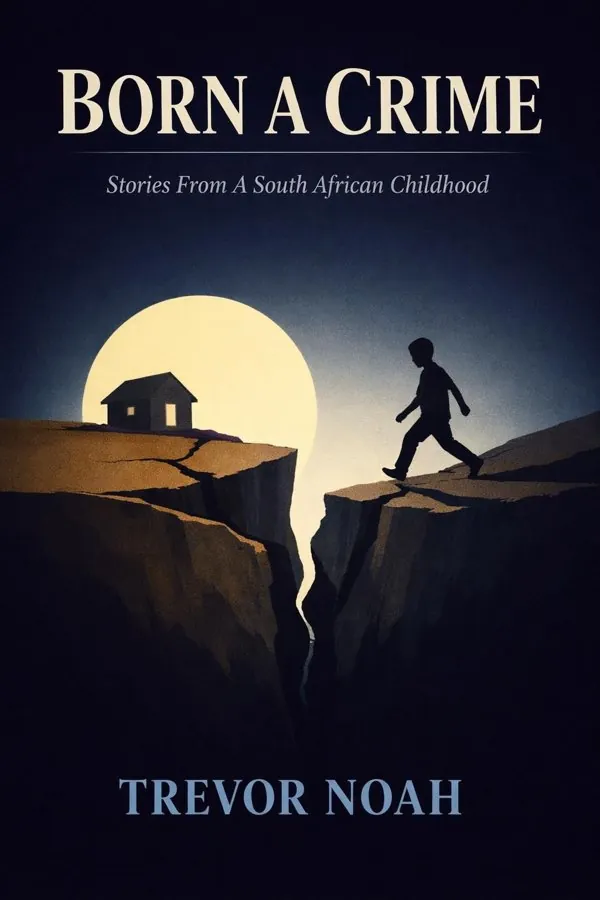
Born a Crime
by Trevor Noah
Born a Crime is Trevor Noah’s sharply observed, deeply moving memoir about growing up in South Africa during and after apartheid as the son of a Black Xhosa mother and a white Swiss father. Because interracial relationships were illegal at the time of his birth, Noah’s very existence violated the law. That premise gives the book its title, but the memoir is about far more than legal absurdity. It is a vivid portrait of a boy learning how race, language, class, religion, violence, and love shape a life—and how humor can become a survival tool in the face of chaos. What makes the book so powerful is Noah’s ability to balance painful truth with wit. He writes not as a distant observer, but as someone who lived inside the contradictions of apartheid and its aftermath. His stories are personal, but they also illuminate larger social systems with unusual clarity. At the center of the memoir is his mother, Patricia Nombuyiselo Noah, whose intelligence, faith, defiance, and fierce devotion made his survival possible. Born a Crime matters because it turns history into lived experience and shows how resilience is built, one choice at a time.
Key Takeaways
- 1A Hidden Childhood Under Apartheid — Sometimes the most powerful way to understand a political system is to see how it reaches into the smallest details of f…
- 2A Mother’s Defiance Shapes a Life — A child’s destiny is often altered by the courage of one person willing to refuse the script. Trevor Noah’s mother, Patr…
- 3Faith as Discipline, Not Escape — Belief becomes transformative when it moves from passive comfort to active discipline. In Born a Crime, Trevor Noah desc…
 10 min read
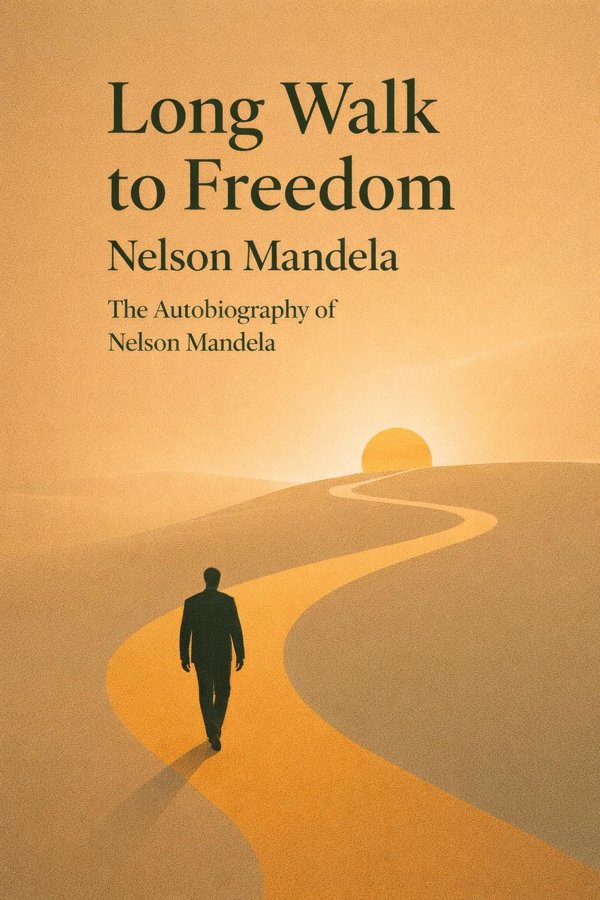
Long Walk to Freedom
by Nelson Mandela
Long Walk to Freedom is far more than the life story of Nelson Mandela. It is a firsthand account of one of the twentieth century’s most significant moral and political struggles: the fight against apartheid in South Africa. In this autobiography, Mandela traces his path from a rural childhood in the Transkei to his emergence as a lawyer, activist, political prisoner, negotiator, and ultimately the first democratically elected president of South Africa. Along the way, he reveals not only the public milestones of history, but also the private costs of commitment, leadership, and sacrifice. What makes this book so powerful is its combination of intimacy and historical weight. Mandela does not present himself as a flawless hero. Instead, he writes with humility about fear, error, discipline, grief, and endurance. His authority comes not from theory, but from lived experience: decades spent resisting racial oppression, including 27 years in prison. The result is a memoir that illuminates how courage is built, how dignity survives under pressure, and how reconciliation can become a political force. Long Walk to Freedom matters because it shows that freedom is never simply won once; it must be continually defended, shared, and deepened.
Key Takeaways
- 1Childhood, Tradition, and Early Identity — A leader’s public convictions are often rooted in private beginnings. Mandela’s early life in Mvezo and Qunu, in the Tra…
- 2Education as a Door to Awakening — Education does more than prepare a person for work; it can awaken a person to injustice. Mandela’s schooling, especially…
- 3Johannesburg and Political Consciousness — Sometimes freedom begins when comfort ends. Mandela’s move to Johannesburg transformed him from a sheltered young man in…
 10 min read
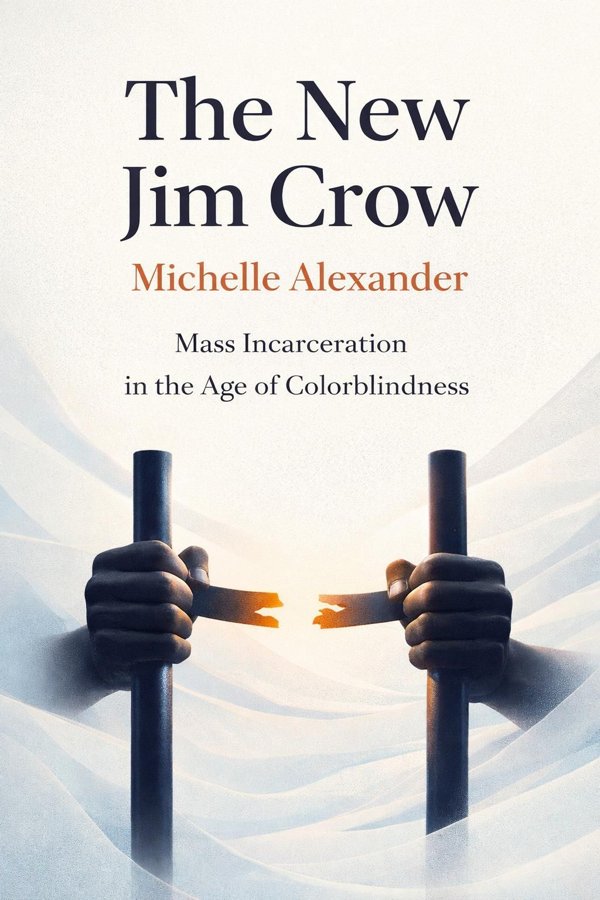
The New Jim Crow
by Michelle Alexander
What if the end of explicit segregation did not end racial caste in America, but simply redesigned it? In The New Jim Crow, Michelle Alexander argues that mass incarceration has become the latest system for managing and marginalizing Black Americans after slavery and Jim Crow. Her central claim is unsettling: the U.S. criminal justice system, often presented as neutral and colorblind, has operated in practice as a powerful mechanism of racial control. Through laws, policing strategies, prosecutorial discretion, sentencing rules, and the stigma attached to a criminal record, millions of people are pushed into a permanent second-class status. This book matters because it shifts the conversation from individual prejudice to institutional design. Alexander shows how policies such as the War on Drugs, stop-and-frisk, plea bargaining, and felony disenfranchisement combine to produce consequences that extend far beyond prison walls. The result is a caste-like system affecting employment, housing, education, voting, and family stability. Alexander writes with the authority of a civil rights lawyer and legal scholar who has worked closely on racial justice issues. Her book remains one of the most influential critiques of the American justice system, challenging readers to question comforting myths about fairness, crime, and equality.
Key Takeaways
- 1The Rebirth of a Racial Caste — A society does not need to use openly racist language to maintain racial hierarchy; it only needs institutions that repr…
- 2Policing as Occupation in Poor Neighborhoods — The front door to mass incarceration is not the courtroom or prison gate; it is the street corner. Alexander emphasizes …
- 3The Law Rewards Unequal Justice — Justice is often imagined as blind, but Alexander shows how legal discretion can produce predictable inequality. The cri…
 10 min read
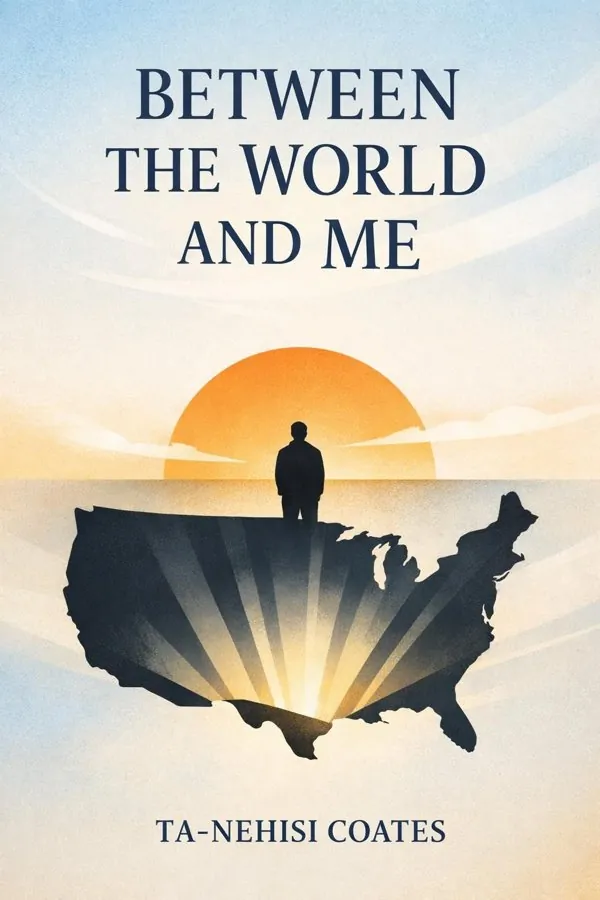
Between the World and Me
by Ta-Nehisi Coates
Between the World and Me is Ta-Nehisi Coates’s searing, intimate meditation on race, history, and the fragility of the Black body in the United States. Written as a letter to his teenage son, the book blends memoir, social criticism, and philosophical reflection to confront a central American truth: racism is not just a matter of prejudice or bad intentions, but a force that has historically been enacted on Black bodies through violence, control, exclusion, and fear. Coates moves from his childhood in Baltimore to his education at Howard University, from national tragedies to personal grief, always returning to the question of how one lives honestly under such conditions. The book matters because it refuses comforting myths and instead offers moral clarity, emotional precision, and historical depth. Coates writes with the authority of a major public intellectual and journalist who has spent years examining American power, but also with the vulnerability of a father trying to prepare his son for the world as it is. The result is a modern classic that challenges readers to rethink identity, citizenship, and the American Dream.
Key Takeaways
- 1The Body Is the Central Battleground — A society reveals its deepest values by what it permits to happen to human bodies. Coates builds his argument around thi…
- 2Baltimore Taught Fear as Curriculum — Children often learn their society’s truths before they know its theories. Coates’s memories of growing up in Baltimore …
- 3Real Education Begins with Honest Inquiry — The most transformative education often starts when we stop accepting the stories we were handed. Coates describes schoo…
 10 min read
Sapiens
by Yuval Noah Harari
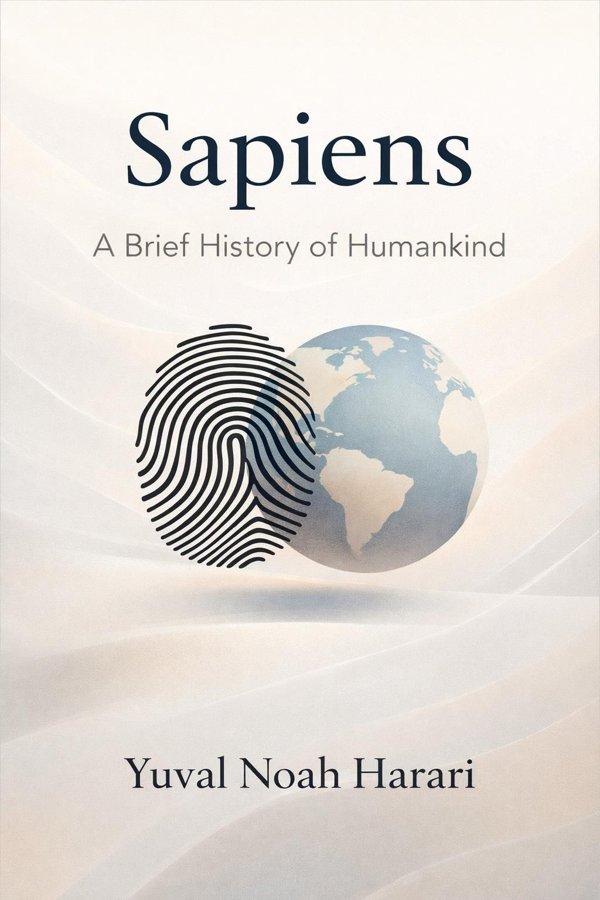
Sapiens: A Brief History of Humankind is an ambitious, big-picture history of our species, tracing how Homo sapiens rose from an unremarkable African ape to the dominant force on Earth. Yuval Noah Harari combines history, biology, anthropology, economics, and philosophy to explain the turning points that transformed human life: the Cognitive Revolution, the Agricultural Revolution, and the Scientific Revolution. Rather than offering a narrow chronological account, he asks a deeper question: what made humans uniquely capable of building empires, religions, markets, and nations? Harari’s answer is both provocative and memorable: our greatest power lies in our ability to create and believe shared stories. These collective fictions—such as money, laws, gods, and states—allow strangers to cooperate on a massive scale. The book matters because it challenges comforting assumptions about progress, happiness, and civilization. It invites readers to see modern society not as inevitable, but as the result of historical choices, accidents, and myths. As a historian and public intellectual, Harari brings scholarly range and narrative clarity to one of the most compelling questions in human history: how did we become who we are?
Key Takeaways
- 1The Cognitive Revolution and Shared Imagination — Human dominance did not begin with stronger bodies, sharper teeth, or faster legs; it began with a new kind of mind. Aro…
- 2The Agricultural Revolution: Progress or Trap? — What if one of history’s greatest achievements was also one of its greatest mistakes? Harari provocatively argues that t…
- 3Myths Make Large Societies Possible — Civilization runs not only on roads, crops, and armies, but on ideas that exist because people collectively agree they d…
 10 min read
Educated
by Tara Westover
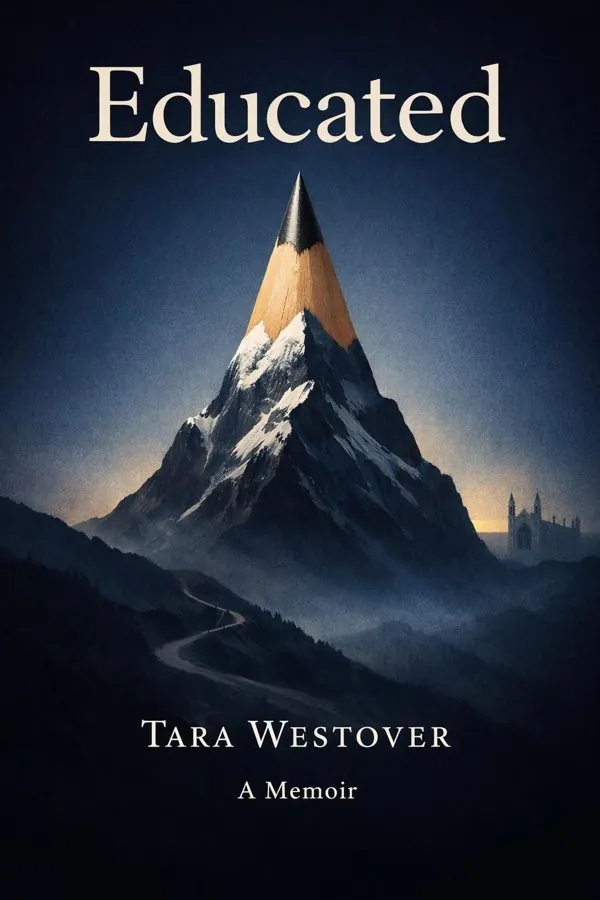
What does it mean to educate yourself when everything around you teaches you to stay small, silent, and obedient? In Educated, Tara Westover answers that question through one of the most striking memoirs of recent years. Her story begins in rural Idaho, in a survivalist Mormon household cut off from mainstream institutions, where hospitals, schools, and the government were treated as threats rather than supports. From that unlikely starting point, Westover eventually makes her way to Brigham Young University and later earns a doctorate in history from the University of Cambridge. What makes this memoir so powerful is that it is not simply a success story about academic achievement. It is a deeply human account of how knowledge changes a person from the inside out. Westover shows that education is not just the accumulation of facts; it is the painful, liberating process of learning to question the stories that shaped you. Her memoir matters because it speaks to anyone who has ever struggled to separate love from control, loyalty from self-betrayal, or family truth from personal truth. With honesty, emotional precision, and hard-won insight, Westover turns her life into a profound meditation on identity, memory, and the cost of becoming yourself.
Key Takeaways
- 1From the Mountain: Childhood and Isolation — Westover’s childhood at the foot of Buck’s Peak is the foundation of everything that follows. The mountain is more than …
- 2Work, Fear, and the Awakening of a Mind — In the junkyard, work becomes Westover’s first education in risk, hierarchy, and survival. She learns by doing, but what…
- 3Learning the World Beyond: From the Mountain to BYU — Westover’s move from her isolated upbringing to Brigham Young University marks one of the memoir’s most dramatic shifts.…
 10 min read
The Warmth of Other Suns
by Isabel Wilkerson
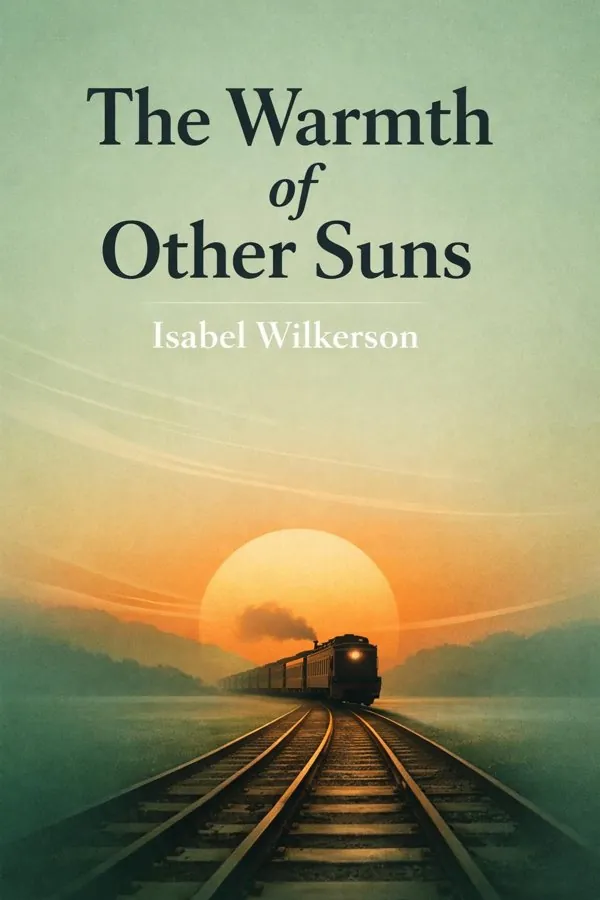
The Warmth of Other Suns tells the story of one of the largest internal migrations in American history: the movement of roughly six million Black Americans out of the Jim Crow South to the North, Midwest, and West between about 1915 and 1970. Rather than treating the Great Migration as an abstract demographic shift, Isabel Wilkerson makes it intimate and unforgettable by following the lives of three individuals—Ida Mae Gladney, George Starling, and Robert Foster—whose journeys reveal the fear, calculation, hope, and sacrifice behind this mass exodus. The book shows that migration was not simply about jobs or geography. It was about fleeing a rigid racial order that constrained where people could work, live, vote, travel, and dream. What makes this book matter so deeply is that it reframes modern American history. Wilkerson demonstrates that the Great Migration reshaped cities, politics, music, labor, family life, and the nation’s racial landscape. Her authority comes from years of reporting, archival research, oral histories, and narrative skill of the highest order. The result is both sweeping history and deeply human testimony—a work that helps readers understand not only where America has been, but why it looks the way it does today.
Key Takeaways
- 1A Migration Born from Survival — Some movements begin with ambition; this one began with the need to breathe freely. Wilkerson shows that the Great Migra…
- 2Ida Mae and Quiet Courage — History often celebrates loud heroes, but Wilkerson reminds us that endurance itself can be a form of bravery. Ida Mae G…
- 3George Starling and Stolen Possibility — Talent means little when a system is designed to waste it. George Starling’s life reveals how Jim Crow crushed ambition …
 10 min read
Nothing to Envy
by Barbara Demick
Nothing to Envy by Barbara Demick is a deeply reported work of narrative nonfiction that brings readers inside one of the most secretive and misunderstood societies in the world: North Korea. Rather than focusing only on dictators, missiles, and propaganda, Demick tells the country’s story through the lives of ordinary people in the city of Chongjin. Through defectors’ memories, she reconstructs how families loved, worked, starved, adapted, and ultimately began to question the system that controlled every part of their lives. The result is both intimate and politically revealing. What makes this book so powerful is its human scale. Demick shows how ideology enters the kitchen, the classroom, the workplace, and even romantic relationships. As shortages worsen and the state’s promises collapse, readers witness the slow unraveling of belief itself. The book matters because it turns an abstract geopolitical issue into a vivid moral and human reality. A longtime journalist and former Los Angeles Times bureau chief, Demick is known for rigorous reporting and compassionate storytelling. Her authority comes not from distant theorizing, but from careful listening to those who lived through famine, repression, and escape.
Key Takeaways
- 1Ordinary Lives Reveal a Closed Regime — The most revealing way to understand a dictatorship is often not through speeches or military parades, but through the r…
- 2Propaganda Works Through Repetition and Isolation — People do not need to believe every lie for propaganda to shape their world; they only need to have no competing reality…
- 3Love Becomes Defiance Under Total Control — When a state tries to organize every aspect of life, even private feeling can become a political act. One of the most me…
 10 min read
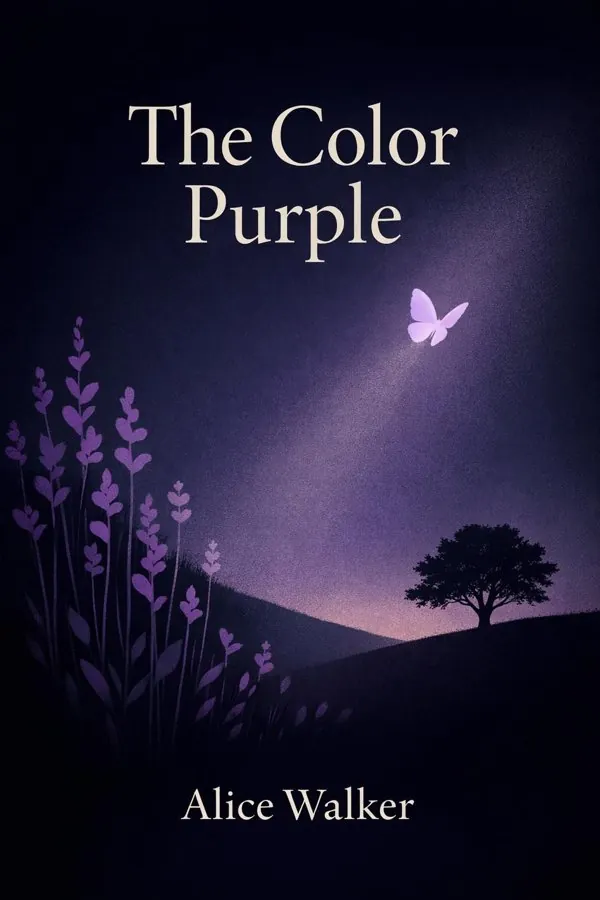
The Color Purple
by Alice Walker
Some novels tell a story; The Color Purple changes the way you hear a human voice. Alice Walker’s landmark 1982 novel is an epistolary work set in the early 20th-century American South, where letters become the fragile yet powerful thread holding together a life marked by violence, separation, racism, and silence. At its center is Celie, a Black woman whose early years are shaped by abuse and forced submission, but whose spirit slowly transforms through love, friendship, work, and self-discovery. As the novel unfolds, Walker reveals not only Celie’s suffering, but also her astonishing capacity to grow into freedom. The book matters because it does more than portray oppression; it insists on the possibility of healing without denying the depth of the wounds. Through Celie, Nettie, Shug Avery, Sofia, and others, Walker explores gender, power, race, sexuality, faith, and the meaning of dignity. Walker’s authority comes not only from her literary brilliance, which earned her the Pulitzer Prize and National Book Award, but from her lifelong commitment to telling the truth about Black women’s lives with tenderness, courage, and moral clarity.
Key Takeaways
- 1Celie’s Early Letters: Silence and Survival — Sometimes the first act of freedom is simply finding a place to speak, even if no one answers. At the beginning of The C…
- 2Life with Mr.___: The Cage of Servitude — Oppression often becomes most dangerous when it is mistaken for ordinary life. When Celie is forced into marriage with M…
- 3Shug Avery and the Awakening — Transformation often begins when someone sees in us what we have never been allowed to see in ourselves. Shug Avery ente…
Want the full summary?
Get instant access to this book summary and 100K+ more with Fizz Moment.
Get Free SummaryAvailable on App Store • Free to download
About This List
Books that shaped Trevor Noah's worldview and humor. From social commentary to personal memoirs.
This list features 9 carefully selected books. With FizzRead, you can read AI-powered summaries of each book in just 15 minutes. Get the key takeaways and start applying the insights immediately.
Ready to start reading?
Get instant access to all 9 book summaries and 100K+ more with FizzRead.