
Reese Witherspoon's Book Club: Stories That Captivated Millions
Reese Witherspoon's Book Club has turned countless novels into bestsellers and major films. Her picks celebrate strong female voices, gripping stories, and books that spark conversation.
 10 min read
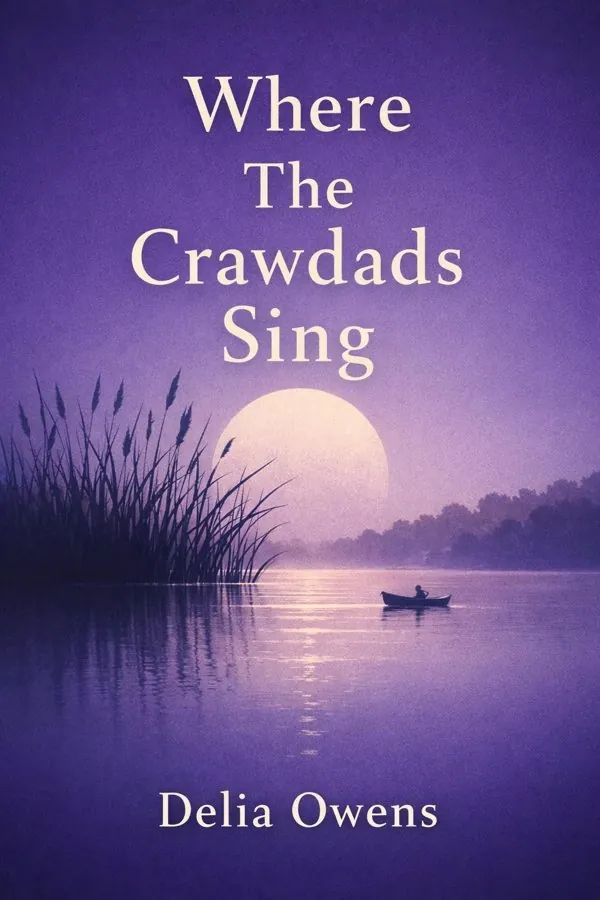
Where the Crawdads Sing
by Delia Owens
What makes a person who they are: the people who raise them, the place that shapes them, or the wounds they learn to survive? Where the Crawdads Sing answers that question through one of modern fiction’s most unforgettable heroines, Kya Clark, a girl abandoned by nearly everyone except the wild marsh she calls home. First published in 2018, Delia Owens’s bestselling novel blends coming-of-age drama, love story, courtroom suspense, and murder mystery into a deeply atmospheric reading experience. But what gives the book its lasting emotional power is its portrait of loneliness, prejudice, and the human need to belong. Set against the coastal wetlands of North Carolina, the novel asks readers to look beyond labels like “Marsh Girl” and see the full humanity of someone society has dismissed. Owens, an American author and zoologist, brings extraordinary sensory detail to the natural world, making the marsh feel as alive and important as any character in the story. That scientific eye, paired with an intimate emotional lens, gives the novel its signature strength. If you’re drawn to stories about resilience, nature, heartbreak, and hidden truths, this book offers all of that—and more.
Key Takeaways
- 1Kya’s Early Life and Family Abandonment — Kya Clark’s childhood is shaped by repeated abandonment, and the novel makes clear that this isn’t a single traumatic ev…
- 2Learning, Love, and the Pain of Absence — Tate Walker changes Kya’s life because he offers something no one else has consistently given her: patient recognition. …
- 3Chase Andrews and the Collision of Two Worlds — Chase Andrews represents a very different kind of relationship from Tate, and through him the novel explores what happen…
 10 min read
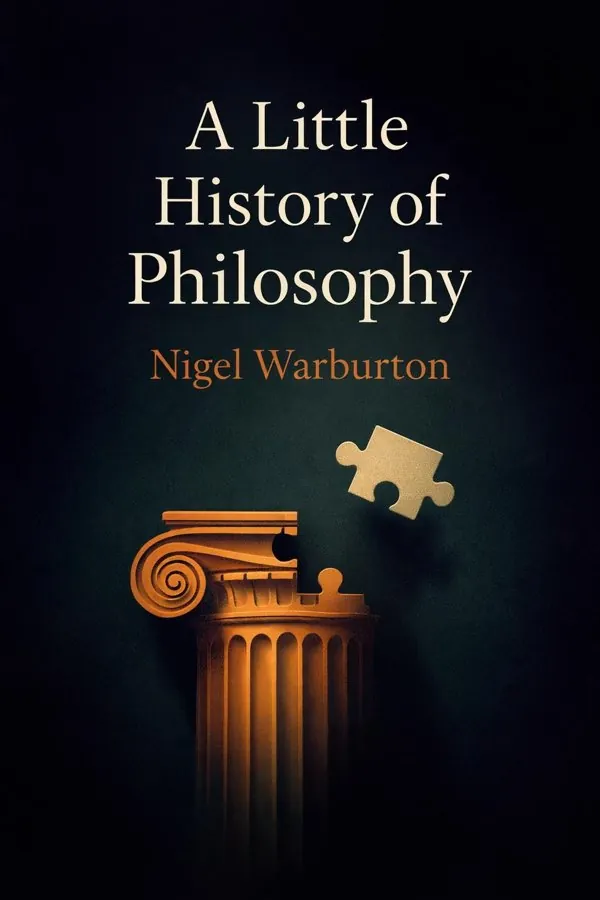
A Little History of Philosophy
by Nigel Warburton
What if the biggest questions in life were not obstacles to avoid, but invitations to think more deeply? In A Little History of Philosophy, Nigel Warburton turns the history of Western philosophy into a lively, human story filled with argument, curiosity, and intellectual courage. Rather than presenting philosophy as a dense academic subject reserved for specialists, he introduces it as an ongoing conversation about truth, justice, happiness, knowledge, freedom, religion, and the meaning of life. Moving from Socrates in ancient Athens to modern thinkers such as Nietzsche, Sartre, and contemporary analytic philosophers, Warburton shows how major ideas emerged in response to real problems people faced in their societies and in themselves. Each philosopher is treated not as a monument, but as a person wrestling with difficult questions that still matter today. The book matters because it makes philosophy accessible without oversimplifying it. Warburton, a British philosopher, writer, and co-founder of the widely respected Philosophy Bites podcast, is especially skilled at explaining difficult ideas with clarity and energy. The result is an inviting guide for anyone who wants to understand how philosophy has shaped the modern mind.
Key Takeaways
- 1Socrates and the examined life — A life filled with activity can still be intellectually asleep. That is the unsettling lesson Socrates leaves us with wh…
- 2Plato and Aristotle shape reality — We often assume that reality is exactly what our senses present to us, but Plato and Aristotle show two very different w…
- 3Happiness, pleasure, and inner control — Many people chase happiness as if it were a reward waiting somewhere in the future, but ancient philosophers often saw i…
 10 min read
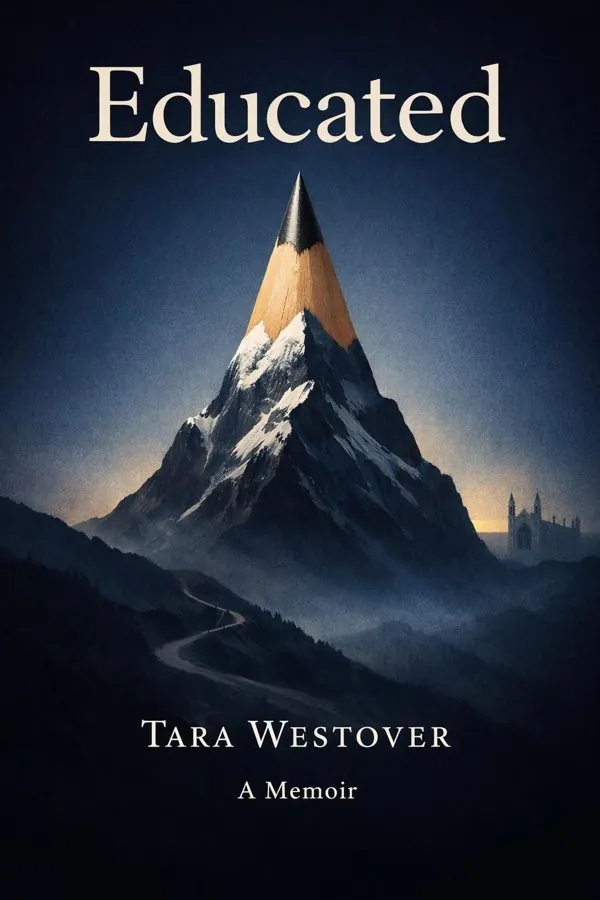
Educated
by Tara Westover
What does it mean to educate yourself when everything around you teaches you to stay small, silent, and obedient? In Educated, Tara Westover answers that question through one of the most striking memoirs of recent years. Her story begins in rural Idaho, in a survivalist Mormon household cut off from mainstream institutions, where hospitals, schools, and the government were treated as threats rather than supports. From that unlikely starting point, Westover eventually makes her way to Brigham Young University and later earns a doctorate in history from the University of Cambridge. What makes this memoir so powerful is that it is not simply a success story about academic achievement. It is a deeply human account of how knowledge changes a person from the inside out. Westover shows that education is not just the accumulation of facts; it is the painful, liberating process of learning to question the stories that shaped you. Her memoir matters because it speaks to anyone who has ever struggled to separate love from control, loyalty from self-betrayal, or family truth from personal truth. With honesty, emotional precision, and hard-won insight, Westover turns her life into a profound meditation on identity, memory, and the cost of becoming yourself.
Key Takeaways
- 1From the Mountain: Childhood and Isolation — Westover’s childhood at the foot of Buck’s Peak is the foundation of everything that follows. The mountain is more than …
- 2Work, Fear, and the Awakening of a Mind — In the junkyard, work becomes Westover’s first education in risk, hierarchy, and survival. She learns by doing, but what…
- 3Learning the World Beyond: From the Mountain to BYU — Westover’s move from her isolated upbringing to Brigham Young University marks one of the memoir’s most dramatic shifts.…
 10 min read
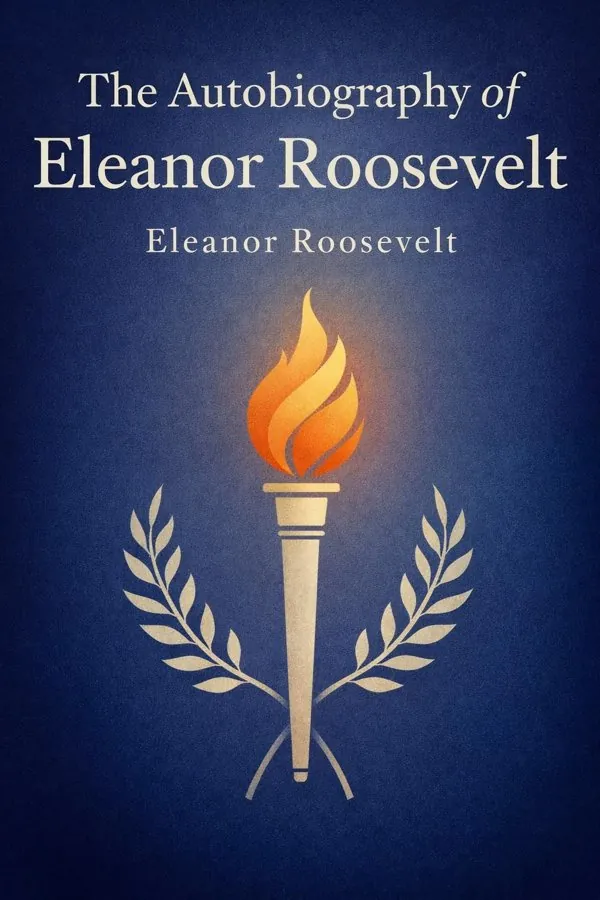
The Autobiography of Eleanor Roosevelt
by Eleanor Roosevelt
The Autobiography of Eleanor Roosevelt is far more than the life story of a former First Lady. It is a record of personal transformation, public service, and moral growth told by one of the most influential women of the twentieth century. In these pages, Eleanor Roosevelt traces her journey from a lonely and insecure childhood into a life of political engagement, social advocacy, and international leadership. She reflects on family wounds, marriage, motherhood, public controversy, and the responsibilities that come with visibility and power. What makes this autobiography especially compelling is its unusual combination of humility and authority. Roosevelt does not present herself as flawless or heroic from the beginning. Instead, she shows how conviction is built gradually through experience, observation, and action. Her voice is thoughtful, candid, and deeply practical, always returning to the question of how an individual can be useful in a troubled world. The book matters because it turns history into lived experience. Through Eleanor Roosevelt’s eyes, readers witness the evolution of modern citizenship, women’s public leadership, and human rights advocacy. Few memoirs offer such intimate access to both a private conscience and a public era.
Key Takeaways
- 1Early Hardship Can Forge Inner Strength — Confidence rarely begins as confidence. More often, it begins as loneliness, uncertainty, and the slow decision not to b…
- 2Service Begins With Seeing Reality Clearly — Social conscience becomes meaningful only when it leaves the realm of sentiment and encounters real lives. Eleanor Roose…
- 3Marriage Can Become a Public Partnership — Relationships are tested most severely when private hopes collide with public ambition. Eleanor Roosevelt’s marriage to …
 10 min read
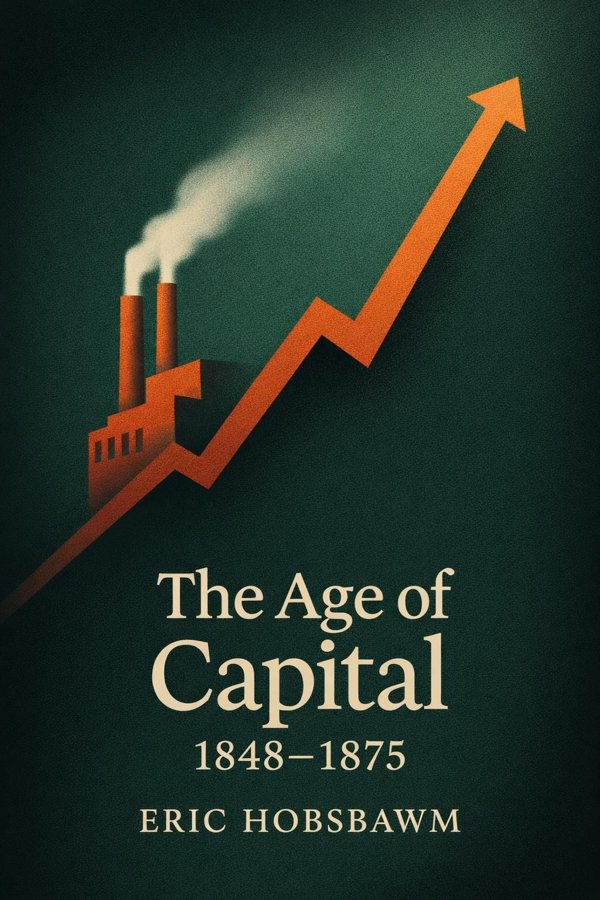
The Age of Capital
by Eric Hobsbawm
The Age of Capital: 1848–1875 is Eric Hobsbawm’s sweeping account of the decades in which capitalism moved from disruptive force to organizing principle of the modern world. Beginning in the aftermath of the failed revolutions of 1848, Hobsbawm shows how political instability gave way to a new kind of order—one shaped by industrial growth, bourgeois confidence, expanding markets, and the belief that progress was both inevitable and desirable. This was the era of railways, free trade, finance, urbanization, scientific optimism, and middle-class ascendancy, but it was also a period marked by class conflict, inequality, colonial expansion, and the sharpening contradictions of liberal society. What makes the book so powerful is that Hobsbawm never treats economics, politics, and culture as separate stories. He reveals how they formed a single historical system. As one of the twentieth century’s most influential historians, Hobsbawm brings extraordinary range and clarity to this period, making the book essential for anyone who wants to understand how the modern capitalist world was built—and why its promises were always entangled with tension and crisis.
Key Takeaways
- 1Order Replaced the Spirit of Revolution — History often advances not only through victories, but through the consequences of defeat. Hobsbawm argues that the revo…
- 2Industrial Capitalism Entered Its Heroic Age — Prosperity can feel natural in retrospect, but Hobsbawm reminds us that the mid-nineteenth century witnessed an extraord…
- 3The Bourgeoisie Became Society’s Ruling Class — A class truly rules when its values become common sense. One of Hobsbawm’s central insights is that the age was not defi…
 10 min read
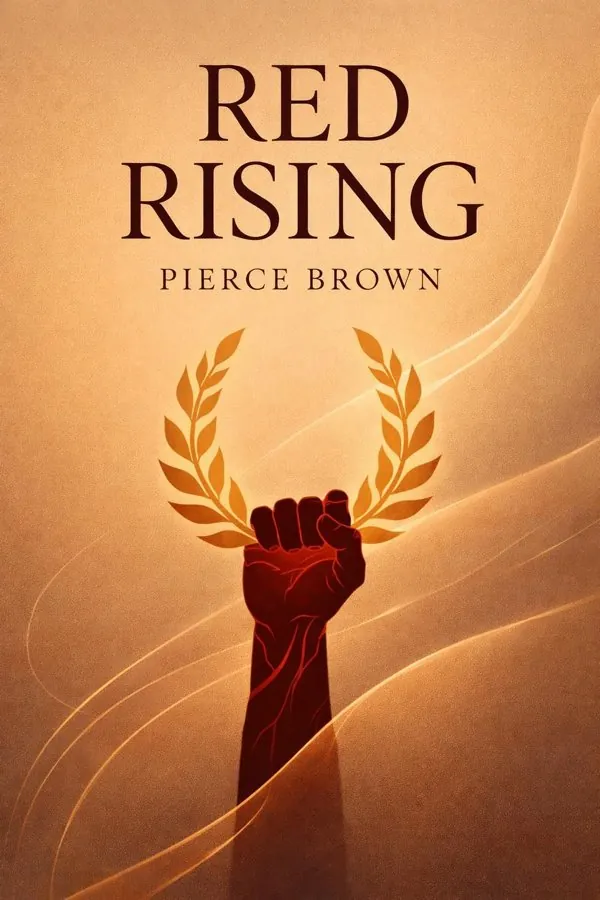
Red Rising
by Pierce Brown
What if the society that gave your life meaning was built on a lie? Red Rising begins with that devastating question and turns it into a relentless, emotionally charged science-fantasy saga about class, power, identity, and revolt. Set in a future solar system ruled by a rigid hierarchy of color-coded castes, the novel follows Darrow, a Red laborer on Mars who believes he is helping terraform the planet for future generations. When he discovers that Mars has long since been made livable and that Reds remain enslaved only to enrich the ruling Gold elite, his grief and rage become the spark for a dangerous mission: infiltrate the masters and destroy their world from within. Pierce Brown brings enormous force to this premise, blending dystopian politics, Roman-inspired aristocracy, brutal survival games, and intimate character conflict into a story that feels both mythic and personal. Red Rising matters because it is not only a thrilling rebellion narrative; it is also a sharp examination of how injustice is normalized, how identity can be weaponized, and how leadership demands both cunning and sacrifice.
Key Takeaways
- 1From the Pits of Mars — Oppression becomes most powerful when it disguises itself as purpose. At the start of Red Rising, Darrow lives as a Red,…
- 2The Truth and the Sons — Revolution often begins not with ideology, but with a wound that can no longer be ignored. Darrow's turning point comes …
- 3Becoming Gold Through Pain — To overthrow a system from within, Darrow must become what he hates. One of the novel's most striking ideas is that tran…
 10 min read
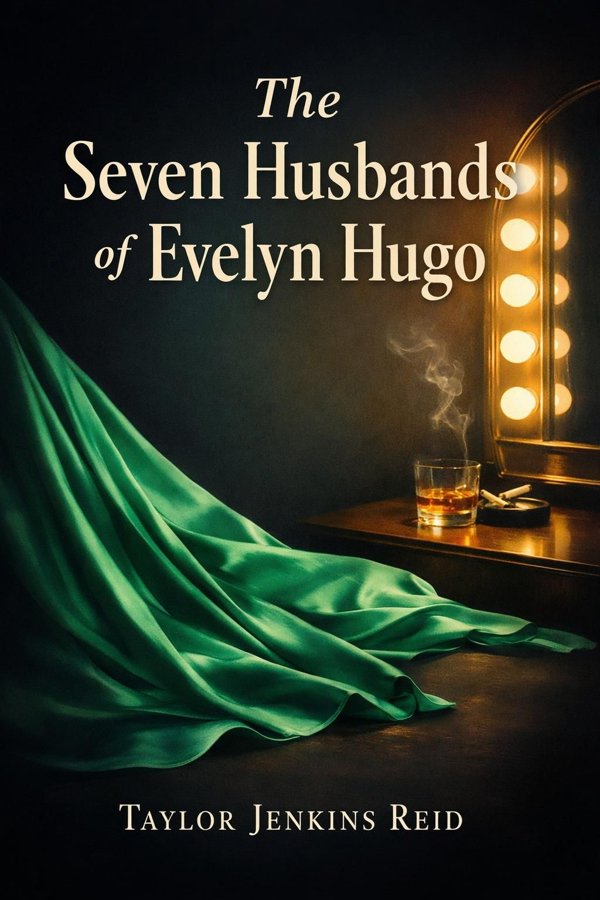
The Seven Husbands of Evelyn Hugo
by Taylor Jenkins Reid
What does it cost to become unforgettable? In The Seven Husbands of Evelyn Hugo, Taylor Jenkins Reid answers that question through the voice of a fictional Old Hollywood icon who is finally ready to reveal the truth behind her fame, her marriages, and the love story she hid from the world. The novel begins when Evelyn Hugo, once one of Hollywood’s most dazzling and controversial stars, summons an unknown journalist named Monique Grant to write her biography. What follows is a layered confession about ambition, reinvention, sacrifice, sexuality, grief, and the price of controlling one’s own image. This is far more than a glamorous celebrity novel. It is a sharp exploration of how women survive systems that reward beauty, punish honesty, and force impossible choices between public success and private happiness. Reid brings Evelyn to life with such precision that she feels like a real legend from cinema’s golden age. Known for emotionally immersive, character-driven novels about fame, identity, and human relationships, Reid uses Evelyn’s story to examine how people build myths around themselves and what happens when they finally tell the truth.
Key Takeaways
- 1From Hell’s Kitchen to Hollywood Power — Reinvention is rarely elegant; more often, it is born from desperation. Evelyn Hugo begins life as Evelyn Elena Herrera,…
- 2Marriage as Strategy, Shelter, and Illusion — Not every marriage begins with love; some begin with survival. The seven husbands in Evelyn Hugo’s life are the novel’s …
- 3Celia St. James and Hidden Love — The deepest love in a life is not always the one history records. Though Evelyn becomes famous for her seven husbands, t…
 10 min read
The Midnight Library
by Matt Haig
What if every regret you have ever carried could be tested, revised, and lived out in a different version of your life? Matt Haig’s The Midnight Library begins with that haunting question and turns it into a deeply moving novel about despair, possibility, and the fragile beauty of being alive. At the center of the story is Nora Seed, a woman overwhelmed by disappointment and convinced she has failed at life. But in the mysterious space between life and death, she finds herself inside a library filled with books that each contain a different life she could have lived if she had made other choices. From there, the novel becomes both a gripping story and a philosophical meditation on regret, identity, and what truly makes a life meaningful. Haig is especially suited to explore these themes. Across both fiction and nonfiction, including Reasons to Stay Alive, he has written with unusual honesty about mental health, hope, and the human condition. The Midnight Library matters because it speaks directly to modern anxieties: the fear of wasted potential, the burden of comparison, and the longing to know if a different life would have made us happier.
Key Takeaways
- 1Between Life and Death: Nora’s Awakening — Sometimes the most transformative moment in a story begins at the point where a person believes nothing can change. That…
- 2Lessons from the Infinite Lives — We often imagine that regret points toward the life we should have lived, but The Midnight Library asks a more unsettlin…
- 3Choosing Life Again — A meaningful life is not discovered by finding perfection; it is chosen by embracing imperfection. As Nora moves through…
 10 min read
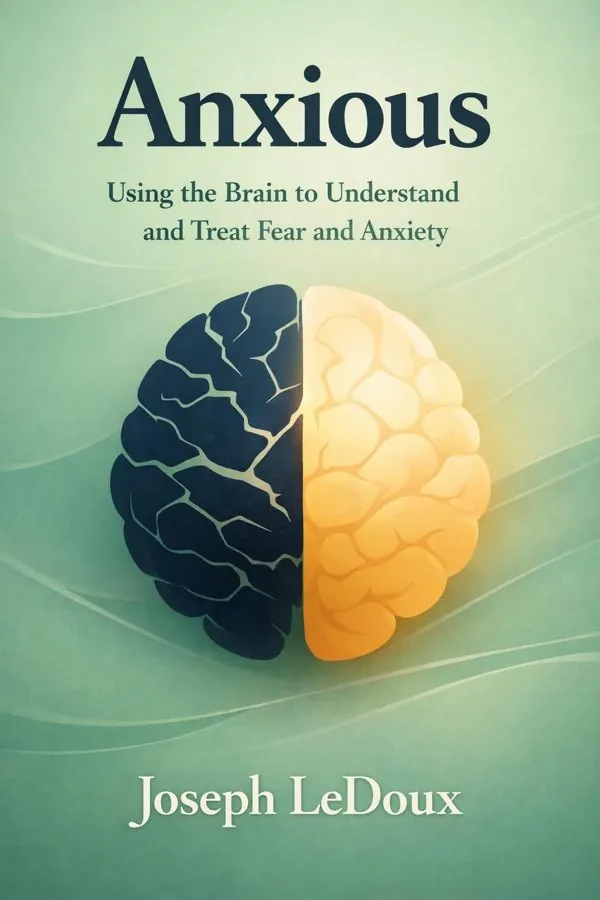
Anxious
by Joseph LeDoux
Anxiety can feel deeply personal, but Joseph LeDoux shows that it is also profoundly biological. In Anxious, the renowned neuroscientist explores how the brain detects danger, stores threat memories, and generates the conscious experience we call fear and anxiety. Rather than treating these emotions as vague psychological states, LeDoux traces them to specific neural systems shaped by evolution to help organisms survive. Yet the same systems that once protected us can misfire in modern life, producing chronic worry, panic, phobias, and debilitating stress. What makes this book so important is its insistence on precision. LeDoux challenges common assumptions about emotion, especially the tendency to blur automatic survival responses with the subjective feeling of fear. Drawing on decades of groundbreaking research on the amygdala, conditioning, memory, and consciousness, he offers a more rigorous framework for understanding anxiety disorders and improving treatment. The result is a book that bridges neuroscience, psychology, psychiatry, and philosophy. For anyone who wants to understand why the brain so easily turns anticipation into suffering—and what science can do about it—Anxious is both illuminating and urgently relevant.
Key Takeaways
- 1Fear and Anxiety Need Clear Definitions — One of the biggest obstacles to understanding anxiety is that we often use the same word for very different processes. L…
- 2The Amygdala Learns Threats Fast — A simple tone paired with a mild shock can teach an animal to freeze in anticipation—and that elegant experiment helped …
- 3Survival Circuits Are Not Feelings — We often assume that if the brain triggers a defensive response, the feeling of fear must already exist. LeDoux argues t…
Want the full summary?
Get instant access to this book summary and 100K+ more with Fizz Moment.
Get Free SummaryAvailable on App Store • Free to download
About This List
Reese Witherspoon's Book Club has turned countless novels into bestsellers and major films. Her picks celebrate strong female voices, gripping stories, and books that spark conversation.
This list features 9 carefully selected books. With FizzRead, you can read AI-powered summaries of each book in just 15 minutes. Get the key takeaways and start applying the insights immediately.
Ready to start reading?
Get instant access to all 9 book summaries and 100K+ more with FizzRead.