
Morgan Housel's Financial Wisdom Reads
Books recommended by Morgan Housel, author of The Psychology of Money. Essential reading on wealth, behavior, and decision-making.
 10 min read
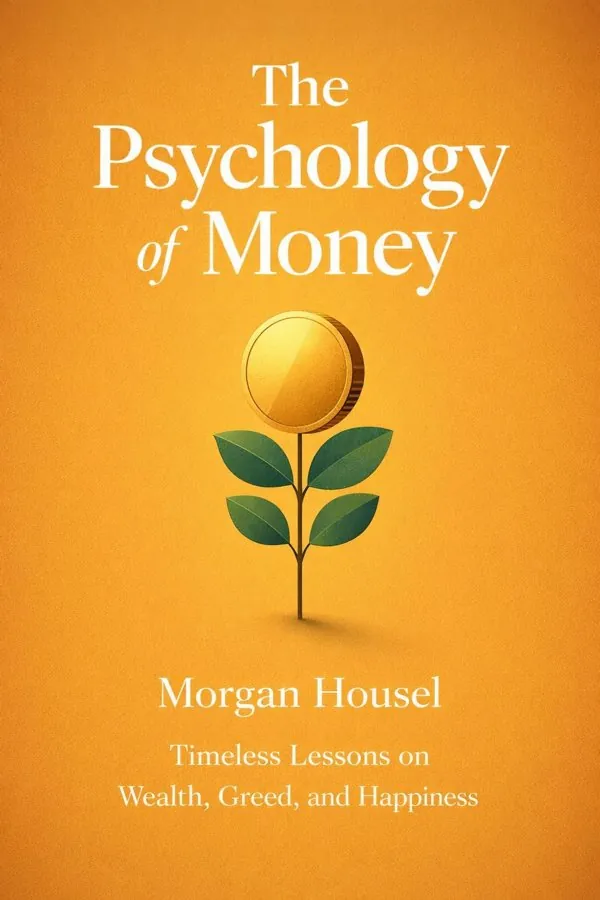
The Psychology of Money
by Morgan Housel
Money is often treated as a math problem, but Morgan Housel argues that it is really a behavior problem. In The Psychology of Money, he explores how wealth, spending, saving, risk, and happiness are shaped less by spreadsheets and more by emotion, ego, fear, luck, and personal history. The book explains why smart people can make poor financial decisions, why average people can build remarkable wealth, and why doing well with money has more to do with temperament than raw intelligence. Rather than offering complicated formulas or market predictions, Housel focuses on the habits and mindsets that drive long-term financial success. His lessons are practical, memorable, and rooted in stories from investors, business leaders, and everyday people. As a respected financial writer and former columnist for The Wall Street Journal and The Motley Fool, Housel brings both credibility and clarity to the subject. This book matters because it helps readers build a healthier relationship with money, make better decisions under uncertainty, and define success on their own terms.
Key Takeaways
- 1Money Decisions Are Driven by Behavior — One of the most important truths about money is that people do not make financial decisions on spreadsheets alone. They …
- 2Compounding Rewards Patience More Than Brilliance — The most extraordinary results in finance often come from ordinary actions repeated for a very long time. Housel emphasi…
- 3Saving Gives Power and Peace — Many people think of saving as delayed consumption, but Housel reframes it as a source of control, flexibility, and emot…
 10 min read
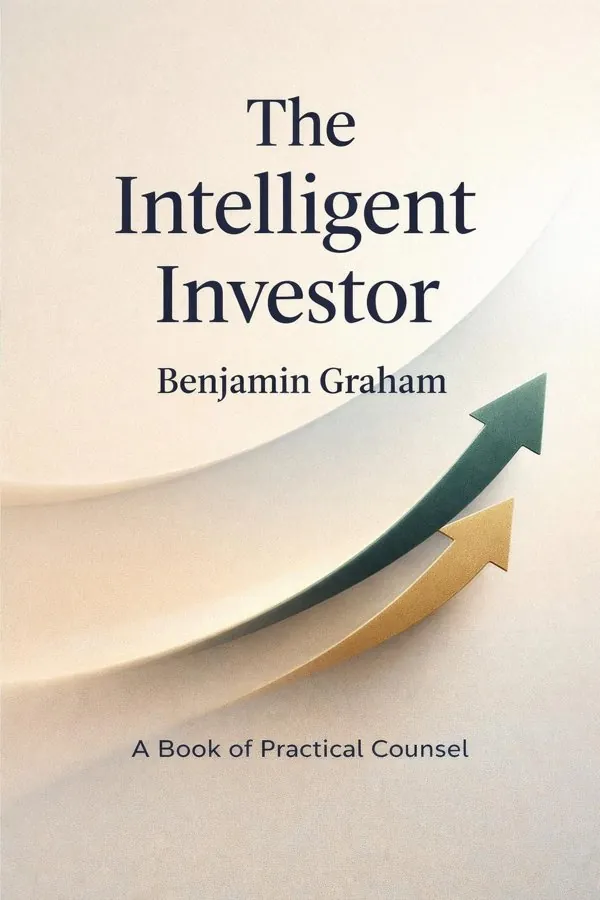
The Intelligent Investor
by Benjamin Graham
Why does one investor build durable wealth over decades while another repeatedly chases hot tips, panics in downturns, and ends up disappointed? Benjamin Graham’s The Intelligent Investor answers that question with unusual clarity. First published in 1949, this classic remains one of the most respected books on value investing because it focuses less on prediction and more on judgment, discipline, and protection against avoidable mistakes. Graham, widely regarded as the father of modern security analysis, wrote for ordinary investors who wanted a rational framework in a market often driven by noise, excitement, and fear. His advice is timeless precisely because human behavior in markets rarely changes. Instead of promising quick riches, he teaches readers how to think about risk, intrinsic value, portfolio construction, and emotional control. Concepts such as the margin of safety, the distinction between investment and speculation, and the famous allegory of Mr. Market have shaped generations of investors, including many professionals. If you want a practical philosophy for making smarter financial decisions and avoiding costly psychological traps, this book still matters enormously.
Key Takeaways
- 1The Difference Between Investment and Speculation — Graham begins with a deceptively simple but essential definition: an investment operation is one that, after thorough an…
- 2Defining the Intelligent Investor: Emotional Discipline — For Graham, intelligence in investing has little to do with IQ, advanced math, or market predictions. The intelligent in…
- 3Understanding Market Fluctuations: The Allegory of Mr. Market — One of Graham’s most memorable teaching tools is Mr. Market, an imaginary business partner who shows up every day offeri…
 10 min read
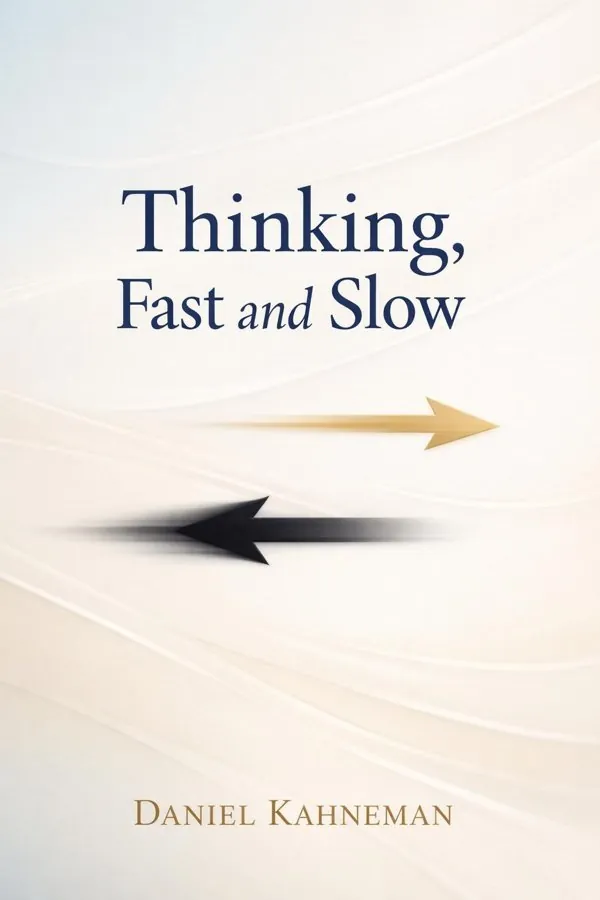
Thinking Fast and Slow
by Daniel Kahneman
Thinking Fast and Slow is one of the most influential books ever written about how the human mind works. In it, Daniel Kahneman distills decades of groundbreaking research in psychology and behavioral economics into a practical framework for understanding why people make smart decisions in some situations and surprisingly poor ones in others. His central insight is that our thinking is shaped by two systems: one that is fast, intuitive, and automatic, and another that is slow, effortful, and analytical. Most of the time, these systems cooperate efficiently. But just as often, the quick judgments of the mind lead us into predictable errors. What makes this book so powerful is that it changes how you see everyday life. From investing and hiring to relationships, planning, medicine, and public policy, Kahneman shows how biases quietly shape choices we assume are rational. He writes with the authority of a Nobel Prize-winning researcher whose work, much of it developed with Amos Tversky, transformed our understanding of judgment under uncertainty. This is not only a book about mistakes; it is a guide to better thinking, wiser decisions, and greater humility about the limits of human reason.
Key Takeaways
- 1The Two Systems That Shape Thought — Most of what you think feels deliberate, but much of it happens automatically. Kahneman’s most famous contribution is th…
- 2Heuristics Make Judgment Efficient and Flawed — The mind is built to simplify, not to calculate perfectly. To navigate uncertainty, we rely on heuristics, mental shortc…
- 3Confidence Often Exceeds What We Know — We are far better at creating explanations than at recognizing our ignorance. Kahneman shows that overconfidence is one …
 10 min read
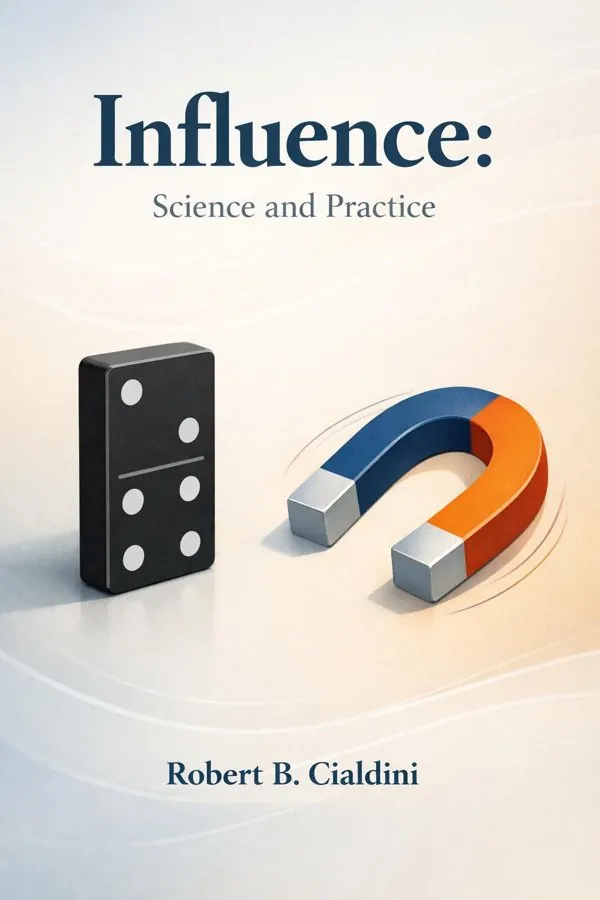
Influence
by Robert Cialdini
Why do people say yes when they would prefer to say no? Why do intelligent, careful individuals still fall for pressure, urgency, and persuasive framing? In Influence, Robert B. Cialdini answers these questions by uncovering the hidden psychological patterns that shape everyday decisions. Drawing on decades of research in social psychology, as well as undercover fieldwork in sales, fundraising, advertising, and compliance professions, Cialdini explains how persuasion often works not through logic alone, but through reliable mental shortcuts. He identifies six core principles of influence—reciprocity, commitment and consistency, social proof, liking, authority, and scarcity—and shows how they operate in business, relationships, politics, and consumer behavior. What makes the book so enduring is its balance of scientific rigor and practical usefulness. It helps readers become both more persuasive and more resistant to manipulation. Whether you work in marketing, negotiation, leadership, or simply want to make better decisions in a world full of influence attempts, this book offers a framework that remains remarkably relevant. Influence is not just about persuasion; it is about understanding human behavior under pressure.
Key Takeaways
- 1Weapons of Influence and Automaticity — Much of persuasion succeeds not because people are foolish, but because people are busy. Cialdini begins with a crucial …
- 2Reciprocity Creates Powerful Obligation — A small favor can create a surprisingly large sense of debt. That is the essence of reciprocity, one of the oldest and m…
- 3Commitment Shapes Future Behavior — People do not just want to make decisions; they want to appear consistent with them. Cialdini explains that once individ…
 10 min read
Poor Charlie"s Almanack
by Charles T. Munger
Poor Charlie’s Almanack is far more than a book about investing. It is a practical guide to thinking clearly, judging wisely, and living rationally in a world full of noise, ego, incentives, and error. Compiled by Peter D. Kaufman from Charles T. Munger’s speeches, essays, and public remarks, the book captures the intellectual operating system behind one of the most respected minds in business. Munger, best known as Warren Buffett’s longtime partner at Berkshire Hathaway, argues that success does not come from flashy predictions or complicated formulas. It comes from disciplined reasoning, moral clarity, patience, and a broad understanding of how the world actually works. What makes this book matter is its reach. Munger draws lessons not only from finance, but also from psychology, biology, history, economics, engineering, law, and human behavior. His famous idea of using a “latticework of mental models” offers readers a way to make better decisions in investing, business, and everyday life. Sharp, witty, and often brutally honest, Poor Charlie’s Almanack remains essential reading for anyone who wants to avoid foolish mistakes and build sound judgment over a lifetime.
Key Takeaways
- 1The Psychology of Human Misjudgment — The most dangerous enemy in decision-making is often not the market, the competition, or bad luck, but the mind itself. …
- 2The Importance of Mental Models — A single big idea is rarely enough to understand a complex world. Munger’s concept of mental models is his answer to sha…
- 3Worldly Wisdom Through Broad Learning — Real wisdom does not come from knowing more facts than everyone else; it comes from understanding the enduring patterns …
 10 min read
The Most Important Thing
by Howard Marks
What separates exceptional investors from the crowd is rarely access to better information alone. More often, it is the ability to interpret that information with greater depth, discipline, and emotional balance. In The Most Important Thing, legendary investor Howard Marks distills decades of experience into a practical philosophy of intelligent investing. Rather than offering a formula for quick profits, Marks explains how thoughtful investors can improve their odds by understanding risk, market cycles, value, psychology, and the importance of judgment. At the center of the book is his famous idea of “second-level thinking,” the ability to look beyond obvious conclusions and ask what others may be missing. This book matters because it challenges many of the simplistic assumptions that dominate financial conversations. Marks argues that success does not come from certainty or prediction, but from careful reasoning, humility, and consistent decision-making under uncertainty. As co-founder of Oaktree Capital Management and one of the most respected voices in investing, Marks writes with unusual authority. His insights are valuable not only for professional investors, but for anyone who wants to make better decisions in environments shaped by risk, emotion, and imperfect information.
Key Takeaways
- 1Second-Level Thinking Beats the Obvious — Most people stop thinking at the first reasonable answer, but extraordinary results usually come from going one level de…
- 2Risk Matters More Than Return Chasing — The most dangerous investment mistake is not earning too little; it is taking risks you do not fully understand. Marks r…
- 3Value and Price Are Never the Same — An excellent asset can still be a poor investment if you pay too much for it. This distinction between value and price i…
 10 min read
A Random Walk Down Wall Street
by Burton Malkiel
What if the biggest investing advantage is not superior intelligence, secret information, or perfect timing, but the discipline to ignore noise? In A Random Walk Down Wall Street, Burton G. Malkiel makes the provocative case that most investors, including many professionals, cannot consistently beat the market. Prices, he argues, move in ways that are largely unpredictable, making elaborate forecasting systems far less useful than they appear. Instead of chasing hot stocks, market gurus, or clever charts, Malkiel urges readers to embrace a simpler path: broad diversification, low costs, and long-term patience. First published in 1973 and repeatedly updated to address new market trends, the book has become one of the most influential works in personal finance. Malkiel writes with the authority of a Princeton economist and longtime investment thinker, but his message is strikingly practical. He combines financial history, economic theory, and behavioral psychology to show why investors so often sabotage themselves. For anyone trying to build wealth without becoming a full-time market analyst, this book remains a clear, persuasive, and deeply relevant guide to rational investing.
Key Takeaways
- 1Speculative manias never really disappear — Every generation believes its bubble is different. That is one of Burton Malkiel’s most important warnings. To understan…
- 2Charts cannot reliably predict markets — If price charts truly revealed the future, Wall Street would be full of billionaires drawing trend lines. Malkiel challe…
- 3Fundamental analysis has real limits — Careful research feels like it should guarantee better returns, but Malkiel shows why even serious fundamental analysis …
 10 min read
Sapiens
by Yuval Noah Harari
Sapiens: A Brief History of Humankind is an ambitious, big-picture history of our species, tracing how Homo sapiens rose from an unremarkable African ape to the dominant force on Earth. Yuval Noah Harari combines history, biology, anthropology, economics, and philosophy to explain the turning points that transformed human life: the Cognitive Revolution, the Agricultural Revolution, and the Scientific Revolution. Rather than offering a narrow chronological account, he asks a deeper question: what made humans uniquely capable of building empires, religions, markets, and nations? Harari’s answer is both provocative and memorable: our greatest power lies in our ability to create and believe shared stories. These collective fictions—such as money, laws, gods, and states—allow strangers to cooperate on a massive scale. The book matters because it challenges comforting assumptions about progress, happiness, and civilization. It invites readers to see modern society not as inevitable, but as the result of historical choices, accidents, and myths. As a historian and public intellectual, Harari brings scholarly range and narrative clarity to one of the most compelling questions in human history: how did we become who we are?
Key Takeaways
- 1The Cognitive Revolution and Shared Imagination — Human dominance did not begin with stronger bodies, sharper teeth, or faster legs; it began with a new kind of mind. Aro…
- 2The Agricultural Revolution: Progress or Trap? — What if one of history’s greatest achievements was also one of its greatest mistakes? Harari provocatively argues that t…
- 3Myths Make Large Societies Possible — Civilization runs not only on roads, crops, and armies, but on ideas that exist because people collectively agree they d…
Want the full summary?
Get instant access to this book summary and 100K+ more with Fizz Moment.
Get Free SummaryAvailable on App Store • Free to download
About This List
Books recommended by Morgan Housel, author of The Psychology of Money. Essential reading on wealth, behavior, and decision-making.
This list features 8 carefully selected books. With FizzRead, you can read AI-powered summaries of each book in just 15 minutes. Get the key takeaways and start applying the insights immediately.
Ready to start reading?
Get instant access to all 8 book summaries and 100K+ more with FizzRead.