
Books for New Managers — Lead with Confidence
The transition from individual contributor to manager is one of the hardest in any career. These books give you the playbook for leading teams, giving feedback, and earning respect.
 10 min read
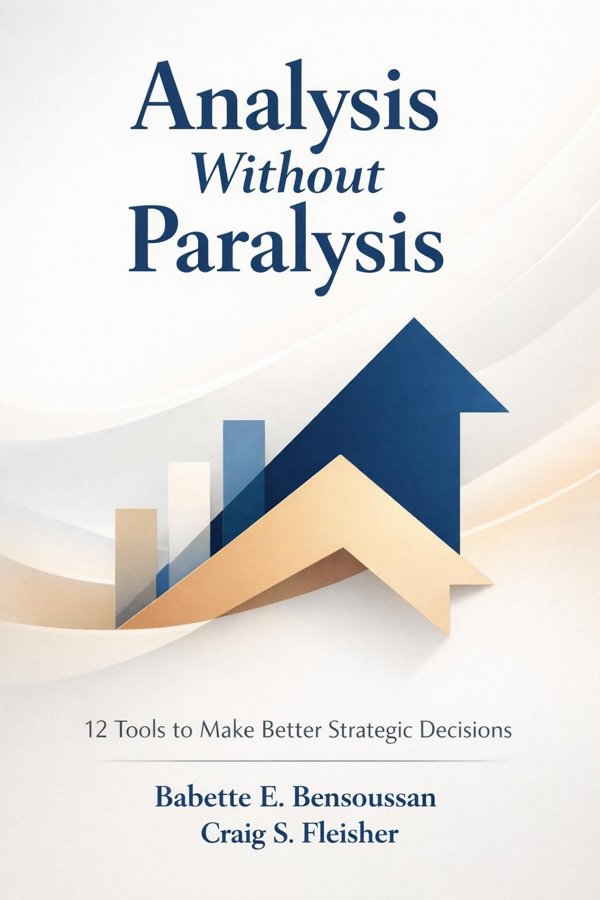
Analysis Without Paralysis: 12 Tools to Make Better Strategic Decisions
by Babette E. Bensoussan, Craig S. Fleisher
Analysis Without Paralysis es una guía práctica que presenta doce herramientas analíticas esenciales para la toma de decisiones estratégicas. Los autores explican cómo aplicar cada herramienta de manera efectiva para mejorar la comprensión del entorno empresarial, la competencia y las oportunidades de mercado. El libro está diseñado para ejecutivos, consultores y estudiantes que buscan claridad y rigor en el análisis estratégico.
Key Takeaways
- 1Overview of Analytical Thinking — Before diving into specific tools, we must clarify what analysis truly means. In strategic decision-making, confusion of…
- 2Tool 1 – SWOT Analysis — SWOT analysis remains one of the most accessible frameworks for strategic assessment, but its power depends entirely on …
- 3Tool 2 – PEST Analysis
 10 min read
Antifragile: Things That Gain from Disorder
by Nassim Nicholas Taleb
Antifragile explores how certain systems, ideas, and individuals benefit from volatility, randomness, and stress. Taleb argues that rather than merely resisting shocks, antifragile entities grow stronger through them. The book extends his Incerto series, offering a philosophical and practical framework for understanding uncertainty and resilience in life, business, and nature.
Key Takeaways
- 1The Nature of Antifragility — To live is to confront uncertainty. But humans often confuse being unharmed by disorder with benefiting from it. If a po…
- 2The Illusion of Predictability — Modern society rests on a dangerous delusion: that the world is predictable and that risk can be managed through sophist…
- 3The Barbell Strategy
 10 min read
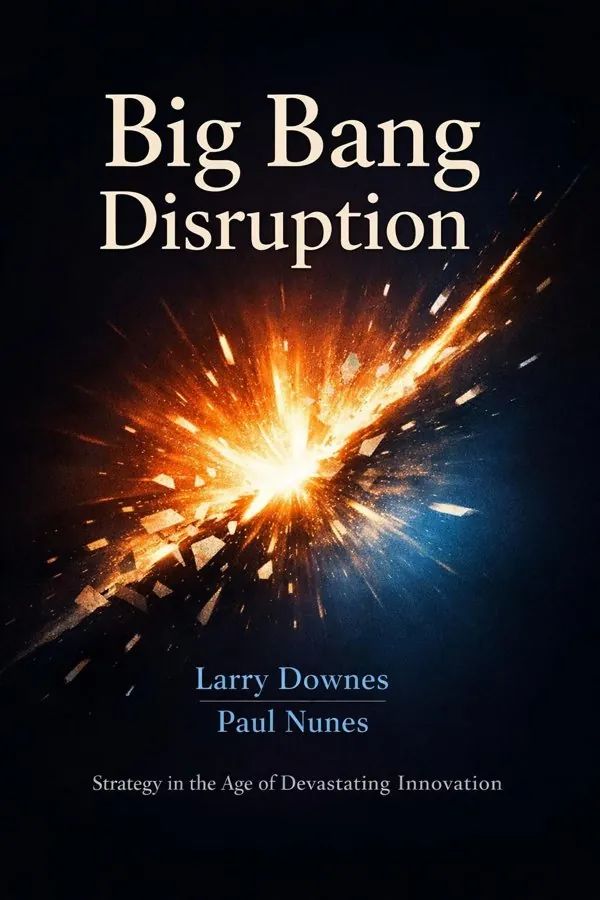
Big Bang Disruption: Strategy in the Age of Devastating Innovation
by Larry Downes, Paul Nunes
Big Bang Disruption explores how rapid technological innovation can upend entire industries almost overnight. Larry Downes and Paul Nunes analyze how traditional models of incremental innovation have been replaced by sudden, large-scale disruptions that reshape markets and consumer behavior. The book provides strategic frameworks for businesses to anticipate, adapt to, and thrive amid these transformative changes.
Key Takeaways
- 1The Four Stages of Big Bang Disruption — Through years of research, Paul and I distilled what appeared at first as chaos into a four-stage lifecycle—one that rep…
- 2Technological Convergence and the Acceleration of Change — Disruption has always been part of business, but what makes our era “devastating” is the convergence of enabling technol…
- 3Reading Early Warning Signs of Disruption
 10 min read
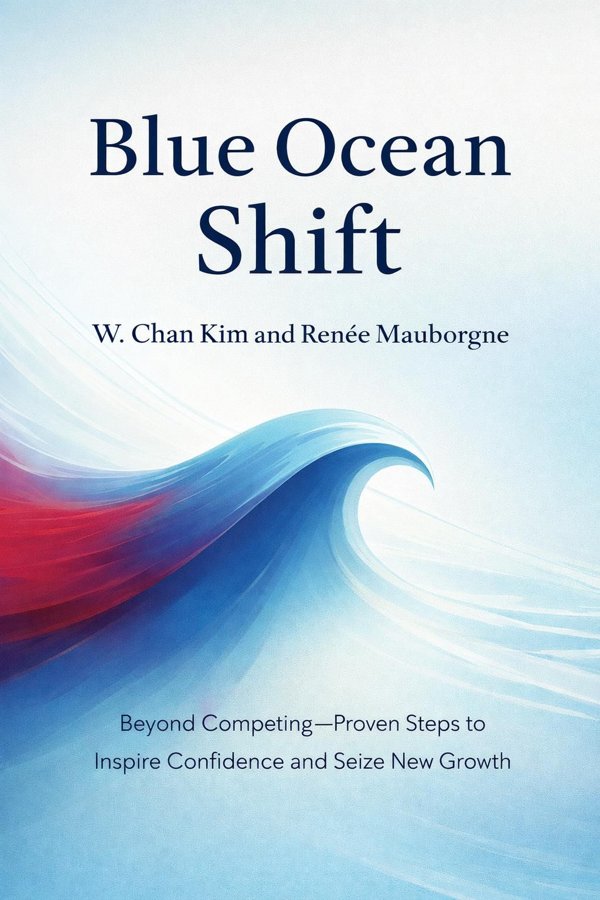
Blue Ocean Shift: Beyond Competing – Proven Steps to Inspire Confidence and Seize New Growth
by W. Chan Kim and Renée Mauborgne
Blue Ocean Shift is a strategic management book that guides organizations and individuals on how to move from crowded, competitive markets (red oceans) to untapped new spaces (blue oceans). Building on the ideas from Blue Ocean Strategy, the authors present a systematic five-step process to help leaders unlock new growth, inspire confidence, and achieve sustainable success through creative market reconstruction and human-centered leadership.
Key Takeaways
- 1The Human Side of Strategy — In every transformation, people matter most. When organizations fail to make bold moves, it is rarely because of intelle…
- 2Step 1 – Getting Started — Every successful blue ocean journey begins with choosing the right place to start and assembling the right team. This is…
- 3Step 2 – Mapping the Current State
 10 min read
Blue Ocean Strategy: How to Create Uncontested Market Space and Make the Competition Irrelevant
by W. Chan Kim, Renée Mauborgne
Blue Ocean Strategy introduces a systematic approach to making the competition irrelevant by creating uncontested market space. The authors argue that lasting success comes not from battling competitors but from creating 'blue oceans'—untapped new market spaces ripe for growth. Drawing on a study of 150 strategic moves spanning more than 100 years and 30 industries, the book provides analytical frameworks and tools to help organizations break out of the 'red ocean' of bloody competition.
Key Takeaways
- 1Introduction to Red and Blue Oceans — To appreciate the power of a blue ocean, you must first understand the nature of the red. Red oceans represent all the i…
- 2Reconstructing Market Boundaries — Creating a blue ocean begins with seeing differently. In our study of strategic moves, we found six core paths that enab…
- 3Focusing on the Big Picture, Not the Numbers
 10 min read
Build For Change: Revolutionizing Customer Engagement Through Continuous Digital Innovation
by Alan Trefler
Build For Change argues that the greatest threat to modern organizations is not competition alone, but rigidity. In a world where customer expectations evolve faster than corporate structures, Alan Trefler makes the case that companies must stop designing systems, processes, and strategies for stability and start designing them for constant adaptation. The book explores how digital innovation can become a continuous capability rather than a one-time transformation project, especially in customer engagement, operations, and decision-making. What makes this book especially valuable is its practical perspective. Trefler does not treat digital transformation as a buzzword or a technology shopping list. Instead, he shows how organizations can create adaptive enterprise architectures, automate intelligently, connect business and IT, and reshape culture so they can respond quickly to change without creating chaos. His focus is on building organizations that are resilient, customer-centric, and operationally agile. As the founder and CEO of Pegasystems, Trefler brings decades of firsthand experience helping large enterprises modernize complex systems and processes. His authority comes from seeing where transformation efforts succeed, where they fail, and what it truly takes to build for change.
Key Takeaways
- 1Technology Reset Customer Expectations Forever — A customer rarely compares your company only with your direct competitors; they compare you with the best digital experi…
- 2Build Systems Designed To Evolve — The future rarely rewards what is merely efficient today; it rewards what can be changed tomorrow. Trefler’s “build for …
- 3The Adaptive Enterprise Wins Faster — Scale without agility creates impressive-looking inertia. Trefler argues that the organizations best positioned for the …
 10 min read
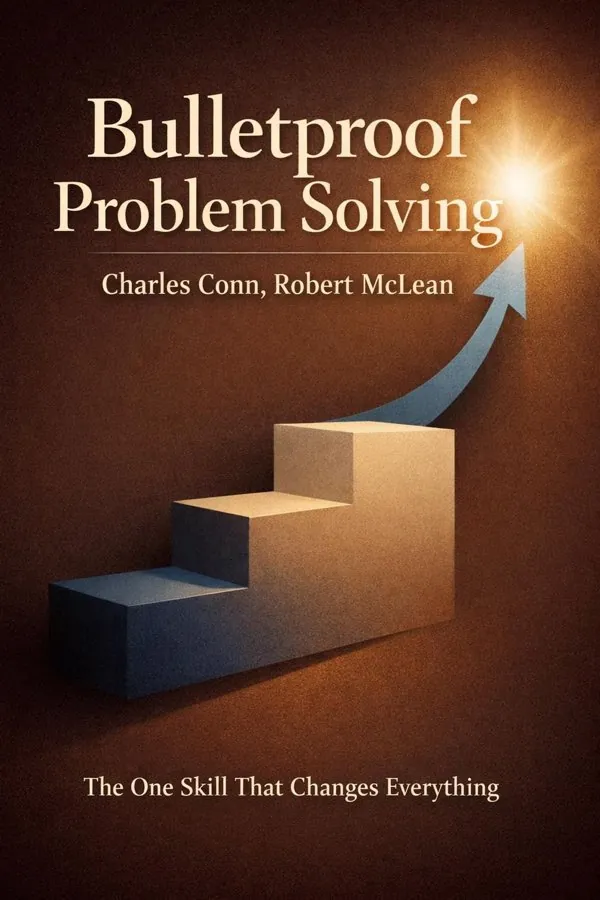
Bulletproof Problem Solving: The One Skill That Changes Everything
by Charles Conn, Robert McLean
Bulletproof Problem Solving provides a structured, practical approach to tackling complex problems using a seven-step process. Drawing on decades of consulting experience at McKinsey & Company, the authors show how to define problems clearly, break them into manageable parts, use logic trees, and apply data-driven analysis to reach sound decisions. The book emphasizes creative thinking, hypothesis testing, and iterative learning to improve decision quality in business, policy, and personal contexts.
Key Takeaways
- 1The Need for Systematic Problem Solving — Throughout our professional lives, we saw how even brilliant people struggle when problems outgrow their intuition. Comp…
- 2Step 1: Define the Problem Clearly — Defining a problem sounds deceptively simple, yet it’s where most problem-solving efforts fail. People frequently confus…
- 3Step 2: Disaggregate the Problem Using Logic Trees
 10 min read
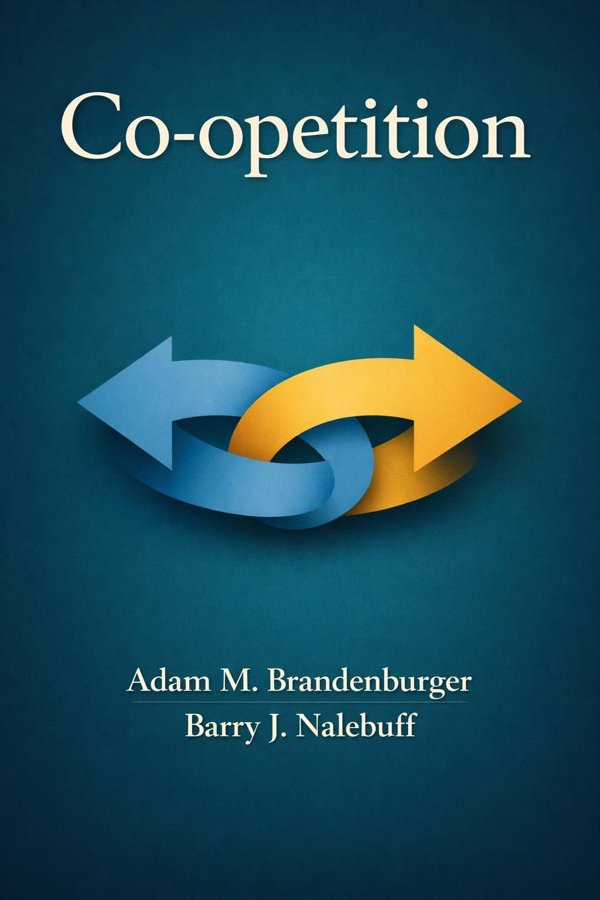
Co-opetition: A Revolutionary Mindset That Combines Competition and Cooperation
by Adam M. Brandenburger, Barry J. Nalebuff
Most strategy books teach managers to think like warriors: defend territory, weaken rivals, and capture as much value as possible. Co-opetition challenges that instinct. Adam M. Brandenburger and Barry J. Nalebuff argue that business is not just a contest over a fixed pie. It is also a creative process in which companies can make the pie bigger before deciding how to divide it. Drawing on game theory, they show that firms often win more by combining competition with cooperation than by pursuing pure confrontation. This idea matters because modern markets are deeply interconnected. Your suppliers shape your costs, your customers shape your power, your competitors influence industry growth, and your complementors can increase demand for what you sell. Understanding these relationships changes strategy from a battle of attrition into a system of smart interactions. The authors bring unusual authority to the topic. Brandenburger is a leading strategy scholar with deep expertise in game theory, while Nalebuff is a renowned Yale professor known for translating economic thinking into practical business tools. Together, they offer a framework that is both intellectually rigorous and highly usable. The result is a strategy classic that helps leaders rethink how value is created, shared, and sustained.
Key Takeaways
- 1From Zero-Sum to Interdependent Strategy — One of the most damaging assumptions in business is that every gain for another player must mean a loss for you. Co-opet…
- 2Game Theory as a Practical Language — Strategy improves when you stop asking only, “What should I do?” and start asking, “How will others react to what I do?”…
- 3The Value Net Reveals Hidden Players — A company’s biggest strategic opportunities often come from players it has not fully noticed. To make those players visi…
 10 min read
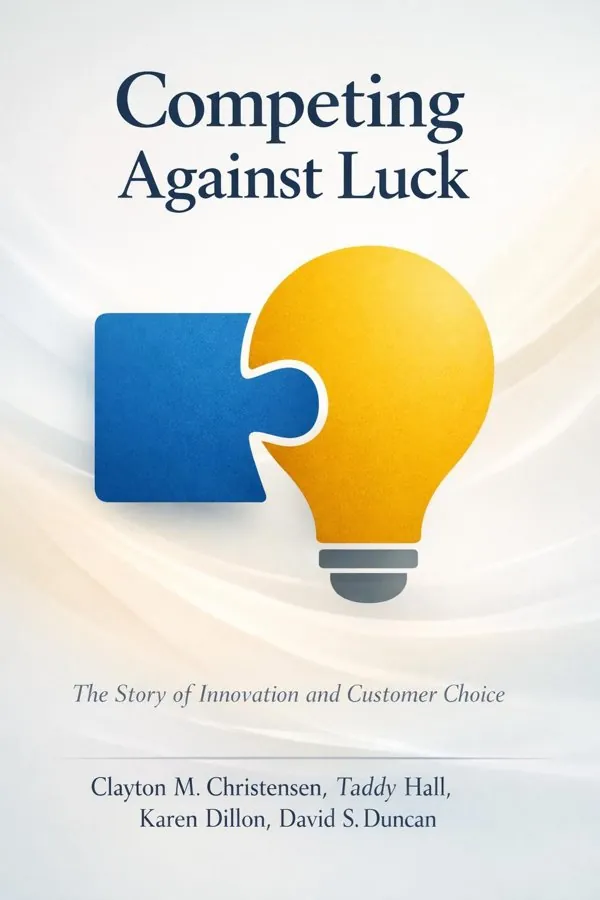
Competing Against Luck: The Story of Innovation and Customer Choice
by Clayton M. Christensen, Taddy Hall, Karen Dillon, David S. Duncan
In this influential work, Clayton M. Christensen and his coauthors introduce the 'Jobs to Be Done' theory, explaining how successful innovation stems from understanding the real jobs customers are trying to accomplish. The book provides a framework for predicting innovation success by focusing on customer motivations rather than demographics or product features.
Key Takeaways
- 1The 'Jobs to Be Done' Theory: Understanding Customer Behavior — At the heart of this work lies the simple yet profound observation that customers don’t buy products—they hire them. Thi…
- 2Why Traditional Segmentation Fails: Rethinking Markets and Customers — Businesses have long relied on segmentation models that group customers by age, income, gender, or region. These categor…
- 3Discovering Customer Jobs: Seeing the Functional, Emotional, and Social Dimensions
 10 min read
Competing Against Time: How Time-Based Competition Is Reshaping Global Markets
by George Stalk Jr. and Thomas M. Hout
This influential business book explores how leading companies gain competitive advantage by managing time as a strategic resource. Stalk and Hout argue that speed in product development, production, and delivery can redefine market leadership. Drawing on case studies from global firms, the authors demonstrate how time-based competition transforms operations, customer responsiveness, and profitability.
Key Takeaways
- 1The Rise of Time-Based Competition — Over much of industrial history, competition has been defined by cost and quality. Companies either sought to make thing…
- 2Cycle-Time Reduction and Its Market Impact — Let’s examine why cycle time matters. Cycle time represents the total duration from concept to market delivery. In tradi…
- 3Organizational Barriers and Structural Transformation
 10 min read
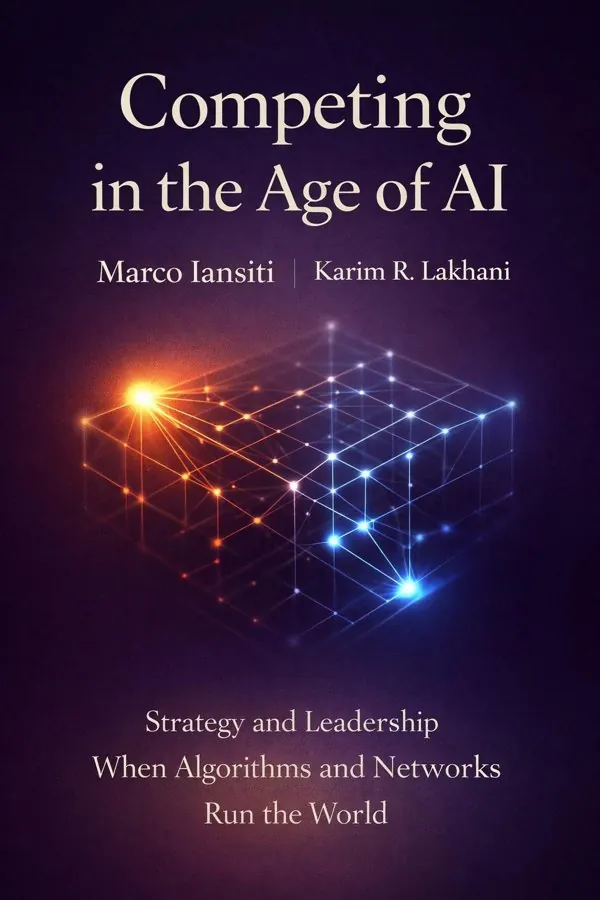
Competing in the Age of AI: Strategy and Leadership When Algorithms and Networks Run the World
by Marco Iansiti, Karim R. Lakhani
This book explores how artificial intelligence and digital networks are transforming the foundations of business strategy and leadership. Marco Iansiti and Karim R. Lakhani analyze how data-driven and software-centric models redefine scale, scope, and learning, enabling organizations to compete in unprecedented ways. Drawing on examples from leading firms, they show how AI reshapes operations, innovation, and value creation across industries.
Key Takeaways
- 1The Digital Operating Model — When we first examined the operations of AI-driven companies, one feature stood out: they run on digital operating model…
- 2The Shift from Traditional Firms to AI-Driven Firms — Most businesses still think of themselves in industrial terms: goods flow through supply chains, people make decisions, …
- 3Core Capabilities of AI Firms
 10 min read
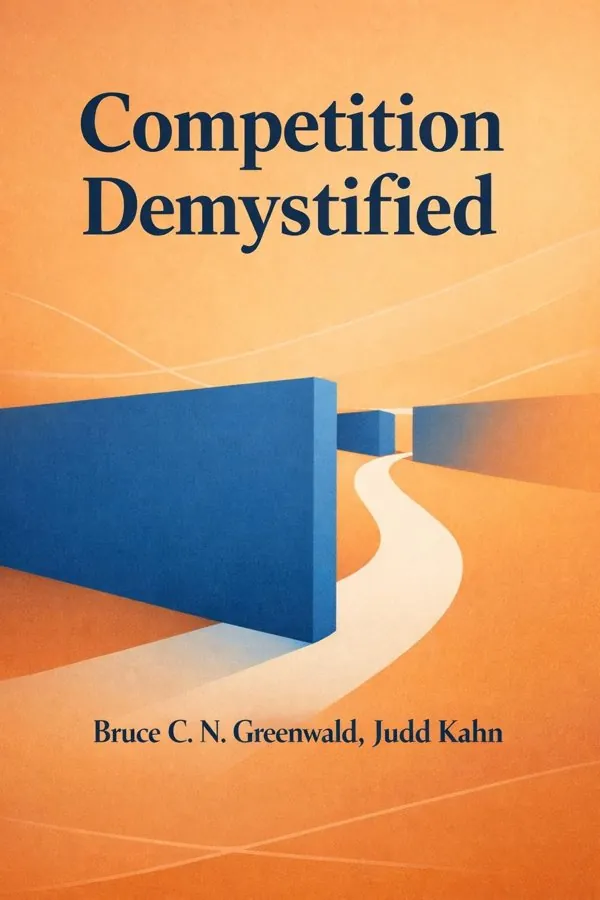
Competition Demystified: A Radically Simplified Approach to Business Strategy
by Bruce C. N. Greenwald, Judd Kahn
Competition Demystified presents a simplified framework for understanding business strategy and competitive advantage. Bruce Greenwald and Judd Kahn challenge Michael Porter's complex models by focusing on barriers to entry as the central determinant of competition. The book provides practical tools for analyzing industries and developing strategies based on real-world competitive dynamics.
Key Takeaways
- 1Defining Competition — The business world loves the language of rivalry—the race, the battle, the fight. Yet beneath this drama lies a simpler …
- 2Barriers to Entry — Barriers to entry come in various forms, but they share one effect: they make imitation costly or slow. The most familia…
- 3The Role of Competitive Advantage
 10 min read
Competitive Advantage: Creating and Sustaining Superior Performance
by Michael E. Porter
Why do some companies consistently outperform rivals even when they face the same customers, technologies, and industry pressures? In Competitive Advantage, Michael E. Porter offers one of the most influential answers ever written. Expanding beyond his earlier work on industry structure and competitive positioning, Porter shows that superior performance comes from the specific activities a firm performs, how those activities fit together, and whether they allow the company to deliver lower cost or greater uniqueness than competitors. The book’s most famous contribution—the value chain—gives managers a practical way to break the business into strategically meaningful parts and see where advantage is created, eroded, or defended. Rather than treating strategy as a slogan, Porter turns it into disciplined analysis: of cost behavior, differentiation drivers, technology choices, buyer value, interrelationships across business units, and the challenge of sustaining success over time. For executives, founders, consultants, investors, and students, this book remains essential because it bridges economic theory and managerial action. Porter’s authority as a Harvard Business School professor and pioneering strategy thinker makes this a foundational guide to how winning firms actually work.
Key Takeaways
- 1Foundations of Competitive Advantage — Superior performance rarely comes from doing one thing well; it comes from building an economic system that rivals canno…
- 2Cost Leadership Is System Design — Low cost is not the result of frugality alone; it is the product of strategic architecture. Porter emphasizes that cost …
- 3Differentiation Creates Real Buyer Value — Customers do not pay premiums for difference alone; they pay for differences that matter to them. Porter’s treatment of …
 10 min read
Competitive Strategy: Techniques for Analyzing Industries and Competitors
by Michael E. Porter
Competitive Strategy: Techniques for Analyzing Industries and Competitors is a foundational work in business strategy that introduced Porter's Five Forces framework. It provides systematic methods for analyzing industry structure, understanding competitive forces, and developing strategies for achieving sustainable advantage. The book has become a cornerstone of modern strategic management and is widely used in academia and business practice.
Key Takeaways
- 1Understanding Industry Structure: The Foundation of Competitive Analysis — Every firm competes within an industry, and each industry operates within a distinct economic structure. That structure—…
- 2The Five Forces: Unraveling the Logic of Competition — The Five Forces framework is often summarized as a simple checklist, but at its heart, it is a theory of competition—a w…
- 3Generic Strategies: Paths to Competitive Advantage
 10 min read
Corporate Strategy and Risk Management (Chinese Edition)
by Chinese Institute of Certified Public Accountants
Corporate Strategy and Risk Management (Chinese Edition) is more than an exam preparation text: it is a structured guide to how organizations define direction, compete effectively, and survive uncertainty. Compiled by the Chinese Institute of Certified Public Accountants (CICPA), the book presents a disciplined framework for understanding strategic management from environmental analysis and strategic choice to execution, control, and enterprise risk management. What makes it especially valuable is its combination of rigorous theory with practical business realities, including Chinese corporate cases and decision scenarios that bring abstract ideas to life. For CPA candidates, managers, and professionals in finance, audit, and internal control, the book explains how strategy and risk are inseparable: every strategic choice creates exposure, and every risk response shapes future options. Its authority comes from CICPA’s central role in China’s accounting profession, examination system, and professional standards. As a result, the book does not treat strategy as inspirational rhetoric. It treats strategy as a disciplined managerial process, grounded in analysis, aligned with governance, and strengthened through systematic risk management.
Key Takeaways
- 1Understanding Strategy and Its Evolution — A company rarely fails because it lacks activity; it fails because its activity lacks direction. One of the book’s found…
- 2From Mission to Strategic Choice — If a company does not know what it stands for, it will eventually not know what to choose. The book shows that mission, …
- 3Analyzing the External Competitive Environment — Markets punish assumptions that leaders never test. A central contribution of the book is its systematic approach to ext…
Want the full summary?
Get instant access to this book summary and 100K+ more with Fizz Moment.
Get Free SummaryAvailable on App Store • Free to download
About This List
The transition from individual contributor to manager is one of the hardest in any career. These books give you the playbook for leading teams, giving feedback, and earning respect.
This list features 15 carefully selected books. With FizzRead, you can read AI-powered summaries of each book in just 15 minutes. Get the key takeaways and start applying the insights immediately.
Ready to start reading?
Get instant access to all 15 book summaries and 100K+ more with FizzRead.