
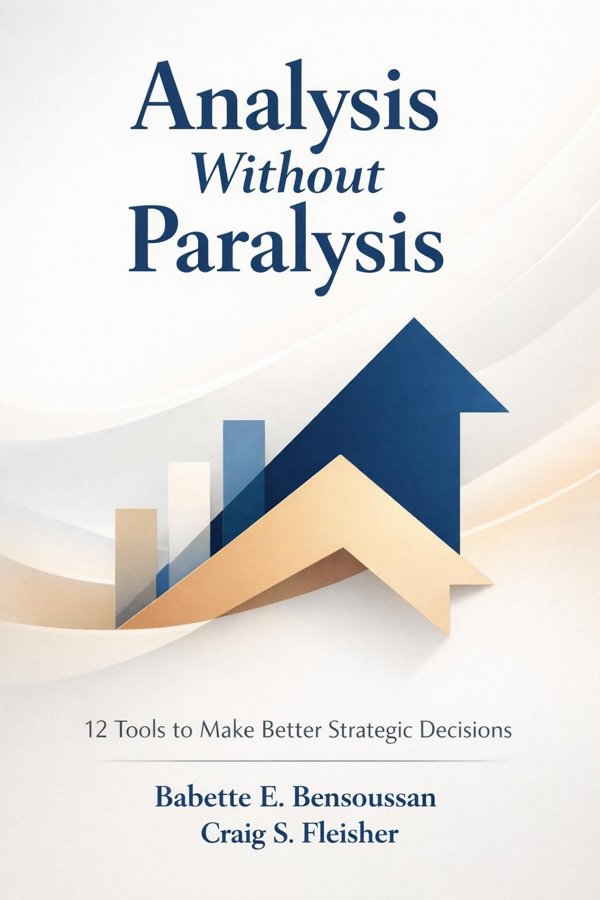
Analysis Without Paralysis: 12 Tools to Make Better Strategic Decisions: Summary & Key Insights
by Babette E. Bensoussan, Craig S. Fleisher
 10 min13 chaptersAudio available
What Is Analysis Without Paralysis: 12 Tools to Make Better Strategic Decisions About?
Analysis Without Paralysis: 12 Tools to Make Better Strategic Decisions by Babette E. Bensoussan, Craig S. Fleisher is a strategy book spanning 13 pages. Analysis Without Paralysis es una guía práctica que presenta doce herramientas analíticas esenciales para la toma de decisiones estratégicas. Los autores explican cómo aplicar cada herramienta de manera efectiva para mejorar la comprensión del entorno empresarial, la competencia y las oportunidades de mercado. El libro está diseñado para ejecutivos, consultores y estudiantes que buscan claridad y rigor en el análisis estratégico.
This FizzRead summary covers all 13 key chapters of Analysis Without Paralysis: 12 Tools to Make Better Strategic Decisions in approximately 10 minutes, distilling the most important ideas, arguments, and takeaways from Babette E. Bensoussan, Craig S. Fleisher's work. Also available as an audio summary and Key Quotes Podcast.
Analysis Without Paralysis: 12 Tools to Make Better Strategic Decisions
Analysis Without Paralysis es una guía práctica que presenta doce herramientas analíticas esenciales para la toma de decisiones estratégicas. Los autores explican cómo aplicar cada herramienta de manera efectiva para mejorar la comprensión del entorno empresarial, la competencia y las oportunidades de mercado. El libro está diseñado para ejecutivos, consultores y estudiantes que buscan claridad y rigor en el análisis estratégico.
Who Should Read Analysis Without Paralysis: 12 Tools to Make Better Strategic Decisions?
This book is perfect for anyone interested in strategy and looking to gain actionable insights in a short read. Whether you're a student, professional, or lifelong learner, the key ideas from Analysis Without Paralysis: 12 Tools to Make Better Strategic Decisions by Babette E. Bensoussan, Craig S. Fleisher will help you think differently.
- ✓Readers who enjoy strategy and want practical takeaways
- ✓Professionals looking to apply new ideas to their work and life
- ✓Anyone who wants the core insights of Analysis Without Paralysis: 12 Tools to Make Better Strategic Decisions in just 10 minutes
Want the full summary?
Get instant access to this book summary and 100K+ more with Fizz Moment.
Get Free SummaryAvailable on App Store • Free to download
Key Chapters
Before diving into specific tools, we must clarify what analysis truly means. In strategic decision-making, confusion often arises from misunderstanding three related but distinct concepts: data, information, and intelligence. Data are raw facts—numbers, transcripts, or market figures—that have no meaning until processed. Information is data given context; it begins to tell a story. Intelligence, however, is insight derived from analysis: it answers the question 'So what?' and guides decision-making.
In our experience consulting with organizations, the majority spend far too much time collecting and reporting data while doing little to extract intelligence. The most effective analysts are not those who gather the most, but those who discern the most significant patterns within what they gather. Analytical thinking thus becomes the art of turning the abundance of data into actionable understanding.
This requires discipline: defining the decision problem clearly before analysis begins, establishing hypotheses, and choosing appropriate tools intentionally, not reflexively. When analysts skip this step and merely 'run models', they often find themselves lost in complexity. A clear problem definition, by contrast, acts like a compass—it tells you what data is relevant and what analyses will move you closer to insight. Through disciplined thinking, analysis shifts from a reactive search for information to a proactive quest for understanding.
As we proceed through the tools, this distinction—between noise and intelligence—should remain your mental anchor.
SWOT analysis remains one of the most accessible frameworks for strategic assessment, but its power depends entirely on how thoughtfully it is applied. In our approach, it serves as a structured conversation—the first synthesis of internal and external realities. Internal strengths and weaknesses reflect your current capabilities and limitations; external opportunities and threats reveal forces shaping your environment.
Too often, organizations conduct SWOT exercises superficially, generating long lists without priorities or interconnections. The essence of effective SWOT lies in integration: the intersection where internal strengths meet external opportunities defines strategic leverage, while the pairing of weaknesses and threats signals potential vulnerabilities. For instance, a company with strong R&D but weak commercialization must recognize that merely having innovation capacity does not equate to market success; the external environment may favor fast-followers, not pioneers.
In practice, I advise teams to construct their SWOTs collaboratively but evaluatively, grounding each entry in data and finishing with a prioritization of issues that matter most for competitiveness. SWOT is thus not an end but a platform—a springboard into more specialized analyses such as PEST or Porter’s Five Forces. Its value lies not in categorization but in integration: helping decision-makers see the holistic balance between internal realities and external dynamics.
+ 11 more chapters — available in the FizzRead app
All Chapters in Analysis Without Paralysis: 12 Tools to Make Better Strategic Decisions
About the Authors
Babette E. Bensoussan es consultora en inteligencia competitiva y estrategia empresarial. Craig S. Fleisher es profesor y experto en análisis estratégico y gestión de inteligencia. Ambos son reconocidos internacionalmente por su trabajo en el campo de la inteligencia competitiva.
Get This Summary in Your Preferred Format
Read or listen to the Analysis Without Paralysis: 12 Tools to Make Better Strategic Decisions summary by Babette E. Bensoussan, Craig S. Fleisher anytime, anywhere. FizzRead offers multiple formats so you can learn on your terms — all free.
Available formats: App · Audio · PDF · EPUB — All included free with FizzRead
Download Analysis Without Paralysis: 12 Tools to Make Better Strategic Decisions PDF and EPUB Summary
Key Quotes from Analysis Without Paralysis: 12 Tools to Make Better Strategic Decisions
“Before diving into specific tools, we must clarify what analysis truly means.”
“SWOT analysis remains one of the most accessible frameworks for strategic assessment, but its power depends entirely on how thoughtfully it is applied.”
Frequently Asked Questions about Analysis Without Paralysis: 12 Tools to Make Better Strategic Decisions
Analysis Without Paralysis: 12 Tools to Make Better Strategic Decisions by Babette E. Bensoussan, Craig S. Fleisher is a strategy book that explores key ideas across 13 chapters. Analysis Without Paralysis es una guía práctica que presenta doce herramientas analíticas esenciales para la toma de decisiones estratégicas. Los autores explican cómo aplicar cada herramienta de manera efectiva para mejorar la comprensión del entorno empresarial, la competencia y las oportunidades de mercado. El libro está diseñado para ejecutivos, consultores y estudiantes que buscan claridad y rigor en el análisis estratégico.
You Might Also Like

Mastery
Robert Greene
10 min
Cut Costs Not Corners: A Practical Guide to Staying Competitive and Improving Profits
Colin Barrow
10 min
Good Strategy/Bad Strategy: The Difference and Why It Matters
Richard P. Rumelt
10 min
On Grand Strategy
John Lewis Gaddis
10 min
The Six Disciplines of Digital Transformation
George Westerman
10 min
7 Powers: The Foundations of Business Strategy
Hamilton Helmer
10 minFeatured In
Browse by Category
Ready to read Analysis Without Paralysis: 12 Tools to Make Better Strategic Decisions?
Get the full summary and 100K+ more books with Fizz Moment.