
Books About Relationships — Build Deeper Connections
Relationships are the single biggest factor in happiness. These books offer research-backed insights into love, communication, and building lasting bonds.
 10 min read
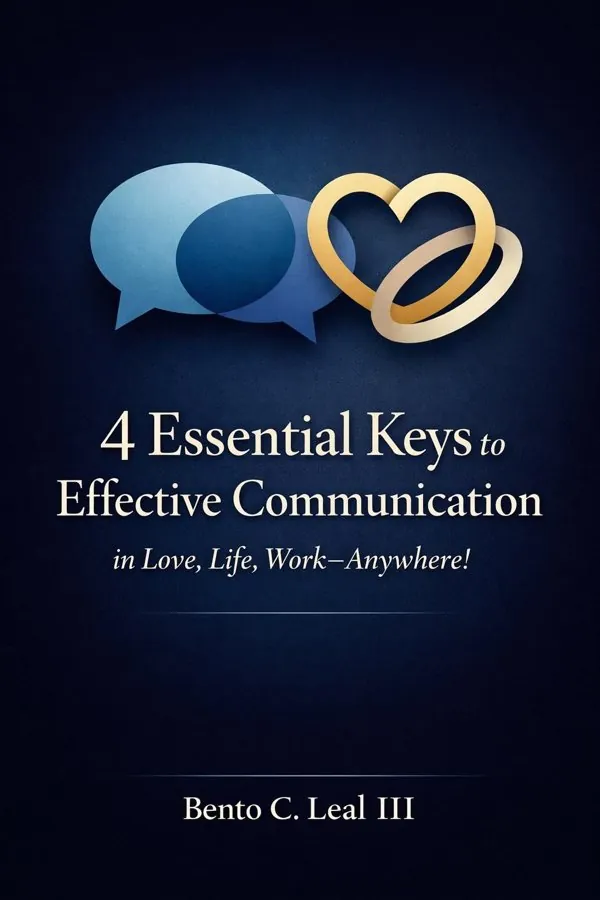
4 Essential Keys to Effective Communication in Love, Life, Work--Anywhere!: Including the 12-Day Communication Challenge!
by Bento C. Leal III
This book provides practical tools and insights to help readers improve their communication skills in all areas of life—personal, professional, and social. It introduces four essential keys to effective communication, focusing on empathy, listening, understanding, and connection. The author also includes a 12-day communication challenge designed to help readers practice and internalize these principles for lasting improvement.
Key Takeaways
- 1Key 1 – Empathic Listening — Empathic listening is the foundation of all effective communication. Most people think they’re good listeners, but too o…
- 2Key 2 – Empathic Speaking — Once we’ve learned to listen empathically, the next step is learning to speak empathically. Communication is a two-way s…
- 3Key 3 – Managing Emotions
 10 min read
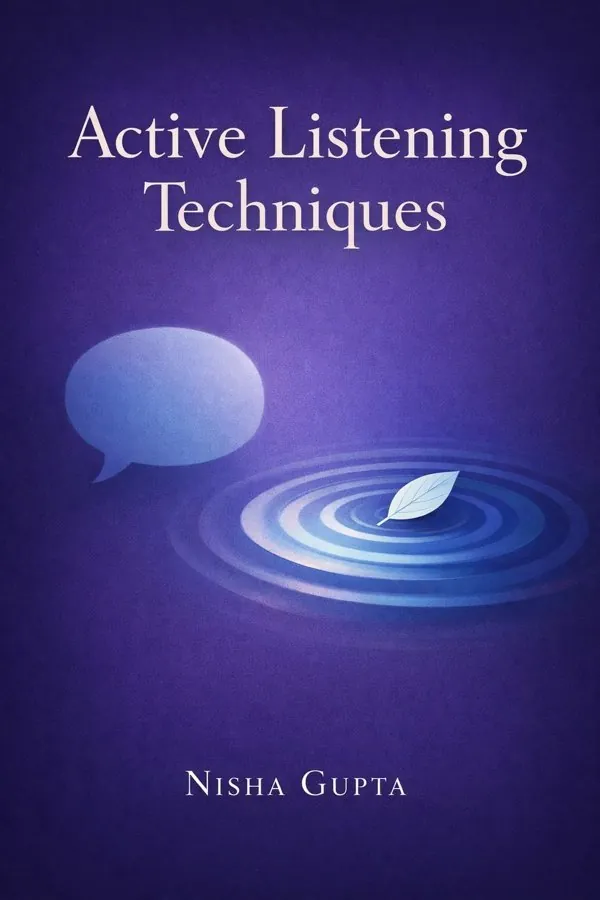
Active Listening Techniques: 30 Practical Tools to Hone Your Communication Skills
by Nisha Gupta
Active Listening Techniques offers practical exercises and strategies to improve communication, empathy, and understanding in personal and professional settings. The book emphasizes mindfulness, nonverbal cues, and emotional intelligence to help readers become more effective listeners and communicators.
Key Takeaways
- 1Understanding the Foundations of Active Listening — Before we can listen well, we must recognize what keeps us from doing so. In my years as a psychologist and communicatio…
- 2Mindfulness, Body Language, and Nonverbal Understanding — Much of what is communicated never passes through words. When I teach teams or couples about active listening, I often h…
- 3Clarifying, Paraphrasing, and Building Trust
 10 min read
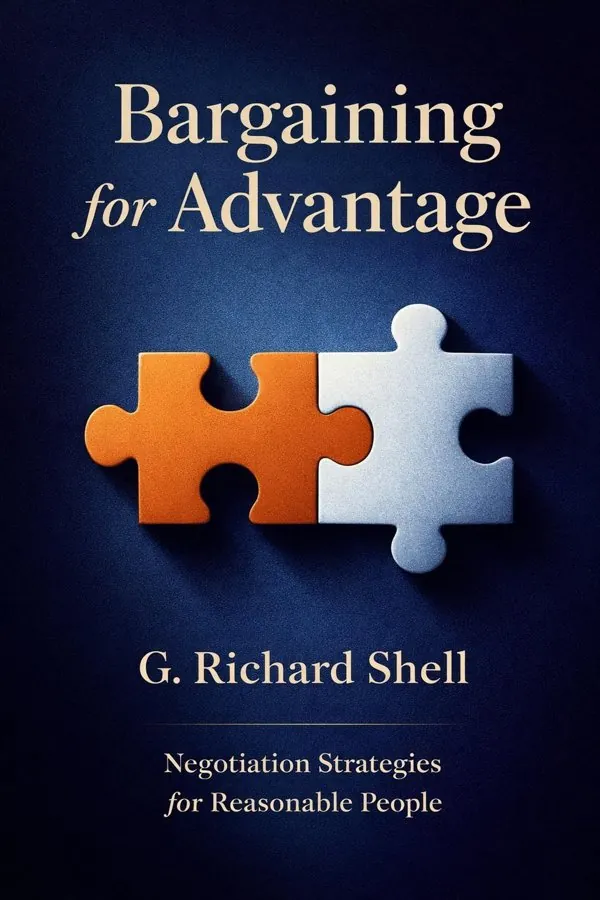
Bargaining for Advantage: Negotiation Strategies for Reasonable People
by G. Richard Shell
Bargaining for Advantage is a comprehensive guide to negotiation that blends practical advice with insights from psychology and economics. G. Richard Shell presents a framework for understanding negotiation styles, strategies, and ethics, helping readers develop confidence and skill in both professional and personal negotiations. The book emphasizes preparation, understanding interests, and building relationships to achieve mutually beneficial outcomes.
Key Takeaways
- 1The Six Foundations of Effective Negotiation — At the heart of every negotiation lies a set of universal forces—drivers that shape outcomes regardless of culture, cont…
- 2Personal Bargaining Style and Self-Awareness — Your personality is your first negotiation tool. Every word, gesture, and tone emerges from it. Most of us carry a prefe…
- 3Goals, Expectations, and the Psychology of Aspiration
 10 min read
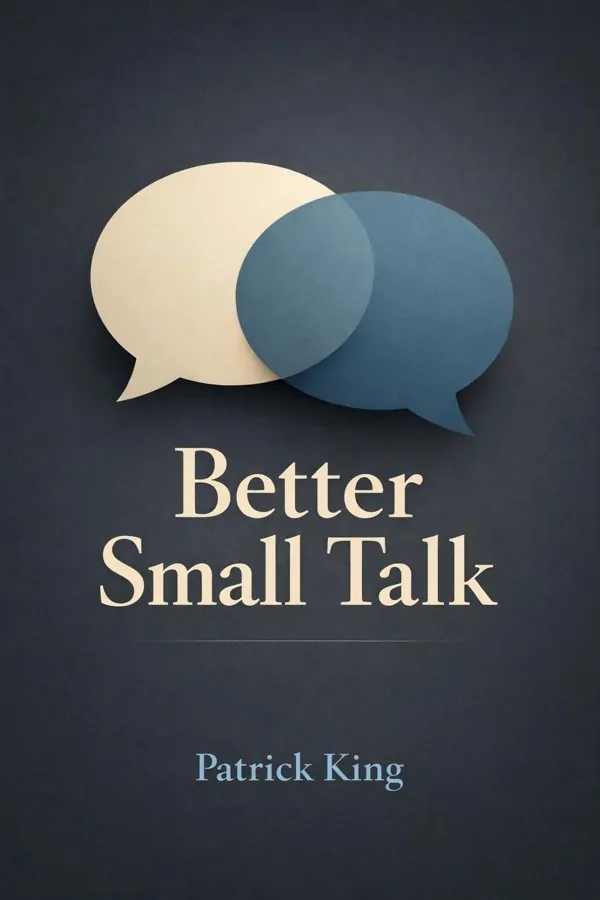
Better Small Talk: Talk to Anyone, Avoid Awkwardness, Generate Deep Conversations, and Make Real Friends
by Patrick King
Better Small Talk is a practical guide to improving conversational skills and building meaningful connections. Patrick King, a social interaction specialist, offers actionable techniques to overcome social anxiety, start engaging conversations, and maintain rapport in any situation. The book provides strategies for active listening, empathy, and confidence in communication, helping readers transform small talk into genuine dialogue.
Key Takeaways
- 1The Myths and Fears Surrounding Small Talk — People often assume that small talk is superficial, a waste of energy compared to deep conversation. But this belief mis…
- 2Adopting the Right Mindset: Curiosity Over Performance — Before mastering techniques, you must cultivate the right mental framework. Conversation thrives on genuine curiosity. C…
- 3Starting Conversations with Confidence and Ease
 10 min read
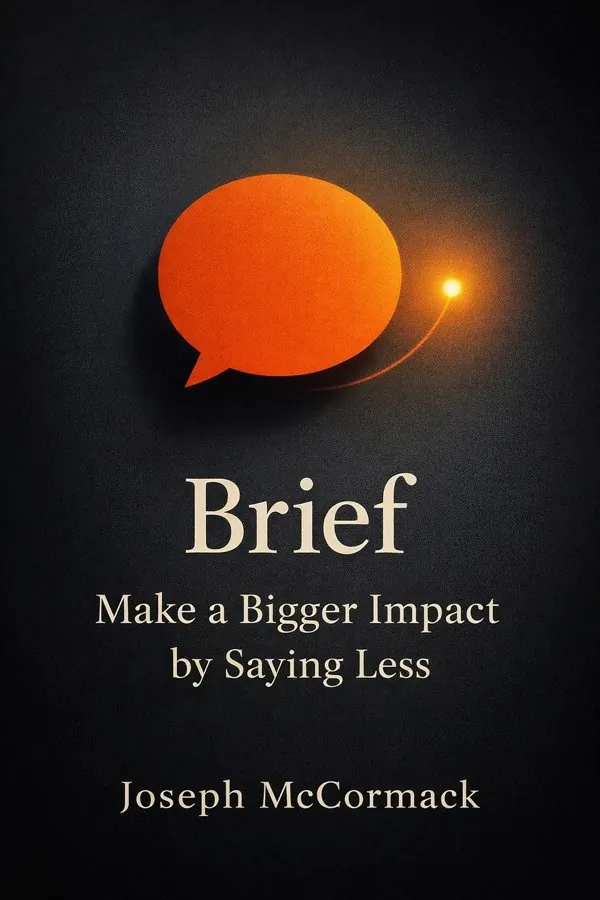
Brief: Make a Bigger Impact by Saying Less
by Joseph McCormack
In Brief: Make a Bigger Impact by Saying Less, Joseph McCormack argues that one of the most valuable professional skills today is not speaking more, but communicating with precision. In a world crowded with emails, presentations, meetings, reports, and endless digital interruptions, people are overwhelmed by information and starved for clarity. McCormack shows that brevity is not about being simplistic or cutting important details. It is about delivering the right message, in the right amount, at the right time, so people can quickly understand and act. Drawing on his experience as a communication strategist and founder of The BRIEF Lab, McCormack explains why long-winded communication wastes attention, reduces impact, and often hides weak thinking. He offers practical frameworks for preparing ideas, structuring messages, understanding audiences, and speaking with discipline in high-stakes situations. The book is especially useful for leaders, managers, sales professionals, consultants, and anyone who needs to persuade others under time pressure. Its central promise is compelling: when you learn to say less with greater intention, your message becomes more memorable, more persuasive, and far more effective.
Key Takeaways
- 1Brevity Is Clarity, Not Shallowness — Most people assume that being brief means leaving out substance. McCormack challenges that assumption from the start. Re…
- 2Information Overload Destroys Communication Impact — The modern workplace does not suffer from a lack of communication. It suffers from too much of the wrong kind. McCormack…
- 3Preparation Is the Price of Brevity — People often speak too long because they have not thought deeply enough beforehand. McCormack emphasizes that brevity re…
 10 min read
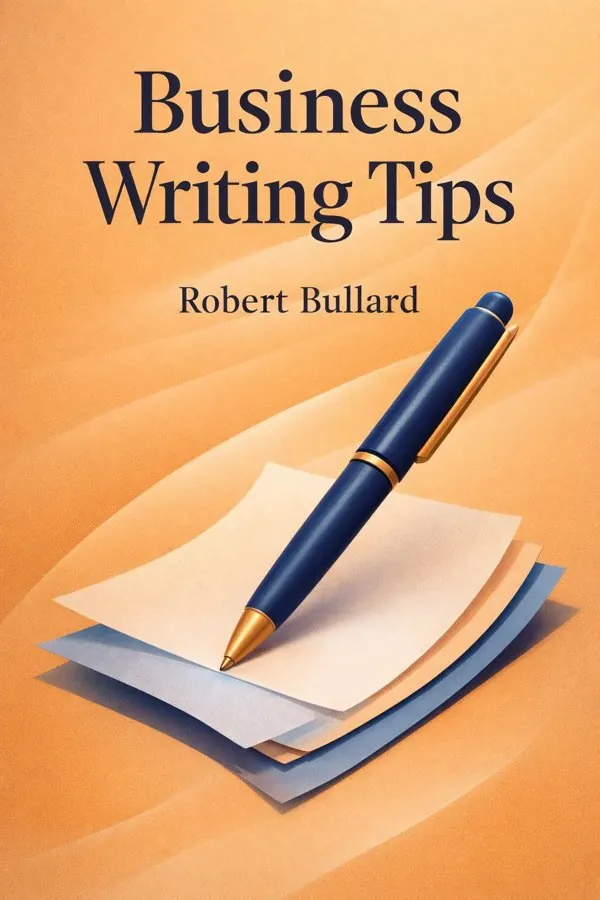
Business Writing Tips
by Robert Bullard
Business Writing Tips is a practical guide to one of the most underrated professional skills: the ability to express ideas clearly, confidently, and persuasively in writing. Robert Bullard shows that business writing is not just about grammar or sounding professional. It is about getting results—earning trust, reducing confusion, speeding up decisions, and influencing people without wasting their time. Covering everyday workplace formats such as emails, reports, proposals, and promotional materials, the book explains how strong writing supports both efficiency and credibility. What makes this guide especially useful is its direct, applied approach. Rather than offering abstract rules, Bullard focuses on the real problems professionals face: messages that are too vague, reports that ramble, emails that create misunderstandings, and documents that fail to move readers to action. He breaks effective writing down into core principles such as clarity, structure, tone, persuasion, and editing, then shows how each can be improved immediately. As a business communication consultant and trainer, Bullard writes with practical authority. His advice is grounded in workplace realities, making this a valuable resource for anyone who wants their writing to sound sharper, smarter, and more effective.
Key Takeaways
- 1The Foundations of Professional Communication — One of the fastest ways to lose influence at work is to make people work too hard to understand you. That is the foundat…
- 2Clarity, Conciseness, and Structure Matter Most — Most weak business writing does not fail because the writer lacks ideas; it fails because the ideas are buried. Bullard …
- 3Tone Should Support Your Purpose — The same message can open doors or create resistance depending on its tone. Bullard shows that tone in business writing …
 10 min read
Can We Talk?: Seven Principles for Managing Difficult Conversations at Work
by Roberta Chinsky Matuson
Difficult conversations are not rare interruptions at work; they are part of the job. Whether you need to address poor performance, set boundaries, resolve a misunderstanding, discuss compensation, or deliver unwelcome news, the quality of that conversation often determines the quality of the relationship that follows. In Can We Talk?, leadership consultant Roberta Chinsky Matuson offers a practical framework for handling these moments with more clarity, confidence, and composure. Rather than treating hard conversations as dramatic, one-off events, she shows how they can become structured, respectful exchanges that protect trust while still addressing real problems. What makes the book especially useful is its managerial realism. Matuson understands that workplace conversations are shaped by power dynamics, fear, timing, personality, and organizational culture. Drawing on her experience advising leaders and companies on talent, retention, and communication, she outlines seven principles that help readers prepare better, listen more effectively, manage emotions, and follow through after the talk is over. The result is a practical guide for anyone who wants to stop avoiding conflict and start leading conversations that produce accountability, understanding, and healthier workplaces.
Key Takeaways
- 1Create Conditions Before Words Are Spoken — Most difficult conversations are won or lost before the first sentence is ever spoken. Matuson emphasizes that the envir…
- 2Clarify Your Intent Before You Speak — When people enter a difficult conversation without a clear purpose, they often end up saying more than they mean and acc…
- 3Listen to Understand, Not Defend — One of the biggest mistakes in difficult conversations is assuming that listening means waiting for your turn to respond…
 10 min read
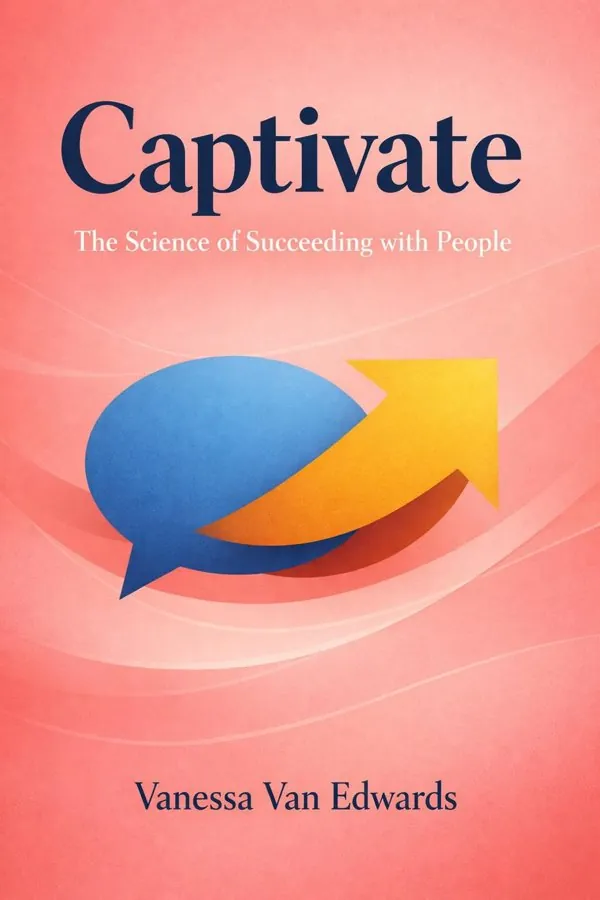
Captivate: The Science of Succeeding with People
by Vanessa Van Edwards
Captivate: The Science of Succeeding with People es un libro de no ficción que explora cómo comprender y dominar las dinámicas sociales mediante principios científicos. Vanessa Van Edwards, investigadora de comportamiento, ofrece estrategias prácticas para mejorar la comunicación, generar confianza y aumentar la influencia personal en contextos profesionales y sociales. A través de estudios de casos y experimentos, el libro enseña cómo leer el lenguaje corporal, iniciar conversaciones efectivas y construir relaciones auténticas.
Key Takeaways
- 1The First Impression: The Art and Science of the First Five Seconds — Most people decide if they like or trust you within the first few seconds of meeting you. Research from Princeton shows …
- 2Body Language and Nonverbal Mastery: Communicating Beyond Words — Words are only a small part of how people read us — research suggests that up to 60–90% of communication is nonverbal. E…
- 3Conversation Dynamics: The Science of Connection through Words
 10 min read
Communicate With Mastery: Speak With Conviction and Write for Impact
by J. D. Schramm
Communicate With Mastery is a practical guide that helps professionals and leaders develop clear, confident, and persuasive communication skills. Drawing on years of teaching at Stanford Graduate School of Business, J. D. Schramm provides actionable frameworks for crafting messages that resonate, structuring presentations effectively, and writing with clarity and purpose. The book emphasizes authenticity, empathy, and storytelling as essential tools for impactful communication in both personal and professional contexts.
Key Takeaways
- 1The Foundations of Effective Communication: Clarity, Authenticity, and Empathy — Effective communication begins with seeing through the noise—to arrive at clarity. Clarity demands that we define our me…
- 2Knowing Your Audience: The Heart of Message Alignment — Before words ever leave your mouth or keyboard, ask yourself: who am I talking to, and what do they need from me right n…
- 3Frameworks for Structuring Your Spoken Communication
 10 min read
Communicate in a Crisis: Practical Strategies for Effective Crisis Communication
by Kate Hartley
Communicate in a Crisis explores how organizations can effectively manage communication during times of crisis. Drawing on real-world examples, Kate Hartley provides insights into how trust, empathy, and transparency can help brands navigate public scrutiny and maintain credibility. The book offers practical frameworks for crisis preparedness, stakeholder engagement, and reputation management in the digital age.
Key Takeaways
- 1The Nature of Crisis in the Digital Age — A crisis, in my experience, is not defined solely by events but by perception. It begins the moment people lose confiden…
- 2Trust: How It Changes and Why It Matters — Trust used to be a vertical construct: institutions possessed authority, and people deferred to it. Today, that authorit…
- 3Understanding Human Behavior in a Crisis
 10 min read
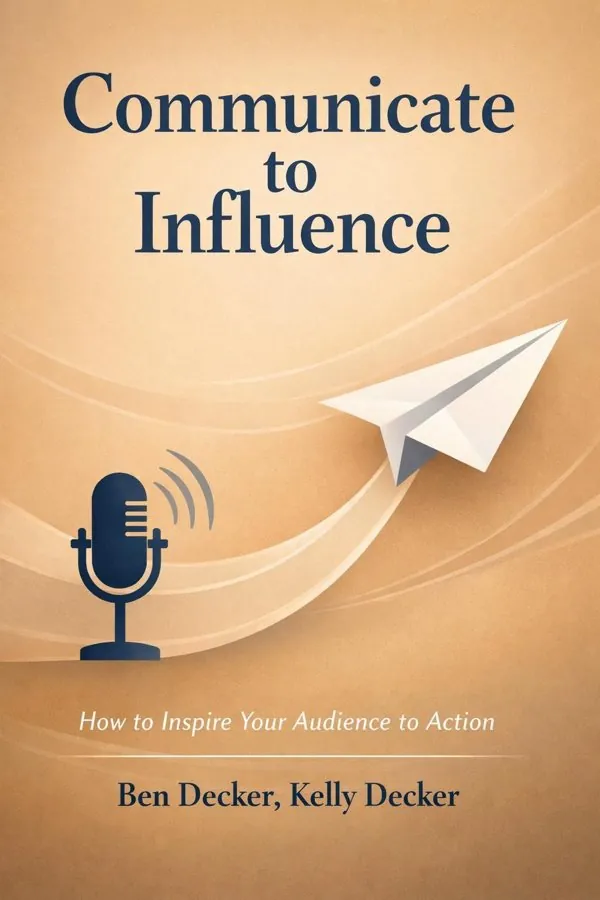
Communicate to Influence: How to Inspire Your Audience to Action
by Ben Decker, Kelly Decker
Communicate to Influence enseña el método Decker, un marco probado para transformar la comunicación de información en comunicación de influencia. Los autores, Ben y Kelly Decker, ofrecen estrategias prácticas para inspirar a las audiencias, mejorar la presencia ejecutiva y lograr un impacto positivo en cualquier entorno profesional.
Key Takeaways
- 1The Communication Gap: Why Information Isn’t Enough — Let’s begin where most professionals go wrong: with the assumption that clarity is the same as influence. In truth, most…
- 2The Behavioral Communication Model: How Influence Takes Shape — Behavior is at the heart of how people perceive you. In the Decker Method, we teach the Behavioral Communication Model—a…
- 3Creating a Listener-Centered Message
 10 min read
Connect: Building Exceptional Relationships with Family, Friends, and Colleagues
by David L. Bradford, Carole Robin
Connect is a practical guide to developing deeper, more meaningful relationships in both personal and professional contexts. Drawing on decades of teaching at Stanford’s Graduate School of Business, the authors present a framework for building trust, openness, and authenticity that leads to stronger connections and more effective collaboration.
Key Takeaways
- 1Understanding the Continuum of Relationships—From Superficial to Exceptional—and the Role of Authenticity — Every relationship exists along a continuum. At one end, we find contact that is polite, functional, and shallow—convers…
- 2The Concept of Openness: Balancing Disclosure and Feedback to Build Trust — Openness, at its core, has two sides: disclosure and feedback. Disclosure is the act of telling others what is going on …
- 3Exploring Vulnerability as a Strength in Deepening Interpersonal Bonds
 10 min read
Conscious Uncoupling: 5 Steps to Living Happily Even After
by Katherine Woodward Thomas
Conscious Uncoupling ofrece un enfoque compasivo y transformador para superar el dolor de una ruptura amorosa. A través de cinco pasos prácticos, Katherine Woodward Thomas guía a los lectores para liberarse del resentimiento, sanar las heridas emocionales y crear una nueva vida llena de bienestar y crecimiento personal. El método promueve la responsabilidad emocional y la posibilidad de mantener relaciones sanas incluso después de una separación.
Key Takeaways
- 1Step 1 – Find Emotional Freedom — The first step is all about reclaiming your emotional space in the midst of turmoil. When relationships end, the waves o…
- 2Step 2 – Reclaim Your Power and Your Life — Once emotion settles enough for reflection, the second step invites you to reclaim authorship of your story. It is easy,…
- 3Step 3 – Break the Pattern, Heal Your Heart
 10 min read
Conversation Casanova: How to Effortlessly Start Conversations and Flirt Like a Pro
by Dave Perotta
Conversation Casanova is a practical guide that teaches men how to confidently start conversations, build attraction, and improve their social and dating skills. Through actionable advice and real-world examples, Dave Perotta helps readers overcome anxiety, develop charisma, and communicate effectively in romantic and social settings.
Key Takeaways
- 1Understanding Social Anxiety — Almost every guy who struggles with conversation starts from the same painful place—a loop of self-doubt. You see someon…
- 2Mindset and Confidence — The secret to charisma is not technique—it’s mindset. Before you can become magnetic to others, you must be aligned with…
- 3Starting Conversations
 10 min read
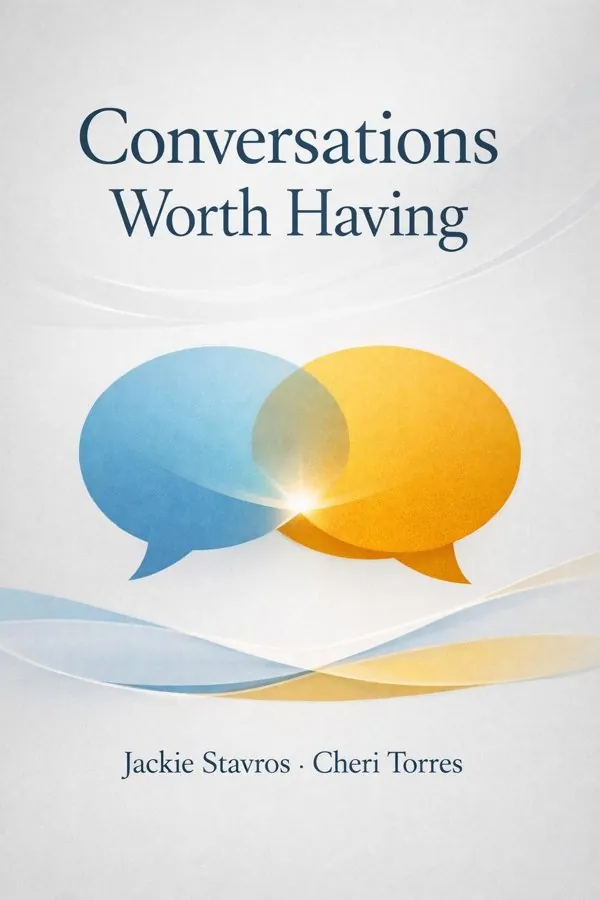
Conversations Worth Having: Using Appreciative Inquiry to Fuel Productive and Meaningful Engagement
by Jackie Stavros, Cheri Torres
Conversations Worth Having introduces the principles and practices of Appreciative Inquiry (AI) to help individuals and organizations create positive, productive, and meaningful dialogue. The book provides practical tools for transforming everyday interactions into opportunities for collaboration, innovation, and growth. Through real-world examples and exercises, it demonstrates how intentional conversations can build trust, engagement, and shared understanding.
Key Takeaways
- 1Appreciative Inquiry and the Power of Conversation — Appreciative Inquiry (AI) begins with a radical yet intuitive question: what if we focused not on what’s broken, but on …
- 2Productive vs. Destructive Dialogue — Every conversation carries an emotional climate — one that can nurture or poison the space between people. A destructive…
- 3Crafting Generative Questions and Framing Possibility
Want the full summary?
Get instant access to this book summary and 100K+ more with Fizz Moment.
Get Free SummaryAvailable on App Store • Free to download
About This List
Relationships are the single biggest factor in happiness. These books offer research-backed insights into love, communication, and building lasting bonds.
This list features 15 carefully selected books. With FizzRead, you can read AI-powered summaries of each book in just 15 minutes. Get the key takeaways and start applying the insights immediately.
Ready to start reading?
Get instant access to all 15 book summaries and 100K+ more with FizzRead.