
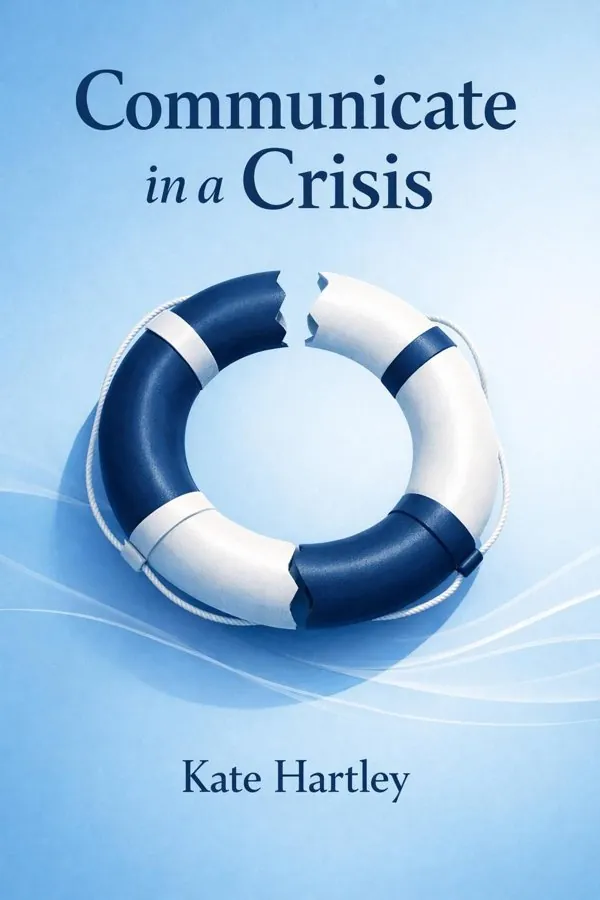
Communicate in a Crisis: Practical Strategies for Effective Crisis Communication: Summary & Key Insights
by Kate Hartley
 10 min6 chaptersAudio available
What Is Communicate in a Crisis: Practical Strategies for Effective Crisis Communication About?
Communicate in a Crisis: Practical Strategies for Effective Crisis Communication by Kate Hartley is a communication book spanning 6 pages. Communicate in a Crisis explores how organizations can effectively manage communication during times of crisis. Drawing on real-world examples, Kate Hartley provides insights into how trust, empathy, and transparency can help brands navigate public scrutiny and maintain credibility. The book offers practical frameworks for crisis preparedness, stakeholder engagement, and reputation management in the digital age.
This FizzRead summary covers all 6 key chapters of Communicate in a Crisis: Practical Strategies for Effective Crisis Communication in approximately 10 minutes, distilling the most important ideas, arguments, and takeaways from Kate Hartley's work. Also available as an audio summary and Key Quotes Podcast.
Communicate in a Crisis: Practical Strategies for Effective Crisis Communication
Communicate in a Crisis explores how organizations can effectively manage communication during times of crisis. Drawing on real-world examples, Kate Hartley provides insights into how trust, empathy, and transparency can help brands navigate public scrutiny and maintain credibility. The book offers practical frameworks for crisis preparedness, stakeholder engagement, and reputation management in the digital age.
Who Should Read Communicate in a Crisis: Practical Strategies for Effective Crisis Communication?
This book is perfect for anyone interested in communication and looking to gain actionable insights in a short read. Whether you're a student, professional, or lifelong learner, the key ideas from Communicate in a Crisis: Practical Strategies for Effective Crisis Communication by Kate Hartley will help you think differently.
- ✓Readers who enjoy communication and want practical takeaways
- ✓Professionals looking to apply new ideas to their work and life
- ✓Anyone who wants the core insights of Communicate in a Crisis: Practical Strategies for Effective Crisis Communication in just 10 minutes
Want the full summary?
Get instant access to this book summary and 100K+ more with Fizz Moment.
Get Free SummaryAvailable on App Store • Free to download
Key Chapters
A crisis, in my experience, is not defined solely by events but by perception. It begins the moment people lose confidence that an organization can act responsibly or communicate truthfully. In describing crises, I distinguish between operational and reputational ones: operational crises emerge from system breakdowns—product faults, supply chain failures, accidents. Reputational crises arise from breaches of trust—ethical misconduct, insensitive comments, poor handling of customers or staff. Often, the two intertwine, as operational failures can quickly evolve into reputational damage once the public feels deceived.
In the digital age, crises escalate swiftly because information—and misinformation—travels faster than ever. Social media platforms amplify voices, both credible and false, making rumor management one of your first challenges. The traditional model of corporate messaging, which relied on delayed statements and press briefings, is obsolete. Instead, the expectation is real-time transparency. Silence is perceived as guilt; slow acknowledgment as incompetence. The organization must learn to listen deeply and respond promptly, using accessible, human language.
I emphasize that crisis communication today is as much emotional as rational. People react before they reflect, especially when frightened or outraged. The public does not wait for proof; they respond to perceived sincerity. This means that the tone of your communication—humble, empathetic, accountable—matters more than polished phrasing. Your audience is not abstract; it is made up of individuals whose identities and values feel personally threatened by your organization’s actions. If your message doesn’t reflect that understanding, it will fail, no matter how technically accurate.
Understanding this new dynamic sets the foundation for every strategy that follows. In the chapters ahead, I help readers build systems that anticipate the emotional dimension of crisis as rigorously as the operational one.
Trust used to be a vertical construct: institutions possessed authority, and people deferred to it. Today, that authority has fragmented. Trust has become peer-driven, where validation comes from friends, influencers, and personal networks rather than official spokespeople. This shift profoundly alters communication strategy during crises—because now, you’re not addressing a group awaiting instruction, but a community that challenges and verifies your every word.
One of the reasons for this transformation lies in repeated institutional failures—political scandals, corporate corruption, data misuse—all of which taught the public to substitute institutional trust with interpersonal trust. Brands became humanized entities, judged as people rather than faceless organizations. This anthropomorphism means your organization must communicate as a person would: with empathy, emotion, and visible accountability. When trust collapses, restoration is possible only through consistent, authentic behavior over time; there is no shortcut.
In illustrating these dynamics, I share examples like how some airlines turned disasters into long-term reputational recovery by focusing on transparency and sincere apology, while others exacerbated outrage by blaming external forces or using bureaucratic language. The difference always lay in perceived empathy. Implementing empathy systematically—training leaders to express it, empowering social media teams to mirror it, embedding transparency into the company’s daily conduct—becomes not just a moral stance but a competitive advantage.
For professionals reading this, I urge reframing crisis communication as trust management. Every message either deposits or withdraws trust, and during crises, withdrawals happen automatically. You survive only if your deposits—years of goodwill and consistent honesty—outweigh the panic-induced deficit. Therefore, sustained trust-building before any crisis is the most practical form of crisis preparation.
+ 4 more chapters — available in the FizzRead app
All Chapters in Communicate in a Crisis: Practical Strategies for Effective Crisis Communication
About the Author
Kate Hartley is a communications consultant and co-founder of Polpeo, a company that helps organizations prepare for and manage crises in social media. She has over 25 years of experience in public relations and crisis management, working with global brands to improve their communication strategies.
Get This Summary in Your Preferred Format
Read or listen to the Communicate in a Crisis: Practical Strategies for Effective Crisis Communication summary by Kate Hartley anytime, anywhere. FizzRead offers multiple formats so you can learn on your terms — all free.
Available formats: App · Audio · PDF · EPUB — All included free with FizzRead
Download Communicate in a Crisis: Practical Strategies for Effective Crisis Communication PDF and EPUB Summary
Key Quotes from Communicate in a Crisis: Practical Strategies for Effective Crisis Communication
“A crisis, in my experience, is not defined solely by events but by perception.”
“Trust used to be a vertical construct: institutions possessed authority, and people deferred to it.”
Frequently Asked Questions about Communicate in a Crisis: Practical Strategies for Effective Crisis Communication
Communicate in a Crisis: Practical Strategies for Effective Crisis Communication by Kate Hartley is a communication book that explores key ideas across 6 chapters. Communicate in a Crisis explores how organizations can effectively manage communication during times of crisis. Drawing on real-world examples, Kate Hartley provides insights into how trust, empathy, and transparency can help brands navigate public scrutiny and maintain credibility. The book offers practical frameworks for crisis preparedness, stakeholder engagement, and reputation management in the digital age.
You Might Also Like

Magic Words: The Science and Secrets Behind Seven Words That Motivate, Engage, and Influence
Tim David
10 min
Talking Across The Divide: How to Communicate with People You Disagree with and Maybe Even Change the World
Justin Lee
10 min
The Exceptional Presenter: A Proven Formula to Open Up! and Own the Room
Timothy J. Koegel
10 min
4 Essential Keys to Effective Communication in Love, Life, Work--Anywhere!: Including the 12-Day Communication Challenge!
Bento C. Leal III
10 min
Active Listening Techniques: 30 Practical Tools to Hone Your Communication Skills
Nisha Gupta
10 min
Bargaining for Advantage: Negotiation Strategies for Reasonable People
G. Richard Shell
10 minFeatured In
Browse by Category
Ready to read Communicate in a Crisis: Practical Strategies for Effective Crisis Communication?
Get the full summary and 100K+ more books with Fizz Moment.