
Books About Money — Essential Reads on Wealth & Finance
Money touches every aspect of life. These books explore wealth, poverty, investing, and the psychology of money in ways that will change your relationship with finances.

 10 min read
The Most Important Thing
by Howard Marks
What separates exceptional investors from the crowd is rarely access to better information alone. More often, it is the ability to interpret that information with greater depth, discipline, and emotional balance. In The Most Important Thing, legendary investor Howard Marks distills decades of experience into a practical philosophy of intelligent investing. Rather than offering a formula for quick profits, Marks explains how thoughtful investors can improve their odds by understanding risk, market cycles, value, psychology, and the importance of judgment. At the center of the book is his famous idea of “second-level thinking,” the ability to look beyond obvious conclusions and ask what others may be missing. This book matters because it challenges many of the simplistic assumptions that dominate financial conversations. Marks argues that success does not come from certainty or prediction, but from careful reasoning, humility, and consistent decision-making under uncertainty. As co-founder of Oaktree Capital Management and one of the most respected voices in investing, Marks writes with unusual authority. His insights are valuable not only for professional investors, but for anyone who wants to make better decisions in environments shaped by risk, emotion, and imperfect information.
Key Takeaways
- 1Second-Level Thinking Beats the Obvious — Most people stop thinking at the first reasonable answer, but extraordinary results usually come from going one level de…
- 2Risk Matters More Than Return Chasing — The most dangerous investment mistake is not earning too little; it is taking risks you do not fully understand. Marks r…
- 3Value and Price Are Never the Same — An excellent asset can still be a poor investment if you pay too much for it. This distinction between value and price i…
 10 min read
21st Century Investing: Redirecting Financial Strategies to Drive Systems Change
by William Burckart, Steve Lydenberg
This book presents a new paradigm for investors seeking to address complex social, financial, and environmental challenges. Authors William Burckart and Steve Lydenberg introduce the concept of system-level investing, which encourages institutions and individuals to move beyond traditional and sustainable investing to strategies that enhance the health and stability of the broader social and environmental systems on which markets depend.
Key Takeaways
- 1Rethinking Investment Focus: Beyond Firm-Level and Short-Term Performance — For decades, mainstream investment practice has revolved around micro-level data points: earnings growth, cost efficienc…
- 2Interdependence and Systemic Risks: Why Markets Depend on Healthy Global Systems — The global financial system operates like a living organism. Markets breathe through trust, transparency, and reliabilit…
- 3From Fragmentation to Integration: A Framework for System-Level Thinking
 10 min read
23 Things They Don’t Tell You About Capitalism
by Ha-Joon Chang
What if the economic “common sense” you hear every day is not neutral truth, but a set of stories designed to make one version of capitalism look inevitable? In 23 Things They Don’t Tell You About Capitalism, Ha-Joon Chang dismantles many of the most familiar claims about markets, globalization, corporations, wealth, and government. He argues that markets are never truly free, that business success depends on institutions and public support, and that rich nations often became rich through policies they now discourage poorer nations from using. Rather than rejecting capitalism outright, Chang asks readers to see it more honestly: as a political and social system shaped by law, power, history, and choices. The book matters because it gives non-specialists a way to think critically about economic debates that affect wages, jobs, inequality, development, and democracy. Chang writes with unusual clarity, using historical examples, everyday logic, and sharp comparisons instead of technical jargon. A Cambridge economist known for challenging neoliberal orthodoxy, he brings academic authority together with a public-minded style that makes complex ideas accessible. The result is a provocative guide to understanding how capitalism actually works—and how it could work better.
Key Takeaways
- 1Markets Are Made, Not Natural — A market is never simply “there”; it is designed, protected, and limited by rules. One of Chang’s most important insight…
- 2Shareholder Value Is a Dangerous Myth — When companies focus only on maximizing shareholder returns, they often weaken the very foundations of long-term prosper…
- 3High Pay Reflects Systems, Not Merit — People in rich countries often believe their incomes mainly reflect superior individual productivity, but Chang argues t…
 10 min read
A Beginner's Guide to the Stock Market: Everything You Need to Start Making Money Today
by Matthew R. Kratter
A Beginner's Guide to the Stock Market explains the fundamentals of investing in stocks, ETFs, and other securities. Written in clear, accessible language, it introduces readers to how the stock market works, how to open a brokerage account, and how to build a simple, profitable portfolio. The book is designed for those with no prior experience, offering practical advice on avoiding common mistakes and understanding market psychology.
Key Takeaways
- 1Understanding Stocks and Ownership — To begin, it’s vital to grasp what a stock truly represents. When you buy a share of a company, you’re purchasing a smal…
- 2How the Market Works and Opening Your Brokerage Account — Once you grasp what stocks represent, the next step is understanding how to interact with the market itself. The stock m…
- 3Types of Investments: Stocks, ETFs, Mutual Funds, and Bonds
 10 min read
A Companion to Marx’s Capital
by David Harvey
This book is a detailed guide to Karl Marx’s *Capital, Volume I*, written by the renowned Marxist scholar David Harvey. It provides a chapter-by-chapter commentary that helps readers understand Marx’s critique of political economy, the logic of capital accumulation, and the dynamics of capitalist production. Harvey contextualizes Marx’s ideas within both historical and contemporary frameworks, making the text accessible to students, activists, and scholars interested in critical theory and political economy.
Key Takeaways
- 1Historical Context — When Marx wrote *Capital*, Europe was convulsed by the industrial revolution. Factories multiplied, cities grew, and wor…
- 2Commodity and Value — Marx begins *Capital* not with the factory or the worker but with the commodity — the seemingly simple unit of capitalis…
- 3Money and Circulation
 10 min read
A Dog Named Money
by Bodo Schäfer
A Dog Named Money is the English edition of the German children's book by financial coach Bodo Schäfer. First published in 1999, it tells the story of an eleven-year-old girl named Kira who finds an injured Labrador and names him Money. Through their friendship, Kira learns valuable lessons about managing money, achieving dreams, and taking financial responsibility. The book introduces children and young readers to fundamental principles of wealth building and financial independence.
Key Takeaways
- 1Kira’s Discovery and the Start of a Friendship — Kira’s adventure begins on an ordinary day, when she discovers a wounded Labrador lying beside the road. Acting out of p…
- 2Learning Goals and the Power of Dreams — Once Money begins to talk, he does something unexpected: he asks Kira about her dreams. At first, she lists vague wishes…
- 3Habits of Saving and Dividing Income
 10 min read
A Farewell to Alms: A Brief Economic History of the World
by Gregory Clark
Why did humanity remain desperately poor for thousands of years, only to experience a dramatic explosion in wealth over the last two centuries? In A Farewell to Alms, economic historian Gregory Clark tackles one of the biggest questions in social science: why some societies escaped stagnation while others did not. Rather than treating the Industrial Revolution as a mysterious miracle or a simple triumph of institutions, Clark argues that modern growth emerged from much deeper historical forces shaped over centuries. Drawing on wage records, birth and death data, estate accounts, and other long-run evidence, Clark reconstructs the logic of preindustrial life with unusual precision. He shows how most societies were trapped in a Malthusian world where any productivity gain eventually translated into larger populations, not permanently better living standards. He then explores why England broke out first and how that escape transformed the global economy. The book matters because it challenges comforting explanations about progress, culture, and development. Whether you agree with Clark or not, his argument is bold, data-driven, and impossible to ignore. For readers interested in economics, inequality, history, and the origins of modern prosperity, this is a provocative and deeply influential work.
Key Takeaways
- 1The World Was Once Malthusian — The most unsettling idea in the book is that for most of human history, economic progress did not make ordinary people m…
- 2Historical Records Reveal Persistent Stagnation — Big arguments about world history become persuasive only when they rest on stubborn facts, and Clark builds his case thr…
- 3Preindustrial Production Had Hard Limits — A society can be full of effort and still remain poor if its production system cannot generate self-reinforcing growth. …
 10 min read
A Little History of Economics
by Niall Kishtainy
Economics shapes far more than stock markets and government budgets; it influences the food we buy, the jobs we pursue, the taxes we pay, and the opportunities available in society. In A Little History of Economics, Niall Kishtainy turns a subject that often seems technical or intimidating into a vivid story about ideas, power, wealth, poverty, and human behavior. Rather than presenting economics as a set of dry formulas, he traces its evolution through the thinkers, debates, crises, and social changes that gave rise to the modern world. The book matters because it helps readers understand not only what economists have said, but why those ideas emerged and how they continue to affect public policy and everyday life. Kishtainy shows how economic thought developed in response to real problems: trade, inequality, industrialization, unemployment, financial collapse, and globalization. His authority comes from both scholarly expertise and a gift for clear explanation. With a background in the history of economic thought and a talent for making complex ideas accessible, he offers readers an engaging guide to one of the most important conversations in human history.
Key Takeaways
- 1Economics Begins With Human Survival — A powerful way to understand economics is to see that it began long before modern graphs, equations, or central banks. A…
- 2Markets Can Coordinate, But Not Perfectly — One of the most influential insights in economic history is that decentralized markets can create order without anyone c…
- 3Industrial Growth Changed Everything — Economic growth may sound abstract, but the Industrial Revolution turned it into one of the defining forces of modern li…
 10 min read
A Man for All Markets: From Las Vegas to Wall Street, How I Beat the Dealer and the Market
by Edward O. Thorp
In this memoir, Edward O. Thorp recounts his journey from mathematics professor to legendary investor. He pioneered card counting in blackjack, developed quantitative trading strategies, and became one of the first to apply mathematical models to financial markets. The book blends autobiography, mathematics, and finance, offering insights into probability, risk, and rational decision-making.
Key Takeaways
- 1Early Life and Education — My fascination with the hidden order of things began in childhood. I grew up in Depression-era Chicago with limited mean…
- 2Graduate Studies and Teaching — After completing my undergraduate degree, I continued at UCLA, diving deeper into analysis and probability. My early aca…
- 3Discovery of Blackjack Mathematics
 10 min read
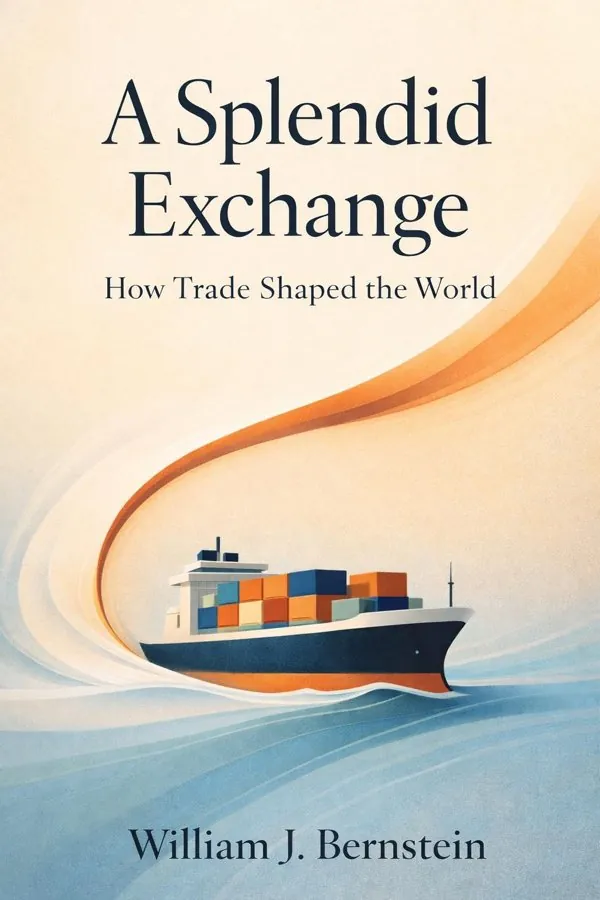
A Splendid Exchange: How Trade Shaped the World
by William J. Bernstein
A Splendid Exchange explores the history of trade from ancient Mesopotamia to the modern global economy. William J. Bernstein traces how commerce has shaped civilizations, driven exploration, and influenced political and cultural development. The book combines economic history with storytelling to show how trade has been both a source of prosperity and conflict throughout human history.
Key Takeaways
- 1Early Trade Networks — Trade was born not in bustling ports but in river valleys where the first cities emerged. In ancient Mesopotamia, around…
- 2The Silk Road — The Silk Road was less a single path than a living organism—a constellation of routes stretching across deserts and moun…
- 3Maritime Trade and the Indian Ocean
 10 min read
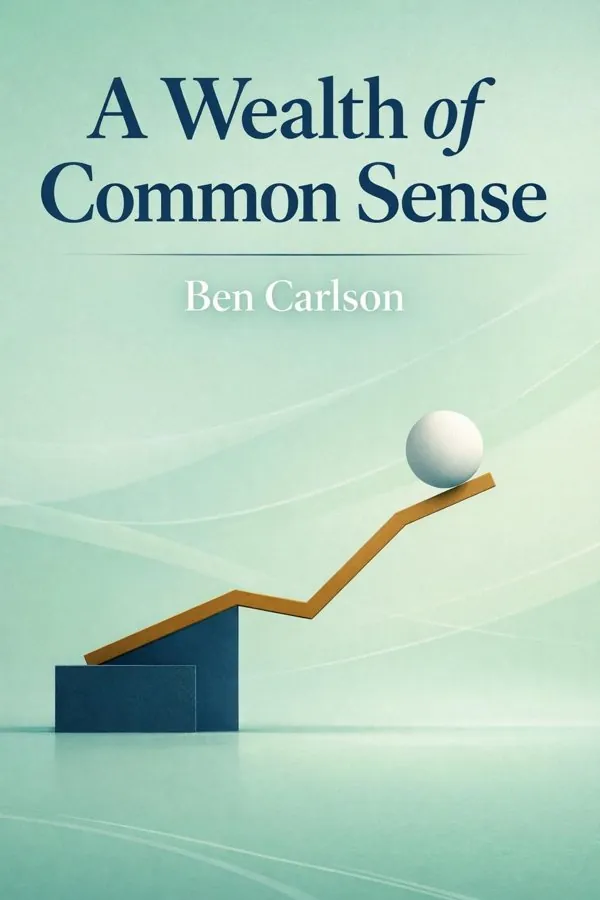
A Wealth of Common Sense: Why Simplicity Trumps Complexity in Any Investment Plan
by Ben Carlson
A Wealth of Common Sense explains how individual investors can build a simple, rational, and effective investment strategy. Ben Carlson, a portfolio manager and financial blogger, argues that complexity often leads to poor decisions and that long-term success comes from discipline, diversification, and understanding risk. The book provides practical guidance on asset allocation, behavioral finance, and how to avoid common investing mistakes.
Key Takeaways
- 1The Problem with Complexity — Throughout my career, I’ve watched countless investors get lost in a maze of complex financial products. Wall Street thr…
- 2Understanding Market Behavior — The market is a complex ecosystem of human psychology, randomness, and historical cycles. Investors often treat volatili…
- 3Investor Psychology and Behavioral Biases
 10 min read
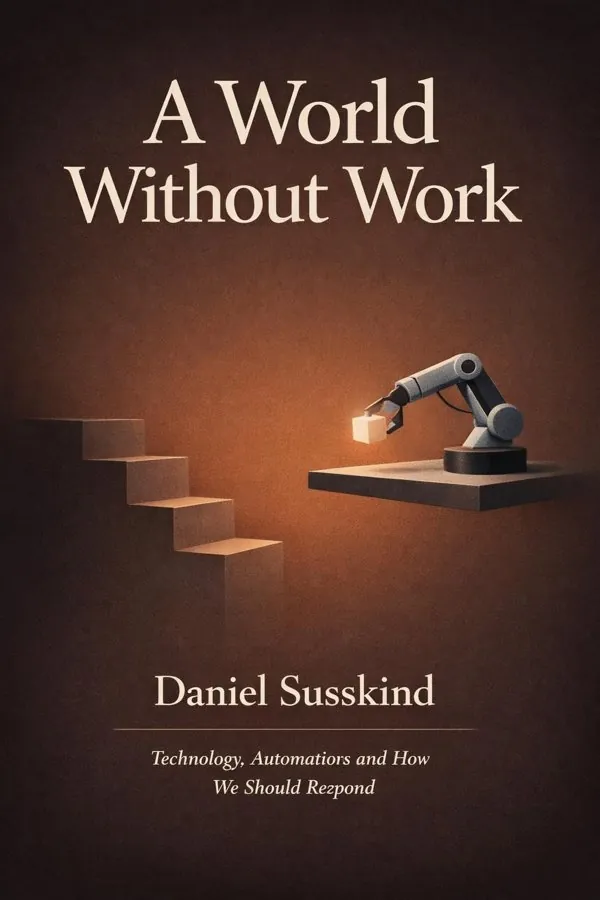
A World Without Work: Technology, Automation, and How We Should Respond
by Daniel Susskind
In this book, Daniel Susskind explores how automation and artificial intelligence are transforming the nature of work and employment. He examines the economic and social consequences of a future where machines increasingly perform tasks once done by humans, and proposes ways societies can adapt to ensure prosperity and purpose in a world with less traditional work.
Key Takeaways
- 1Historical Context — To understand the extraordinary transformation taking place today, we must first step back into history. The fear that m…
- 2The Nature of Technological Progress — The key distinction between earlier technologies and today’s automation lies in what computers can actually do. For cent…
- 3The Economic Impact of Automation
 10 min read
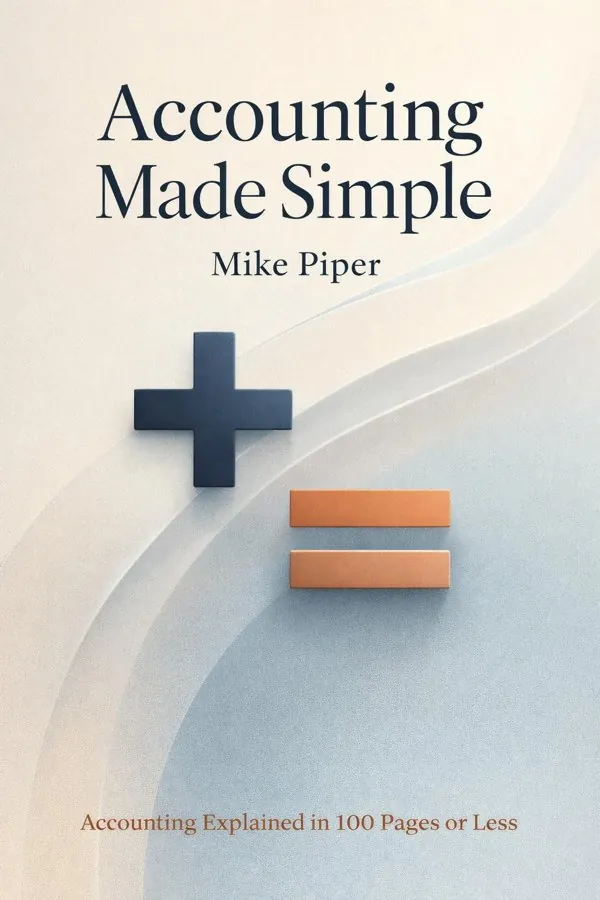
Accounting Made Simple: Accounting Explained in 100 Pages or Less
by Mike Piper
This concise guide introduces the fundamentals of accounting in a clear and accessible way. It covers essential topics such as the accounting equation, financial statements, accruals, depreciation, and key ratios, making it ideal for beginners and non-accountants seeking to understand how financial information is recorded and interpreted.
Key Takeaways
- 1The Accounting Equation: The Foundation of All Systems — Everything in accounting begins with one simple relationship: Assets = Liabilities + Equity. This equation is more than …
- 2Double-Entry Bookkeeping: The Mechanics of Balance — The genius of double-entry bookkeeping is its insistence on duality. For every transaction, something is given and somet…
- 3The Financial Statements: The Scorecards of Performance
 10 min read
Accounting for Non-Accountants: The Fast and Easy Way to Learn the Basics
by Wayne A. Label
Accounting for Non-Accountants is a comprehensive introduction to the principles of accounting and finance for readers without prior experience. It explains key concepts such as balance sheets, income statements, cash flow, and financial ratios in clear, accessible language. The book is designed to help managers, entrepreneurs, and students understand how to interpret financial information and make informed business decisions.
Key Takeaways
- 1The Accounting Equation: The Foundation of Financial Understanding — Everything begins with one elegantly simple equation: Assets = Liabilities + Owner’s Equity. This formula is not just ma…
- 2Double-Entry Bookkeeping: The Architecture of Accuracy — The double-entry system is where accounting becomes art. Every transaction affects at least two accounts, ensuring that …
- 3Reading the Financial Statements: Balance Sheet, Income Statement, and Cash Flow
 10 min read
Adapt: Why Success Always Starts With Failure
by Tim Harford
What if the biggest obstacle to success is not failure, but the illusion that complex problems can be solved through perfect plans? In Adapt, economist and journalist Tim Harford argues that in a fast-changing, unpredictable world, the most reliable path to progress is not top-down certainty but trial, error, and continuous learning. Drawing on stories from war zones, business failures, urban policy, medicine, and social change, Harford shows that systems often become dangerous when leaders are too confident, too centralized, or too committed to a single grand design. Instead, resilient success comes from experimentation, feedback, and the willingness to revise ideas when reality disagrees. The book matters because many of today’s biggest challenges—economic crises, organizational dysfunction, public policy failures, and innovation bottlenecks—are too complex for tidy solutions. Harford is uniquely qualified to make this case: he is a respected economist, Financial Times columnist, and bestselling author known for translating difficult ideas into vivid, practical insights. Adapt is both a critique of rigid thinking and a hopeful guide to solving real-world problems more intelligently.
Key Takeaways
- 1Failure Is the Engine of Progress — The uncomfortable truth is that success rarely arrives fully formed; it is usually built out of mistakes, revisions, and…
- 2Complex Problems Resist Grand Plans — The more complicated the problem, the less likely it is to yield to a single elegant blueprint. Harford distinguishes be…
- 3Decentralization Creates Better Solutions — One of the book’s most powerful insights is that intelligence is often distributed, not concentrated. Harford shows that…
Want the full summary?
Get instant access to this book summary and 100K+ more with Fizz Moment.
Get Free SummaryAvailable on App Store • Free to download
About This List
Money touches every aspect of life. These books explore wealth, poverty, investing, and the psychology of money in ways that will change your relationship with finances.
This list features 15 carefully selected books. With FizzRead, you can read AI-powered summaries of each book in just 15 minutes. Get the key takeaways and start applying the insights immediately.
Ready to start reading?
Get instant access to all 15 book summaries and 100K+ more with FizzRead.