
Best Philosophy Books — Timeless Wisdom for Modern Life
From ancient Stoics to modern existentialists, these philosophy books tackle the biggest questions. Timeless wisdom that remains shockingly relevant.
 10 min read
Meditations
by Marcus Aurelius
What does it mean to stay calm, just, and fully human in a world full of pressure, conflict, ego, and loss? That is the enduring question at the heart of Meditations, the private journal of Roman emperor Marcus Aurelius. Written in Greek and never intended for publication, these reflections are not polished philosophy lectures. They are personal reminders from one of the most powerful men in the world trying to govern not only an empire, but also his own mind. That tension is exactly why this book still matters. Meditations remains one of the clearest guides to Stoic philosophy because it speaks directly to everyday struggles: dealing with difficult people, accepting change, resisting vanity, and acting with integrity when no one is watching. Marcus Aurelius is remembered as both a Roman emperor and a Stoic philosopher, a rare figure often described as a philosopher-king. His reflections on virtue, discipline, mortality, and inner peace have influenced readers for centuries. If you want practical wisdom rather than abstract theory, Meditations offers a deeply human blueprint for living with clarity, resilience, and moral purpose.
Key Takeaways
- 1Book I: Lessons from Those Who Shaped Me — The opening book of Meditations is an extraordinary act of gratitude. Instead of launching into abstract arguments, Marc…
- 2Book II: Accepting Fate and Living Rationally — Book II opens with one of the most quoted passages in Stoic philosophy: a morning reminder that we will meet interfering…
- 3Book III: Integrity Beyond Fame — In Book III, Marcus Aurelius turns his attention to time, mortality, and the danger of living for approval. He reminds h…
 10 min read
Letters from a Stoic
by Seneca
What if peace of mind had less to do with controlling the world and more to do with mastering yourself? That is the enduring promise of Letters from a Stoic, Seneca’s timeless collection of moral letters to his friend Lucilius. Written nearly two thousand years ago, these letters still feel startlingly modern because they confront the same problems we face today: stress, distraction, ambition, fear of loss, and the pressure to live up to other people’s expectations. Rather than offering abstract theory, Seneca turns Stoicism into practical advice for ordinary living. He writes about how to use time wisely, how to face death without panic, how to handle wealth without becoming its servant, and how to build a life anchored in character instead of circumstance. Seneca’s authority comes not only from philosophical insight but from experience. He was a Roman Stoic philosopher, statesman, and dramatist who lived close to power and instability, which gives his reflections unusual force. Letters from a Stoic matters because it shows that wisdom is not a luxury for scholars—it is daily training for anyone who wants to live with clarity, courage, and inner freedom.
Key Takeaways
- 1Virtue: The Only Good — Seneca’s central claim is radical but liberating: the only true good is virtue. Wealth, status, health, comfort, and pra…
- 2The Fleeting Nature of Time and the Art of Using Life Well — Few themes in Seneca’s letters feel more urgent than his warning about wasted time. He argues that people guard their mo…
- 3Mastering the Passions: The Discipline of Inner Control — Seneca sees destructive emotions—especially anger, fear, anxiety, and uncontrolled desire—not as unavoidable rulers of t…
 10 min read
Tao Te Ching
by Lao Tzu
Few books have shaped spiritual thought, leadership, and personal reflection as deeply as the Tao Te Ching. Though brief in length, this ancient classic opens a surprisingly vast way of seeing life: one that values stillness over strain, humility over ego, and alignment over force. At a time when modern life often rewards speed, control, and constant self-assertion, the Tao Te Ching offers a radically different path. It suggests that the most effective way to live is not by pushing harder, but by moving in harmony with the deeper patterns of existence. Attributed to Lao Tzu, the revered sage traditionally associated with the founding of Daoism, this text has endured for more than two millennia because it speaks to timeless human struggles: how to lead without dominating, act without exhausting yourself, and find peace in a world of change. Divided into reflections on the Tao, or the Way, and Te, often translated as virtue or inner power, the book blends poetic paradox with practical wisdom. Its teachings on non-action, simplicity, and natural balance continue to influence philosophy, politics, spirituality, and self-development around the world.
Key Takeaways
- 1Introduction to the Tao — The Tao is the starting point of the entire book, yet Lao Tzu immediately tells us it cannot be fully captured in langua…
- 2The Nature of the Tao — Lao Tzu describes the Tao through paradox because ordinary logic cannot contain it. It is empty, yet never used up. It i…
- 3Wu Wei (Non-Action) — Wu wei is one of the most misunderstood ideas in the Tao Te Ching. It does not mean laziness, passivity, or refusing to …
 10 min read
Beyond Good and Evil
by Friedrich Nietzsche
Beyond Good and Evil is Friedrich Nietzsche’s bold attack on the moral certainties, philosophical habits, and spiritual comforts that have shaped Western thought for centuries. First published in 1886, the book asks a disturbing question: what if our highest ideals—truth, humility, equality, selflessness, even morality itself—are not eternal facts but human inventions shaped by fear, instinct, and the struggle for power? Rather than offering a tidy system, Nietzsche tests inherited beliefs and exposes the motives hidden beneath them. He challenges philosophers for pretending to be objective while smuggling in their own values, and he calls for a new kind of thinker strong enough to create values instead of merely obeying them. The book matters because it pushes readers to examine not only what they believe, but why they believe it. Nietzsche wrote as a trained classical scholar, brilliant stylist, and fearless critic of culture. His influence extends across philosophy, psychology, literature, politics, and modern self-understanding. Beyond Good and Evil remains one of his sharpest and most provocative works.
Key Takeaways
- 1The Hidden Prejudices of Philosophers — Every philosophy begins with a confession, even when it pretends to be pure reason. Nietzsche opens Beyond Good and Evil…
- 2The Courage of the Free Spirit — Freedom begins when a person can live without the shelter of comforting illusions. Nietzsche’s “free spirit” is not simp…
- 3Religion as Psychology and Discipline — Religious belief is never just a doctrine; it is also a training of the human soul. In his reflections on religion, Niet…
 10 min read
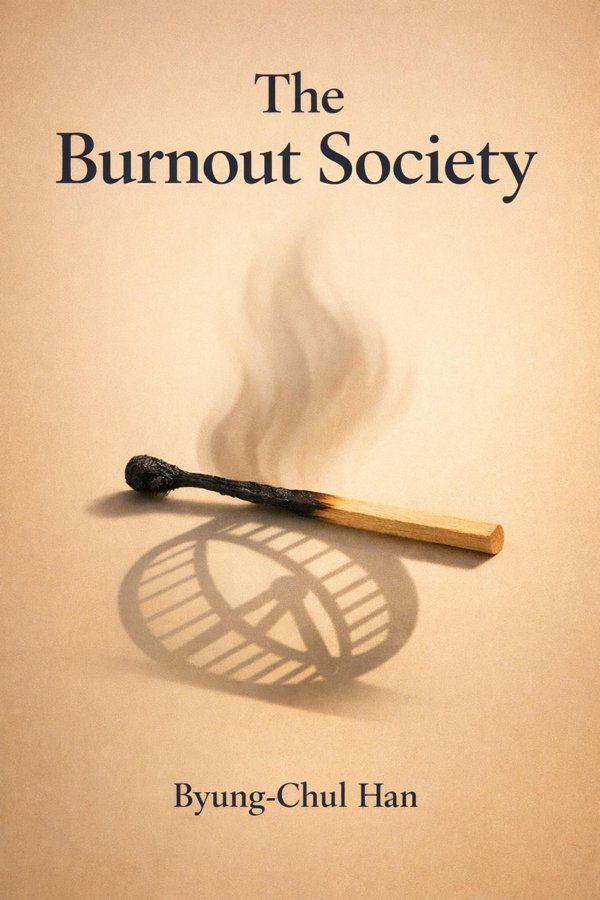
The Burnout Society
by Byung-Chul Han
In The Burnout Society, Byung-Chul Han offers a sharp, unsettling diagnosis of modern life: we no longer live mainly under repression, but under the pressure to perform, improve, and optimize ourselves without end. Instead of being disciplined by external authority, we are driven by internalized demands to become more productive, more visible, more resilient, and more successful. What looks like freedom, Han argues, often turns into a subtler form of coercion—self-exploitation. The result is a society marked not by obedience, but by exhaustion, anxiety, depression, and burnout. Though brief, the book is remarkably influential because it gives language to experiences many people already feel but struggle to explain. Han connects work culture, digital communication, attention fragmentation, and the loss of contemplation into a broader philosophical critique of neoliberal life. As a South Korean–German philosopher known for his incisive cultural analysis, Han writes with unusual clarity and force. This book matters because it helps readers see that burnout is not merely a personal failure or productivity problem. It is a social condition rooted in the very ideals our era celebrates.
Key Takeaways
- 1From Discipline to Performance — A society can oppress people not only by saying “no,” but also by relentlessly saying “you can.” Han’s central claim is …
- 2The Achievement Subject Exploits Itself — The most efficient system of control is one in which people believe they are acting freely while carrying out the system…
- 3Burnout, Depression, and Invisible Violence — Not all violence is loud, direct, or visible; some forms appear as overstimulation, overexposure, and excessive positivi…
 10 min read
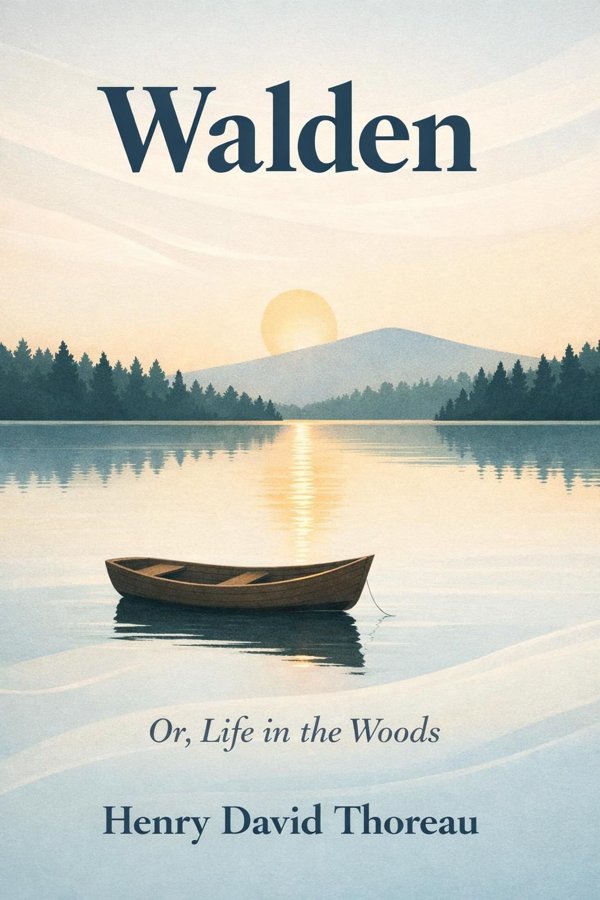
Walden
by Henry David Thoreau
Walden is Henry David Thoreau’s enduring meditation on how to live with clarity, freedom, and purpose in a noisy world. Drawn from the two years, two months, and two days he spent in a small cabin near Walden Pond in Concord, Massachusetts, the book is far more than a nature journal or memoir of rustic living. It is a philosophical challenge to the habits of modern society: endless work, needless consumption, social conformity, and the mistaken belief that a busy life is a meaningful one. Thoreau asks what remains when we strip life down to its essentials—and whether simplicity might reveal a richer kind of wealth. What makes Walden still powerful is that Thoreau does not merely preach; he experiments. He grows beans, tracks his expenses, observes animals and seasons, and turns daily life into a test of values. As a writer, naturalist, and moral thinker, he speaks with unusual authority because he lived the questions he posed. For readers feeling overwhelmed by speed, distraction, and material pressure, Walden offers a radical but practical invitation: live deliberately, notice deeply, and measure success by consciousness rather than accumulation.
Key Takeaways
- 1Living Deliberately Gives Life Its Shape — Most people do not choose their lives so much as inherit them. They absorb routines, ambitions, and anxieties from the c…
- 2Economy Reveals the True Cost of Living — A price tag never tells the whole price. One of Walden’s most important insights appears in its opening chapter, “Econom…
- 3Solitude Deepens Rather Than Diminishes Life — Loneliness is not the same as solitude. Thoreau’s time at Walden challenges the fear that being alone means being depriv…
 10 min read
Being and Nothingness
by Jean-Paul Sartre
Originally published in French in 1943, Being and Nothingness is Jean-Paul Sartre’s most ambitious philosophical work and one of the defining texts of existentialism. In this demanding but rewarding book, Sartre asks what it means to exist as a human being in a world that simply is. He distinguishes between the being of things, which are fixed and complete, and the being of human consciousness, which is open, self-questioning, and never fully settled. From that distinction, he develops his most influential ideas: freedom, anguish, bad faith, responsibility, the body, the gaze of others, and the difficulty of living authentically. What makes the book endure is not only its originality but its unsettling honesty. Sartre argues that we are not born with a ready-made essence or destiny; instead, we are constantly making ourselves through our choices. That insight has shaped philosophy, psychology, literature, and political thought for decades. As a leading French philosopher, novelist, and public intellectual, Sartre brought extraordinary range and authority to this project. Being and Nothingness remains essential reading for anyone interested in consciousness, freedom, identity, and the burdens of human existence.
Key Takeaways
- 1Nothingness Opens Human Freedom — The most unsettling truth in Sartre’s philosophy is that human freedom begins with a gap. The world of objects appears f…
- 2Consciousness Is Always Beyond Itself — A powerful insight runs through the whole book: consciousness is never a sealed container filled with inner contents. It…
- 3Being-for-Itself Means Radical Openness — Human existence is defined less by what it is than by what it is not yet. Sartre calls human consciousness being-for-its…
 10 min read
The Secret Teachings of All Ages
by Manly P. Hall
The Secret Teachings of All Ages is an ambitious tour through the symbolic, philosophical, and mystical traditions that have shaped human civilization. In this sweeping work, Manly P. Hall explores ancient religions, sacred myths, secret societies, alchemy, astrology, Pythagorean thought, Hermetic philosophy, and the hidden meanings encoded in art, architecture, and ritual. Rather than presenting history as a dry sequence of events, Hall invites readers to see it as a layered drama of ideas in which wisdom has often been preserved in symbols, allegories, and initiatory teachings. What makes the book enduringly compelling is its central claim: that beneath the world’s many traditions lies a common search for truth, self-knowledge, and spiritual transformation. Hall does not simply catalog esoteric lore; he argues that symbols are tools for awakening deeper perception. His authority comes not from academic specialization in one narrow field, but from his extraordinary breadth as a philosopher, lecturer, and interpreter of comparative religion and symbolism. For readers drawn to philosophy, mythology, religion, or the history of ideas, this book remains a fascinating invitation to think more deeply about how ancient wisdom continues to shape modern consciousness.
Key Takeaways
- 1Wisdom Often Hides in Symbols — The most powerful truths are often not stated directly. One of Manly P. Hall’s central insights is that ancient wisdom t…
- 2Ancient Traditions Share Common Principles — Civilizations may differ in language, geography, and customs, yet Hall argues that their deepest teachings often converg…
- 3Myth Is a Map of Human Nature — Myths survive for centuries not because people mistake them for newspaper reports, but because they tell the truth in a …
 10 min read
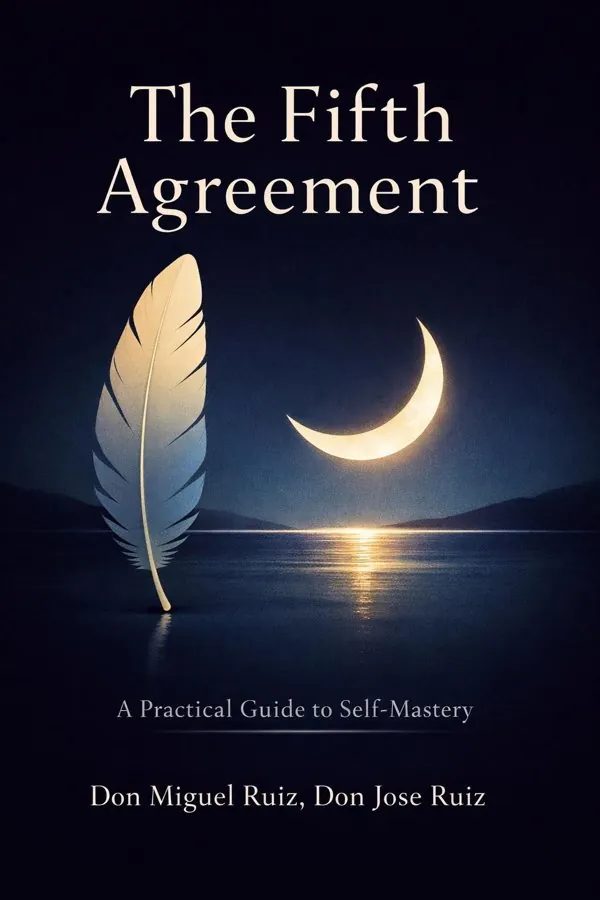
The Fifth Agreement
by Don Miguel Ruiz
The Fifth Agreement es una guía espiritual que amplía las enseñanzas de 'Los Cuatro Acuerdos'. Don Miguel Ruiz y su hijo Don José Ruiz invitan al lector a profundizar en la sabiduría tolteca, explorando cómo la percepción y la verdad personal pueden liberar la mente de creencias limitantes. El quinto acuerdo —sé escéptico, pero aprende a escuchar— ofrece una nueva perspectiva para alcanzar la libertad y la autenticidad.
Key Takeaways
- 1Review of the Four Agreements and the Foundation of Self-Mastery — When we first introduced 'The Four Agreements,' they served as the pillars of a new way of living—simple sentences that …
- 2The Fifth Agreement: Be Skeptical, but Learn to Listen — The Fifth Agreement is a bridge between knowledge and wisdom. 'Be skeptical' means you must question everything you hear…
- 3Perception, The Dream, and the Nature of Truth
 10 min read
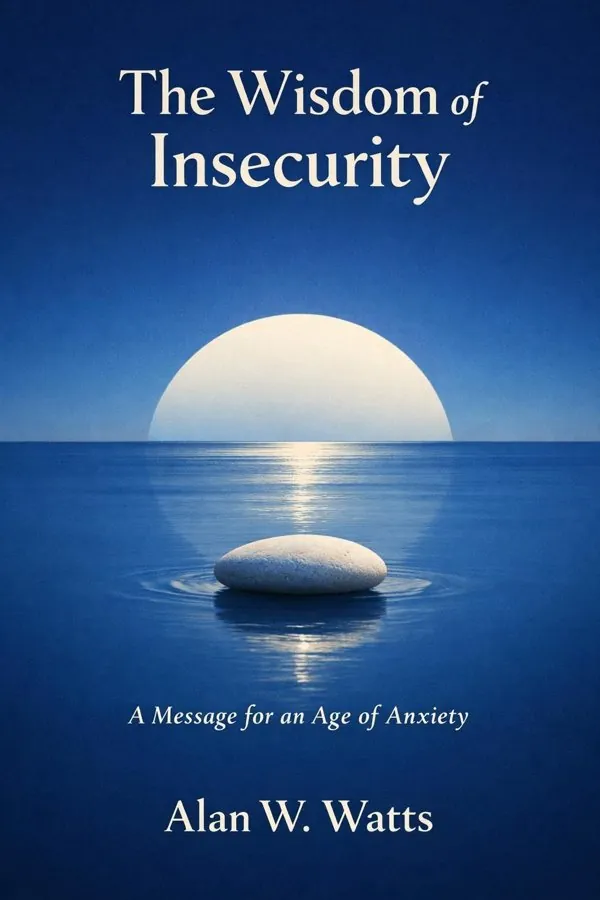
The Wisdom of Insecurity
by Alan Watts
What if the very thing you keep chasing—security—is the source of your unease? In The Wisdom of Insecurity, Alan Watts examines one of the deepest contradictions of modern life: our attempt to create lasting psychological safety in a world defined by change. We pursue certainty through money, beliefs, routines, relationships, ambition, and self-improvement, yet the harder we cling, the more fragile and anxious we become. Watts argues that peace does not come from controlling life but from participating in it fully, without demanding guarantees it cannot give. First published in 1951, this brief but profound work remains strikingly relevant in an age of burnout, constant comparison, and future-focused worry. Drawing on Zen Buddhism, Taoism, Christian mysticism, and modern psychology, Watts translates complex spiritual insights into clear, accessible language for Western readers. He is not offering a productivity system or a doctrine to believe in. Instead, he invites us to see how fear is amplified by our resistance to uncertainty, and how freedom begins when we stop living for tomorrow and awaken to the only reality we ever truly have: the present moment.
Key Takeaways
- 1The Problem of Chasing Security — The more desperately we seek psychological security, the more insecure we tend to feel. Watts begins with a paradox: hum…
- 2Impermanence Is the Shape of Life — Much of our suffering comes from treating passing things as if they should stay. Watts argues that impermanence is not a…
- 3The Self We Defend Is Unstable — One of Watts’s most radical claims is that the self we constantly protect may be more imagined than real. We usually thi…
 10 min read
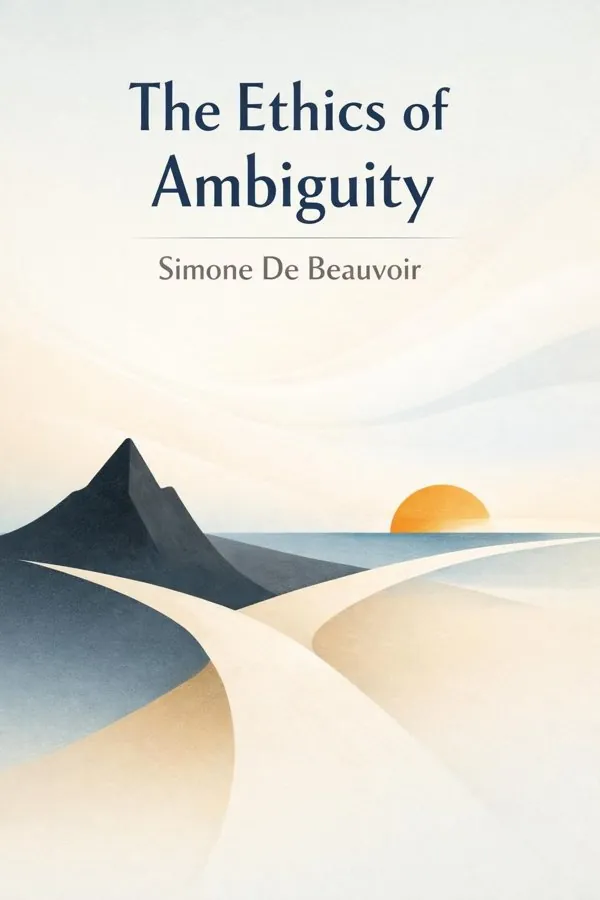
The Ethics of Ambiguity
by Simone de Beauvoir
Originally published in 1947, The Ethics of Ambiguity is Simone de Beauvoir’s bold attempt to answer one of philosophy’s oldest questions: how should we live if there is no fixed moral order handed down from above? Drawing on existentialism, de Beauvoir argues that the human condition is fundamentally ambiguous. We are free, yet limited; self-conscious, yet embodied; individual, yet always entangled with other people. Rather than seeing this tension as a problem to escape, she treats it as the starting point of an honest ethics. What makes this book endure is its refusal of comforting simplifications. De Beauvoir rejects both moral absolutism and cynical relativism, showing instead that freedom becomes meaningful only when it seeks its realization in a world shared with others. Ethics, then, is not obedience to rules but a difficult practice of responsibility, commitment, and liberation. As one of the twentieth century’s major philosophers and a central figure in existentialism, de Beauvoir writes with unusual authority and urgency. This book remains essential for readers interested in freedom, politics, morality, and what it means to live authentically among other human beings.
Key Takeaways
- 1Ambiguity Is the Truth of Existence — The most honest ethics begins by admitting that human life cannot be reduced to a neat formula. De Beauvoir’s central cl…
- 2Freedom Emerges Through Human Consciousness — Freedom does not mean floating above reality; it begins the moment consciousness recognizes that it is not identical wit…
- 3Bad Faith Hides from Responsibility — One of the easiest ways to avoid freedom is to pretend we do not have it. De Beauvoir explores several attitudes through…
 10 min read
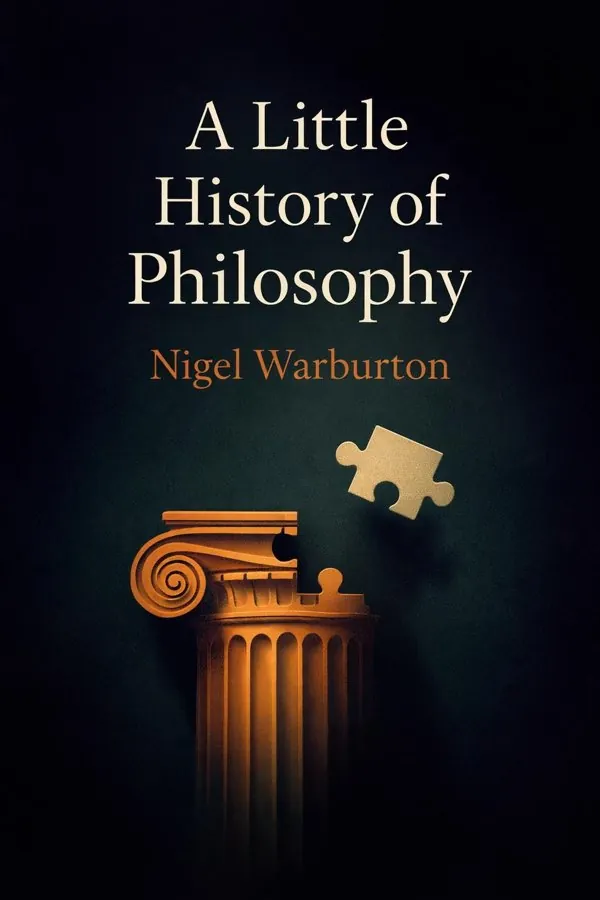
A Little History of Philosophy
by Nigel Warburton
What if the biggest questions in life were not obstacles to avoid, but invitations to think more deeply? In A Little History of Philosophy, Nigel Warburton turns the history of Western philosophy into a lively, human story filled with argument, curiosity, and intellectual courage. Rather than presenting philosophy as a dense academic subject reserved for specialists, he introduces it as an ongoing conversation about truth, justice, happiness, knowledge, freedom, religion, and the meaning of life. Moving from Socrates in ancient Athens to modern thinkers such as Nietzsche, Sartre, and contemporary analytic philosophers, Warburton shows how major ideas emerged in response to real problems people faced in their societies and in themselves. Each philosopher is treated not as a monument, but as a person wrestling with difficult questions that still matter today. The book matters because it makes philosophy accessible without oversimplifying it. Warburton, a British philosopher, writer, and co-founder of the widely respected Philosophy Bites podcast, is especially skilled at explaining difficult ideas with clarity and energy. The result is an inviting guide for anyone who wants to understand how philosophy has shaped the modern mind.
Key Takeaways
- 1Socrates and the examined life — A life filled with activity can still be intellectually asleep. That is the unsettling lesson Socrates leaves us with wh…
- 2Plato and Aristotle shape reality — We often assume that reality is exactly what our senses present to us, but Plato and Aristotle show two very different w…
- 3Happiness, pleasure, and inner control — Many people chase happiness as if it were a reward waiting somewhere in the future, but ancient philosophers often saw i…
 10 min read
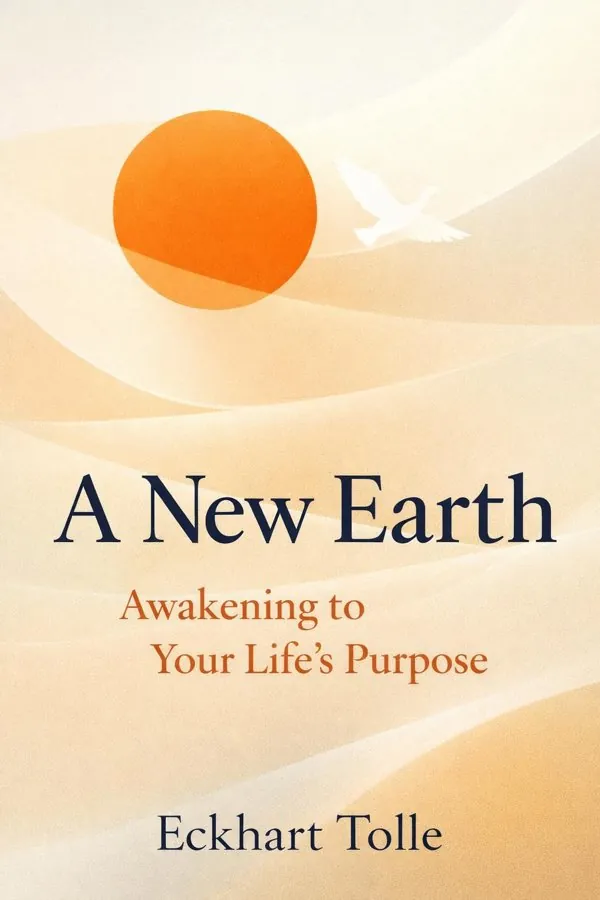
A New Earth
by Eckhart Tolle
A New Earth is Eckhart Tolle’s bold and accessible exploration of what keeps human beings trapped in conflict, anxiety, and dissatisfaction—and what it would take to move beyond those patterns. At the center of the book is a simple but far-reaching claim: much of human suffering is created by the ego, the false sense of self built from thought, status, memory, and identification with form. Tolle argues that real transformation does not begin with changing the outer world alone, but with awakening to a deeper consciousness beneath compulsive thinking. What makes this book matter is its scope. It is both an intensely personal guide to inner peace and a sweeping diagnosis of humanity’s collective crises, from destructive relationships to social conflict and environmental imbalance. Tolle connects everyday emotional habits with the larger destiny of the planet, suggesting that inner awakening is not a luxury but an evolutionary necessity. Tolle writes with the authority of a teacher whose work has helped millions rethink their relationship to thought, presence, and identity. Following the impact of The Power of Now, A New Earth expands his message into a practical vision for personal and collective awakening.
Key Takeaways
- 1The Flowering of Human Consciousness — Human beings may be more technologically advanced than ever, yet inwardly many still live in confusion, fear, and confli…
- 2Ego: The False Self We Defend — Much of what people call “me” is actually a story they are constantly trying to maintain. Tolle’s central insight is tha…
- 3The Pain-Body Feeds on Unconscious Emotion — Some emotional reactions feel larger than the immediate moment because they are. Tolle introduces the “pain-body” as an …
 10 min read
The Daily Stoic
by Ryan Holiday, Stephen Hanselman
The Daily Stoic is a practical guide to living with greater clarity, steadiness, and self-command. Structured as 366 short meditations—one for each day of the year—it draws on the timeless wisdom of Marcus Aurelius, Seneca, and Epictetus, then translates their ideas into language that speaks to modern work, relationships, ambition, anxiety, and adversity. Rather than presenting Stoicism as a dry historical philosophy, Ryan Holiday and Stephen Hanselman show it as a daily discipline: a way to train your mind, direct your actions, and meet life’s uncertainties without being ruled by them. What makes the book matter is its usefulness. These reflections are not designed to impress you intellectually; they are meant to change how you respond when plans fail, tempers rise, egos flare, or fears take over. Holiday, known for bringing Stoic philosophy into contemporary culture, and Hanselman, a seasoned translator and interpreter of classical thought, make ancient insights feel immediate and actionable. The result is a book that can be read a page at a time yet shape an entire outlook—a manual for becoming calmer, wiser, and more resilient in everyday life.
Key Takeaways
- 1Perception Shapes More Than Reality Does — The first battle in life is rarely with events themselves; it is with the story you tell yourself about them. This is th…
- 2Right Action Is the Core of Character — Clear thinking matters, but Stoicism is not just a philosophy of inner calm; it is a philosophy of ethical action. The D…
- 3Will Turns Hardship Into Inner Strength — No philosophy is serious if it only works when life is pleasant. The Daily Stoic’s third major theme, the discipline of …
 10 min read
What We Owe the Future
by William MacAskill
What if the most important moral choices of our time are not only about the people alive today, but about the billions or even trillions who may live after us? In What We Owe the Future, philosopher William MacAskill makes the case that our responsibilities extend far beyond the present generation. He argues that because future people can matter just as much as those alive now, decisions made in this century could shape the entire trajectory of human civilization. That claim turns questions about technology, politics, war, institutions, and moral progress into matters of extraordinary ethical importance. MacAskill combines philosophy, history, economics, and risk analysis to develop the case for longtermism: the view that positively influencing the long-run future should be a central moral priority. Rather than offering abstract speculation alone, he grounds his argument in examples of historical turning points, existential risks, and the possibility that today’s values may become locked in for centuries. As a leading moral philosopher, Oxford professor, and co-founder of major effective altruist organizations, MacAskill brings both intellectual rigor and practical urgency to one of the biggest ethical questions of our age: what do we owe the people who come after us?
Key Takeaways
- 1Future people count morally too — A simple idea can rearrange an entire moral worldview: people who do not exist yet can still matter. MacAskill begins fr…
- 2The future could be unimaginably vast — The moral stakes of the future become enormous once we recognize how much life may still lie ahead. Humanity is a very y…
- 3Long-term effects often outweigh immediate ones — Some actions matter not because of what they do today, but because of what they set in motion. MacAskill argues that whe…
Want the full summary?
Get instant access to this book summary and 100K+ more with Fizz Moment.
Get Free SummaryAvailable on App Store • Free to download
About This List
From ancient Stoics to modern existentialists, these philosophy books tackle the biggest questions. Timeless wisdom that remains shockingly relevant.
This list features 15 carefully selected books. With FizzRead, you can read AI-powered summaries of each book in just 15 minutes. Get the key takeaways and start applying the insights immediately.
Ready to start reading?
Get instant access to all 15 book summaries and 100K+ more with FizzRead.