
Barack Obama's Reading List: Books That Shaped a President
Barack Obama shares his annual reading list every year, featuring books on history, identity, science, and the human condition. His picks reflect deep intellectual curiosity and a commitment to understanding diverse perspectives.
 10 min read
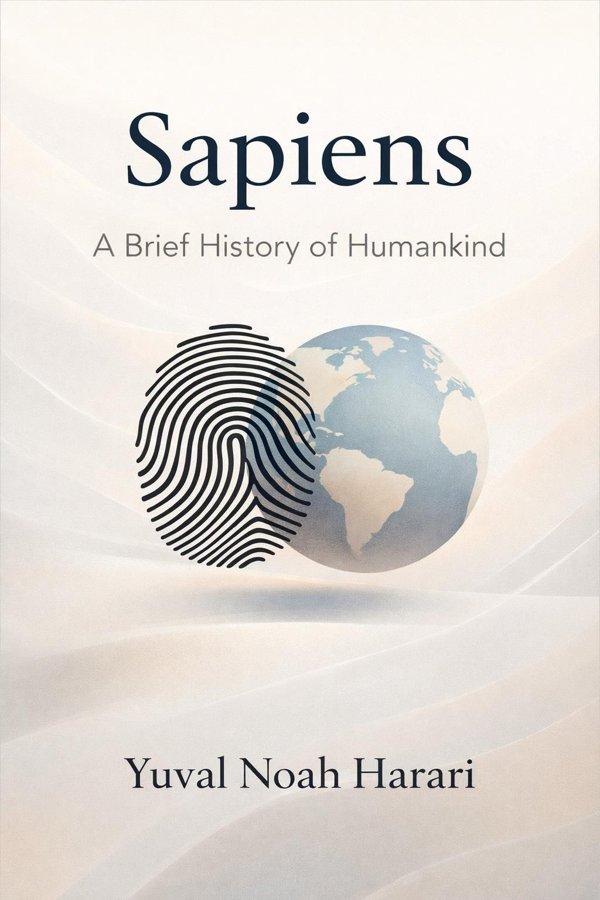
Sapiens
by Yuval Noah Harari
Sapiens: A Brief History of Humankind is an ambitious, big-picture history of our species, tracing how Homo sapiens rose from an unremarkable African ape to the dominant force on Earth. Yuval Noah Harari combines history, biology, anthropology, economics, and philosophy to explain the turning points that transformed human life: the Cognitive Revolution, the Agricultural Revolution, and the Scientific Revolution. Rather than offering a narrow chronological account, he asks a deeper question: what made humans uniquely capable of building empires, religions, markets, and nations? Harari’s answer is both provocative and memorable: our greatest power lies in our ability to create and believe shared stories. These collective fictions—such as money, laws, gods, and states—allow strangers to cooperate on a massive scale. The book matters because it challenges comforting assumptions about progress, happiness, and civilization. It invites readers to see modern society not as inevitable, but as the result of historical choices, accidents, and myths. As a historian and public intellectual, Harari brings scholarly range and narrative clarity to one of the most compelling questions in human history: how did we become who we are?
Key Takeaways
- 1The Cognitive Revolution and Shared Imagination — Human dominance did not begin with stronger bodies, sharper teeth, or faster legs; it began with a new kind of mind. Aro…
- 2The Agricultural Revolution: Progress or Trap? — What if one of history’s greatest achievements was also one of its greatest mistakes? Harari provocatively argues that t…
- 3Myths Make Large Societies Possible — Civilization runs not only on roads, crops, and armies, but on ideas that exist because people collectively agree they d…
 10 min read
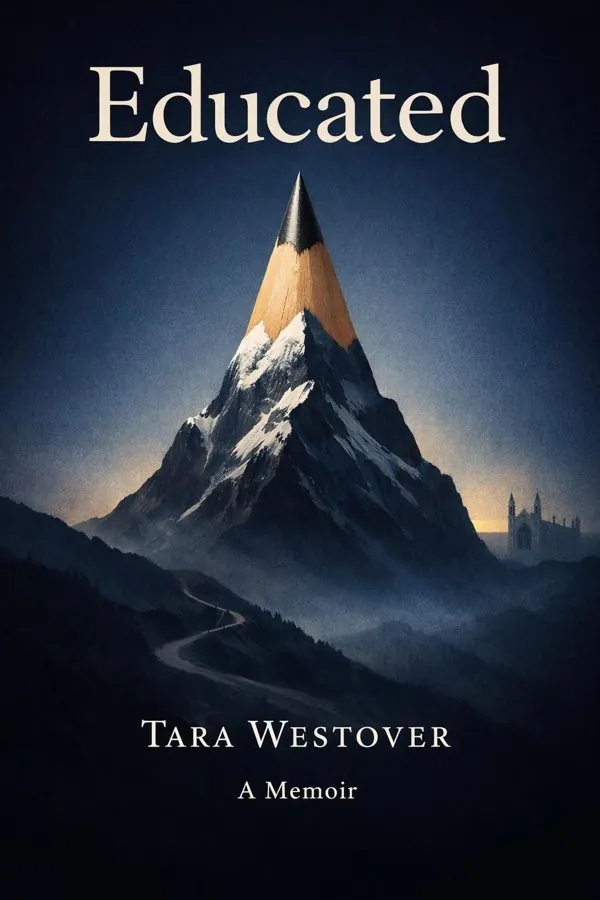
Educated
by Tara Westover
What does it mean to educate yourself when everything around you teaches you to stay small, silent, and obedient? In Educated, Tara Westover answers that question through one of the most striking memoirs of recent years. Her story begins in rural Idaho, in a survivalist Mormon household cut off from mainstream institutions, where hospitals, schools, and the government were treated as threats rather than supports. From that unlikely starting point, Westover eventually makes her way to Brigham Young University and later earns a doctorate in history from the University of Cambridge. What makes this memoir so powerful is that it is not simply a success story about academic achievement. It is a deeply human account of how knowledge changes a person from the inside out. Westover shows that education is not just the accumulation of facts; it is the painful, liberating process of learning to question the stories that shaped you. Her memoir matters because it speaks to anyone who has ever struggled to separate love from control, loyalty from self-betrayal, or family truth from personal truth. With honesty, emotional precision, and hard-won insight, Westover turns her life into a profound meditation on identity, memory, and the cost of becoming yourself.
Key Takeaways
- 1From the Mountain: Childhood and Isolation — Westover’s childhood at the foot of Buck’s Peak is the foundation of everything that follows. The mountain is more than …
- 2Work, Fear, and the Awakening of a Mind — In the junkyard, work becomes Westover’s first education in risk, hierarchy, and survival. She learns by doing, but what…
- 3Learning the World Beyond: From the Mountain to BYU — Westover’s move from her isolated upbringing to Brigham Young University marks one of the memoir’s most dramatic shifts.…
 10 min read
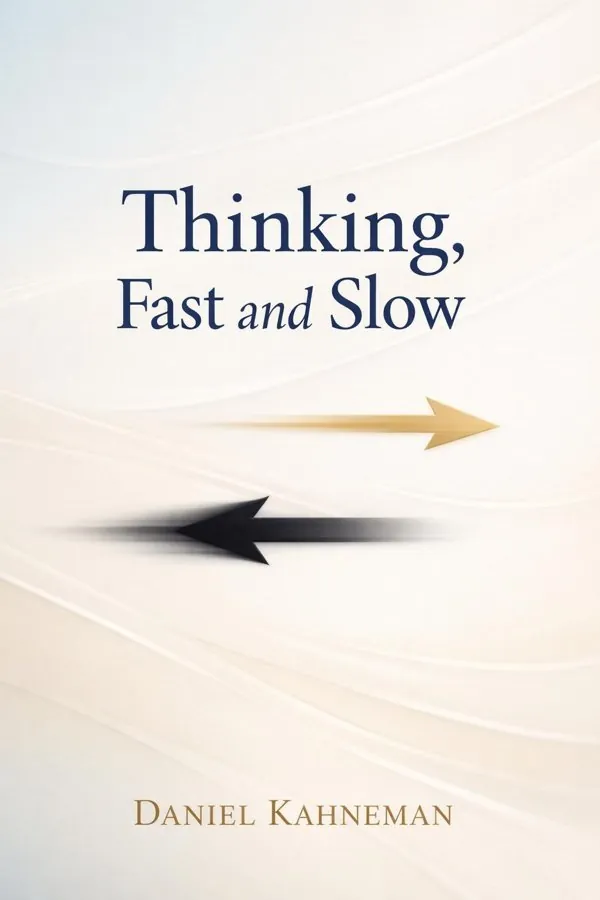
Thinking Fast and Slow
by Daniel Kahneman
Thinking Fast and Slow is one of the most influential books ever written about how the human mind works. In it, Daniel Kahneman distills decades of groundbreaking research in psychology and behavioral economics into a practical framework for understanding why people make smart decisions in some situations and surprisingly poor ones in others. His central insight is that our thinking is shaped by two systems: one that is fast, intuitive, and automatic, and another that is slow, effortful, and analytical. Most of the time, these systems cooperate efficiently. But just as often, the quick judgments of the mind lead us into predictable errors. What makes this book so powerful is that it changes how you see everyday life. From investing and hiring to relationships, planning, medicine, and public policy, Kahneman shows how biases quietly shape choices we assume are rational. He writes with the authority of a Nobel Prize-winning researcher whose work, much of it developed with Amos Tversky, transformed our understanding of judgment under uncertainty. This is not only a book about mistakes; it is a guide to better thinking, wiser decisions, and greater humility about the limits of human reason.
Key Takeaways
- 1The Two Systems That Shape Thought — Most of what you think feels deliberate, but much of it happens automatically. Kahneman’s most famous contribution is th…
- 2Heuristics Make Judgment Efficient and Flawed — The mind is built to simplify, not to calculate perfectly. To navigate uncertainty, we rely on heuristics, mental shortc…
- 3Confidence Often Exceeds What We Know — We are far better at creating explanations than at recognizing our ignorance. Kahneman shows that overconfidence is one …
 10 min read
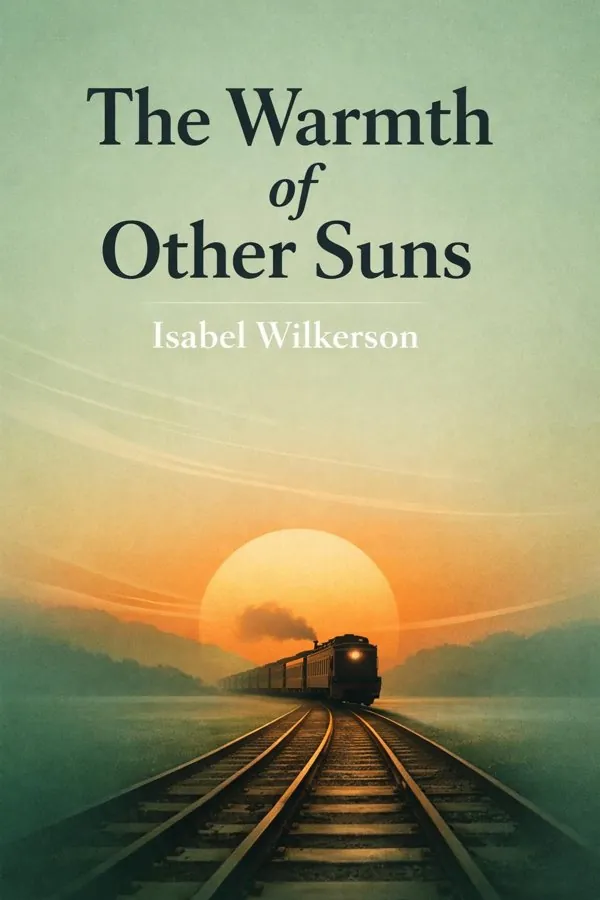
The Warmth of Other Suns
by Isabel Wilkerson
The Warmth of Other Suns tells the story of one of the largest internal migrations in American history: the movement of roughly six million Black Americans out of the Jim Crow South to the North, Midwest, and West between about 1915 and 1970. Rather than treating the Great Migration as an abstract demographic shift, Isabel Wilkerson makes it intimate and unforgettable by following the lives of three individuals—Ida Mae Gladney, George Starling, and Robert Foster—whose journeys reveal the fear, calculation, hope, and sacrifice behind this mass exodus. The book shows that migration was not simply about jobs or geography. It was about fleeing a rigid racial order that constrained where people could work, live, vote, travel, and dream. What makes this book matter so deeply is that it reframes modern American history. Wilkerson demonstrates that the Great Migration reshaped cities, politics, music, labor, family life, and the nation’s racial landscape. Her authority comes from years of reporting, archival research, oral histories, and narrative skill of the highest order. The result is both sweeping history and deeply human testimony—a work that helps readers understand not only where America has been, but why it looks the way it does today.
Key Takeaways
- 1A Migration Born from Survival — Some movements begin with ambition; this one began with the need to breathe freely. Wilkerson shows that the Great Migra…
- 2Ida Mae and Quiet Courage — History often celebrates loud heroes, but Wilkerson reminds us that endurance itself can be a form of bravery. Ida Mae G…
- 3George Starling and Stolen Possibility — Talent means little when a system is designed to waste it. George Starling’s life reveals how Jim Crow crushed ambition …
 10 min read
When Breath Becomes Air
by Paul Kalanithi
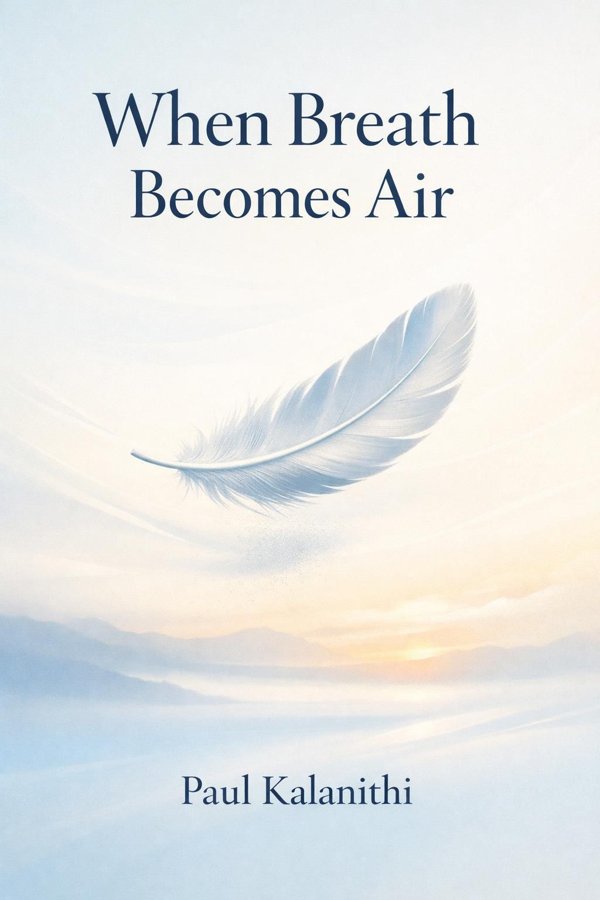
What do you do when the future you spent years building suddenly disappears? In *When Breath Becomes Air*, Paul Kalanithi confronts that question with unusual honesty, intelligence, and grace. This memoir is far more than a cancer narrative. It is a profound meditation on mortality, identity, purpose, and the fragile line between doctor and patient. As a neurosurgeon, Kalanithi devoted his life to operating on the organ that creates thought, memory, personality, and selfhood. As a writer and lifelong reader, he also understood that science alone cannot answer the deepest human questions. That rare combination gives this book its power. Kalanithi brings together medicine, philosophy, literature, and lived experience to ask what makes life meaningful when time is limited. His reflections resonate with anyone facing uncertainty, loss, ambition, or the search for a life worth living. Because he writes from both sides of the hospital bed, his insights feel especially hard-won. *When Breath Becomes Air* matters because it reminds us that death is not only a medical event. It is also a mirror, showing us how we choose to live.
Key Takeaways
- 1From the Arizona Desert to a Quest for Literature and Science — Kalanithi’s early life in the Arizona desert becomes the first lens through which he learns to think about vastness, sol…
- 2Cambridge Reflections: Consciousness and the Philosophy of Death — At Cambridge, Kalanithi deepens the intellectual search that had already shaped his life. He turns to the philosophy of …
- 3The Physician’s Calling: Contemplating Life and Death in the Operating Room — In medicine, and especially in neurosurgery, Kalanithi finds the place where his intellectual and moral questions become…
 10 min read
Man's Search for Meaning
by Viktor Frankl
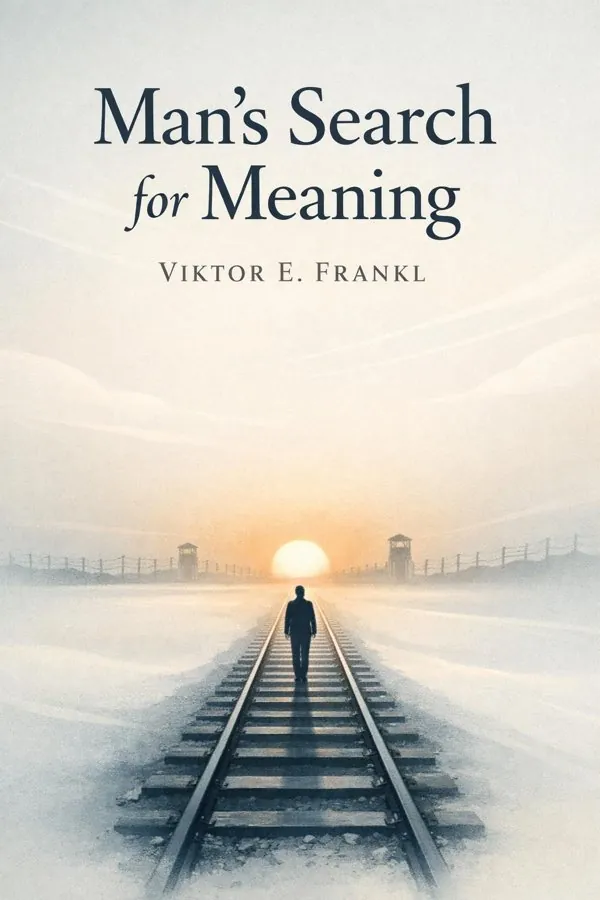
What keeps a person going when everything familiar has been taken away—comfort, identity, loved ones, freedom, and even the expectation of tomorrow? That is the unbearable and essential question at the heart of *Man's Search for Meaning*. Viktor E. Frankl’s landmark book is far more than a Holocaust memoir. It is a profound study of human endurance, an examination of suffering, and a practical philosophy for anyone trying to live with purpose in hard times. Drawing on his experiences in Nazi concentration camps, Frankl explores how people respond when life is reduced to its barest terms and why some still manage to preserve dignity, hope, and inner freedom. What makes this book endure is that Frankl does not offer empty inspiration. He writes as an Austrian neurologist, psychiatrist, and Holocaust survivor who later developed logotherapy, a school of psychotherapy centered on meaning as the primary human motivation. His insight is simple but life-changing: even when we cannot change our circumstances, we can still choose our response. That idea has made this book one of the most influential works in psychology and self-help, especially for readers facing grief, burnout, uncertainty, or the quiet fear that life has lost direction.
Key Takeaways
- 1The Shock of Arrival and the Dehumanization of Camp Life — When Frankl first arrived at Auschwitz, the destruction of the self began immediately. The process was systematic: priso…
- 2Emotional Detachment and the Apathy that Defines Survival — After the first shock came a second psychological stage: apathy. Frankl shows that this numbness was not indifference in…
- 3Moral Choice and Inner Freedom in the Midst of Suffering — One of the book’s most powerful claims is that even under extreme oppression, a human being retains a final freedom: the…
 10 min read
Where the Crawdads Sing
by Delia Owens
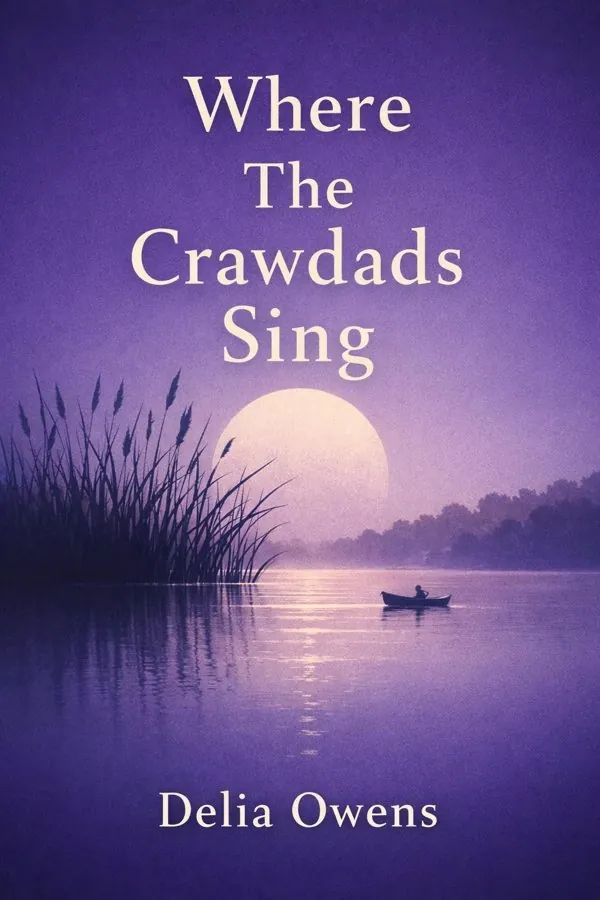
What makes a person who they are: the people who raise them, the place that shapes them, or the wounds they learn to survive? Where the Crawdads Sing answers that question through one of modern fiction’s most unforgettable heroines, Kya Clark, a girl abandoned by nearly everyone except the wild marsh she calls home. First published in 2018, Delia Owens’s bestselling novel blends coming-of-age drama, love story, courtroom suspense, and murder mystery into a deeply atmospheric reading experience. But what gives the book its lasting emotional power is its portrait of loneliness, prejudice, and the human need to belong. Set against the coastal wetlands of North Carolina, the novel asks readers to look beyond labels like “Marsh Girl” and see the full humanity of someone society has dismissed. Owens, an American author and zoologist, brings extraordinary sensory detail to the natural world, making the marsh feel as alive and important as any character in the story. That scientific eye, paired with an intimate emotional lens, gives the novel its signature strength. If you’re drawn to stories about resilience, nature, heartbreak, and hidden truths, this book offers all of that—and more.
Key Takeaways
- 1Kya’s Early Life and Family Abandonment — Kya Clark’s childhood is shaped by repeated abandonment, and the novel makes clear that this isn’t a single traumatic ev…
- 2Learning, Love, and the Pain of Absence — Tate Walker changes Kya’s life because he offers something no one else has consistently given her: patient recognition. …
- 3Chase Andrews and the Collision of Two Worlds — Chase Andrews represents a very different kind of relationship from Tate, and through him the novel explores what happen…
 10 min read
Between the World and Me
by Ta-Nehisi Coates
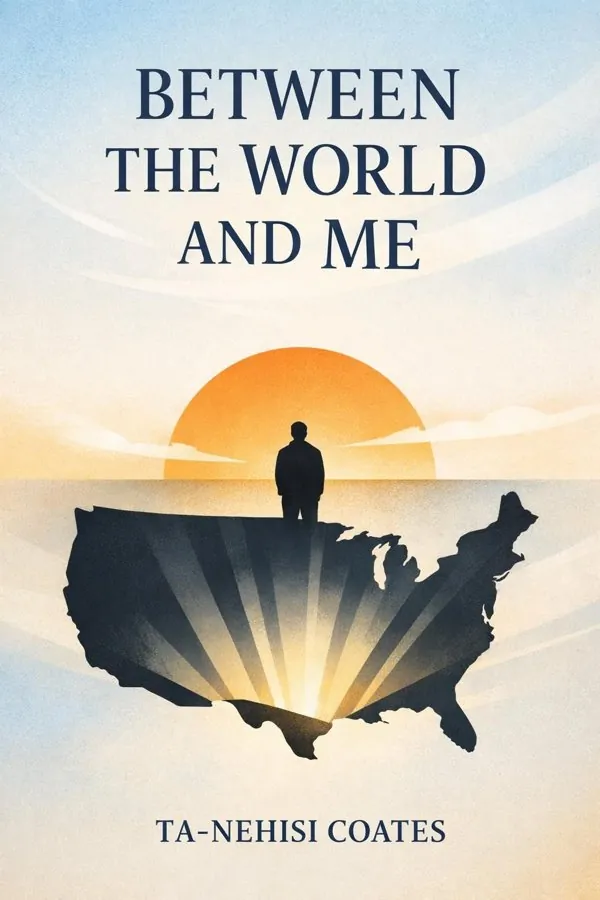
Between the World and Me is Ta-Nehisi Coates’s searing, intimate meditation on race, history, and the fragility of the Black body in the United States. Written as a letter to his teenage son, the book blends memoir, social criticism, and philosophical reflection to confront a central American truth: racism is not just a matter of prejudice or bad intentions, but a force that has historically been enacted on Black bodies through violence, control, exclusion, and fear. Coates moves from his childhood in Baltimore to his education at Howard University, from national tragedies to personal grief, always returning to the question of how one lives honestly under such conditions. The book matters because it refuses comforting myths and instead offers moral clarity, emotional precision, and historical depth. Coates writes with the authority of a major public intellectual and journalist who has spent years examining American power, but also with the vulnerability of a father trying to prepare his son for the world as it is. The result is a modern classic that challenges readers to rethink identity, citizenship, and the American Dream.
Key Takeaways
- 1The Body Is the Central Battleground — A society reveals its deepest values by what it permits to happen to human bodies. Coates builds his argument around thi…
- 2Baltimore Taught Fear as Curriculum — Children often learn their society’s truths before they know its theories. Coates’s memories of growing up in Baltimore …
- 3Real Education Begins with Honest Inquiry — The most transformative education often starts when we stop accepting the stories we were handed. Coates describes schoo…
 10 min read
A Promised Land
by Barack Obama
A Promised Land is the first installment of Barack Obama’s presidential memoir, covering his path from a young man searching for identity to a leader navigating one of the most demanding offices in the world. Blending personal history with political storytelling, the book traces Obama’s early life, his rise through community organizing and public office, the drama of the 2008 campaign, and the defining struggles of his first years in the White House. At its core, this is not only a memoir of power but a meditation on democracy, compromise, race, and the moral burdens of leadership. What makes the book especially compelling is Obama’s reflective tone. He does not present politics as a neat story of heroic victories, but as a series of imperfect choices made under pressure, uncertainty, and intense public scrutiny. Readers gain an insider’s view of economic crisis management, health care reform, foreign policy, and the emotional costs of governing. As the 44th President of the United States and a gifted writer with a deep sense of history, Obama brings unusual authority to this account. The result is a memoir that is both intimate and expansive, idealistic and sober, personal and profoundly civic.
Key Takeaways
- 1Identity Shapes the Way Leaders See — Leadership often begins long before power arrives; it starts with the stories we tell ourselves about who we are. In A P…
- 2Idealism Must Survive Contact With Power — It is easy to believe in change when you are outside the system; the real test comes when you enter it. Obama’s account …
- 3Ambition Needs Purpose to Stay Grounded — Ambition by itself is rarely enough to sustain public trust; it needs to be anchored in a purpose larger than self-advan…
Want the full summary?
Get instant access to this book summary and 100K+ more with Fizz Moment.
Get Free SummaryAvailable on App Store • Free to download
About This List
Barack Obama shares his annual reading list every year, featuring books on history, identity, science, and the human condition. His picks reflect deep intellectual curiosity and a commitment to understanding diverse perspectives.
This list features 9 carefully selected books. With FizzRead, you can read AI-powered summaries of each book in just 15 minutes. Get the key takeaways and start applying the insights immediately.
Ready to start reading?
Get instant access to all 9 book summaries and 100K+ more with FizzRead.