

Liberalism and Its Discontents: Summary & Key Insights
 10 min11 chaptersAudio available
What Is Liberalism and Its Discontents About?
Liberalism and Its Discontents by Francis Fukuyama is a politics book spanning 11 pages. In this book, Francis Fukuyama explores the challenges facing liberal democracy in the twenty-first century. He examines how liberalism, once the dominant political ideology, has come under attack from both the right and the left, and argues for a renewed commitment to its core principles of individual rights, rule of law, and tolerance. Fukuyama traces the historical development of liberal thought and analyzes contemporary issues such as identity politics, nationalism, and populism.
This FizzRead summary covers all 11 key chapters of Liberalism and Its Discontents in approximately 10 minutes, distilling the most important ideas, arguments, and takeaways from Francis Fukuyama's work. Also available as an audio summary and Key Quotes Podcast.
Liberalism and Its Discontents
In this book, Francis Fukuyama explores the challenges facing liberal democracy in the twenty-first century. He examines how liberalism, once the dominant political ideology, has come under attack from both the right and the left, and argues for a renewed commitment to its core principles of individual rights, rule of law, and tolerance. Fukuyama traces the historical development of liberal thought and analyzes contemporary issues such as identity politics, nationalism, and populism.
Who Should Read Liberalism and Its Discontents?
This book is perfect for anyone interested in politics and looking to gain actionable insights in a short read. Whether you're a student, professional, or lifelong learner, the key ideas from Liberalism and Its Discontents by Francis Fukuyama will help you think differently.
- ✓Readers who enjoy politics and want practical takeaways
- ✓Professionals looking to apply new ideas to their work and life
- ✓Anyone who wants the core insights of Liberalism and Its Discontents in just 10 minutes
Want the full summary?
Get instant access to this book summary and 100K+ more with Fizz Moment.
Get Free SummaryAvailable on App Store • Free to download
Key Chapters
To understand our current crisis, we must return to the origins of liberalism. The idea did not emerge fully formed, but evolved out of Europe’s violent struggles between faiths and monarchies. Thinkers like John Locke, Thomas Hobbes, and Montesquieu articulated visions of political order that would protect individuals from arbitrary power. Locke’s social contract, which posited that government derives legitimacy from the consent of the governed, became a foundational claim. He insisted that individuals possess natural rights — life, liberty, and property — that precede the state itself. This was a revolutionary departure from a world still defined by hierarchy, religion, and paternal authority.
The Enlightenment’s broader emphasis on reason and autonomy strengthened this moral pivot. The notion that each person was capable of self-governance led to demands for freedom of speech, conscience, and enterprise. It was a theory of peace through pluralism: if the state could refrain from imposing moral or religious orthodoxy, society could avoid endless conflict. For all its imperfections, this liberal idea enabled Europe, and later much of the world, to escape the cycle of repression and rebellion that had defined earlier epochs.
Yet liberalism was from its birth both universalist and precarious. It elevated individual freedom, but it also depended on restraint — the ability of citizens and states alike to limit their power. Every generation has had to renegotiate this balance between freedom and order. The liberal tradition’s success has always hinged on that delicate equilibrium.
At its essence, liberalism rests on three interlocking principles: individual rights, the rule of law, and limited government. Everything else flows from these. As I have argued, these principles were not simply philosophical abstractions; they provided a practical answer to Europe's sectarian bloodshed. By protecting individuals’ rights equally, regardless of belief or status, liberalism enabled peaceful coexistence.
The rule of law is the mechanism through which this protection is made real. It constrains power — both governmental and private — ensuring that no one stands above the law. Limited government, in turn, ensures that the state serves as a neutral arbiter rather than an instrument of domination. In modern democracies, these ideas evolved into constitutionalism, separation of powers, and the independent judiciary.
Such institutions embody the liberal conviction that human beings, though imperfect, can coexist under general rules that respect diversity. Critics often accuse liberalism of being soulless or atomizing, but I argue that its moral contribution lies precisely in this neutrality. It does not seek to dictate the highest good — only to guarantee the space where individuals may pursue their own visions of it. In a pluralistic age, that modesty is not a weakness; it is a profound moral achievement.
+ 9 more chapters — available in the FizzRead app
All Chapters in Liberalism and Its Discontents
About the Author
Francis Fukuyama is an American political scientist, economist, and author known for his work on political order and development. He gained international recognition with his book 'The End of History and the Last Man' and has taught at Stanford University and Johns Hopkins University.
Get This Summary in Your Preferred Format
Read or listen to the Liberalism and Its Discontents summary by Francis Fukuyama anytime, anywhere. FizzRead offers multiple formats so you can learn on your terms — all free.
Available formats: App · Audio · PDF · EPUB — All included free with FizzRead
Download Liberalism and Its Discontents PDF and EPUB Summary
Key Quotes from Liberalism and Its Discontents
“To understand our current crisis, we must return to the origins of liberalism.”
“At its essence, liberalism rests on three interlocking principles: individual rights, the rule of law, and limited government.”
Frequently Asked Questions about Liberalism and Its Discontents
Liberalism and Its Discontents by Francis Fukuyama is a politics book that explores key ideas across 11 chapters. In this book, Francis Fukuyama explores the challenges facing liberal democracy in the twenty-first century. He examines how liberalism, once the dominant political ideology, has come under attack from both the right and the left, and argues for a renewed commitment to its core principles of individual rights, rule of law, and tolerance. Fukuyama traces the historical development of liberal thought and analyzes contemporary issues such as identity politics, nationalism, and populism.
More by Francis Fukuyama

The Origins of Political Order: From Prehuman Times to the French Revolution
Francis Fukuyama
10 min
The End of History and the Last Man
Francis Fukuyama
10 min
Trust: The Social Virtues and the Creation of Prosperity
Francis Fukuyama
10 min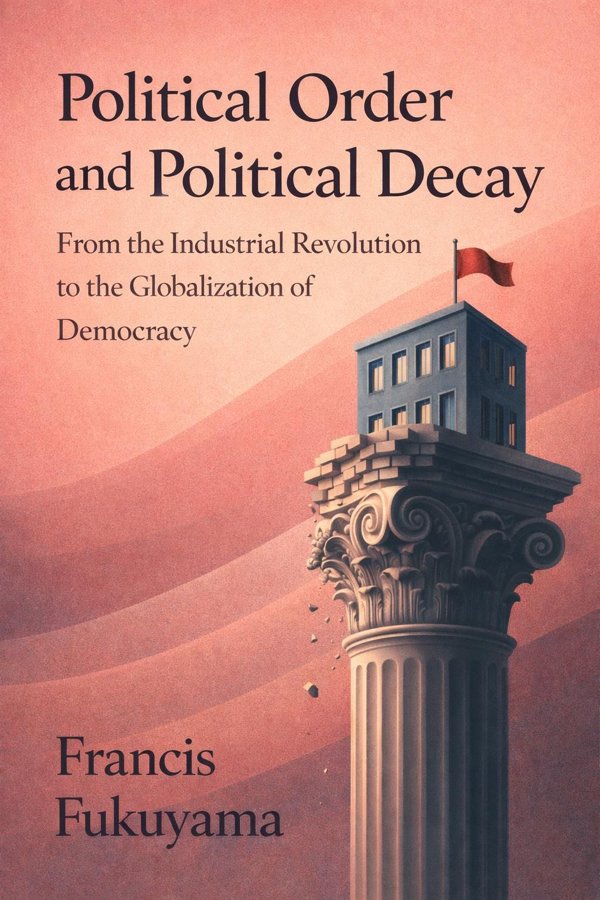
Political Order and Political Decay: From the Industrial Revolution to the Globalization of Democracy
Francis Fukuyama
10 minYou Might Also Like

Antifa: The Anti-Fascist Handbook
Mark Bray
10 min
Attack from Within: How Disinformation Is Sabotaging America
Barbara McQuade
10 min
Coercion, Capital, and European States, AD 990–1992
Charles Tilly
10 min
Digital Democracy: Concepts, Methodologies, Tools, and Applications
Various Authors
10 min
Fascism
Stanley G. Payne
10 min
Fire And Fury: Inside The Trump White House
Michael Wolff
10 minBrowse by Category
Ready to read Liberalism and Its Discontents?
Get the full summary and 100K+ more books with Fizz Moment.