
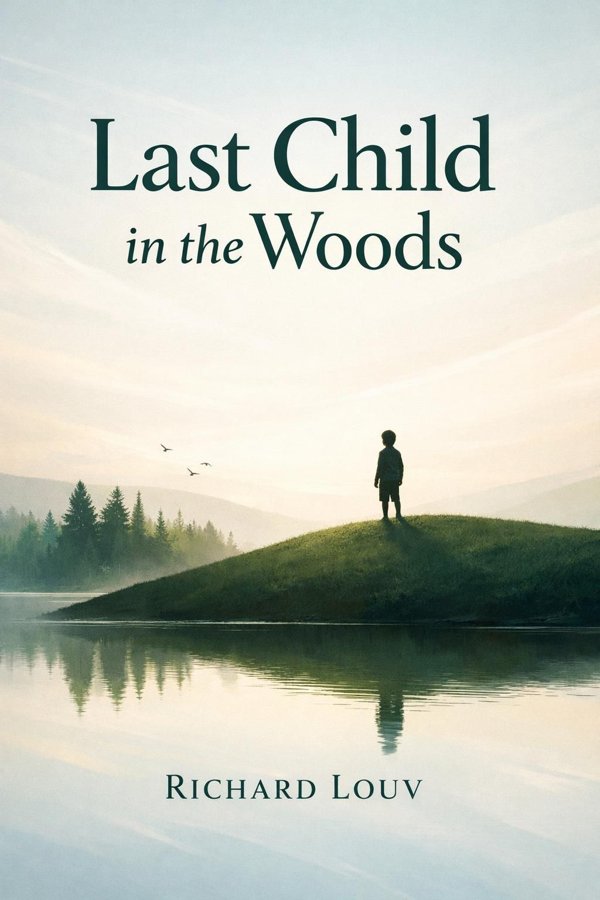
Last Child in the Woods: Saving Our Children from Nature-Deficit Disorder: Summary & Key Insights
by Richard Louv
 10 min5 chaptersAudio available
What Is Last Child in the Woods: Saving Our Children from Nature-Deficit Disorder About?
Last Child in the Woods: Saving Our Children from Nature-Deficit Disorder by Richard Louv is a environment book spanning 5 pages. In this influential work, journalist and author Richard Louv explores the growing divide between children and the natural world. He introduces the concept of 'nature-deficit disorder' to describe the physical and psychological costs of this separation. Drawing on research, interviews, and personal stories, Louv argues that direct exposure to nature is essential for healthy childhood development and for the future of the planet. The book has inspired a global movement to reconnect children with nature through education, urban planning, and family life.
This FizzRead summary covers all 5 key chapters of Last Child in the Woods: Saving Our Children from Nature-Deficit Disorder in approximately 10 minutes, distilling the most important ideas, arguments, and takeaways from Richard Louv's work. Also available as an audio summary and Key Quotes Podcast.
Last Child in the Woods: Saving Our Children from Nature-Deficit Disorder
In this influential work, journalist and author Richard Louv explores the growing divide between children and the natural world. He introduces the concept of 'nature-deficit disorder' to describe the physical and psychological costs of this separation. Drawing on research, interviews, and personal stories, Louv argues that direct exposure to nature is essential for healthy childhood development and for the future of the planet. The book has inspired a global movement to reconnect children with nature through education, urban planning, and family life.
Who Should Read Last Child in the Woods: Saving Our Children from Nature-Deficit Disorder?
This book is perfect for anyone interested in environment and looking to gain actionable insights in a short read. Whether you're a student, professional, or lifelong learner, the key ideas from Last Child in the Woods: Saving Our Children from Nature-Deficit Disorder by Richard Louv will help you think differently.
- ✓Readers who enjoy environment and want practical takeaways
- ✓Professionals looking to apply new ideas to their work and life
- ✓Anyone who wants the core insights of Last Child in the Woods: Saving Our Children from Nature-Deficit Disorder in just 10 minutes
Want the full summary?
Get instant access to this book summary and 100K+ more with Fizz Moment.
Get Free SummaryAvailable on App Store • Free to download
Key Chapters
When I reflect on my own childhood, I remember endless days exploring ravines, building forts, and getting dirty. But for many twenty-first-century kids, that landscape of discovery has disappeared. Across generations, we’ve seen a steady shrinking of the territory children are allowed to roam. Sociologists have documented that the average radius around home where children play freely has diminished by more than ninety percent over the last few decades.
Urbanization, increased traffic, and cultural shifts have reshaped our environment—and our perceptions of safety. Parents today are more fearful, schools are more structured, and neighborhoods less friendly to spontaneous adventure. Add to that the rise of digital entertainment, and you get a formula for confinement that is both physical and psychological. The result is not just fewer scraped knees and sunburns, but fewer chances for children to develop independence, curiosity, and empathy for living things.
As I spoke with families across the United States, a poignant pattern emerged: children were describing nature as 'boring,' or even 'dangerous.' That struck me deeply. These words reflect not only loss of experience but of language and imagination. A stream becomes a drainage ditch; a field becomes a future subdivision. The language of nature fades from memory, and with it goes a sense of wonder.
Yet I also found sparks of hope. Some communities are rediscovering ways to let children engage with nature safely and freely. Urban gardens, schoolyard habitats, and family camping initiatives show that even a single tree or patch of wild ground can be enough to awaken curiosity and joy. What matters most is that we allow children to explore with all their senses—to feel, touch, and belong to the living world once more.
+ 3 more chapters — available in the FizzRead app
All Chapters in Last Child in the Woods: Saving Our Children from Nature-Deficit Disorder
About the Author
Richard Louv is an American journalist and author best known for his work on the connections between family, nature, and community. He is the co-founder and chairman emeritus of the Children & Nature Network, an organization that promotes nature engagement for children. His writings have appeared in major publications, and his books have influenced environmental education and policy worldwide.
Get This Summary in Your Preferred Format
Read or listen to the Last Child in the Woods: Saving Our Children from Nature-Deficit Disorder summary by Richard Louv anytime, anywhere. FizzRead offers multiple formats so you can learn on your terms — all free.
Available formats: App · Audio · PDF · EPUB — All included free with FizzRead
Download Last Child in the Woods: Saving Our Children from Nature-Deficit Disorder PDF and EPUB Summary
Key Quotes from Last Child in the Woods: Saving Our Children from Nature-Deficit Disorder
“When I reflect on my own childhood, I remember endless days exploring ravines, building forts, and getting dirty.”
“As a journalist, I did not invent the idea that nature is good for us; I simply listened to what scientists, parents, and children had been telling us all along.”
Frequently Asked Questions about Last Child in the Woods: Saving Our Children from Nature-Deficit Disorder
Last Child in the Woods: Saving Our Children from Nature-Deficit Disorder by Richard Louv is a environment book that explores key ideas across 5 chapters. In this influential work, journalist and author Richard Louv explores the growing divide between children and the natural world. He introduces the concept of 'nature-deficit disorder' to describe the physical and psychological costs of this separation. Drawing on research, interviews, and personal stories, Louv argues that direct exposure to nature is essential for healthy childhood development and for the future of the planet. The book has inspired a global movement to reconnect children with nature through education, urban planning, and family life.
More by Richard Louv
You Might Also Like

A Life on Our Planet: My Witness Statement and a Vision for the Future
David Attenborough
10 min
A Sky Full Of Birds
Matt Merritt
10 min
Carbon Zero: Imagining Cities That Can Save the Planet
Alex Steffen
10 min
Eaarth: Making a Life on a Tough New Planet
Bill McKibben
10 min
The Social Contract and Environmental Governance
Various Editors
10 min
The Wild Places
Robert Macfarlane
10 minBrowse by Category
Ready to read Last Child in the Woods: Saving Our Children from Nature-Deficit Disorder?
Get the full summary and 100K+ more books with Fizz Moment.