
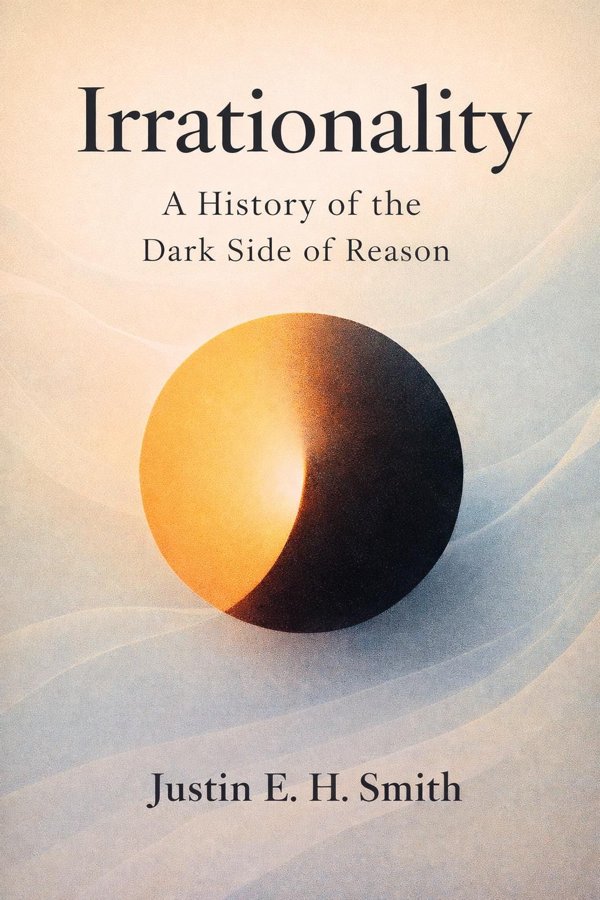
Irrationality: A History of the Dark Side of Reason: Summary & Key Insights
 10 min8 chaptersAudio available
Key Takeaways from Irrationality: A History of the Dark Side of Reason
A civilization does not discover reason by leaving irrationality behind; it discovers reason by trying to name, tame, and live alongside it.
Mystery does not always oppose reason; sometimes it gives reason its work to do.
The age that celebrated reason most loudly also revealed how easily reason can become self-righteous, abstract, and blind to its own excesses.
Human beings do not live by logic alone, and any culture that forgets this invites a revolt.
Scientific method is one of humanity’s greatest tools for correcting error, yet scientists remain human beings shaped by hopes, prestige, habits, and cultural assumptions.
What Is Irrationality: A History of the Dark Side of Reason About?
Irrationality: A History of the Dark Side of Reason by Justin E. H. Smith is a civilization book spanning 8 pages. Why do human beings keep producing superstition, fanaticism, conspiracy, and self-deception in cultures that pride themselves on reason? In Irrationality, philosopher and historian Justin E. H. Smith argues that this is not a contradiction at all. The history of rational thought has always carried within it a shadow side: myth, impulse, imagination, dogma, and collective delusion. Rather than treating irrationality as a mere failure of logic, Smith shows that it has been woven into philosophy, religion, science, politics, and modern technological life from the beginning. This book matters because it challenges one of the modern world’s most flattering assumptions: that civilization advances simply by replacing unreason with knowledge. Smith reveals instead that reason and irrationality develop together, often reinforcing each other in unexpected ways. Ancient metaphysics, medieval theology, Enlightenment universalism, Romantic passion, modern ideology, and digital algorithms all tell part of the same story. As a professor of history and philosophy of science at Université Paris Cité, Smith brings unusual authority to this inquiry. He combines intellectual history, philosophical depth, and cultural criticism to explain why understanding irrationality is essential if we want to understand ourselves.
This FizzRead summary covers all 8 key chapters of Irrationality: A History of the Dark Side of Reason in approximately 10 minutes, distilling the most important ideas, arguments, and takeaways from Justin E. H. Smith's work. Also available as an audio summary and Key Quotes Podcast.
Irrationality: A History of the Dark Side of Reason
Why do human beings keep producing superstition, fanaticism, conspiracy, and self-deception in cultures that pride themselves on reason? In Irrationality, philosopher and historian Justin E. H. Smith argues that this is not a contradiction at all. The history of rational thought has always carried within it a shadow side: myth, impulse, imagination, dogma, and collective delusion. Rather than treating irrationality as a mere failure of logic, Smith shows that it has been woven into philosophy, religion, science, politics, and modern technological life from the beginning.
This book matters because it challenges one of the modern world’s most flattering assumptions: that civilization advances simply by replacing unreason with knowledge. Smith reveals instead that reason and irrationality develop together, often reinforcing each other in unexpected ways. Ancient metaphysics, medieval theology, Enlightenment universalism, Romantic passion, modern ideology, and digital algorithms all tell part of the same story.
As a professor of history and philosophy of science at Université Paris Cité, Smith brings unusual authority to this inquiry. He combines intellectual history, philosophical depth, and cultural criticism to explain why understanding irrationality is essential if we want to understand ourselves.
Who Should Read Irrationality: A History of the Dark Side of Reason?
This book is perfect for anyone interested in civilization and looking to gain actionable insights in a short read. Whether you're a student, professional, or lifelong learner, the key ideas from Irrationality: A History of the Dark Side of Reason by Justin E. H. Smith will help you think differently.
- ✓Readers who enjoy civilization and want practical takeaways
- ✓Professionals looking to apply new ideas to their work and life
- ✓Anyone who wants the core insights of Irrationality: A History of the Dark Side of Reason in just 10 minutes
Want the full summary?
Get instant access to this book summary and 100K+ more with Fizz Moment.
Get Free SummaryAvailable on App Store • Free to download
Key Chapters
A civilization does not discover reason by leaving irrationality behind; it discovers reason by trying to name, tame, and live alongside it. Smith begins in ancient Greece, where philosophy first gave systematic attention to what it means to think well, act justly, and distinguish knowledge from confusion. Yet even in this foundational moment, reason did not emerge as a clean, self-sufficient force. Plato worried about appetites, poetic seduction, and the instability of crowds. Aristotle classified forms of knowledge and logic, but also recognized habit, emotion, and rhetoric as central to human life. Greek tragedy, myth, and philosophy developed together, not in separate worlds.
This matters because the usual story of civilization says rational thought replaced mythic thinking. Smith complicates that narrative. The Greeks did not eliminate myth; they reinterpreted it. They did not banish madness; they tried to categorize it. They did not remove persuasion from public life; they refined it. In democratic assemblies, courts, and schools, reason depended on forms of speech and social authority that were never purely logical.
You can see the same pattern today. We often imagine evidence-based debate as the opposite of storytelling, but public persuasion still relies on symbols, narratives, and moral imagery. A policy report may be full of data, yet what moves people is often a vivid example or emotionally charged frame. This is not a modern corruption of reason. It is part of reason’s historical condition.
Smith’s deeper point is that rationality begins not as a triumph over darkness, but as a fragile discipline developed within a world already shaped by desire, ritual, and imagination. Actionable takeaway: when evaluating an argument, ask not only whether its logic is sound, but also what myths, emotions, and social assumptions are helping make it persuasive.
Mystery does not always oppose reason; sometimes it gives reason its work to do. In the medieval world, Smith shows, intellectual life was not defined by a simple surrender to dogma. Instead, theological culture created one of history’s most ambitious efforts to integrate faith, logic, metaphysics, and moral inquiry. Thinkers in the scholastic tradition believed the world was ordered and intelligible because it was created by God. This conviction gave them confidence that disciplined reasoning could clarify doctrine, resolve disputes, and illuminate the structure of reality.
The modern stereotype paints the Middle Ages as irrational and pre-scientific, but Smith argues that this misses the complexity of the period. Medieval thinkers did not reject reason; they embedded it within a larger framework that included revelation, symbolism, and sacred authority. Questions that now seem purely religious were often treated with remarkable analytical rigor. Debates about universals, causation, personhood, and the soul sharpened habits of distinction and argument that would shape later philosophy.
At the same time, reason had boundaries. Some truths were held to exceed human comprehension. Paradox was not always a failure to be solved; it could signal the limits of finite understanding. That attitude still appears in secular life. Experts in medicine, economics, or law often reason carefully within accepted frameworks, while relying on background assumptions that are not themselves fully demonstrated in everyday practice.
The lesson is not that all authority deserves trust, but that reason always operates inside institutions and inherited worldviews. Even the most careful thinker starts from commitments they did not invent. Actionable takeaway: when you encounter a system of belief, do not ask only whether it contains irrational elements; ask how it organizes reason, what it treats as unquestionable, and where it places the limits of explanation.
The age that celebrated reason most loudly also revealed how easily reason can become self-righteous, abstract, and blind to its own excesses. Smith treats the Enlightenment not as a false project, but as a paradoxical one. It advanced science, criticism, secular inquiry, and universal ideals of human dignity. Yet it also generated rigid systems, overconfidence in classification, and new forms of domination justified in the name of progress.
The central tension is this: once reason sees itself as the final judge of legitimacy, it can begin to dismiss everything outside its preferred framework as mere error, backwardness, or barbarism. Enlightenment thinkers challenged superstition and arbitrary authority, but some also imposed sweeping theories of civilization that ranked peoples, cultures, and ways of life. Rational administration could become bureaucratic cruelty. Universal principles could be paired with colonial arrogance. The dream of clarity could harden into a refusal to acknowledge ambiguity.
This history remains highly relevant. Modern institutions still invoke expertise, data, and evidence while quietly embedding assumptions about what counts as a normal citizen, a developed society, or a valid form of knowledge. A technically efficient system may still be unjust if it ignores lived complexity. Consider standardized testing, predictive policing, or economic metrics that treat people as units rather than as moral agents in context.
Smith’s contribution is not to reject the Enlightenment, but to warn against idealizing it. Reason becomes dangerous when it forgets its own limits and begins to confuse abstraction with wisdom. A society can become more informed while also becoming more spiritually narrow or politically coercive.
Actionable takeaway: defend reason, but stay alert to the ways claims of neutrality, universality, and expertise may conceal power, exclusion, or misplaced certainty.
Human beings do not live by logic alone, and any culture that forgets this invites a revolt. In response to the abstractions of Enlightenment thought, Romanticism elevated feeling, imagination, creativity, nature, and inward experience. Smith interprets this not as a simple rejection of reason, but as a protest against forms of rationality that had become cold, mechanical, and detached from lived life.
Romantic thinkers, poets, and artists insisted that truth is not exhausted by analysis. They valued the sublime, the mysterious, and the emotionally intense because such experiences seemed to reveal dimensions of reality inaccessible to calculation. National traditions, folklore, passion, genius, and authenticity became powerful cultural ideals. This shift enriched modern culture by restoring attention to art, individuality, and the depths of subjectivity.
But the recovery of unreason had dangers too. Once intuition and feeling are treated as superior to criticism, they can slide into cults of instinct, anti-intellectualism, and exclusionary identity. The same celebration of spirit that inspires artistic freedom can also feed nationalism, mythic politics, or contempt for disciplined inquiry. We still live with this legacy. Self-expression is often treated as inherently truthful, even when it is misinformed or manipulative. “I feel it strongly” becomes a substitute for “I have examined it carefully.”
Yet Smith does not dismiss Romanticism. He shows that modern life needs imagination, emotion, and symbolic meaning. A purely procedural society becomes sterile. The challenge is integration: emotion should deepen judgment, not replace it.
In practical terms, this applies everywhere from leadership to education. Data can show what is happening, but stories and symbols shape why people care. Actionable takeaway: make room for feeling and imagination in your thinking, but always pair emotional conviction with reflection, evidence, and a willingness to revise your view.
Scientific method is one of humanity’s greatest tools for correcting error, yet scientists remain human beings shaped by hopes, prestige, habits, and cultural assumptions. Smith argues that modern science should not be romanticized as a realm purified of irrationality. Its power lies precisely in the fact that it was built to discipline minds that are naturally vulnerable to illusion, status competition, and premature certainty.
The history of science includes extraordinary breakthroughs, but also examples of collective fixation and conceptual blindness. Researchers have defended flawed theories for decades, ignored contradictory evidence, and interpreted data through the lens of what their age found plausible. Phrenology, racial science, eugenics, and overconfident reductionism are not accidents external to science; they show how inquiry can be redirected by ideology and desire. Even today, publication incentives, media attention, tribal academic disputes, and funding pressures affect which questions get asked and which conclusions gain traction.
Smith’s point is not cynical. He is not saying science is just another belief system. He is saying that the scientific enterprise works best when it acknowledges its vulnerability to non-rational influences. Peer review, replication, open criticism, and methodological transparency are valuable because they are protections against human weakness, not because scientists are naturally more rational than everyone else.
This perspective is useful in everyday life too. People often invoke “the science” as if knowledge appears without interpretation. But real scientific literacy requires understanding uncertainty, competing models, and institutional context. In health decisions, public policy, and technology debates, trust should be informed rather than blind.
Actionable takeaway: respect scientific expertise deeply, but evaluate claims by asking how evidence was produced, what incentives are involved, and whether the process includes real safeguards against error and bias.
Groups can become convinced of things no thoughtful individual would endorse alone. Smith explores political irrationality as a recurring feature of modern public life, not a rare breakdown. Ideologies, national myths, mass movements, and partisan identities all rely on emotional energy, symbolic narratives, and simplified worldviews that exceed evidence. Politics does not merely use irrationality as a tool; it often depends on it for cohesion, mobilization, and legitimacy.
This does not mean every political commitment is irrational. Rather, even serious political ideals require stories about enemies, destinies, historical missions, and moral innocence. These stories help people endure sacrifice and uncertainty. The danger arises when they become closed systems, immune to correction. At that point, contradictory facts are not evaluated but absorbed, explained away, or denounced as hostile propaganda.
The twentieth century offers obvious examples, from totalitarian mythmaking to propaganda states. But Smith’s insight applies more broadly to democracies as well. Citizens often imagine they vote on policy after objective analysis, yet many align first with a tribe and then assemble reasons afterward. Social belonging, resentment, fear, and hope shape political judgment far more than most people admit. Campaigns understand this intuitively: they do not simply provide arguments; they stage identities.
This helps explain why fact-checking alone rarely changes minds. If a belief is attached to dignity, community, or existential threat, evidence can feel like an attack rather than a correction. The answer is not to abandon truth, but to recognize that persuasion must address moral imagination and social trust as well as information.
Actionable takeaway: before reacting to a political claim, ask what emotional need, group identity, or narrative it serves for you and for others; this creates space for more honest judgment and less reflexive partisanship.
A machine can process information with astonishing speed and still intensify human confusion. Smith examines the digital age as a new chapter in the history of irrationality, where algorithmic systems do not eliminate bias, fantasy, or manipulation but often scale them. Search engines, recommender systems, viral platforms, and data-driven interfaces appear neutral because they are mathematical. Yet they are built on human choices about relevance, engagement, monetization, and behavioral prediction.
The result is a peculiar fusion of hyper-rational structure and irrational social consequence. Platforms optimize for attention, outrage, repetition, and emotional salience because those variables keep users engaged. Conspiracy theories, identity performance, and moral panic can spread faster than careful analysis not despite the system’s design, but because of it. Rational infrastructure becomes a vehicle for irrational amplification.
This helps explain why modern people can feel both overinformed and less capable of judgment. We are surrounded by data but deprived of orientation. The ability to access endless information is mistaken for understanding. Meanwhile, algorithmic personalization narrows perspective, making individuals feel sovereign while subtly guiding what they see, fear, and desire.
You can observe this in daily habits. A person opens a platform seeking one fact and ends up immersed in emotionally charged, loosely connected content. The experience feels self-directed, but recommendation systems are steering attention in ways difficult to notice from within. The technology is not irrational in itself; it operationalizes incentives that exploit our cognitive vulnerabilities.
Smith’s warning is timely: digital systems are not a triumph of reason over chaos. They are environments where quantified logic and human irrationality now co-produce each other at scale. Actionable takeaway: build friction into your information diet by pausing before sharing, checking original sources, and deliberately seeking viewpoints that algorithms are unlikely to show you.
The most unsettling idea in Smith’s book is also the most liberating: reason and irrationality are not two separate territories with a clear border between them. They are intertwined aspects of human life. We imagine ourselves crossing from darkness into light through education, science, or moral progress. But the mind that calculates is also the mind that dreams, fears, imitates, worships, and rationalizes. Civilization does not abolish this structure; it organizes it.
This has major philosophical implications. If irrationality is not merely error from outside reason, then the task is not purification but vigilance. Human beings use reason to justify desire as often as to discipline it. We create systems of explanation that also serve identity and power. We seek truth, but we also seek comfort, order, recognition, and meaning. Rational argument therefore cannot be understood apart from psychology, culture, and history.
This view avoids two extremes. On one side is naïve rationalism, which assumes enough evidence will solve confusion. On the other is cynical relativism, which says reason is just disguise. Smith rejects both. Rational inquiry remains real and indispensable, but it is always embodied, social, and fallible. Its dignity lies not in perfection but in self-correction.
For readers, this framework can be deeply practical. It encourages intellectual humility without surrendering standards. In relationships, work, citizenship, and study, better judgment begins when we stop imagining ourselves as purely rational actors and start examining the motives entangled with our conclusions.
Actionable takeaway: practice reflective skepticism toward yourself first; whenever you feel absolutely certain, ask what desire, fear, identity, or loyalty might be cooperating with your reasoning.
All Chapters in Irrationality: A History of the Dark Side of Reason
About the Author
Justin E. H. Smith is a philosopher and historian of ideas whose work explores the boundaries of reason, science, culture, and human identity. He is a professor of history and philosophy of science at Université Paris Cité and has written extensively on early modern philosophy, the history of science, and the conceptual foundations of modern thought. His scholarship often connects historical inquiry with contemporary questions about rationality, technology, classification, and what it means to be human. Known for blending rigorous research with accessible cultural criticism, Smith has built a reputation as a distinctive voice in intellectual history. In Irrationality, he draws on this interdisciplinary background to examine how unreason has persisted within the very traditions that define themselves by reason.
Get This Summary in Your Preferred Format
Read or listen to the Irrationality: A History of the Dark Side of Reason summary by Justin E. H. Smith anytime, anywhere. FizzRead offers multiple formats so you can learn on your terms — all free.
Available formats: App · Audio · PDF · EPUB — All included free with FizzRead
Download Irrationality: A History of the Dark Side of Reason PDF and EPUB Summary
Key Quotes from Irrationality: A History of the Dark Side of Reason
“A civilization does not discover reason by leaving irrationality behind; it discovers reason by trying to name, tame, and live alongside it.”
“Mystery does not always oppose reason; sometimes it gives reason its work to do.”
“The age that celebrated reason most loudly also revealed how easily reason can become self-righteous, abstract, and blind to its own excesses.”
“Human beings do not live by logic alone, and any culture that forgets this invites a revolt.”
“Scientific method is one of humanity’s greatest tools for correcting error, yet scientists remain human beings shaped by hopes, prestige, habits, and cultural assumptions.”
Frequently Asked Questions about Irrationality: A History of the Dark Side of Reason
Irrationality: A History of the Dark Side of Reason by Justin E. H. Smith is a civilization book that explores key ideas across 8 chapters. Why do human beings keep producing superstition, fanaticism, conspiracy, and self-deception in cultures that pride themselves on reason? In Irrationality, philosopher and historian Justin E. H. Smith argues that this is not a contradiction at all. The history of rational thought has always carried within it a shadow side: myth, impulse, imagination, dogma, and collective delusion. Rather than treating irrationality as a mere failure of logic, Smith shows that it has been woven into philosophy, religion, science, politics, and modern technological life from the beginning. This book matters because it challenges one of the modern world’s most flattering assumptions: that civilization advances simply by replacing unreason with knowledge. Smith reveals instead that reason and irrationality develop together, often reinforcing each other in unexpected ways. Ancient metaphysics, medieval theology, Enlightenment universalism, Romantic passion, modern ideology, and digital algorithms all tell part of the same story. As a professor of history and philosophy of science at Université Paris Cité, Smith brings unusual authority to this inquiry. He combines intellectual history, philosophical depth, and cultural criticism to explain why understanding irrationality is essential if we want to understand ourselves.
More by Justin E. H. Smith
You Might Also Like
The Structure of Scientific Revolutions
Thomas S. Kuhn
10 min
Genius
Harold Bloom
10 min
A Cultural History of the Medieval Age
Various Editors
10 min
A History of God: The 4,000-Year Quest of Judaism, Christianity and Islam
Karen Armstrong
10 min
A History of the World in 10½ Chapters
Julian Barnes
10 min
A Short History of Progress
Ronald Wright
10 minBrowse by Category
Ready to read Irrationality: A History of the Dark Side of Reason?
Get the full summary and 100K+ more books with Fizz Moment.