
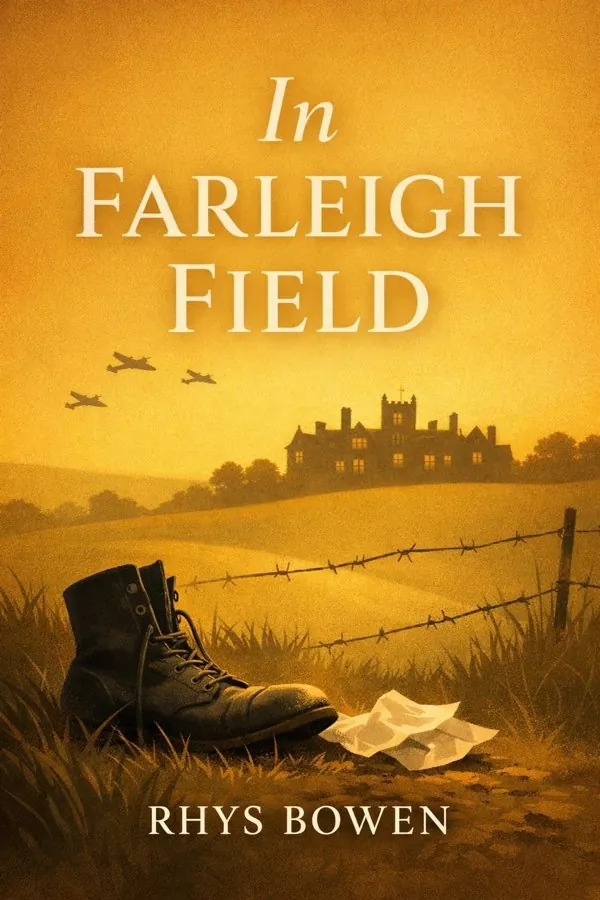
In Farleigh Field: Summary & Key Insights
by Rhys Bowen
 10 min9 chaptersAudio available
Key Takeaways from In Farleigh Field
A single unexplained death can expose the fault lines of an entire community.
Some of the most decisive contributions to war happen in silence.
Privilege does not protect people from suspicion; sometimes it makes them more dangerous.
Duty becomes most painful when it collides with affection.
Betrayal is rarely sudden; it is usually built from smaller compromises.
What Is In Farleigh Field About?
In Farleigh Field by Rhys Bowen is a war_military book spanning 5 pages. Set in the uneasy calm of the English countryside during World War II, In Farleigh Field blends historical fiction, mystery, espionage, and emotional family drama into a richly layered story about loyalty under pressure. Rhys Bowen places readers at Farleigh Place, the ancestral home of Lord Westerham, where the discovery of a dead parachutist in a nearby field shatters the fragile routines of wartime life. As suspicion spreads, the investigation draws together members of an aristocratic family, a childhood friend now serving in British intelligence, and a brilliant young woman engaged in codebreaking work hidden from public view. What makes the novel compelling is not just the question of who died and why, but the deeper moral conflict beneath the mystery. Bowen shows how war transforms drawing rooms into battlegrounds, ordinary conversations into acts of concealment, and private affection into a test of national duty. Her command of historical detail, especially around British intelligence, wartime rationing, class tensions, and Bletchley Park, gives the novel both authenticity and emotional weight. In Farleigh Field matters because it reminds us that in wartime, betrayal is rarely simple, and courage often appears in the most quiet, human forms.
This FizzRead summary covers all 9 key chapters of In Farleigh Field in approximately 10 minutes, distilling the most important ideas, arguments, and takeaways from Rhys Bowen's work. Also available as an audio summary and Key Quotes Podcast.
In Farleigh Field
Set in the uneasy calm of the English countryside during World War II, In Farleigh Field blends historical fiction, mystery, espionage, and emotional family drama into a richly layered story about loyalty under pressure. Rhys Bowen places readers at Farleigh Place, the ancestral home of Lord Westerham, where the discovery of a dead parachutist in a nearby field shatters the fragile routines of wartime life. As suspicion spreads, the investigation draws together members of an aristocratic family, a childhood friend now serving in British intelligence, and a brilliant young woman engaged in codebreaking work hidden from public view.
What makes the novel compelling is not just the question of who died and why, but the deeper moral conflict beneath the mystery. Bowen shows how war transforms drawing rooms into battlegrounds, ordinary conversations into acts of concealment, and private affection into a test of national duty. Her command of historical detail, especially around British intelligence, wartime rationing, class tensions, and Bletchley Park, gives the novel both authenticity and emotional weight. In Farleigh Field matters because it reminds us that in wartime, betrayal is rarely simple, and courage often appears in the most quiet, human forms.
Who Should Read In Farleigh Field?
This book is perfect for anyone interested in war_military and looking to gain actionable insights in a short read. Whether you're a student, professional, or lifelong learner, the key ideas from In Farleigh Field by Rhys Bowen will help you think differently.
- ✓Readers who enjoy war_military and want practical takeaways
- ✓Professionals looking to apply new ideas to their work and life
- ✓Anyone who wants the core insights of In Farleigh Field in just 10 minutes
Want the full summary?
Get instant access to this book summary and 100K+ more with Fizz Moment.
Get Free SummaryAvailable on App Store • Free to download
Key Chapters
A single unexplained death can expose the fault lines of an entire community. In In Farleigh Field, the novel opens with a body found in a field near Farleigh Place: a man who appears to have parachuted in, only to die when his chute failed. The image is startling because it immediately collapses the distance between the war abroad and the country estate at home. The countryside, usually imagined as sheltered and orderly, becomes a place where global conflict lands without warning.
This death is not just a plot device. It acts as a trigger that forces everyone around Farleigh Place to reveal something about themselves. Some react with fear, others with curiosity, and still others with guarded calculation. The event also introduces one of the book’s most important questions: when something appears accidental in wartime, how often is it really planned? Bowen uses this uncertainty to great effect, creating a mystery in which appearances are unreliable and every detail may matter.
In practical terms, the opening teaches readers how strong mysteries work. The best mysteries begin with a disruption that is both specific and symbolic. Here, the dead soldier is not only a victim; he represents the intrusion of hidden networks, state secrecy, and divided loyalties into everyday life. For readers, this creates a deeper kind of suspense, because the mystery is not only who the man was, but what his death says about the people still living.
Actionable takeaway: When reading or analyzing a mystery, pay close attention to the first disruption. Ask not only what happened, but what larger social or moral conflict that event has just set in motion.
Privilege does not protect people from suspicion; sometimes it makes them more dangerous. One of Bowen’s sharpest achievements in In Farleigh Field is her portrayal of the aristocratic world as both elegant and deeply vulnerable to compromise. Farleigh Place, with its traditions, inherited status, and social polish, initially appears to represent continuity in a disrupted nation. Yet beneath that surface lies a network of financial pressure, ideological confusion, and personal weakness that makes the upper class fertile ground for espionage.
The novel explores an uncomfortable wartime reality: members of Britain’s elite were not automatically loyal simply because of lineage. Some were naive, some resentful, some politically misguided, and some actively compromised. Bowen never turns this into caricature. Instead, she shows how social confidence and family reputation can become shields behind which betrayal hides. The drawing room becomes just as perilous as the battlefield because treason often wears good manners.
This idea matters because it challenges the assumption that threat always comes from outside. In practical terms, organizations often focus on external danger while ignoring the risks embedded within trusted structures. The people who understand a system best are also those best positioned to manipulate it. Bowen’s mystery thrives on this principle: familiarity can conceal the gravest hazards.
The aristocratic setting also sharpens the emotional stakes. Loyalty is no longer just patriotic; it is familial, social, and historical. To suspect someone from one’s own circle is to challenge the worldview that once made life feel stable.
Actionable takeaway: Do not confuse status, polish, or tradition with integrity. Whether in institutions, workplaces, or relationships, evaluate trust through actions and patterns, not appearances or pedigree.
Duty becomes most painful when it collides with affection. Ben Cresswell, now working in British intelligence, returns to the world of Farleigh Place not as a carefree childhood friend but as an investigator tasked with uncovering dangerous secrets. His role gives the novel a powerful emotional engine, because he is forced to examine people he knows personally through the cold lens of national security.
Ben’s conflict is central to the book’s moral depth. Intelligence work demands suspicion, discipline, and detachment. Friendship and love ask for trust, memory, and mercy. Bowen does not offer easy reconciliation between these demands. Instead, she shows how war distorts ordinary human bonds. Ben cannot fully inhabit his past because the present requires vigilance. Every conversation may contain a clue. Every shared history may conceal a lie.
What makes Ben compelling is that he is not simply a detective figure solving a puzzle. He represents the cost of responsibility. To do his job well, he must risk hurting people who matter to him. That makes his investigation more than procedural; it becomes ethical. Readers are invited to consider whether truth-seeking is still virtuous when it threatens to shatter families and private loyalties.
This tension has broad relevance. Leaders, managers, and professionals often face situations in which personal comfort conflicts with institutional duty. Ben’s storyline illustrates that integrity sometimes means choosing what is necessary over what is emotionally easier.
Actionable takeaway: When responsibility and personal loyalty clash, define your core principle in advance. Knowing what duty requires before a crisis comes can help you act with greater clarity and less regret.
Betrayal is rarely sudden; it is usually built from smaller compromises. As the mystery unfolds, In Farleigh Field becomes an inquiry into how treachery develops and how difficult it can be to recognize in real time. Bowen avoids simplistic villainy. The traitorous behavior in the novel emerges from motives that feel human: greed, fear, ideology, resentment, desperation, and rationalization. This complexity makes the revelation more unsettling, because readers see that betrayal often grows in the same emotional soil as ordinary weakness.
The novel’s investigative structure reinforces this point. Clues are scattered not only in physical evidence but in behavior, tone, omission, and inconsistency. People reveal themselves through what they avoid saying as much as through what they confess. Bowen’s approach mirrors real life: major breaches of trust are often visible in retrospect as patterns of evasiveness, entitlement, or self-justification.
There is also a larger wartime message here. Nations are endangered not just by enemy force, but by citizens who decide that private desire outweighs collective survival. The traitor in the story is therefore not only a criminal but a moral warning. Bowen shows that betrayal is destructive because it weaponizes intimacy and access. The one who harms from within causes a different kind of damage than the obvious enemy.
Readers can apply this lesson beyond the novel. In teams, communities, and relationships, trust should include accountability. Healthy trust is not blindness; it is confidence supported by evidence, consistency, and shared values.
Actionable takeaway: Watch for patterns, not isolated incidents. If someone repeatedly hides information, shifts stories, or excuses self-serving behavior, treat those signs seriously before the damage becomes irreversible.
War does not merely change events; it changes who is allowed to matter. One of the most rewarding aspects of In Farleigh Field is how it expands the reader’s sense of women’s wartime roles. Through Pamela and other female characters, Bowen portrays women not as passive observers of history but as active participants in intelligence, family survival, emotional resilience, and moral judgment.
The novel is especially effective in showing that women’s contributions often operated on multiple levels at once. A woman might be navigating rationing, preserving a household under pressure, protecting vulnerable relatives, and quietly supporting the war effort through highly skilled work. This layering challenges simplistic narratives that divide wartime roles into masculine action and feminine waiting. Bowen’s women think strategically, endure uncertainty, and shape outcomes.
Importantly, the book also acknowledges constraints. Social expectations do not vanish during war; they often intensify. Women are expected to remain composed, loyal, and useful while revealing very little of their own fear or ambition. That tension gives the novel emotional realism. Agency exists, but it is exercised within structures of secrecy, class, and gendered expectation.
This idea remains relevant because many forms of labor today are still underestimated when they are coded as supportive, emotional, or administrative rather than dramatic. Bowen invites readers to reassess what counts as meaningful contribution and who gets credit for sustaining institutions in crisis.
Actionable takeaway: Reevaluate the hidden labor around you. Notice who is solving problems, holding systems together, or carrying emotional burdens without formal recognition, and give that work the respect it deserves.
War exposes which social structures are durable and which are already fading. Farleigh Place is more than a setting; it is a symbol of an old England under strain. The grand house, with its rituals and hierarchy, represents inherited order, but the war reveals how precarious that order has become. Servants are fewer, money is tighter, social certainties are weaker, and the estate’s authority no longer feels unquestioned. Bowen uses this atmosphere of decline to deepen the mystery and to situate personal drama within historical transformation.
The country house tradition often suggests permanence, but In Farleigh Field treats permanence as an illusion. The aristocratic family still carries prestige, yet prestige cannot stop war, economic pressure, or moral failure. This gives the novel a melancholic richness. Readers are not simply watching a mystery unfold; they are watching a social world lose its old confidence.
Practically, the book offers a useful lens for thinking about institutions in transition. Organizations can appear stable because they preserve outward rituals, titles, and familiar routines. But beneath that surface, resources may be depleted and assumptions may no longer match reality. Bowen captures this gap between appearance and underlying fragility with great skill.
This setting also sharpens suspense. In a declining world, people have more reason to hide things. Financial worry, fading influence, and fear of exposure all increase the pressure that can lead to deceit.
Actionable takeaway: When evaluating a family system, workplace, or institution, look beyond tradition and symbolism. Ask whether the structure is truly healthy or merely preserving the appearance of stability while deeper weaknesses spread.
Affection becomes more complicated when truth itself is rationed. In In Farleigh Field, romantic feeling is not presented as an escape from wartime tension but as one of the arenas in which that tension is most sharply felt. Relationships are shaped by delay, uncertainty, unspoken obligations, and the ever-present possibility that honesty may be impossible. Bowen captures the emotional strain of loving someone whose duties require silence.
This is one of the novel’s most humane insights. War does not only separate lovers physically; it also alters the conditions under which intimacy can exist. If one person cannot speak openly about their work, fears, or suspicions, even genuine love must navigate distance. Bowen resists sentimentality by showing that love under pressure is often expressed through restraint, patience, and acts of protection rather than grand declarations.
The novel also asks an important question: can trust survive incomplete knowledge? In some cases, yes, but only when people recognize the difference between malicious deception and necessary secrecy. That distinction is emotionally difficult, which is why the book’s romantic threads feel mature rather than simplistic. Love is not portrayed as blind faith. It is portrayed as a deliberate willingness to endure ambiguity without surrendering one’s judgment.
This idea has modern relevance in any relationship affected by demanding work, confidentiality, trauma, or crisis. Communication may not always be total, but respect, steadiness, and emotional clarity still matter.
Actionable takeaway: In relationships strained by pressure or limited information, focus on consistency of character rather than total access to every fact. Trust grows through dependable behavior, not just complete disclosure.
Heroism is often smaller, steadier, and less glamorous than history suggests. One of Bowen’s most affecting achievements in In Farleigh Field is her attention to quiet courage: the kind shown not in dramatic speeches or battlefield charges, but in endurance, discretion, and moral steadiness. Characters continue their duties, absorb grief, protect others, and make difficult choices without certainty that anyone will ever know what they have done.
This idea gives the novel much of its emotional power. Wartime narratives can easily become dominated by spectacle, but Bowen reminds readers that national survival depends on countless ordinary acts: keeping confidence, telling the truth at personal cost, resisting panic, carrying on with necessary work, and refusing the seductions of convenience or self-interest. These forms of courage rarely look theatrical. They look like composure under strain.
The practical significance of this theme is enduring. In crises, we often overvalue dramatic leadership and undervalue dependable follow-through. Yet communities, teams, and families are sustained by people who do what is required day after day. Bowen’s characters show that bravery is not always boldness. Sometimes it is discipline. Sometimes it is loyalty to principle when no applause is possible.
For readers, this makes the novel not just entertaining but quietly instructive. It offers a more democratic understanding of courage, one available to nearly anyone regardless of rank, wealth, or public recognition.
Actionable takeaway: Redefine courage in your own life. Notice where you are being asked not for spectacle, but for steadiness, honesty, and responsibility, then meet that moment with quiet resolve.
All Chapters in In Farleigh Field
About the Author
Rhys Bowen is a British-born, internationally bestselling author celebrated for her historical mysteries, cozy crime novels, and richly atmospheric fiction. She is best known for creating the Molly Murphy and Royal Spyness series, both of which have earned devoted readerships and critical acclaim. Bowen has received multiple honors for her work, including awards recognizing excellence in mystery writing. Her fiction is admired for its blend of engaging plots, vivid period detail, and appealing, intelligent protagonists. In addition to her series, she has written successful standalone historical novels that explore family, identity, and resilience in times of upheaval. With a talent for combining suspense, humor, and emotional insight, Bowen has become a trusted name for readers who enjoy accessible yet thoughtfully crafted historical storytelling.
Get This Summary in Your Preferred Format
Read or listen to the In Farleigh Field summary by Rhys Bowen anytime, anywhere. FizzRead offers multiple formats so you can learn on your terms — all free.
Available formats: App · Audio · PDF · EPUB — All included free with FizzRead
Download In Farleigh Field PDF and EPUB Summary
Key Quotes from In Farleigh Field
“A single unexplained death can expose the fault lines of an entire community.”
“Some of the most decisive contributions to war happen in silence.”
“Privilege does not protect people from suspicion; sometimes it makes them more dangerous.”
“Duty becomes most painful when it collides with affection.”
“Betrayal is rarely sudden; it is usually built from smaller compromises.”
Frequently Asked Questions about In Farleigh Field
In Farleigh Field by Rhys Bowen is a war_military book that explores key ideas across 9 chapters. Set in the uneasy calm of the English countryside during World War II, In Farleigh Field blends historical fiction, mystery, espionage, and emotional family drama into a richly layered story about loyalty under pressure. Rhys Bowen places readers at Farleigh Place, the ancestral home of Lord Westerham, where the discovery of a dead parachutist in a nearby field shatters the fragile routines of wartime life. As suspicion spreads, the investigation draws together members of an aristocratic family, a childhood friend now serving in British intelligence, and a brilliant young woman engaged in codebreaking work hidden from public view. What makes the novel compelling is not just the question of who died and why, but the deeper moral conflict beneath the mystery. Bowen shows how war transforms drawing rooms into battlegrounds, ordinary conversations into acts of concealment, and private affection into a test of national duty. Her command of historical detail, especially around British intelligence, wartime rationing, class tensions, and Bletchley Park, gives the novel both authenticity and emotional weight. In Farleigh Field matters because it reminds us that in wartime, betrayal is rarely simple, and courage often appears in the most quiet, human forms.
More by Rhys Bowen
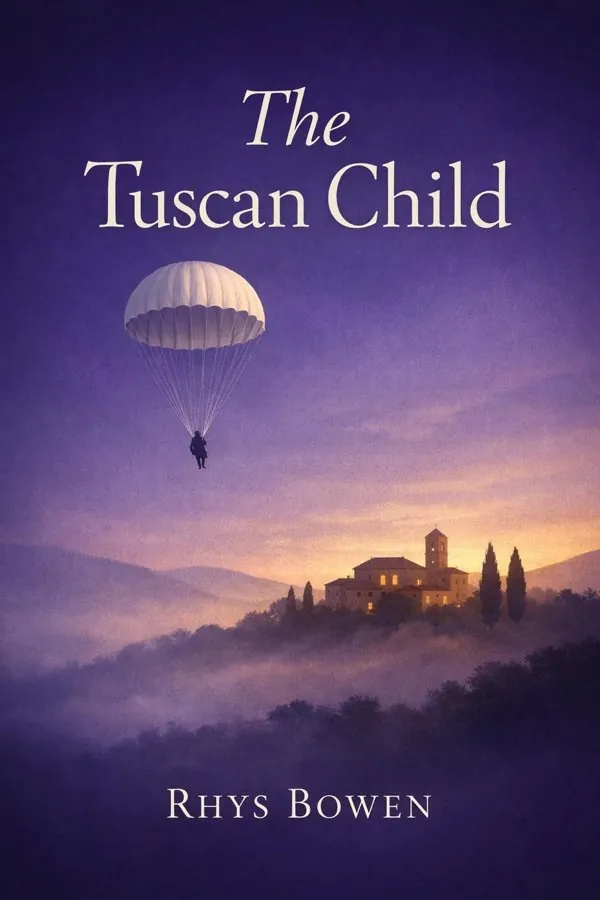
You Might Also Like
Patriot
Andrew Britton
10 min
War
John Hersey
10 min
An Army at Dawn: The War in North Africa, 1942–1943
Rick Atkinson
10 min
Brave New War: The Next Stage of Terrorism and the End of Globalization
John Robb
10 min
Catch-22
Joseph Heller
10 min
Command and Control: Nuclear Weapons, the Damascus Accident, and the Illusion of Safety
Eric Schlosser
10 minBrowse by Category
Ready to read In Farleigh Field?
Get the full summary and 100K+ more books with Fizz Moment.