
The Tuscan Child: Summary & Key Insights
by Rhys Bowen
 10 min9 chaptersAudio available
Key Takeaways from The Tuscan Child
Sometimes a life changes not in a slow unfolding, but in a single violent instant.
Grief rarely arrives alone; it often brings confusion, drift, and the need to rebuild a life from fragments.
The past is never truly finished if its consequences are still being lived in the present.
What parents hide can become part of what children carry.
Heroism is often quieter than history books make it seem.
What Is The Tuscan Child About?
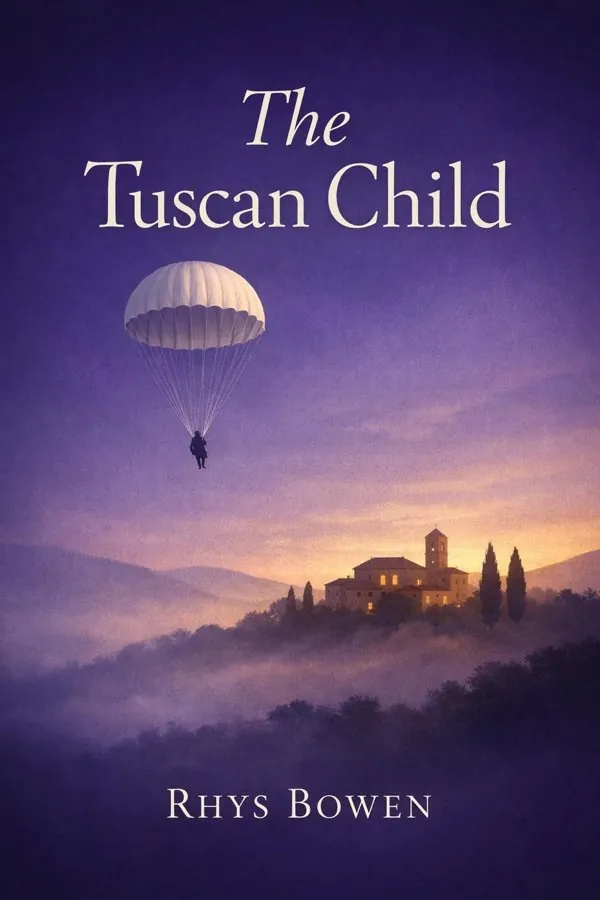
The Tuscan Child by Rhys Bowen is a bestsellers book spanning 3 pages. Some family secrets do not stay buried—they wait, shaping lives from the shadows until someone is brave enough to uncover them. In The Tuscan Child, Rhys Bowen blends wartime suspense, emotional mystery, and sweeping historical fiction into a story that moves between 1944 and the 1970s. After British bomber pilot Hugo Langley is shot down over German-occupied Tuscany, he is rescued by villagers whose courage and silence protect more than a wounded airman. Decades later, his daughter Joanna, newly bereaved and emotionally unmoored, discovers clues suggesting her father hid a painful chapter of his life in Italy. Her journey to Tuscany becomes both an investigation and a reckoning with grief, identity, and the unfinished business of the past. What makes the novel resonate is not only its mystery but its emotional truth: families are often built as much on what is left unsaid as on what is openly shared. Bowen, a New York Times bestselling author celebrated for her historical detail and compelling storytelling, brings both atmosphere and humanity to this intergenerational tale of love, survival, and healing.
This FizzRead summary covers all 9 key chapters of The Tuscan Child in approximately 10 minutes, distilling the most important ideas, arguments, and takeaways from Rhys Bowen's work. Also available as an audio summary and Key Quotes Podcast.
The Tuscan Child
Some family secrets do not stay buried—they wait, shaping lives from the shadows until someone is brave enough to uncover them. In The Tuscan Child, Rhys Bowen blends wartime suspense, emotional mystery, and sweeping historical fiction into a story that moves between 1944 and the 1970s. After British bomber pilot Hugo Langley is shot down over German-occupied Tuscany, he is rescued by villagers whose courage and silence protect more than a wounded airman. Decades later, his daughter Joanna, newly bereaved and emotionally unmoored, discovers clues suggesting her father hid a painful chapter of his life in Italy. Her journey to Tuscany becomes both an investigation and a reckoning with grief, identity, and the unfinished business of the past. What makes the novel resonate is not only its mystery but its emotional truth: families are often built as much on what is left unsaid as on what is openly shared. Bowen, a New York Times bestselling author celebrated for her historical detail and compelling storytelling, brings both atmosphere and humanity to this intergenerational tale of love, survival, and healing.
Who Should Read The Tuscan Child?
This book is perfect for anyone interested in bestsellers and looking to gain actionable insights in a short read. Whether you're a student, professional, or lifelong learner, the key ideas from The Tuscan Child by Rhys Bowen will help you think differently.
- ✓Readers who enjoy bestsellers and want practical takeaways
- ✓Professionals looking to apply new ideas to their work and life
- ✓Anyone who wants the core insights of The Tuscan Child in just 10 minutes
Want the full summary?
Get instant access to this book summary and 100K+ more with Fizz Moment.
Get Free SummaryAvailable on App Store • Free to download
Key Chapters
Sometimes a life changes not in a slow unfolding, but in a single violent instant. Hugo Langley’s story begins that way: in 1944, when his British bomber is shot down over German-occupied Tuscany and he parachutes into an unfamiliar landscape of hills, vineyards, danger, and uncertainty. Wounded and cut off from his comrades, Hugo becomes completely dependent on strangers. That dependence is crucial to the novel’s emotional power. A trained pilot and officer, he is suddenly stripped of status, certainty, and control. Survival now depends on the courage of ordinary villagers willing to risk torture or death to hide him from German forces.
Bowen uses Hugo’s ordeal to show how war compresses moral choices. The villagers who shelter him are not abstract symbols of goodness; they are frightened, practical people who understand exactly what is at stake. Their hospitality is an act of resistance. Through Hugo’s interactions with them, especially with Sofia and her family, the novel explores the fragile alliances that war creates between people from radically different backgrounds. Hugo arrives as an outsider, but necessity forces intimacy, and that intimacy gradually reveals deeper truths about loyalty, sacrifice, and love.
This section of the novel also demonstrates how place can shape experience. Tuscany is not just a scenic backdrop. Its farmhouses, caves, narrow roads, and isolated hills become part of the wartime strategy of concealment and survival. The beauty of the countryside exists alongside fear, which makes the setting feel both romantic and precarious.
A useful way to apply this idea is to reflect on how crisis reveals character. In high-pressure situations, titles and appearances matter less than courage, adaptability, and trust. Ask yourself: when certainty falls away, what values remain? Actionable takeaway: pay attention to the people who act with quiet integrity under pressure—their choices often tell the truest story.
Grief rarely arrives alone; it often brings confusion, drift, and the need to rebuild a life from fragments. When we meet Joanna Langley in 1973, she is a woman without a clear direction. Her mother has recently died, her culinary ambitions have faltered, and she returns to a family estate that feels more like a burden than a home. Then she discovers evidence suggesting that her late father concealed an important part of his wartime past. What begins as curiosity becomes an urgent search for truth.
Joanna’s journey to Tuscany is therefore more than a plot device. It is a classic reinvention story, but one grounded in emotional realism. She arrives not as a confident detective, but as someone trying to understand both her father and herself. The Tuscan landscape, with its warmth, openness, and layers of memory, contrasts with the emotional coldness and reserve of the English world she has known. As she meets people who remember Hugo, Joanna gradually sees that history is not a fixed record; it lives in stories, silences, and conflicting recollections.
Bowen also uses Joanna’s experience to show how travel can become a form of inner transformation. Removed from the expectations of home, Joanna is forced to make independent choices, read emotional nuance, and trust her own instincts. Tuscany becomes a setting where she can confront inherited myths and begin imagining a future beyond grief.
In practical terms, Joanna’s arc speaks to anyone who has felt stuck after loss or failure. Healing does not always begin with a grand plan. Sometimes it starts by following one unanswered question. New environments, new conversations, and a willingness to revisit family narratives can all open unexpected paths. Actionable takeaway: if you feel trapped in old roles or unresolved grief, pursue one concrete thread of curiosity—it may lead to deeper renewal than certainty ever could.
The past is never truly finished if its consequences are still being lived in the present. One of the most compelling aspects of The Tuscan Child is the way it alternates between Hugo’s wartime experience and Joanna’s later investigation, allowing readers to feel the tension between what happened and what has been hidden. This dual timeline structure does more than create suspense. It dramatizes a central truth: secrets do not disappear simply because the people who know them choose silence.
As Joanna uncovers pieces of her father’s story, the novel shows how memory works indirectly. Letters, rumors, half-finished remarks, and local testimony each reveal only part of the truth. The reader is placed in the same position as Joanna, assembling a fuller picture from incomplete evidence. This mirrors how many families process trauma across generations. The children inherit emotional patterns before they inherit facts.
Bowen handles this convergence skillfully by allowing emotional revelations to matter as much as factual ones. It is not only important to learn what happened to Hugo in Tuscany; it is equally important to understand why he carried those memories in silence and how that silence shaped Joanna’s life. The eventual crossing of timelines turns historical mystery into emotional reckoning.
This idea has relevance beyond fiction. In real life, unresolved events often reappear through behavior, family tension, or a vague sense that something is missing. Understanding the present often requires investigating what earlier generations could not or would not say. This does not mean dwelling endlessly on the past, but rather approaching it with honesty and compassion. Actionable takeaway: when recurring family patterns confuse you, look beyond immediate symptoms and ask what older story may still be exerting force.
What parents hide can become part of what children carry. A major theme of The Tuscan Child is that secrecy is not neutral; it shapes identity, relationships, and self-understanding across generations. Hugo’s concealed history in Tuscany is not merely a private matter from long ago. It becomes a hidden architecture beneath Joanna’s life, influencing her sense of family and belonging without her fully realizing it.
Bowen is particularly insightful in showing that family secrets are rarely kept out of cruelty alone. Often they are maintained from shame, fear, social pressure, or a misguided desire to protect others. That complexity makes the novel emotionally rich. Hugo’s silence reflects the burden many survivors of war carry: some experiences are too painful to explain, while others seem impossible to reconcile with the life one returns to. Yet the cost of silence remains. Joanna grows up with an incomplete version of her father, and the resulting gaps leave her vulnerable to confusion and emotional distance.
The novel invites readers to think about secrecy not simply as concealment, but as a force that distorts relationships. When truth is withheld, family members often invent explanations of their own. Misunderstandings harden into identity. A child may assume rejection, coldness, or lack of love where there was actually grief, guilt, or trauma.
In everyday life, this theme applies whenever families avoid difficult conversations about loss, finances, illness, migration, or past relationships. Complete transparency is not always possible, but intentional silence has consequences. Even partial honesty can be more healing than perfect concealment. Actionable takeaway: consider which unspoken truths in your life might be creating unnecessary distance, and where a thoughtful conversation could replace confusion with understanding.
Heroism is often quieter than history books make it seem. In The Tuscan Child, some of the bravest figures are not soldiers or commanders but villagers, farmers, mothers, and daughters who choose decency under occupation. By sheltering Hugo, sharing food, concealing his presence, and managing fear day by day, they demonstrate that moral courage often consists of repeated small actions rather than one dramatic gesture.
Bowen’s portrayal of rural Italians under German occupation highlights a crucial aspect of wartime experience: civilians bear enormous risk, yet their stories are often overshadowed by military narratives. The villagers do not possess power in the formal sense. They cannot control armies or political outcomes. What they can control is whether they betray a wounded stranger, whether they help the vulnerable, and whether they maintain their humanity in a climate of terror. Those choices matter immensely.
This theme deepens the novel’s emotional and ethical range. Hugo survives not only because of luck, but because ordinary people decide his life is worth protecting. That choice creates a bond that transcends nationality. Bowen reminds us that history is shaped not just by leaders, but by countless unnamed individuals who refuse to surrender compassion.
There is a practical lesson here for modern readers. Most of us will never face wartime decisions of this magnitude, but we encounter smaller moral crossroads constantly: whether to defend someone being treated unfairly, whether to offer help when it is inconvenient, whether to act kindly when fear encourages self-protection. Character is built in those moments. Actionable takeaway: do not underestimate the significance of small acts of courage—ethical lives are usually formed through repeated everyday choices, not extraordinary public performances.
Love becomes especially meaningful when the future is uncertain. In Hugo’s wartime storyline, emotional connection develops in an environment where every hour may be interrupted by danger. This gives the novel’s romantic elements both urgency and poignancy. Affection is not experienced in ideal conditions; it emerges amid hunger, fear, hiding, and the constant threat of loss. As a result, love in The Tuscan Child is not sentimental escape but a response to mortality.
Bowen handles this dynamic with restraint. The attraction and tenderness that grow between characters are inseparable from questions of trust, sacrifice, and vulnerability. War strips away many social formalities, accelerating intimacy while also making it fragile. Promises cannot be made lightly because the world may not allow them to be kept. This tension adds emotional depth to the story and helps explain why the consequences of wartime love echo for decades.
The novel also examines how love can take multiple forms: romantic attachment, familial devotion, loyalty to one’s community, and the protective instinct that leads people to risk themselves for others. These strands reinforce one another. In a dangerous world, love becomes both a refuge and a responsibility.
Readers can apply this insight by recognizing that meaningful relationships are tested less by perfect circumstances than by difficult ones. Shared adversity often reveals whether affection is rooted in convenience or commitment. The book encourages us to value presence, honesty, and courage in love rather than idealized fantasy. Actionable takeaway: invest in relationships through concrete acts of care—especially during stressful periods—because love proves its strength most clearly when life is uncertain.
Some places do more than hold memories—they awaken truths we were not ready to face. Tuscany in this novel functions as a living archive, preserving traces of Hugo’s wartime experience and offering Joanna a setting in which her own transformation can occur. Bowen writes the region with vivid affection: sunlit hills, old villages, shared meals, hidden rural spaces, and a pace of life that contrasts with English restraint and emotional reserve. Yet the beauty is not superficial. It becomes part of the novel’s emotional logic.
For Hugo, the landscape is initially a place of fear and survival. For Joanna, it is a place of discovery. The same geography that once concealed danger later makes revelation possible. This overlap suggests that place can contain layered meanings across time. A village road may be ordinary to one visitor and sacred or painful to another. By returning physically to where history occurred, Joanna gains access not only to facts but to atmosphere, perspective, and empathy.
The novel therefore shows how environment affects healing. Distance from familiar routines can loosen defensive patterns and make insight possible. New surroundings often help people reinterpret old experiences. This is one reason retreats, pilgrimages, heritage travel, and visits to family homelands can feel so significant: location has the power to turn abstract history into felt reality.
In practical life, this does not mean healing requires a trip to Italy. It does mean that changing one’s setting—through travel, walks, visiting meaningful places, or even redesigning daily spaces—can support emotional processing. Physical context shapes thought. Actionable takeaway: when you need clarity, step into a place that invites reflection; sometimes a change of landscape can unlock a change of understanding.
Strength does not always announce itself; often it appears as persistence in the face of constraint. Although The Tuscan Child includes wartime action and historical mystery, much of its emotional force comes from the resilience of its women. Sofia and the women in wartime Tuscany navigate occupation, scarcity, danger, and social expectation while protecting their families and making ethically difficult decisions. Decades later, Joanna must navigate grief, uncertainty, and the destabilizing discovery that her family history is incomplete.
These women are linked by more than plot. Bowen presents resilience as practical, adaptive, and often underrecognized. Sofia’s world demands physical bravery and emotional discipline. Joanna’s demands are different but no less real: she must move from passivity to agency, from inherited silence to self-directed inquiry. Neither woman has the luxury of perfect conditions. They proceed with limited information, real vulnerability, and meaningful risk.
This theme matters because it broadens the definition of courage. The novel does not restrict bravery to combat or overt heroics. It honors endurance, emotional labor, caregiving, truth-seeking, and the willingness to keep going without guarantees. For many readers, that will feel familiar. Life often asks for exactly this kind of strength.
Applied practically, the book reminds us to recognize forms of resilience that are easy to overlook, especially in ourselves. Starting over after a loss, asking hard questions, protecting others, and making independent decisions are all acts of courage. Actionable takeaway: redefine strength in your own life to include persistence, emotional honesty, and the quiet determination to continue even when certainty is unavailable.
Closure is rarely found by avoiding painful knowledge; more often, it begins when we finally face what has been hidden. The emotional resolution of The Tuscan Child rests on this principle. Joanna’s search is not merely an intellectual exercise to solve a historical puzzle. It is a necessary confrontation with the truth her family never fully acknowledged. Only by learning what happened to Hugo, and why, can she begin to integrate loss, revise her understanding of her parents, and imagine a less burdened future.
Bowen does not suggest that truth erases pain. Some revelations complicate rather than simplify. But the novel argues that clarity is more humane than confusion. Even difficult truths can restore dignity because they allow people to make sense of their experiences. In Joanna’s case, knowledge transforms inherited mystery into narrative understanding. The unknown had trapped her in ambiguity; the truth gives shape to grief.
This idea resonates widely. Many people postpone difficult conversations or avoid searching for answers because uncertainty feels safer than disruption. Yet unresolved questions often exert greater emotional pressure over time. Whether the issue is family history, personal regret, or relationship breakdown, honest understanding usually creates more freedom than silence does.
The novel’s deepest contribution may be this compassionate view of healing: it is not about constructing a perfectly happy ending, but about replacing secrecy with comprehension and estrangement with connection. Actionable takeaway: identify one unresolved question in your life that continues to drain emotional energy, and take a small step toward clarity—ask, read, listen, or reflect with courage.
All Chapters in The Tuscan Child
About the Author
Rhys Bowen is a New York Times bestselling author celebrated for her historical mysteries and richly atmospheric fiction. Born in Bath, England, she later moved to the United States and built an international readership through her beloved Molly Murphy and Royal Spyness series. Her work is known for combining suspense, humor, historical detail, and emotionally engaging characters. Bowen has received numerous awards and honors for her contributions to mystery and historical fiction, and she is especially admired for making the past feel immediate and human. In her standalone novels, including The Tuscan Child, she brings the same narrative skill to more emotionally layered stories of family, identity, and hidden history. Her ability to blend compelling plots with immersive settings has made her a favorite among readers who enjoy both mystery and historical drama.
Get This Summary in Your Preferred Format
Read or listen to the The Tuscan Child summary by Rhys Bowen anytime, anywhere. FizzRead offers multiple formats so you can learn on your terms — all free.
Available formats: App · Audio · PDF · EPUB — All included free with FizzRead
Download The Tuscan Child PDF and EPUB Summary
Key Quotes from The Tuscan Child
“Sometimes a life changes not in a slow unfolding, but in a single violent instant.”
“Grief rarely arrives alone; it often brings confusion, drift, and the need to rebuild a life from fragments.”
“The past is never truly finished if its consequences are still being lived in the present.”
“What parents hide can become part of what children carry.”
“Heroism is often quieter than history books make it seem.”
Frequently Asked Questions about The Tuscan Child
The Tuscan Child by Rhys Bowen is a bestsellers book that explores key ideas across 9 chapters. Some family secrets do not stay buried—they wait, shaping lives from the shadows until someone is brave enough to uncover them. In The Tuscan Child, Rhys Bowen blends wartime suspense, emotional mystery, and sweeping historical fiction into a story that moves between 1944 and the 1970s. After British bomber pilot Hugo Langley is shot down over German-occupied Tuscany, he is rescued by villagers whose courage and silence protect more than a wounded airman. Decades later, his daughter Joanna, newly bereaved and emotionally unmoored, discovers clues suggesting her father hid a painful chapter of his life in Italy. Her journey to Tuscany becomes both an investigation and a reckoning with grief, identity, and the unfinished business of the past. What makes the novel resonate is not only its mystery but its emotional truth: families are often built as much on what is left unsaid as on what is openly shared. Bowen, a New York Times bestselling author celebrated for her historical detail and compelling storytelling, brings both atmosphere and humanity to this intergenerational tale of love, survival, and healing.
More by Rhys Bowen
You Might Also Like
The Godfather
Mario Puzo
10 min
The Handmaid's Tale
Margaret Atwood
10 min
The Hunger Games
Suzanne Collins
10 min
The Nightingale
Kristin Hannah
10 min
The Seven Husbands of Evelyn Hugo
Taylor Jenkins Reid
10 min
Backwater Justice
Fern Michaels
10 minBrowse by Category
Ready to read The Tuscan Child?
Get the full summary and 100K+ more books with Fizz Moment.