
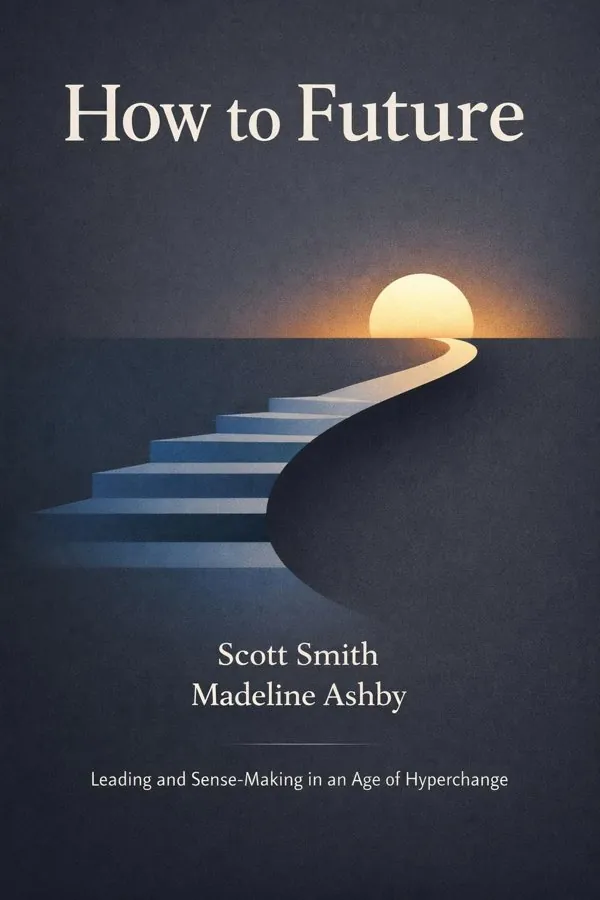
How to Future: Leading and Sense-Making in an Age of Hyperchange: Summary & Key Insights
by Scott Smith, Madeline Ashby
 10 min6 chaptersAudio available
What Is How to Future: Leading and Sense-Making in an Age of Hyperchange About?
How to Future: Leading and Sense-Making in an Age of Hyperchange by Scott Smith, Madeline Ashby is a future_trends book spanning 6 pages. How to Future es una guía práctica para líderes, innovadores y pensadores estratégicos que buscan anticipar y dar forma al futuro en tiempos de cambio acelerado. Los autores presentan métodos de prospectiva, diseño de futuros y pensamiento sistémico para ayudar a las organizaciones a navegar la incertidumbre y construir resiliencia frente a la disrupción tecnológica y social.
This FizzRead summary covers all 6 key chapters of How to Future: Leading and Sense-Making in an Age of Hyperchange in approximately 10 minutes, distilling the most important ideas, arguments, and takeaways from Scott Smith, Madeline Ashby's work. Also available as an audio summary and Key Quotes Podcast.
How to Future: Leading and Sense-Making in an Age of Hyperchange
How to Future es una guía práctica para líderes, innovadores y pensadores estratégicos que buscan anticipar y dar forma al futuro en tiempos de cambio acelerado. Los autores presentan métodos de prospectiva, diseño de futuros y pensamiento sistémico para ayudar a las organizaciones a navegar la incertidumbre y construir resiliencia frente a la disrupción tecnológica y social.
Who Should Read How to Future: Leading and Sense-Making in an Age of Hyperchange?
This book is perfect for anyone interested in future_trends and looking to gain actionable insights in a short read. Whether you're a student, professional, or lifelong learner, the key ideas from How to Future: Leading and Sense-Making in an Age of Hyperchange by Scott Smith, Madeline Ashby will help you think differently.
- ✓Readers who enjoy future_trends and want practical takeaways
- ✓Professionals looking to apply new ideas to their work and life
- ✓Anyone who wants the core insights of How to Future: Leading and Sense-Making in an Age of Hyperchange in just 10 minutes
Want the full summary?
Get instant access to this book summary and 100K+ more with Fizz Moment.
Get Free SummaryAvailable on App Store • Free to download
Key Chapters
To begin futuring, we must first understand the environment we’re inhabiting. We call it the age of *hyperchange* — not just change at a fast pace, but at a pace that makes past models of prediction and control obsolete. We see this in technological breakthroughs that collapse entire industries overnight, in climate events that reshape economies, and in social movements that overturn norms in weeks, not decades. Hyperchange is relentless and nonlinear, and it exposes the fragility of strategies built on old assumptions.
Most leaders still rely on tools made for slower times: five-year plans, numerical projections, or best-case economic models. But in hyperchange, those instruments are like compasses in a magnetic storm. They give a sense of direction, but no guarantee of accuracy. This is why we argue that a structured approach to *futuring* is no longer optional — it’s essential. You can’t manage what you can’t interpret. You must learn to sense and make meaning before you act.
Through years of consulting across sectors, we’ve noticed that the most resilient organizations are not those that have the most data or resources, but the ones that actively cultivate anticipation as a habit. They learn to read signals of change — the subtle indicators that hint at what is to come. For example, an increase in DIY biohacking communities might be a weak signal of a shift in healthcare culture; a pattern of youth activism could herald deeper systemic movements. The point is not to chase every signal, but to learn to discern which ones matter to your context.
Hyperchange demands that we see our systems — technological, social, economic — as interconnected and adaptive. In this sense, the first step in futuring is learning humility. The future will not follow our plans just because we made them, but we can prepare by engaging in what we call structured curiosity. That’s the core of our practice: learning to explore uncertainty with both discipline and imagination.
There’s a profound distinction between foresight and prediction. Prediction assumes that the future follows a single, knowable trajectory — that if we just gather enough data, we can forecast precisely what will happen. Foresight, on the other hand, accepts uncertainty as the defining condition of reality. It offers a disciplined way to explore possible, plausible, and preferable futures, recognizing that multiple futures can exist simultaneously.
When we teach foresight, we emphasize that it’s a *practice*, not a product. It involves ongoing sense-making: collecting signals, identifying emerging patterns, and using narrative tools to imagine outcomes. Think of foresight as building scenarios that function like wind tunnels for your decisions. You create them to test how your strategies might perform under different conditions, not to assert that any one of them will come true.
In our workshops, we often see participants light up when they realize that foresight gives them permission to imagine without fear of being wrong. The role of a futurist is to expand the range of what’s considered possible — to challenge default assumptions that often go unquestioned. A company that only looks at its competitors as threats misses the signals that new ecosystems are forming. A policymaker who plans only within current electoral cycles ignores intergenerational impacts.
Foresight, therefore, is deeply ethical. It demands that we think about who benefits from the futures we design and who might be excluded. It’s as much about empathy as analysis. When we use speculative design or scenario planning, we ask participants not only to imagine technologies or markets but also to consider how different people will experience them. A future where automation erases inequality looks very different from one where it amplifies it.
To future well, you must balance imagination with rigor. You must become fluent in uncertainty while keeping your judgment grounded. Foresight does not give you certainty; it gives you preparedness.
+ 4 more chapters — available in the FizzRead app
All Chapters in How to Future: Leading and Sense-Making in an Age of Hyperchange
About the Authors
Scott Smith es un futurista y consultor especializado en estrategia y diseño de futuros. Madeline Ashby es escritora de ciencia ficción y analista de futuros con experiencia en tecnología y cultura digital.
Get This Summary in Your Preferred Format
Read or listen to the How to Future: Leading and Sense-Making in an Age of Hyperchange summary by Scott Smith, Madeline Ashby anytime, anywhere. FizzRead offers multiple formats so you can learn on your terms — all free.
Available formats: App · Audio · PDF · EPUB — All included free with FizzRead
Download How to Future: Leading and Sense-Making in an Age of Hyperchange PDF and EPUB Summary
Key Quotes from How to Future: Leading and Sense-Making in an Age of Hyperchange
“To begin futuring, we must first understand the environment we’re inhabiting.”
“There’s a profound distinction between foresight and prediction.”
Frequently Asked Questions about How to Future: Leading and Sense-Making in an Age of Hyperchange
How to Future: Leading and Sense-Making in an Age of Hyperchange by Scott Smith, Madeline Ashby is a future_trends book that explores key ideas across 6 chapters. How to Future es una guía práctica para líderes, innovadores y pensadores estratégicos que buscan anticipar y dar forma al futuro en tiempos de cambio acelerado. Los autores presentan métodos de prospectiva, diseño de futuros y pensamiento sistémico para ayudar a las organizaciones a navegar la incertidumbre y construir resiliencia frente a la disrupción tecnológica y social.
You Might Also Like
Futureproof: 9 Rules for Humans in the Age of Automation
Kevin Roose
10 min
The Third Wave
Alvin Toffler
10 min
2030: How Today's Biggest Trends Will Collide and Reshape the Future of Everything
Mauro F. Guillén
10 min
A Very Human Future: Enriching Humanity in a Digitized World
Rohit Talwar, Steve Wells, Alexandra Whittington
10 min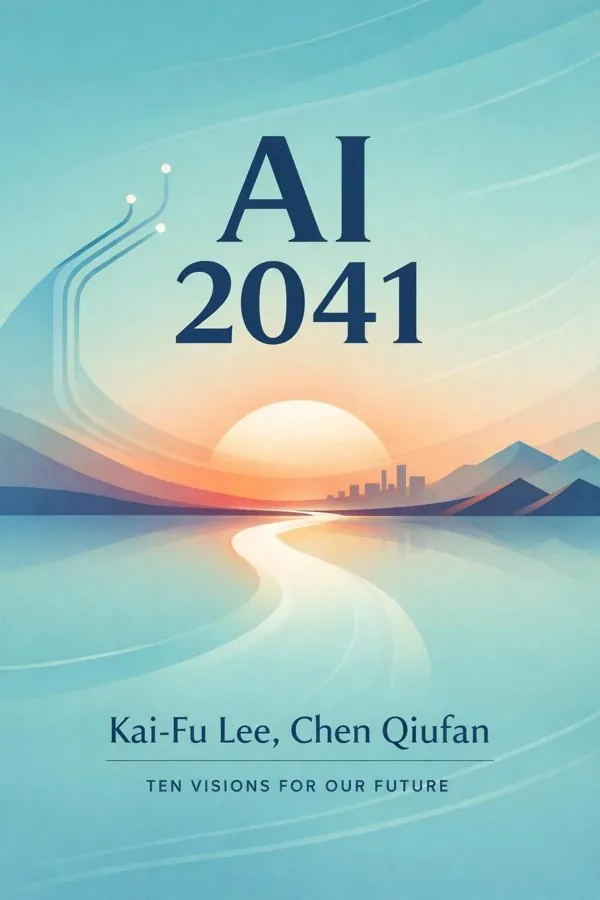
AI 2041: Ten Visions for Our Future
Kai-Fu Lee, Chen Qiufan
10 min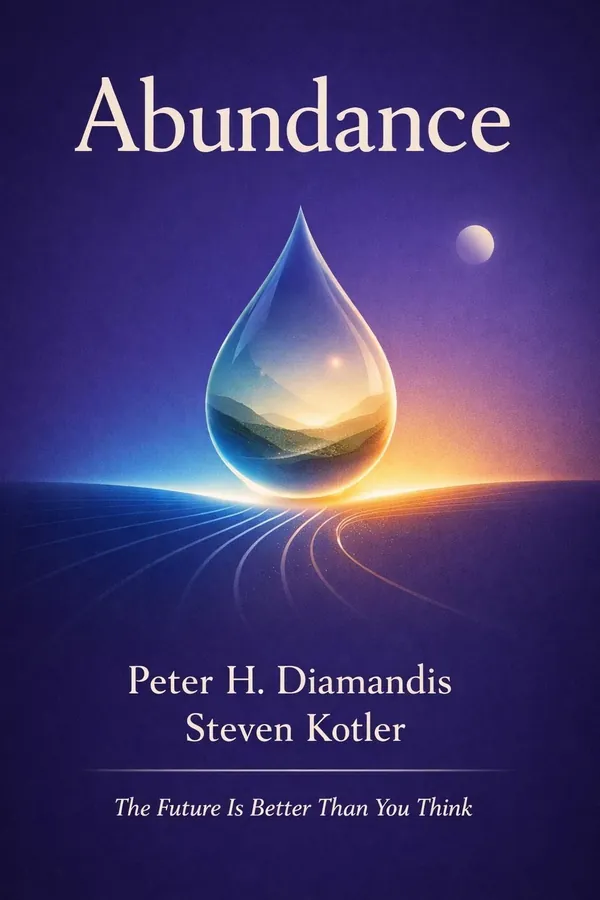
Abundance: The Future Is Better Than You Think
Peter H. Diamandis, Steven Kotler
10 minBrowse by Category
Ready to read How to Future: Leading and Sense-Making in an Age of Hyperchange?
Get the full summary and 100K+ more books with Fizz Moment.