
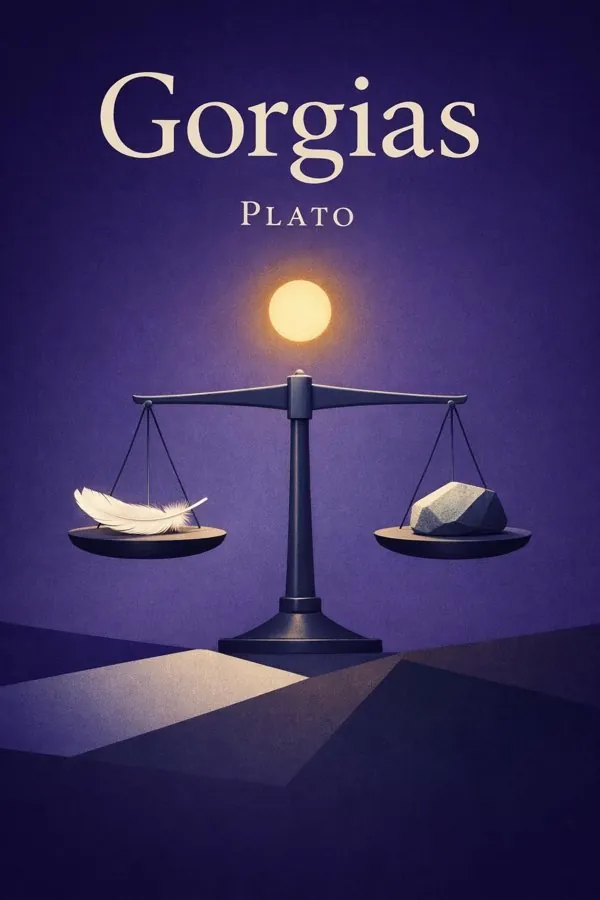
Gorgias: Summary & Key Insights
by Plato
 10 min9 chaptersAudio available
Key Takeaways from Gorgias
The most dangerous kind of power is the power that works without knowledge.
A crowd can be moved long before it is educated.
Many people assume power proves success, but Plato asks whether power without justice is actually a form of failure.
The idea that punishment can be good sounds harsh until Plato reveals what he means by it.
In his view, the truly great person should seize more, enjoy more, and dominate more.
What Is Gorgias About?
Gorgias by Plato is a western_phil book spanning 4 pages. What if the people who seem most powerful are actually the least free? In Gorgias, Plato stages one of philosophy’s sharpest confrontations between appearance and reality, success and virtue, persuasion and truth. The dialogue unfolds through a sequence of tense exchanges between Socrates and three defenders of public power: Gorgias, the celebrated teacher of rhetoric; Polus, his ambitious admirer; and Callicles, the bold champion of strength, pleasure, and political domination. Together, they force a question that still defines public life: is the purpose of speech to win, or to guide people toward what is good? This work matters because it addresses problems that remain urgent in democracies, media culture, law, business, and everyday relationships. Plato examines how persuasive language can manipulate crowds, conceal ignorance, and reward injustice, while also showing why moral self-discipline is harder—and ultimately more valuable—than influence. As the student of Socrates and one of the founding figures of Western philosophy, Plato brings unmatched authority to these themes. Gorgias is not just a dialogue about rhetoric; it is a searching investigation into the soul, political leadership, and what it means to live well.
This FizzRead summary covers all 9 key chapters of Gorgias in approximately 10 minutes, distilling the most important ideas, arguments, and takeaways from Plato's work. Also available as an audio summary and Key Quotes Podcast.
Gorgias
What if the people who seem most powerful are actually the least free? In Gorgias, Plato stages one of philosophy’s sharpest confrontations between appearance and reality, success and virtue, persuasion and truth. The dialogue unfolds through a sequence of tense exchanges between Socrates and three defenders of public power: Gorgias, the celebrated teacher of rhetoric; Polus, his ambitious admirer; and Callicles, the bold champion of strength, pleasure, and political domination. Together, they force a question that still defines public life: is the purpose of speech to win, or to guide people toward what is good?
This work matters because it addresses problems that remain urgent in democracies, media culture, law, business, and everyday relationships. Plato examines how persuasive language can manipulate crowds, conceal ignorance, and reward injustice, while also showing why moral self-discipline is harder—and ultimately more valuable—than influence. As the student of Socrates and one of the founding figures of Western philosophy, Plato brings unmatched authority to these themes. Gorgias is not just a dialogue about rhetoric; it is a searching investigation into the soul, political leadership, and what it means to live well.
Who Should Read Gorgias?
This book is perfect for anyone interested in western_phil and looking to gain actionable insights in a short read. Whether you're a student, professional, or lifelong learner, the key ideas from Gorgias by Plato will help you think differently.
- ✓Readers who enjoy western_phil and want practical takeaways
- ✓Professionals looking to apply new ideas to their work and life
- ✓Anyone who wants the core insights of Gorgias in just 10 minutes
Want the full summary?
Get instant access to this book summary and 100K+ more with Fizz Moment.
Get Free SummaryAvailable on App Store • Free to download
Key Chapters
The most dangerous kind of power is the power that works without knowledge. That is the problem Socrates uncovers when he first questions Gorgias, the famous master of rhetoric. Gorgias presents rhetoric as a magnificent craft: the ability to persuade audiences in law courts, assemblies, and public life. It seems superior to other skills because it can influence people without needing to perform the technical work itself. The rhetorician can convince a crowd about medicine, politics, or justice even when a doctor or statesman knows more.
Socrates presses on a crucial distinction: is rhetoric a true art grounded in understanding, or merely a knack for producing belief? Real arts, such as medicine, aim at genuine good and require knowledge of their subject. Rhetoric, by contrast, often produces persuasion without teaching truth. It can make the ignorant seem wise and the weak argument appear stronger. In that sense, it resembles flattery more than expertise. It pleases audiences rather than improving them.
This insight remains strikingly modern. Advertising, political messaging, and social media influence often reward confidence, emotional appeal, and repetition more than accuracy. A charismatic speaker can shape opinion on economics, health, or ethics while lacking any real competence. The issue is not that persuasion is always bad, but that persuasion detached from truth becomes manipulation.
Plato does not deny the practical force of rhetoric. He asks what it is for. If speech guides people toward what is just and beneficial, it can serve a noble role. If it only seeks applause or advantage, it corrupts both speaker and audience.
Actionable takeaway: Whenever someone persuades you powerfully, ask not only “Was that convincing?” but also “Was it true, informed, and aimed at the good?”
A crowd can be moved long before it is educated. Plato uses the exchange with Gorgias to show how easily persuasion can bypass understanding. Gorgias admits that rhetoric produces belief in matters of justice, but not necessarily knowledge. That admission is decisive. If rhetoric works by creating conviction without grounding people in truth, then it gives enormous power to whoever can manage appearances.
Socrates worries that this makes rhetoric morally unstable. A speaker who can influence a jury, assembly, or public audience without possessing wisdom can steer decisions toward whatever seems useful in the moment. The audience feels informed, yet its judgment rests on impression rather than insight. This is why Socrates compares rhetoric to cookery in relation to medicine. Cookery aims at pleasure and immediate satisfaction; medicine aims at health, which may involve discomfort. Likewise, flattering speech offers what people want to hear, while genuine guidance may challenge, correct, or even offend.
The point applies beyond formal politics. In workplaces, a polished presenter may win support for a weak idea because it sounds exciting. In personal relationships, someone may use emotional language to avoid responsibility. In public discourse, short slogans can overpower careful reasoning. The more complex the issue, the greater the temptation to substitute style for substance.
Plato’s warning is not anti-communication. It is a call to align communication with reality. Speech becomes honorable when it helps others see clearly, not merely agree quickly. The ethical test of persuasion is whether it improves judgment or merely captures attention.
Actionable takeaway: Before accepting a persuasive message, pause to separate emotional impact from actual evidence and ask what knowledge supports the claim.
Many people assume power proves success, but Plato asks whether power without justice is actually a form of failure. When Polus enters the discussion, he defends rhetoric as the instrument of domination. To him, the rhetorician has the enviable ability to get what he wants, defeat enemies, and avoid punishment. Political power appears desirable because it lets a person act freely and impose his will.
Socrates challenges this assumption at its root. Doing whatever one wishes is not the same as doing what is truly good. A person may pursue wealth, revenge, or influence believing these will satisfy him, yet if those choices damage his character, he has not benefited. For Socrates, injustice harms the doer more deeply than the victim because it disorders the soul. Outward success can therefore conceal inward ruin.
This is one of the dialogue’s boldest moral claims: it is worse to commit injustice than to suffer it. That sounds counterintuitive because we usually measure harm in external terms—loss, pain, humiliation, or defeat. Socrates shifts the standard inward. To become unjust is to make oneself morally deformed. Polus, like many ambitious people, focuses on visible outcomes. Socrates focuses on what kind of person one becomes.
The argument speaks directly to modern ideas of winning. A leader may manipulate numbers, crush rivals, or evade accountability and still be praised as effective. But if these victories depend on deception or cruelty, Plato would ask whether they are truly victories at all. Success that destroys integrity is self-defeating.
Actionable takeaway: Judge power not only by what it achieves externally, but by what it makes of the person who uses it.
The idea that punishment can be good sounds harsh until Plato reveals what he means by it. In the debate with Polus, Socrates argues that if wrongdoing damages the soul, then just punishment is not merely retribution but a form of moral correction. As medicine treats bodily illness through painful means when necessary, justice treats the sickness of vice. The person who escapes accountability may appear fortunate, but in reality he remains morally diseased.
This claim overturns common assumptions. We often think the worst outcome for a wrongdoer is getting caught. Socrates says the opposite: the worst outcome is to commit injustice and never be corrected. Avoiding consequences can intensify corruption because it trains the soul to love domination, deception, and excess. Punishment, when truly just, sets limits, exposes wrongdoing, and opens the possibility of reform.
The insight matters today in debates about law, parenting, education, and organizational culture. A company that protects high performers who behave abusively may preserve short-term results while poisoning its internal character. A parent who never imposes consequences may confuse indulgence with love. A justice system focused only on revenge misses Plato’s deeper point that accountability should aim at restoration of order and moral truth.
Of course, Plato is not defending cruelty. The value of punishment depends on justice, proportionality, and a concern for improvement. Punishment as humiliation or vengeance is another form of corruption. But consequences that teach responsibility can be an act of care.
Actionable takeaway: Reframe accountability as a means of correction and moral clarity, not merely as a tool for retaliation.
The strongest challenge in the dialogue comes from Callicles, who says openly what others only imply: conventional morality is a device invented by the weak to restrain the naturally superior. In his view, the truly great person should seize more, enjoy more, and dominate more. Pleasure and expansion are signs of vitality, while restraint is the timid virtue of the mediocre. This is not a crude mistake but a sophisticated defense of ambition without moral limits.
Socrates meets this challenge by separating pleasure from the good. Not everything pleasant is beneficial, and not everything painful is bad. Eating when hungry is pleasant, but overeating can destroy health. Winning an argument may feel satisfying, yet if the argument is dishonest, the pleasure masks damage. Callicles imagines the fulfilled life as one of constantly replenished appetites, like a series of jars always needing to be filled. Socrates counters that such a life is unstable and enslaving. If happiness depends on endless craving, then the self is never at peace.
This exchange remains relevant in consumer culture, status competition, and political strongman fantasies. More followers, more profit, more stimulation, more control—these are often treated as self-justifying goods. Plato asks whether a life organized around appetite can ever become whole. If desire rules, then freedom is an illusion; the person is governed by whatever he cannot stop chasing.
Callicles forces the dialogue to confront a permanent temptation: to equate intensity with excellence. Socrates replies that a good life requires order, measure, and self-mastery.
Actionable takeaway: When something feels powerfully desirable, ask whether satisfying it will bring genuine flourishing or just create a stronger cycle of dependence.
It is easier to conquer a city than to govern oneself. One of Socrates’ most enduring lessons in Gorgias is that the highest form of power is not domination over others but mastery over one’s own desires. Callicles admires the person who breaks restraints and takes what he wants. Socrates argues that such a person is not strong but disordered. Without discipline, appetite becomes a tyrant inside the soul.
Plato presents the soul as something that can be arranged well or badly. A well-ordered soul is guided by reason, shaped by justice, and capable of moderation. A disordered soul is fragmented by greed, fear, vanity, and impulse. This inner structure matters more than external status because it determines whether one can live steadily and act well. The person who cannot say no to pleasure, anger, or ambition is vulnerable even at the height of public success.
This insight applies in ordinary life. A manager who cannot control ego may undermine a team. A public figure addicted to praise may distort decisions to preserve popularity. A person unable to regulate spending, desire, or resentment may appear free while living under compulsion. By contrast, self-discipline creates resilience. It makes better judgment possible because one is less captured by immediate gratification.
Plato’s view challenges modern admiration for scale and visibility. We often praise the person who gets the most attention, money, or influence. Gorgias asks us to look deeper: can that person govern himself? If not, his public power may conceal private servitude.
Actionable takeaway: Build habits of restraint—pausing before reacting, limiting excess, and choosing long-term good over short-term impulse—to strengthen real freedom.
Most people treat philosophy as abstract speculation, but in Gorgias it appears as moral medicine. Socrates insists that his questioning is not a game of verbal victory. He examines definitions, exposes contradictions, and presses uncomfortable conclusions because he believes the soul must be cared for just as the body must be cared for. If rhetoric flatters, philosophy diagnoses. If public life rewards appearance, philosophy asks what is actually true and what kind of person one is becoming.
This is why Socrates is willing to look foolish in the eyes of the crowd. He values examination over applause. To many, that seems impractical. Yet Plato suggests the opposite: without honest inquiry, individuals and societies drift into self-deception. We rationalize injustice, confuse popularity with wisdom, and reward confidence over character. Philosophy interrupts that drift by forcing us to give an account of our beliefs and aims.
In contemporary terms, care of the soul means sustained reflection on motives, values, and habits. It means asking not just whether a decision is efficient, but whether it is right; not just whether a life is successful, but whether it is worthy. Practices like journaling, serious conversation, ethical review in organizations, and intellectual humility all echo this Platonic discipline.
Gorgias also shows that philosophy is often adversarial because truth can sting. Being questioned feels threatening when one’s identity depends on seeming certain. But that discomfort can be transformative. The examined life is not painless; it is purposeful.
Actionable takeaway: Set aside regular time to examine your beliefs, motives, and choices, especially in the areas where you feel most defensive or self-assured.
A statesman is not simply someone who pleases the public, but someone who makes citizens better. This is one of the dialogue’s most radical political claims. Socrates criticizes famous Athenian leaders not because they lacked influence, but because they catered to the city’s desires rather than cultivating justice and discipline. Winning support, on this view, is not enough. The true test of political leadership is whether it improves the moral condition of the community.
Plato distinguishes between genuine statesmanship and pandering. The demagogue tells people what they want to hear. The statesman tells them what they need to hear, even at personal cost. This difference mirrors the contrast between cookery and medicine. Flattery secures approval in the moment; real governance may require sacrifice, restraint, and unpopular truth. A healthy city, like a healthy body, cannot be sustained on indulgence alone.
The relevance is obvious. Modern politics often rewards branding, outrage, and constant messaging. Leaders are pressured to chase polls, perform certainty, and provide emotional satisfaction. Plato’s challenge is severe: if a leader increases dependency, division, or moral confusion while remaining popular, should we still call that leadership successful?
This idea also applies in smaller settings. A teacher who gives easy praise but never corrects may be liked but ineffective. A manager who avoids hard conversations to maintain morale may weaken the organization. Good leadership often involves forming character, not merely maintaining consent.
Actionable takeaway: Evaluate leaders by the long-term condition they produce in people and institutions, not just by charisma, short-term wins, or public approval.
Reputation can hide a ruined inner life. Throughout Gorgias, Socrates insists that the central question is not how one appears before others, but what one is in truth. A person may be celebrated, feared, or envied and yet be fundamentally unhappy because his soul is unjust. Conversely, someone mocked as impractical may be living well if he preserves integrity and seeks truth.
This argument reaches its peak near the end of the dialogue, when Socrates contrasts the life of philosophy with the life devoted to public display. He admits that the philosopher may seem weak in courts or assemblies because he refuses to manipulate language for advantage. But he maintains that it is better to suffer wrong than to commit it, better to lose power than to lose justice, and better to be judged by truth than by the crowd.
Plato is not romanticizing failure. He is redirecting the standard of judgment. Much of human anxiety comes from being seen, ranked, approved, and admired. Gorgias asks what happens when admiration becomes a false god. We start optimizing for impression instead of substance. We manage our image but neglect our character.
This is acutely relevant in an age of visibility. Social platforms, professional competition, and public branding encourage us to build identities others will applaud. Plato reminds us that external recognition cannot replace inner order. A life centered on being admired becomes fragile because it depends on unstable audiences.
Actionable takeaway: In important decisions, ask which option protects your character rather than your image, and choose the one you could defend honestly even without praise.
All Chapters in Gorgias
About the Author
Plato (c. 427-347 BCE) was an ancient Greek philosopher whose writings helped define the foundations of Western thought. Born into an aristocratic Athenian family, he became the most famous student of Socrates and later the teacher of Aristotle. Deeply shaped by the political turmoil of Athens and the execution of Socrates, Plato turned philosophical inquiry toward questions of justice, virtue, knowledge, politics, and the soul. He wrote in dialogue form, using vivid conversations to explore difficult ideas rather than presenting them as dry doctrine. His major works include The Republic, Symposium, Phaedo, and Gorgias. Plato also founded the Academy in Athens, one of the earliest institutions of higher learning, where philosophy and science were studied systematically for generations.
Get This Summary in Your Preferred Format
Read or listen to the Gorgias summary by Plato anytime, anywhere. FizzRead offers multiple formats so you can learn on your terms — all free.
Available formats: App · Audio · PDF · EPUB — All included free with FizzRead
Download Gorgias PDF and EPUB Summary
Key Quotes from Gorgias
“The most dangerous kind of power is the power that works without knowledge.”
“A crowd can be moved long before it is educated.”
“Many people assume power proves success, but Plato asks whether power without justice is actually a form of failure.”
“The idea that punishment can be good sounds harsh until Plato reveals what he means by it.”
“The strongest challenge in the dialogue comes from Callicles, who says openly what others only imply: conventional morality is a device invented by the weak to restrain the naturally superior.”
Frequently Asked Questions about Gorgias
Gorgias by Plato is a western_phil book that explores key ideas across 9 chapters. What if the people who seem most powerful are actually the least free? In Gorgias, Plato stages one of philosophy’s sharpest confrontations between appearance and reality, success and virtue, persuasion and truth. The dialogue unfolds through a sequence of tense exchanges between Socrates and three defenders of public power: Gorgias, the celebrated teacher of rhetoric; Polus, his ambitious admirer; and Callicles, the bold champion of strength, pleasure, and political domination. Together, they force a question that still defines public life: is the purpose of speech to win, or to guide people toward what is good? This work matters because it addresses problems that remain urgent in democracies, media culture, law, business, and everyday relationships. Plato examines how persuasive language can manipulate crowds, conceal ignorance, and reward injustice, while also showing why moral self-discipline is harder—and ultimately more valuable—than influence. As the student of Socrates and one of the founding figures of Western philosophy, Plato brings unmatched authority to these themes. Gorgias is not just a dialogue about rhetoric; it is a searching investigation into the soul, political leadership, and what it means to live well.
More by Plato

You Might Also Like
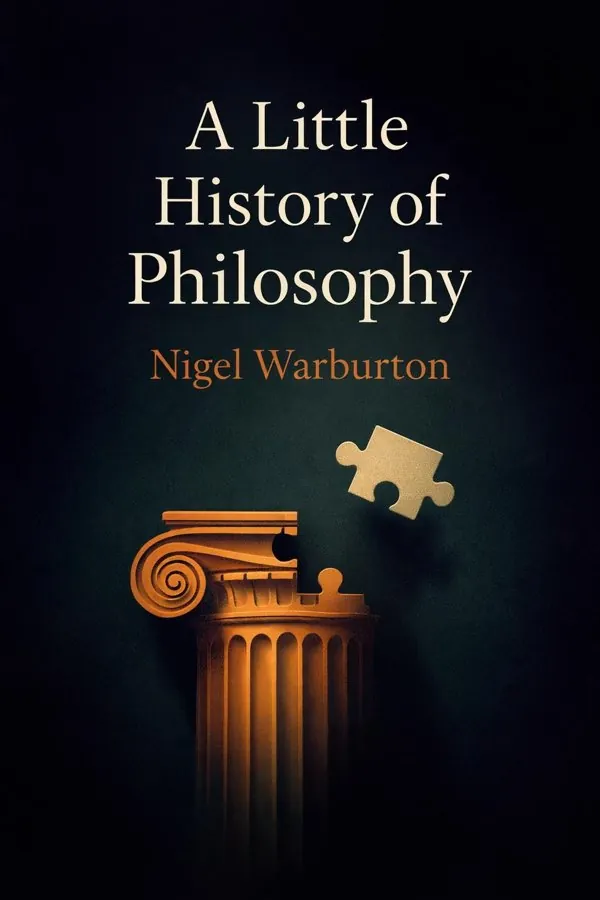
A Little History of Philosophy
Nigel Warburton
10 min
Areopagitica
John Milton
10 min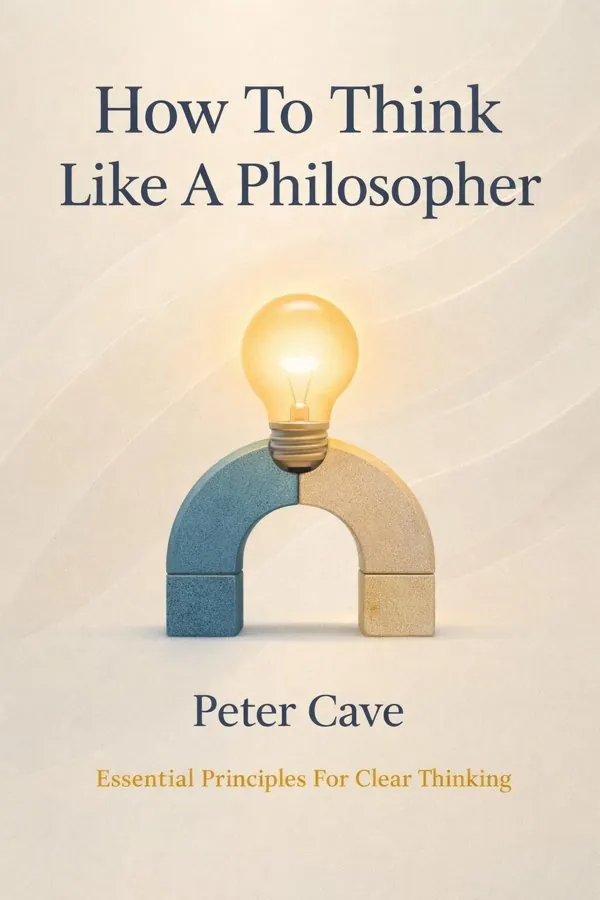
How To Think Like A Philosopher: Essential Principles For Clear Thinking
Peter Cave
10 min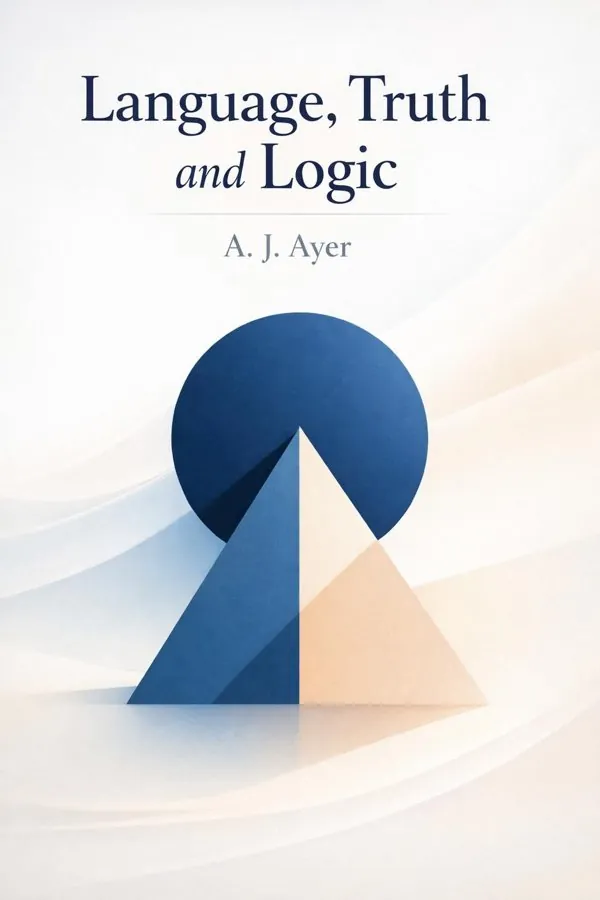
Language, Truth and Logic
A. J. Ayer
10 min
The Age of Reason
Thomas Paine
10 min
The Essays
Michel De Montaigne
10 minBrowse by Category
Ready to read Gorgias?
Get the full summary and 100K+ more books with Fizz Moment.