
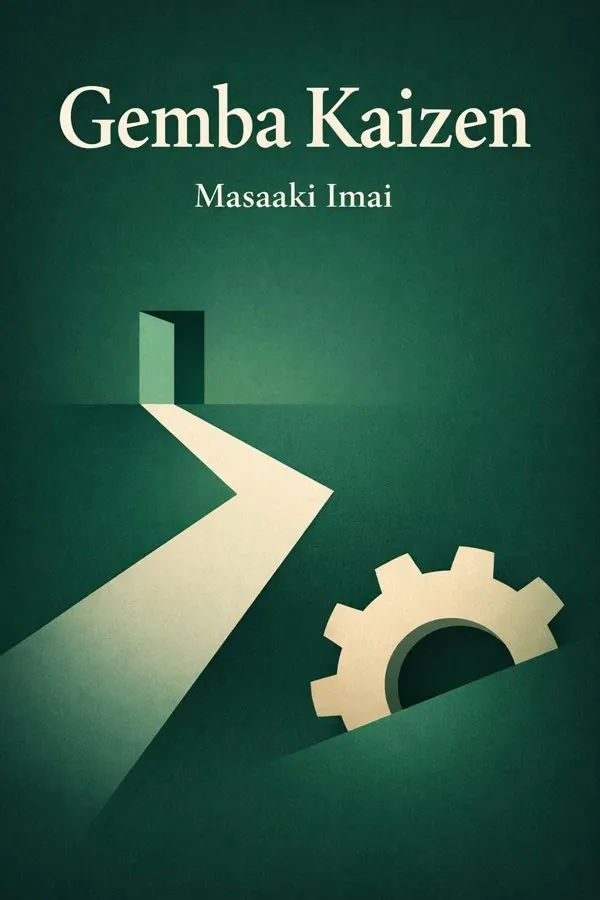
Gemba Kaizen: A Commonsense Approach to a Continuous Improvement Strategy: Summary & Key Insights
by Masaaki Imai
 10 min12 chaptersAudio available
What Is Gemba Kaizen: A Commonsense Approach to a Continuous Improvement Strategy About?
Gemba Kaizen: A Commonsense Approach to a Continuous Improvement Strategy by Masaaki Imai is a productivity book spanning 12 pages. Gemba Kaizen is a foundational book on continuous improvement in the workplace. Masaaki Imai introduces the concept of 'Gemba'—the place where value is created—and explains how to apply Kaizen, the philosophy of incremental and constant improvement, to optimize processes, reduce waste, and foster a culture of participation and learning at all levels of an organization.
This FizzRead summary covers all 12 key chapters of Gemba Kaizen: A Commonsense Approach to a Continuous Improvement Strategy in approximately 10 minutes, distilling the most important ideas, arguments, and takeaways from Masaaki Imai's work. Also available as an audio summary and Key Quotes Podcast.
Gemba Kaizen: A Commonsense Approach to a Continuous Improvement Strategy
Gemba Kaizen is a foundational book on continuous improvement in the workplace. Masaaki Imai introduces the concept of 'Gemba'—the place where value is created—and explains how to apply Kaizen, the philosophy of incremental and constant improvement, to optimize processes, reduce waste, and foster a culture of participation and learning at all levels of an organization.
Who Should Read Gemba Kaizen: A Commonsense Approach to a Continuous Improvement Strategy?
This book is perfect for anyone interested in productivity and looking to gain actionable insights in a short read. Whether you're a student, professional, or lifelong learner, the key ideas from Gemba Kaizen: A Commonsense Approach to a Continuous Improvement Strategy by Masaaki Imai will help you think differently.
- ✓Readers who enjoy productivity and want practical takeaways
- ✓Professionals looking to apply new ideas to their work and life
- ✓Anyone who wants the core insights of Gemba Kaizen: A Commonsense Approach to a Continuous Improvement Strategy in just 10 minutes
Want the full summary?
Get instant access to this book summary and 100K+ more with Fizz Moment.
Get Free SummaryAvailable on App Store • Free to download
Key Chapters
At the heart of Kaizen is a belief that progress happens through persistent small steps rather than grand revolutions. I often say that massive change is risky, but simple improvements are powerful when accumulated over time. In this philosophy, everyone—from the CEO to the shop floor worker—has a role in improvement. This inclusive approach breaks down hierarchical walls that isolate decision-making. Kaizen thrives in an atmosphere where ideas flow freely and where management truly listens to those who know the work best: the people on the Gemba.
I emphasize that every improvement begins with recognition of a problem. Problems are not enemies; they are opportunities for growth. In the Kaizen mindset, mistakes are valuable lessons. This stands in contrast with traditional management, which hides errors or punishes them. Kaizen encourages openness because transparency allows learning. This cultural shift is profound—it transforms the psychological climate of an organization into one of trust and empowerment.
Moreover, Kaizen connects individuals to a larger purpose. When workers see their ideas being implemented, they feel respected. That recognition builds motivation and a sense of ownership. I have seen countless organizations where the morale was revived not through bonuses or slogans but simply by involving employees in improvements and acknowledging their contributions. The power of Kaizen lies not only in tools and techniques but in this human engagement.
In practice, Kaizen focuses on questioning the status quo. Why do we do things this way? Is there a simpler, safer, or faster method? I teach companies to break the cycle of complacency. Improvement is not a one-time project; it is a daily responsibility. When every person adopts this mindset, continuous improvement becomes the organization’s DNA. By nurturing this discipline, we create organizations that learn and adapt naturally, without waiting for crises to force change.
Management often assumes it can run operations from a distance, relying on reports and numbers. But reports never show the full story. In *Gemba Kaizen,* I urge managers to 'go to Gemba'—to walk, observe, question, and understand what truly happens. When leaders visit the Gemba, they connect strategy with reality. They see how processes flow, where obstacles occur, and how workers adapt under pressure. This direct engagement gives managers the insight required to make meaningful improvements.
Many organizations treat audits and reviews as bureaucratic activities detached from the workplace. Gemba management replaces detachment with immersion. Leaders must cultivate a habit of observation—not just looking at what is visible but understanding why things happen as they do. During Gemba walks, a manager should ask: what is the purpose of this process? Does it add value for the customer? What are the sources of waste? These simple but thoughtful questions produce clarity and alignment.
Management’s role in the Kaizen culture is both supportive and participative. It is not about issuing orders but facilitating improvement. When managers demonstrate humility by seeking input from workers, trust deepens. The front line becomes a source of innovation rather than a place to impose control. I have seen managers who transform their entire organization simply by developing the discipline of visiting the Gemba daily, asking questions, and acting on small problems immediately.
Gemba management is grounded in respect. It means recognizing that value is created by people, not by documents or systems. When leaders focus their attention on real work—the flow of materials, the motion of people, the rhythm of tasks—they discover hidden inefficiencies that no report can reveal. This is how management regains true insight: by living the processes rather than supervising from afar.
+ 10 more chapters — available in the FizzRead app
All Chapters in Gemba Kaizen: A Commonsense Approach to a Continuous Improvement Strategy
About the Author
Masaaki Imai is a Japanese management consultant globally recognized for his work in quality management and continuous improvement. As the founder of the Kaizen Institute, he has been a key figure in spreading the principles of Kaizen and Lean Management worldwide.
Get This Summary in Your Preferred Format
Read or listen to the Gemba Kaizen: A Commonsense Approach to a Continuous Improvement Strategy summary by Masaaki Imai anytime, anywhere. FizzRead offers multiple formats so you can learn on your terms — all free.
Available formats: App · Audio · PDF · EPUB — All included free with FizzRead
Download Gemba Kaizen: A Commonsense Approach to a Continuous Improvement Strategy PDF and EPUB Summary
Key Quotes from Gemba Kaizen: A Commonsense Approach to a Continuous Improvement Strategy
“At the heart of Kaizen is a belief that progress happens through persistent small steps rather than grand revolutions.”
“Management often assumes it can run operations from a distance, relying on reports and numbers.”
Frequently Asked Questions about Gemba Kaizen: A Commonsense Approach to a Continuous Improvement Strategy
Gemba Kaizen: A Commonsense Approach to a Continuous Improvement Strategy by Masaaki Imai is a productivity book that explores key ideas across 12 chapters. Gemba Kaizen is a foundational book on continuous improvement in the workplace. Masaaki Imai introduces the concept of 'Gemba'—the place where value is created—and explains how to apply Kaizen, the philosophy of incremental and constant improvement, to optimize processes, reduce waste, and foster a culture of participation and learning at all levels of an organization.
More by Masaaki Imai
You Might Also Like
Browse by Category
Ready to read Gemba Kaizen: A Commonsense Approach to a Continuous Improvement Strategy?
Get the full summary and 100K+ more books with Fizz Moment.